

Previously: Iona Lot Of Airtime



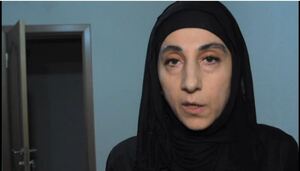
Nick Sturdee, of Channel 4 News, has carried out an exclusive interview with Zubeidat Tsarnaeva, above, mother of the two men accused of the Boston bombings.
She told Channel 4 News the FBI called her years ago to ask if her eldest son Tamerlan could be radicalised.
Watch here.

Philip Boucher-Hayes reported to Mary Wilson on RTÉ’s Drivetime last evening about an investigation by the Children’s Ombudsman into the HSE’s neglect of a 10-year-old rape victim, Maggie*.
Maggie was accompanied by her mother when she told Gardaí she had been raped in 2006. The Gardaí referred her to the HSE but they did not provide her with follow-up services for several weeks. Within that time she was raped by the same man again. When Maggie finally did speak to the HSE, she felt the HSE didn’t believe her, prompting her to attempt suicide.
The following is a transcript of last night’s clip. The italicised sections are from pre-recorded interviews Boucher-Hayes held with Maggie, played during the Drivetime discussion.
At the very end of the broadcast, Boucher-Hayes mentioned that it’s his understanding 40 pages were removed from the report into the girl’s case, at the behest of the HSE.
Mary Wilson: “It’s a lengthy report, Philip that you’ve had sight of. Will you give it to us in a nutshell?”
Philip Boucher-Hayes: “Mary, the HSE did not provide support services to an alleged rape victim because of a dispute with her mother. And the girl subsequently made several attempts on her life. She was also separately deemed not to be at risk from further abuse after she had reported the crimes against her when in fact she says that she was raped and threatened at knifepoint, just a few weeks after she made the report, to try and silence her.”
Wilson: “Now so that you can give us as much detail as you can about the girl, we’ll call her Maggie. And she says she was raped by a neighbour.
Boucher-Hayes: “And she revealed the rape to her mother at the end of 2006, who went with her to report it to the guards. She was referred to the HSE by the Gardaí but there was no follow-up, no services, social workers assigned or psychologists, nothing happened for several weeks until the girl’s mother actually went to the trouble of getting her solicitor to prompt the HSE into action. And from this point on, the Ombudsman’s report confirms a catalogue of errors that we have actually previously reported on this programme. First off, Maggie did not want to be medically examined by a man, which is understandable in the circumstances but the HSE was unable to find a suitably-qualified female specialist to carry out the examination. This was a national staffing problem, say the HSE, not one peculiar to Maggie’s individual case. But the Ombudsman’s report concludes and I’m quoting now:’The HSE actions in arranging medical examinations show significant and unexplained absence of time.”
Wilson: “And what was the dispute between the HSE and the girls mother?”
Boucher-Hayes: “The HSE wanted to interview Maggie on her own which in abuse cases is entirely understandable. But Maggie wanted to be with her mother. Maggie’s mother Sarah said that she was just representing her child’s concerns. Maggie had been through the trauma of relaying her abuse to the gardaí several times. Her first encounter with the HSE was hostile and unbelieving of her so she said she didn’t want to go back to them alone. Her mother communicated that and asked to be present, saying that she would just be expressing her child’s wishes for the HSE so that in effect the mother was blocking access to Maggie, because they wanted to interview her on her own. But remember Maggie was 11 years old at this time. Now I asked her when I met her first last year, why she wasn’t able to see the HSE on her own:
Maggie: ‘They, they did want to talk to me if I went in by myself. But I wouldn’t talk without my mum so after that they just didn’t want to talk to me at all.”
Boucher-Hayes: ‘Why were you not able, do you think, to not talk to them by yourself?’
Maggie: ‘I just didn’t feel comfortable talking to someone unless mum was there and there’d be some things that I didn’t want to say, because I didn’t want to go back over it, so I’d ask mum to say it for me. And then other times I would have talked, but when I was there by myself, I just wasn’t comfortable at all. In general, I was really shy anyways when it came to people I didn’t know, so I just wanted mum there, so I would be comfortable talking to them.”
Boucher-Hayes: “You were ten years old, so, fair enough on one level?”
Maggie: “It made it a lot worse because it was really hard to talk about it and go back over it anyways. Then, when, in turned out they didn’t believe me then, I felt like I was wasting my time telling people and I wished that I hadn’t told anyone in the start and just like, tried to forget about it and just let it continue on that I hadn’t told anyone because they didn’t believe me.”
Boucher-Hayes: “You would rather that the abuse would have continued then rather go through not being believed?”
Maggie: “Yeah. I would. Because it was. Because at first I didn’t know what was wrong, so I wasn’t really affecting me. And then when I knew it was wrong and was told that it could be stopped and I could get help, I was happy that that could happen. But then when it turned out they didn’t believe me and nothing was going to happen about it then it felt like I had gone through all of that for nothing.”
Boucher-Hayes: “And the ridiculous thing about this is that the HSE policy actually allows for introductory getting-to-know-you interviews with the parent present so it’s clear they could have had meetings with Sarah* present until the social worker, or psychologist gained her trust but that wasn’t what the HSE opted for in this case. And this is something that the Children’s Ombudsman takes them to task over in this report I’ve had sight of. Communication difficulties, they say, with the child’s parents were exasperated by administrative inefficiency and delay on the part of the HSE. The Ombudsman’s office met with Maggie and it concluded it’s clear that she feels her views were not respected by the HSE and that her voice was ignored. And the Ombudsman blames the HSE for not retaining direct knowledge of the child’s basic wishes and concludes, quote, unquote here: ‘The delay had a direct, adverse affect on the child by depriving the child of social work.”
Wilson: “So what impact has all of this, this lack of support services, had on Maggie herself?”
Boucher-Hayes: “Hard to tell what the absence of services did to her but this much I can relate as a fact. Not long after she reported the rape to the gardaí and before anybody assessed her mental health, she made an attempt to end her life and it was to be the first of quite a few such attempts.”
Maggie: ‘It hurt a lot and it made me very down and very low. And I just wanted everything to go cause I didn’t think I was going to get anywhere and because no-one believed me so I got really upset.”
Boucher-Hayes: “How low did you get?”
Maggie: “To a stage where I just wanted everything to go, I wanted to end everything, I wanted to end my life.”
Boucher-Hayes: “You couldn’t get out of bed, you just wanted to pull the duvet over your head, ‘go away world’?”
Maggie: “Yeah. Very much like that.”
Boucher-Hayes: “And when you say that you wanted your life to end, was it that you wanted somebody to come in and do something dramatic to help you or do you really think that you just did not want to go on living?”
Maggie: “Well sometimes I basically wanted it all to go away, to be dead, didn’t want anything anymore, I wanted my life ended. But then other times, it would have been a cry for help, to get people to act more, on what was going on, that I actually was really struggling.”
Boucher-Hayes: “And that’s why you started hurting yourself?”
Maggie: “Yeah.”
Boucher-Hayes: “What did you do?”
Maggie: “I started by cutting my wrists.”
Boucher-Hayes: “Was that a serious attempt of your life, or again, do you think that you were looking for somebody to come in and try and take charge and sort out your problems?”
Maggie: “Looking back on it now, I think I was looking for somebody to come in and help me and see that I actually was struggling and needed help.”
Wilson: “You said at the outset, Philip, that she was deemed not to be at risk from any further abuse. She claims though she was raped again after reporting the crime.”
Boucher-Hayes: “And there are questions here, very serious questions for the gardaí to answer, not just the HSE, and I understand the Garda Ombudsman is looking into the investigation of her case too. That report is expected in the coming months, but the HSE told the Children’s Ombudsman’s office, by way of explaining, or excusing its lack of action that there would usually be no allocation of a social worker on an ongoing basis if there was no ongoing risk that’s apparent to them. But from Maggie’s account it would appear that there was a clear risk because..for three weeks after she first reported her abuse, she didn’t leave the house and the first day that she did leave the house to go over to a friend’s, her abuser, she says, was waiting for her. He dragged her to his house, she says, that he raped her again and threatened to keep her silent, threatened her that she should keep silent at knifepoint. Now, obviously, these are issues for the gardaí and the DPP to answer, but if the HSE had been listening properly, if it had in fact engaged with her, at all, by that point, which they hadn’t, it would have understood clearly that she was reporting that there was an ongoing risk to her safety.”
Wilson: “Has she ever received the psychological or social work services that she needed?”
Boucher-Hayes: “Well, solicitors for the child contacted the HSE six months after she had first reported her allegations, in an attempt to try and get the HSE to engage directly for the child’s benefit. The Ombudsman notes, again, a direct quote from this report: ‘It does not appear that the HSE substantively responded to that request at that time’. In other words, what the HSE did was they just ignored this letter from the child’s solicitor saying ‘please, engage with her for her benefit’.The report also details how, in the ongoing catalogue of neglect that Maggie did eventually get to meet with a social worker, what she reported back, the substance of that meeting, with the social worker, was that she and her mother should stop complaining about everything that had happened to them, before that point, which, if it is true, if this is what the social worker did say to her during the course of that meeting, it is ethically very, very dubious to say in the least. And, it would, yet again, be further neglect of a teenage girl who was at that point in time suicidal. She made several more attempts on her life. That though, to her mind, talking to Maggie, isn’t as grave an insult as just not being believed.
Maggie: “When we got talking about it, she literally was saying that she didn’t believe me but didn’t actually say it, that she was questioning me again and making me think ‘wait, did this actually happen?’ like ‘am I actually, maybe I’m over thinking things’. She got me starting to nearly go with what she was saying.”
Boucher-Hayes: “There is no doubt in your mind though, you were raped by this man and on a number of occasions?”
Maggie: “Yeah, I was. No doubt in my mind.”
Boucher-Hayes: “How does it feel to say that?”
Maggie: “It’s weird to finally admit it out loud and it does hurt a bit when I talk about it but it’s better to talk about it. I realise now it’s better to talk about it then keep it in. I suppose now I want to actually try and get everything sorted and try and talk by myself and, because I’ve gotten older and looking into it more, I’ve realised maybe I should just talk by myself and be able to get over it instead of just bottling it all up.”
Wilson: “Philip, what does the HSE have to say about all of this?”
Boucher-Hayes: “Nothing. Obviously we wanted to ask them questions specifically about the areas of neglect, of which Maggie suffered but also I wanted to ask them why was it that it would, that I understand that 40 pages of this report were removed at the instigation of the HSE before the Ombudsman had completed the report. It may be that these are issues that the HSE feels had been answered and don’t need to be included in the report but, in the interests of completeness, it would be interesting to know what it was that those pages dealt with.”
Listen here (Go to 52.40)
Previously: Of the 36 Who Died In Care
Anecdotal evidence suggesting we should be concerned about London property prices? twitter.com/BrendaKelly_IG…
— Brenda Kelly (@BrendaKelly_IG) April 22, 2013
Soft landing.
They’ve got standards.

Chistina Amphlett, lead singer of the Divinyls has died.
You know the song.
You really don’t want to hear Rolf Harris’s version.
Chrissy Amphlett, Divinyls’ lead singer dies age 53 (Telegraph)
 Again?
Professor of Psychiatry at UCD and the Mater Hospital, Patricia Casey, a co-founder with David Quinn of the Iona Institute, spoke with Sean O’Rourke on RTE Radio One’s News at One this afternoon about suicide and abortion.
Sean O’Rourke: “On the one hand you’re saying ‘modern psychiatry no evidence of abortion is treatment for suicidality’. The X case has been overtaken by modern thinking and ah it’s ‘medically redundant’ to use your phrase. If that is the case then you must equally be fearful that your colleagues, your colleague psychiatrists cannot be trusted.”
Professor Patricia Casey: “Well I’m, my concern is two-fold. My concern first of all is that women are going to be, some women will be having abortions if it is agreed on the grounds that it is going to help their mental health and there is no evidence for that. My second concern is that I wouldn’t use the word ‘floodgates’, I don’t like that but there will be widespread abortion within a short period of time because the prediction of suicide is extremely difficult. It’s not that people will deliberately..”
O’Rourke: “And that’s why you need psychiatrists to caution there. I mean we’re not talking about women’s health under the Irish Constitution that’s being legislated for. We’re talking about their lives. The life has to be under immediate…sorry, there has to be real and substantial threat to life as opposed to the health.”
Casey: “Well best practice in psychiatry doesn’t allow women who are suicidal to take their lives. We care for them we offer them support. We offer them any treatments that are necessary, talking treatments, medication and that should continue. But there is, there is a very genuine concern reflected that came to pass with similar laws in other countries that it it cannot be contained.”
O’Rourke: “But who if your argument is right, who is going to authorise these abortions in this country?”
Casey: “Well my bottom line is that the government needs to pause and needs to look at the evidence. They they need to step back and they need to say ‘Look the evidence to the to the em hearings and incidentally, the hearings took place after the government had decided to legislate. So they need to say now they need to admit that the evidence provided to the health committee should show that there is no need for this legislation they need to accept that they may harm women and go back to the drawing board on the suicide issue. That is why I am calling on the government to do at this point.”
O’Rourke: “The fear is to exclude abortion on suicide grounds that is unconstitutional to go that road.”
Casey: Well that would need to be discussed with lawyers. Some people suggest that dealing with the A,B,C cases doesn’t actually require legislation. That’s for the lawyers to do. But as an advocate for my patients and the women I treat, I have to say abortion may harm you and the government needs to take account of that and they need to step back and deal with this some other way.”
Listen here. Scroll to 04:53
We’ll just leave these here;
High Court approves disability settlement (RTE News 10 February 2010)
Previously: Dr Peter Boylan And Breda O’Brien: The Transcript

 Thanks Mike Hogan 4FM and Joe Donnelly
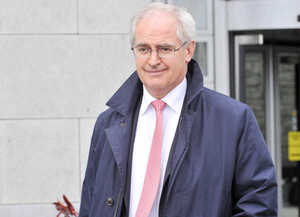
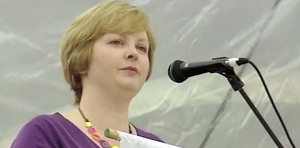
Former Master of Holles Street Hospital in Dublin, Dr Peter Boylan, top, and Breda O’Brien, above, a patron of Iona Institute and Irish Times columnist, were among the guests on RTÉ’s Marian Finucane this morning.
During their discussion, Dr Boylan accused Ms O’Brien of revising history.
Here’s how it unfolded:
Marian Finucane: “Explain how you got involved in the hearings in Galway, last week.”
Dr Peter Boylan: “The coroner wrote to me and asked me would I review the notes and the statements and issue a report to him, so that’s it basically.”
Finucane: “And that was it. And were you there for the whole thing?”
Boylan: “No, I got the transcripts every night but I wasn’t present. I only went down to give my expert evidence on Thursday.”
Finucane: “Right. And your conclusions?”
Boylan: “My conclusions are that if she’d had a termination on the Monday or the Tuesday, she would now be alive. That by the time…”
Finucane: “This is Savita. Just to…”
Boylan: “Yes. By the time a termination became legally realistic prospect, she was becoming seriously ill. And even if they’d started a termination on the morning of the Wednesday that it was too late at that stage. I did identify a number of deficiencies in the care but none of them individually contributed to her death, in my opinion. And, the question of a surgical termination was brought up in some of the media, during the course of discussions since the finish of the inquest. And I don’t want to be graphic about what a surgical termination means at 17 weeks for the live foetus but there’s a very high likelihood that she would have died as a consequence of having had a surgical termination at that stage because…”
Finucane: “On the Monday or the Tuesday?”
Boylan: “No. On the Wednesday.”
Finucane: “No.”
Boylan: “You couldn’t do a termination on the Monday or the Tuesday in this country. It’s just, it was not legal.”
Finucane: “Yeah, I must have misheard, I thought I heard people, on both sides, saying that if a miscarriage was inevitable that then there would…”
Boylan: “The clinical circumstances in which she was, with ruptured membranes at 17 weeks, the chances of survival for that baby were absolutely very small, less than 10%. There are incidences however, well-recognised in this country and internationally where babies in those circumstances can survive. They get to 34 weeks maybe or even later…”
Finucane: “34? Yeah but she was 17?”
Boylan: “She was 17. Yes but a pregnancy, even with ruptured membranes, can continue. It’s highly unlikely. It’s not inevitable that she would have a miscarriage. Now what would have happened in another country is that on the ward round, when she ruptured her membranes, the dismal outlook for the baby would have been discussed with her. And her input into the management, and her husband’s input into the management, would have been taken into account. We can’t do that here. And what would have happened is she would have said one of two things. One: ‘I’d like this pregnancy to continue as long as possible as I dearly want a baby and we want to do everything possible’. That might be say in the circumstances where the mother is in her late 30s/40s, it’s an IVF pregnancy and so on. Not very much different. Or she might, she could said ‘Look no, the outlook is so dismal, I’d like just to have, get this pregnancy over with, in other words terminate it, and then move on and perhaps get pregnant again soon. Her wishes would have been taken into account in any other country. Now what would have happened then is that they would have said to her ‘Look, have a think about this because these are very big decisions.”
Finucane: “Sure are.”
Boylan: “And they would have come back to her the next day, or later the same day, or they might be absolutely certain what they wanted to do. And then, whatever it is that they wished would be undertaken. In any other country.”
Finucane: “Again, just listening to the, to the evidence, I presume every person operates to the guidelines, you know, according to the law.”
Boylan: “We have to.”
Finucane: “Yeah, yes, yeah. But the notion of percentages.”
Boylan: “Yes.”
Finucane: “Of, will you die, won’t you die…”
Boylan: “Yes.”
Finucane: “Does that happen? A lot?”
Boylan: “No. And we cannot, as doctors, be expected to do our ward rounds with a calculator in one hand and the law in another hand. We have to be given the liberty to do what we feel is best for a patient and in this…These circumstances are the only circumstances in obstetric care where a woman’s wishes are not taken into account. Where she has no input into her care. Now if you think of any other sort of situation like that you end up talking about the Taliban. Where else are women denied an input into their care? In what other clinical situation? I can’t identify any. Women are very much involved in their care in obstetrics, in decisions to induce labour, decisions about Caesarian sections, decisions about all sorts of things. And that’s how it should be. But in this circumstances, they are not allowed. And that’s the law.”
Finucane: “Breda, how did, how did we end up here?”
Breda O’Brien: “I’m really alarmed at a couple of things that Peter has said. First of all that the law would not have allowed intervention on Monday because John Bonner, who would be universally acknowledged to be deeply conservative on this, said he would have gone, he would have been in there like a light.”
Boylan: “That’s incorrect.”
O’Brien: “Em. He’s not present to..what he..this is..”
Boylan: “I was on Prime Time with him there last night I think it was…”
O’Brien: “What he said was…”
Boylan: “Friday night. And that’s not correct what he said. He said he would wait until she was ill and then he would have no hesitation in intervening.”
O’Brien: “Can I clarify, Peter?”
Boylan: “He was very clear about that because I picked him up on that.”
O’Brien: “Can I clarify, Peter? When I said he would have been in like a light I was talking about in terms of the care. The care is the crucial issue here. I spoke to three obstetricians over the week, two in person and one by email to clarify this point.”
Finucane: “I should clarify that you yourself are a patron of Iona, just for the record.”


