

https://www.youtube.com/watch?v=SoHFslzV4-U
Strewth.
Mark Geary writes:
Why wasn’t this driver locked up?
Melbourne driver handed $1,000 fine for deliberately hitting cyclist (The Guardian)



https://www.youtube.com/watch?v=SoHFslzV4-U
Strewth.
Mark Geary writes:
Why wasn’t this driver locked up?
Melbourne driver handed $1,000 fine for deliberately hitting cyclist (The Guardian)

Tomorrow.
From 3pm until 11pm.
At the Harry Clarke lecture theatre in the National College of Art & Design on Thomas Street, Dublin 8.
The Creative Time Summit in Miami, Florida – an annual presentation of the world’s leading socially engaged artists and activists – will be live streamed.
From 6pm until 7.30pm.
There will be a live panel discussion on the theme of ‘Resisting displacement and violence’ with community worker and housing activist John Bissett (chair); artist and educator Fiona Woods; artist and co-director at A4 Sound Studios; Lisa Crowne, Assistant Professor at the School of Architecture in UCD Orla Hegarty; and activist for migrant communities Lucky Khambule.
They will be discussion, among other matters, the current housing crisis, and the “growing resistance to the stark effects of inadequate policies for social and affordable housing and lack of equitable development in Dublin”.
Register for free tickets here

Ballot papers for the recent presidential election being sorted into first preference piles in Saggart, Dublin last week
After opening the ballot boxes, we always read of the presence or absence of tallymen.
Never a mention of tallywomen or tallychildren. Do women or children not count?
Dermot O’Rourke,
Lucan,
Co Dublin.
FIGHT!

‘sup?
This morning.
Easkey, County Sligo
Thanks Conor

The National Archives of Ireland tweetz:
Dublin’s Lying-in Hospital is the oldest maternity facility in the world. This fine paper seal attached to an application to Dublin Castle for funds in 1818, features a mother and 3 infants. Now Ireland has the highest birth rate in the EU!


From top: Shop stewards convener Jimmy Reid addresses a mass meeting at Clyde Shipyards, Clydebank, Scotland July 1971; Brendan Ogle
The outrageous comments by Peter Casey in recent weeks targeting travellers and those on welfare need a considered response.
With the rise of neo-fascism from Washington to Rio, from the AfD in Germany to the far right in Britain, we in Ireland cannot be complacent.
The instinct of some to target their anger at the impact of neoliberalism on their lives at those suffering disadvantage – that instinct to cast blame downwards instead of upwards – is dangerous and needs to be challenged.
As part of this necessary discussion, I am pleased to reproduce this seminal speech by Glasgow Ship Yard worker Jimmy Reid.
Jimmy Reid was a member of one of Unite’s predecessor unions, and his 1972 speech to students in Glasgow University was subsequently published in full in the New York Times.
It is a salutary reminder that thought and enlightenment are necessary to overpower intolerance and greed, and that we will all suffer alienation if we are not very careful.
Enjoy the read:
“Alienation is the precise and correctly applied word for describing the major social problem in Britain today. People feel alienated by society.
In some intellectual circles it is treated almost as a new phenomenon. It has, however, been with us for years. What I believe is true is that today it is more widespread, more pervasive than ever before.
Let me right at the outset define what I mean by alienation. It is the cry of men who feel themselves the victims of blind economic forces beyond their control. It’s the frustration of ordinary people excluded from the process of decision-making.
The feeling of despair and hopelessness that pervades people who feel with justification that they have no real say in shaping or determining their own destinies.
Many may not have rationalised it. May not even understand, may not be able to articulate it. But they feel it. It therefore conditions and colours their social attitudes.
Alienation expresses itself in different ways in different people. It is to be found in what our courts often describe as the criminal antisocial behaviour of a section of the community.
It is exposed by those young people who want to opt out of society, by ‘drop-outs, the so called maladjusted, those who seek to escape permanently from the reality of society through intoxicants and narcotics.
Of course, it would be wrong to say is was the sole reason for these things. But it is a much greater factor in all of them than is generally recognised.
Society and its prevailing sense of values leads to another form of alienation. It alienates some from humanity. It partially dehumanises some people, makes them insensitive, ruthless in their handling of fellow human beings, self-centred and grasping.
The irony is, they are often considered normal and well-adjusted.
It is my sincere contention that anyone who can be totally adjusted to our society is in greater need of psychiatric analysis and treatment than anyone else.
They remind me of the character in the novel ‘Catch 22’, the father of Major Major. He was a farmer in the American Mid-West. He hated suggestions for things like -medi-care, social services, unemployment benefits or human rights.
He was, however, an enthusiast for the agricultural policies that paid farmers for not bringing their fields under cultivation. From the money he got from not growing alfalfa he bought more land in order to not grow alfalfa. He became rich.
Pilgrims came from all over the state to sit and learn how to be a successful non-grower of alfalfa. His philosophy was simple. The poor didn’t work hard enough and so they were poor.
He believed that the good Lord gave him two strong hands to grab as much as he could for himself. He is a comic figure (ibid – not any more). But think – have you not met his ilk? I have.
It is easy and tempting to hate such people. However, it is wrong. They are as much products of society, and of a consequence of that society, human alienation, as the poor drop out. They are losers. They have lost the essential elements of our common humanity.
Man is a social being. Real fulfilment for any person lies in service to his fellow men and women. The big challenge to our civilisation is not Oz, a magazine I haven’t seen let alone read. Nor it is permissiveness, although I agree our society is too permissive.
Any society which, for example, permits over one million people to be unemployed is far too permissive for my liking. Nor is it moral laxity in the narrow sense that this word is generally employed – although in a sense here we come nearer to the problem.
It does involve morality, ethics, and our concept of human values. The challenge we face it that of rooting out anything and everything that distorts and devalues human relations.
Let me give two examples from contemporary experience to illustrate the point.
Recently on television I saw an advert. The scene is a banquet. A gentleman is on his feet proposing a toast. His speech is full of phrases like ‘this full-bodied specimen’. Sitting beside him is a young, buxom woman.
The image she projects is not pompous but foolish. She is visibly preening herself, believing that she is the objects of the bloke’s eulogy. Then he concludes – ‘and not I give….’ Then a brand name of what used to be described as Empire Sherry. Then the laughter. Derisive and cruel laughter.
The real point, of course, is this. In this charade, the viewers were obviously expected to identify not with the victim but with her tormentors.
The other illustration is the widespread, implicit acceptance of the concept and term ‘the rat race’. The picture it conjures up is one where we are scurrying around scrambling for position, trampling on others, back stabbing, all in pursuit of personal success.
Even genuinely intended, friendly advice can sometimes take the form of someone saying to you: ‘listen, you look after number one.’ Or as they say in London, ‘Bang the bell Jack, I’m on the bus.’
To the students (of Glasgow University) I address this appeal. Reject these attitudes. Reject the values and false morality that underline these attitudes.
A rat race is for rats.
We’re not rats. We’re human beings. Reject the insidious pressures in society that would blunt your critical faculties to all that is happening around you, that would caution silence in the face of injustice lest you jeopardise your chances of promotion and self-advancement.
This is how it starts, and before you know where you are you’re a fully paid up member of the rat pack. The price is too high. It entails the loss of your dignity and human spirit. Or as Christ put it, ‘What doth it profit a man if he gain the whole world and suffer the loss of his soul?’
Profit is the sole criterion used by the establishment to evaluate economic activity. From the rat race to lame ducks. The vocabulary in vogue is a give-away. Its more reminiscent of a human menagerie than a human society.
The power structures that have inevitable emerged from this approach threaten and undermine our hard one democratic rights. The whole process is towards the centralisation and concentration of power in fewer and fewer hands.
The facts are there for all who want to see. Giant monopoly companies and consortia dominate almost every branch of our economy. The men who wield effective control within these giants exercise a power over their fellow men which is frightening and is a negation of democracy.
Government by the people for the people becomes meaningless unless it includes major economic decision-making by the people for the people. This is not simply and economic matter. In essence it is an ethical and moral question, for whoever takes the important economic decisions in society ipso facto determines the social priorities of that society.
From the Olympian heights of an executive suite, in an atmosphere where your success is judged by the extent to which you can maximise profits, the overwhelming tendency must be to see people as units of production, as indices in your accountant’s books.
To appreciate fully the inhumanity of this situation, you have to see the hurt and despair in the eyes of the man suddenly told he is redundant, without provisions made for suitable alternative employment, with the prospect that if he is in his later forties or fifties, of spending the rest of his life in the Labour Exchange.
Someone, somewhere has decided that he is unwanted, unneeded, and is to be thrown of the industry scrap heap. From the very depth of my being, I challenge the right of any man or any group of men, in business or in government, to tell a fellow human being that he or she is expendable.
The concentration of power in the economic field is matched by the centralisation of decision – making in the political institutions of society. The power of Parliament has undoubtedly been eroded over past decades, with more and more authority being invested in the Executive.
The power of local authorities has been and is being systematically undermined. The only justification I can see for local government is as a counter-balance to the centralised character on national government.
Local government is to be restructured. What an opportunity, one would think, for decentralising as much power as possible back to the local communities. Instead. The proposals are for centralising local government. It’s once again a blueprint for bureaucracy, not democracy. If these proposals are implemented, in a few years when asked, ‘where do you come from?’ I can reply: ‘the Western Region’. It even sounds like a hospital board. It stretches from Oban to Girvan and eastwards to include most of the Glasgow conurbation.
As in other matters, I must ask the politicians who favour these proposals – where and how in your calculations did you quantify the value of a community? Of community life? Of a sense of belonging? Of the feelings of identification? These are rhetorical questions. I know the answer. Such human considerations do not feature in their thought processes.
Everything that is proposed from the establishment seems almost calculated to minimise the role of the people, to miniaturise man. I can understand how attractive this prospect must be to those at the top.
Those of us who refuse to be pawns in their power game can be picked up by their bureaucratic tweezers and dropped in a filing cabinet under ‘M’ for malcontent or maladjusted. When you think of some of the high flats around us, it can hardly be an accident that they are as near as one could get to an architectural representation of a filing cabinet.
If modern technology requires greater and larger productive units, let’s make our wealth-producing resources and potential subject to public control and to social accountability.
Let’s gear our society to social need, not personal greed. Given such creative re-orientation of society, there is no doubt in my mind that a few years will eradicate in our country the scourge of poverty, the underprivileged, slums and insecurity.
Even this is not enough. To measure social progress purely by material advance is not enough. Our aim must be the enrichment of the whole quality of life. It requires a social and cultural, or if you wish, a spiritual transformation of our country.
A necessary part of this must be a re-structuring of the institutions of government and, where necessary, the evolution of addition structures so as to involve the people in the decision-making processes of our society.
The so-called experts will experts will tell you that this would be cumbersome or marginally inefficient. I am prepared to sacrifice a margin of efficiency for the value of peoples participation. Anyway, in the longer term, I reject this argument.
To unleash the latent potential of our people requires that we give them responsibility. The untapped resources of the North Sea are as nothing compared to the untapped resources of our people. I am convinced that the great mass of our people go through life without even a glimmer of what they could have contributed to their fellow human beings.
This is a personal tragedy. It’s a social crime. The flowering of each individual’s personality and talents is the pre-condition for everyone’s development.
In this context education has a vital role to play. If automation and technology is accompanied as it must be with full employment, then the leisure time available to man will be enormously increased. If that is so, then our whole concept of education must change.
The whole object must be to equip and educate people for life, not solely for work or a profession. The creative use of leisure, in communion with and in service to our fellow human beings, can and must become an important element in self-fulfilment.
Universities must be in the forefront of development, must meet social needs and not lag behind them. It is my earnest desire that this great University of Glasgow should be in the vanguard, initiating changes and setting the example for others to follow.
Part of our education process must be the involvement of all sections of the university on the governing bodies. The case for strident representation is unanswerable. It is inevitable.
My conclusion is to re-affirm what I hope and certainly intend to be the spirit permeating this address. It’s an affirmation of faith in humanity. All that is good in man’s heritage involves recognition of our common humanity, an unashamed acknowledgement that man is good by nature.
Burns expressed it in a poem that technically was not his best, yet captured the spirit. In ‘Why should we idly waste our prime’:
“The golden age, we’ll then revive, each man shall be a brother,
In harmony we all shall live and till the earth together,
In virtue trained, enlightened youth shall move each fellow creature,
And time shall surely prove the truth that man is good by nature.”It is my belief that all the factors to make a practical reality of such a world are maturing now. I would like to think that our generation took mankind some way along the road towards this goal. It’s a goal worth fighting for.’
Jimmy Reid, Glasgow Shipyard Worker to Glasgow University Students 1972
Alienation (Brendan Ogle, UniteThe Union)
Pic: Getty

Ryanair will charge for hand luggage starting today
Passengers who refuse to pay extra for “Priority” will only be permitted to travel with one small bag (35cm x 20cm x 20cm) free of charge.
Previously, the airline allows all customers to travel with two items of hand luggage: one small bag and one large bag (no bigger than 55x40x20cm and no heavier than 10kg). However, if they are “Non-Priority”, the larger bag is taken at the gate and put in the hold free of charge.
Passengers are now faced with a decision. Travel with just a small bag; pay the Priority fee (which costs from €6 per person per flight at the time of booking or €8 during online check-in); or pay €8 per person per flight to check in their 10kg bag
The airline claims the changes are not about making money, but about speeding up the boarding process and reducing delays.
Ryanair’s baggage policy changes today – here’s what you need to know (Independent.ie)
Illustration: Daily Star
UPDATE:

Niall M Dowd tweetz:
Ryanair have released size guidelines for their new carry on luggage rule.
Ah now.
About 1lb of cannabis, worth about $3K, which is about 4-5 plants. Nice business if u can get it pic.twitter.com/EPWOep9SLD
— Darragh McCullough (@darraghmccullou) November 1, 2018
Spent a fascinating day filming with @givingtreeaz cannibas growers in Arizona today. Booming business…and why wouldn’t it at over $6 per GRAM🤑 pic.twitter.com/jAO77CHA1A
— Darragh McCullough (@darraghmccullou) November 1, 2018
Darragh McCullough, presenter of RTÉ television’s Ear to the Ground, in Arizona filming and tweeting about the cannabis boom among US farmers.
Grass on Ear to the Ground!
In fairness.

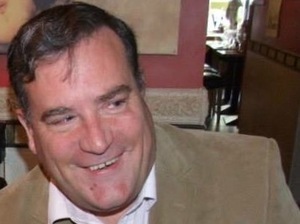
From top: Peter Casey at Dublin Castle last Saturday; Dan Boyle.
I wouldn’t say that the 342,727 voters who indicated support for Peter Casey in our presidential election are racists, but I suspect that many who have tendencies to be racist did vote for him.
There were many factors that contributed to a tenfold increase in his support over a period of one week.
One was the assumption, fuelled by opinion polls, that Michael D. Higgins would be easily elected. While always a dangerous assumption, this seemed to free many voters into making a statement; or statements, to give a collective two fingers to the political establishment.
The second factor is that like Dáil by-elections, in presidential elections most votes gravitate towards the successful candidate and then towards the most viable challenger.
My highest vote (16%) was achieved in a by election. I estimate I got at least half those votes by being seen as the most viable ‘protest’ candidate.
However the third factor is political serendipity – being at the right place at the right time saying a perceived ‘right’ thing.
Undoubtedly Peter Casey touched a nerve. In doing so he caused an extraordinarily large number of voters to change their opinions over a blink of an eye time span.
This is worrying that so many people could at the drop of a hat, express support for a candidate they did not know, and whose wider policy platform was so nebulously incoherent.
The most publicly expressed reason why the new found Casey supporters became attracted to him was because, as they said, he said things they often are afraid to say themselves.
While politicians are regularly castigated for resorting to cliche, this statement meant to be evocative of an electorate not being listened to, is among the worst of all political cliches.
When it is said that people are afraid to say things, it means they feel they are being deprived to say things that are wrong. Very wrong. What is being sought is the right to be intolerant.
For many in the electorate, or at least those who bothered to vote, Casey has been a mischievous cipher to somehow communicate the supposedly desirous state of being politically incorrect.
PC is not a legal code. It’s meant to be about positive ways in how we consider each other, how we speak about and refer to each other. It is open to exaggeration and thus likely ridicule, but it remains a better alternative to that of being nasty and ignorant towards each other.
I wouldn’t be of the school of thought that would want things not to be said. I think it is more rewarding when the distasteful gets said, once it is immediately reacted to and challenged.
While writing this I have been attending an event in Cork. Speaking there was a young traveller woman, an artist. She pointed out she was the only traveller in the room among a crowd of people, who after events of past weeks she would assume one in five of those sat there could not recognise her for who and what she was. Would that Peter Casey could speak with such assured eloquence.
There is a cozy comfort in how we form our opinions of others through generalisations, myths and common misconceptions. Instinct allows us to avoid needing to think or to have to inform ourselves.
This might seem a bit too PC for some. To such people I say FU. That might give some sense of how those we choose not to understand, or engage with, feel.
Dan Boyle is a former Green Party TD and Senator. His column appears here every Thursday. Follow Dan on Twitter: @sendboyle

