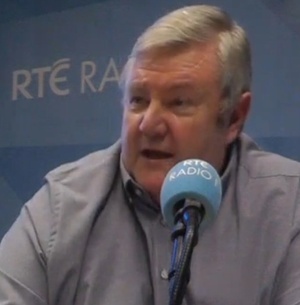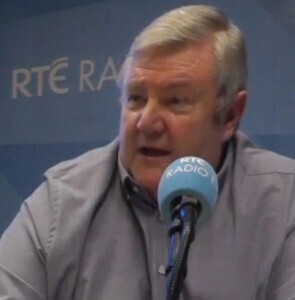
Possible Presidential hopefuls, clockwise from left at top panel: Joan Freeman, Gavin Duffy and Noel Whelan; above: Derek Mooney
Though the 2018 Áras race has not officially started, it is already producing some political myths. Doubtless there will be many more before October, so no harm in putting an end to a few of the more tedious ones now.
Myth No 1. The main parties – or the Elites as the elite myth spreaders call them – want to deny us the right to vote.
This one is exposed by simple arithmetic. There are two routes to getting a nomination. The first is the Oireachtas one, where you need the backing of 20 members of the Dáil and/or Seanad. The second is the Council path, which means getting four city or county councils to propose you.
The Oireachtas route had been the preserve of the two big parties, but as their dominance started to wane in the early 90s, so too did their grip on the Presidential nomination process.
Actually, it slipped as early as 1945 when Patrick McCartan ran as an Independent, with the backing of 20 Oireachtas members getting 20% of the vote, but the two parties subsequently regained their grip on the process.
That grip slipped in 1990 with the joint Labour Party and the Workers’ Party nomination of Mary Robinson. This was repeated in 1997 when Labour, Democratic Left and the Greens got together to run Adi Roache.
But it was in 1997 on the Council route that the FF/FG presidential duopoly finished for good. That election saw the entry into the race of not one, but two independent candidates: Dana and Derek Nally, both of whom were nominated by the Councils. Fourteen years later, in 2011 the trend progressed with four independent candidates getting in to the race.
Oireachtas arithmetic shows that Fine Gael, Fianna Fáil & Labour have neither the numbers nor the power to stop at least one, if not two independents emerging from the Oireachtas route.
Even with Fianna Fáil, Fine Gael and Labour backing President Higgins and Sinn Féin running its own candidate, there are still up to 50 other Oireachtas members who have the scope to facilitate one, or even two more, candidates entering the race. That power lies with them, not with Fianna Fáil or Fine Gael
Meanwhile, the traditional path for independents to enter the race, the 31 Councils, could theoretically nominate up to seven more. Do not be surprised to see councillors from both Fianna Fáil and Fine Gael finding ingenious ways to facilitate other candidates entering the race, while professing firm personal support for MDH.
Though Councils have always had the power to nominate, it wasn’t exercised before 1997. But now they have found that power, they are not going to deny it to themselves, even if that does mean having to duck and dive and put up with irate emails and texts from party HQ.
This brings us to Myth 2.
Myth 2. Only for Sinn Féin there would be no contest
While Sinn Féin has every right to nominate someone and to enjoy its time in the media spotlight while it goes about the process of picking that someone, it does not have the right to pretend that this is a privilege that it enjoys alone. There are 50 Oireachtas members and 31 councils who also have the power to nominate, and they will.
Mary Lou McDonald’s Twitter tirade that “Fine Gael Fianna Fáil & Labour don’t want to give people a say in Presidential election” has little to do with voter choice in the Aras 18 race and has all to do with the next election.
While it does contain dig at the President, hinting that he, as the preferred candidate of the three parties didn’t want to give the people a say, Sinn Féin’s Aras run is no more about winning the Áras than it is about winning Eurovision.
Sinn Féin’s focus is every bit as much on the next general as Fianna Fáil and Fine Gael’s. While the two big parties have decided that the best way to help their next general election prospects is by not contesting the presidential, Sinn Féin have concluded that theirs, is.
It’s a matter of relative positioning. As both are ahead of Sinn Fein in the polls, Fianna Fáil and Fine Gael would have to win outright to justify entering the Aras race.
Sinn Féin merely has to get a few points above its latest opinion poll rating to vindicate its strategy.
So why is Sinn Féin bleating about FF, FG and Labour backing the candidate they are backing? Will we see Sinn Féin HQ follow through on the logic of Mary Lou’s position and allow, nay instruct, Sinn Féin councillors use their position as the third biggest party in local government to facilitate others to enter the race and compete with their nominee?
In the memorable words of James Gogarty at the Mahon Tribunal: “will we fuck” – and he didn’t mean it as an invite either.
Myth 3 – There is no way Michael D can lose
This is the most dangerous of the myths thus far, and it is the one that the electorate may ultimately debunk.
While Michael D is odds-on to win, an unpublished poll (from April) by Dr Kevin Cunningham showed Michael D Higgins getting up to 70%, Irish presidential campaigns are curious things.
Early front runners end up trailing the field. Senator David Norris, who finished up with 6.2%, started out at 21% in the first national opinion poll (Red C).
Though I expect President Higgins to win, most likely on the first count, I also expect much of the campaign coverage will be about his gradual slide in the polls from the mid to upper 60s at the start, to the low 50s by polling day. Enough to win easily, but not enough not to suffer some damage.
The history of recent Irish Presidential elections is that your campaign matters. While MDH is the most tested of all the likely runners, having been through countless elections, he did still manage to slip through the middle of the 2011 Aras race without much negative focus landing on him.
That won’t be the case now. Other candidates are not going to see themselves as running against each other, they will see themselves as each running against the incumbent. Michael D’s high poll ratings make him the one to beat and thus the one to attack.
We see it already. Mary Lou McDonald’s oblique attempt to taint MDH as the elitist candidate, the one who wanted the big parties to give him a clear run, was a smart early move, made even smarter by doing it while she does not have a named candidate to suffer the backlash of attacking a popular President.
But there is another factor, the Enoch Powell one. Powell famously observed that All political lives, unless they are cut off in midstream at a happy juncture, end in failure. It is the caveat here that matters.
The risk for the popular and well politician lies in staying on too long. In running in one election too many and not seeing the right time to exit the stage.
Michael D has been through many rough and tough campaigns before. The voters know him – but that lengthy familiarity may be his vulnerability.
Asking people to put you back in office for seven more years is a big ask, even if that does come with the bonus of keeping Bród and Síoda in the public eye.
People have known Michael D as President and as a major political figure for a long time. There is a risk that when confronted with a panel of alternatives, some voters who still like him will nonetheless feel that a new person may shake things up, as he once did, so it is time for him to go.
The race is his to lose. Dev came within 10700 votes of doing precisely that in 1966. Ultimately, it depends on who the independent Oireachtas members and the city and county councillors back.
Áras 18 will be interesting enough in itself, we won’t need the myths to make it so.
Derek Mooney is a communications and public affairs consultant. He previously served as a Ministerial Adviser to the Fianna Fáil-led government 2004 – 2010. His column appears here every Tuesday Follow Derek on Twitter: @dsmooney
Montage: Irish AmericaRollingnews