Kenneally was given a 14-year sentence in 2016, for sexually abusing ten boys aged between 12 and 16 in Waterford between 1984 and 1987.
During the press conference in February, abuse survivors Colin Power and Jason Clancy said they believed gardai were aware of Kenneally’s abuse as far back as 1979.
The survivors’ claims of a cover-up of the abuse by gardai, members of Fianna Fáil, the HSE and Catholic Church are to be examined by a Commission of Investigation overseen by retired Circuit Court Judge Barry Hickson from next month.
The Child and Family Agency has refused to identify paedophile Bill Kenneally in the medical notes of a boy targeted by him…
Kevin Keating asked to see the 1987 file in which he detailed being lured to the pervert’s home, tied up and threatened if he told anyone about the abuse.
Tusla sent it to him – but the sadist’s name was blanked out despite the fact he was jailed for 14 years in 2016 – 29 years after Kevin first named him to a doctor. Mr Keating and other victims of the former basketball coach claim it proves health bosses knew of the abuse in the 1980s.
The Waterford man said: “The medical notes confirm I told her [the doctor] about the abuse. But there are parts of the papers blacked out. Bill Kenneally’s name has been hidden.
“But that should not be redacted. We know it’s his name there and this shows the HSE knew I and others were being abused by him at that time.”
In a medical report dated 1989 a paediatrician wrote:
“Kevin was seen by me on several occasions between 22/10/87 and the summer of 1988.
“Kevin was a 14-year-old boy who was alleging sexual abuse by ______.
“One episode which occurred on the Halloween of ’86 when he was brought into a house and tied up.
“He was also making allegations other boys had been approached by the same person.
“There is a question of money changing hands in some of these cases.”
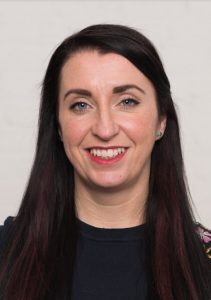
From top: question on the Leaving certificate Politics and Society exam; Anne Marie McNally
Last Wednesday saw 900 students sit the very first Leaving Cert “Politics and Society” exam, a subject that seems like it really has the potential to have a huge impact on our country.
It’s miles away from the kind of rote learning that’s so familiar to those of us who sat the Leaving in the last generation.
These students are being asked to critically engage with big political ideas and pressing social issues. It aims to make sure that they don’t just randomly inherit opinions, but develop ‘informed’ opinions.
There are two “Phase One” (Pilot) schools in my constituency and I’ve been lucky enough to have visited three different classes and contributed to a podcast for the students. I’ve also popped in to visit them as they have taken tours of the Oireachtas under the supervision of the newly appointed Oireachtas Education Officer.
I’d have loved to have had that opportunity growing up and am delighted to contribute where I can as the subject roles out nationwide with 100 schools involved this September.
What I want to do, though, is to focus on just one question of last week’s exam. Section A, part (h) asked the students to “Name two consequences of income inequalities in Ireland on an individual’s life chances.”
It doesn’t take a Social Democrat to recognise that socio-economic deprivation leads to lower education, physical & mental health, and employment outcomes, but the irony of Politics and Society as a subject is the way in which it has been implemented. In a pattern to which we’ve become increasingly familiar in recent years, schools are being asked to do ‘more with less’.
The subject was introduced without giving additional resources – no additional timetable provisions were granted to schools from which to find the teaching hours to deliver the new subject.
That’s fine at the moment, but we all know that when the next round of cuts come, it’ll be the DEIS and public schools who will feel the pinch most. It will almost inevitably be the ‘Private’ schools, who can subsidise additional classes like these, which will end up dominating this form of ‘Citizenship’ education.
The result could well be increased political power and influence remaining within the already narrow band of schools that disproportionately dominate our current political representation. It would be a travesty if this subject pitted one school against another, and one subject against another within each school, rather than democratising our already two-tier education system.
So what’s the solution?
Anybody who has ever talked with me will know that I’ve always considered education to be the ‘silver bullet’. It was for me, and I know countless others for whom this has also been the case.
Well, why not invest properly in this new form of education in the Irish system equally across the schools and guarantee that all students have equal access to that important form of classroom engagement. I want to see it in all our schools, our Adult Education classes, our prisons, and given proper resources to do so.
Obviously, studying citizenship in school isn’t the only way to learn about politics. The recent Marriage Equality and Repeal referenda have seen people who were previously apathetic or disillusioned come to politics in droves.
I was lucky. I licked politics of the stones at home because I was both lucky enough to have parents who were aware of the importance of education; and also stubborn enough to want to know why politics didn’t represent me or my community.
But it shouldn’t come down to the social lottery of having a supportive family or a stubborn streak to be politically active. Just think of all of the political talent that has been and might be squandered that way in the future.
And, NO, I don’t just want the students to learn about Social Democracy, but about the whole political spectrum. They need to be able to engage with a wide range of traditional and controversial ideas in a constructive manner, otherwise we all languish in the dreaded echo chamber.
I was particularly struck by the statement that the ‘Pol Soc’ [Politics and Society Teachers Association of Ireland] teachers issued after the exam. They noted that while the exam was important, they know that “the real test takes place every day, for the rest of the students’ lives. That’s the real prize.”
It’s a prize worth fighting for, for all of our young people and all our citizens. Maybe then we’ll start seeing the kinds of change that the country needs.
Anne Marie McNally is Social Democrats Political Director and General Election candidate for Dublin Mid-West. Her column appears here every Monday.
Christine Lagarde, Managing Director of the International Monetary Fund (IMF), meets Taoiseach Leo Varadkar to discuss “the strengths and challenges facing Ireland, as well as promoting gender equality”.
We have our first Weather Warning for high temperatures now, as it will get above 27c today. The latest charts show little if any breakdown up to and including the weekend. I’ll have a further update around lunch time with the latest information.
A celebration to mark the 25th Anniversary of Decriminalisation of Homosexuality featuring Minister for Housing Eoghan Murphy, Minister for Children and Youth Affairs, Katherine Zappone and Taoiseach Leo Varadkar playing with the Dublin Ukuleje Collective.
It’s a big day for those who might fear
That they’ll miss the event of the year
So get online and book
Or you’ll be a bit shook
And won’t see Pope Francis appear.