

This morning.
Ranelagh, Dublin 6
Niall writes:
It’s Nick’s Coffee shop in Ranelagh’s 10th Birthday today. Giving out free coffees and pastries this morning. Love Nick’s it’s a great institution 😎
In fairness.



This morning.
Ranelagh, Dublin 6
Niall writes:
It’s Nick’s Coffee shop in Ranelagh’s 10th Birthday today. Giving out free coffees and pastries this morning. Love Nick’s it’s a great institution 😎
In fairness.

What you may need to know…
1. Disney “dropped” the long-overdue trailer for The Last Jedi last night during Monday Night Football in the States.
2. The first teaser arrived in April, followed by a behind the scenes feature in July; this is the first that offers more firm plot details. Director Rian Johnson offered this caveat.
3. In terms of plot, it’s as you might have guessed. Rey (Daisy Ridley), last seen on Skellig Michael in Kerry, has begun her Jedi training with Luke Skywalker (Mark Hamill, looking decidedly Oliver Reed-esque). He seems concerned about just how powerful she is, as does Snoke (Andy Serkis), who hints that he’s more interested in her than in Kylo Ren (Adam Driver, angsty).
4. On Ren’s side, he’s still struggling with the Dark Side, as illustrated by his hesitation to blow his own mother’s ship to smithereens. Unless this is a big fake-out, it’s sad to see that Leia (Carrie Fisher) has been hastily written out of the film due to Fisher’s sudden death last year.
5. Could Rey and Ren be about to switch allegiances?
6. The cute little animal thingies are called Porgs. Presumably there’s a factory in China knocking out 5,000 Porgs an hour, of various sizes, to be shipped to Disney stores all over the world in time for Christmas. Gotta get those toys out there. Merchandising is the real reason Disney paid $4bn for LucasFilm back in 2012, after all.
7. It’s a good trailer, does the job. But to me it feels like there’s something off about Star Wars’ image at this stage. With the firing of Colin Trevorrow from Episode IX (2019), the firing of Lord & Miller from the untitled Han Solo Movie (2018), and various other changes and replacements, it feels like we’re getting to see the sausage made.
8. LucasFilm and Disney are so fiercely protective of Star Wars that they are unwilling to take a single risk. When this film finally arrives, it’s clear that the immensely talented Rian Johnson will have toed the line completely, and the finished product will have been audience tested again and again, edited by committee and approved by a zillion executives to push all the right nostalgia buttons and so on. Is it the directors they don’t trust, or the audience?
9. That’s not to say it won’t be good. You could interpret it as a return to the old studio system that Hollywood operated until the 1960s, where the producer had complete creative control and the director was a mere technician. Marvel (arguably) keep getting it right, after all. What that led to was an independent film revolution, so I wouldn’t worry too much about the whole “Hollywood is out of ideas” thing. Which it is, but it’s all part of the cycle.
10. Anyway, I shouldn’t complain. Yeah Star Wars!
Doug’s Verdict: Doesn’t matter. Will be huge no matter what.
Release Date: December 15
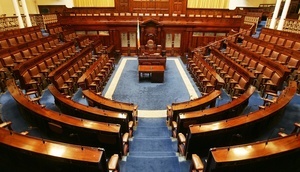
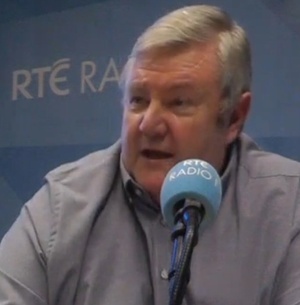
From top: Dáil Eireann; Derek Mooney
Though the big political event today is the Budget, I do not intend to devote too much time to it here.
So much of what is to be announced has already been trailed out that the members of the most ancient and noble orders of the economic and political commentariat could have filed their copy late on Sunday night, taken most of today off and left it to the theatre and TV critics to cover proceedings.
Not that the drama and theatrics of Budget Day are unwelcome or unappealing, but in today’s world setting the government’s budget is more a process than an event.
Much of what the Minister will do today is to confirm which political and business journalists have the most informed sources. The rest is him setting out the conclusions that have almost been reached on the income and expenditure side.
I say “almost” as today’s speech is not the quite the final, final word on the Budget. That comes with the publication, in a week or two, of the full details in the legislation, the Finance Bill 2017, that underpins the Budget. It, to quote previous Finance Bills, will:
“…provide for the imposition, repeal, remission, alteration and regulation of taxation, of stamp duties and of duties relating to excise and otherwise to make further provision in connection with finance including the regulation of customs.”
There may be a bit of “will (s)he, won’t (s)he” during the day as speculation mounts around the corridors of Leinster House about how this TD or that Minister of State is wrestling with their conscience on how they will vote for some cut or increase.
Though it is unlikely that we will hear a “man overboard” cry on any Financial Resolution votes due later tonight, even the best-laid plans of mice and men often go awry.
Theresa May knows the truth of that line only too well… and I am not referring to her nightmare of a conference speech last week. On April 18 last Mrs May thought she had the British Labour party on the ropes when she called a snap election to be held on June 8.
She was convinced that she had the numbers. All the Tory pollsters were telling her that. Indeed, so too were almost all the national TV and newspaper polls and even a few leaked Labour Party ones. Virtually everyone was telling her that she was set to win a landslide which could see her increase her working majority from 17, right up to maybe even 140.
But, as we now know they were wrong, badly wrong.
So was I. A few days before the June 8th vote I ran a poll on Twitter asking people how they thought the election would go. The numbers were interesting and ran against the still prevailing view that May was set to win big.
While a plurality, 41%, thought that the Tories would be back with a majority, a sizeable number, 34%, thought that Corbyn would emerge as the winner with the balance, 25% predicting a hung parliament. My own personal prediction was that the Tories would only pick up an extra 10-15 seats, as I felt a higher young vote could be a factor.
It was, but in a far more important and significant way than we realised at the time.
A major piece of research conducted by four noted US and UK election experts has shown that not only was the youth vote vital to the Corbyn surge, so too was the way in which this new cohort of young and first-time voters informed themselves.
The research, which was conducted for a book the four academics plan to publish soon, entitled: Youthquake! Brexit, the 2017 British General Election and Beyond, found that:
A flood of young voters, many of whom had relatively low levels of political knowledge, used the internet to get news about the general election.
In other words, the 2017 UK general election saw the internet, particularly social media, finally having a big impact on how individual people voted and the overall outcome.
The research found that those who used the internet to get their news about the general election were far more likely to have voted Labour. Conversely, it found that those who used the internet to gather political news less often were much more likely to vote Tory.
The impact was twofold. Young voters were not only mobilised to turn out and vote (turnout among 18-29 y/o went up by about 19% compared to the 2015 election), they were also persuaded as to whom they should support.
So, their decision to vote and the choices they made were associated with the volume of election news that they consumed online.
While it can be argued that there were very specific conditions in the febrile and uncertain political atmosphere in the UK in the aftermath of the Brexit referendum vote that may have compelled many young people to vote, it does fit in with what some believe may be “a global generational shift of voting and political engagement”.
It is a potential shift that sees a cohort of new voters who do not perceive government as something to be whittled away until it is as small as possible, but rather as their best protector against the perils not only of globalisation and automation, but of affordable housing, education and healthcare.
Is this something we might see here? I suspect it is.
But politicians and pundits be warned. While these new voters may get their news online that does not mean they are a ready and available support base for any twitter-savvy politician who knows how to produce great selfies. Content matters, even online.
Bear this in mind when Ministers and TDs take to Facebook, Twitter, Instagram, Youtube and SnapChat tonight with memes, photos and video clips to reassure generation rent that all may yet be well in Fine Gael’s republic of opportunity – provided you get up in time.
Derek Mooney is a communications and public affairs consultant. He previously served as a Ministerial Adviser to the Fianna Fáil-led government 2004 – 2010. His column appears here every Tuesday morning. Follow Derek on Twitter: @dsmooney

Yesterday.
Lunchtime at Coomakishta view point on the ring of Kerry.
(Thanks Padzer Murphy)
Meanwhile…
Sometimes I think Rural Ireland is held together by #bluerope. pic.twitter.com/SRvKngTn7y
— Michael McGovern (@lumendecens) October 10, 2017

Lucius, a new species of wasp named after Lucius Malfo from the Harry Potter series
It’s always great fun when a nerd
Gets to read a new latinate word
So what’s the right thing
For a wasp that won’t sting?
Lucius is suitably absurd
John Moynes
Pic: NZ herald


MORE to folly

James McClean this evening.
Tonight.
Cardiff, Wales.
Thomas Russel writes:
James McClean scores for Ireland [in crucial World Cup play off qualifier away to Wales] & the national broadcaster, RTÉ, has geo-blocked broadcast of the match to his hometown, Derry.
Was it for this, indeed?
The usual suspects will doubtless say they don’t care about the north. I’d say they’ll take the goal, though.
FIGHT!
James McClean secures play-off spot in famous away win (RTÉ)
Pic: RTÉ

Via Tallaght Neignourhood Watch:
This shocking incident happened in Dublin City Centre where a young male put a firework down the back of a young female.
This could have had a fatal result on that young girl. At best she is going to be left with 3rd degree burns and hearing problems, not to mention the mental trauma.
Can we all take a minute to speak to our kids on the run up to Halloween and what they might think is funny, may cause serious injury to others or themselves.
I’ve seen lately people aiming fireworks into crowds of people and onto the buses and luas. This needs to stop. Play your part and speak to your kids please.
Tallaght Neighbourhood Watch (Facebook)
Thanks Garthicus


