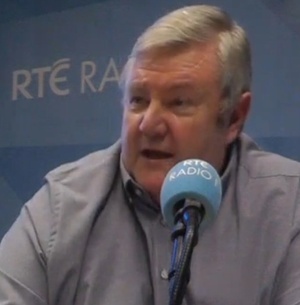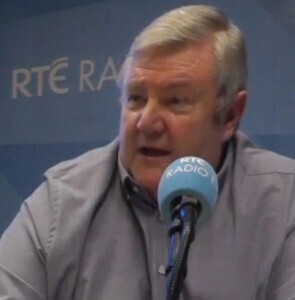
From top: Dónall Ó Cualáin (left), who became Acting Commissioner of An Garda Siochana at midnight last night, following the resignation of Garda Commissioner Noirin O’Sullivan (right) pictured in 2014; Derek Mooney
It hasn’t been a good week for former Garda Commissioners.
It started with Fine Gael airbrushing a former Garda Commissioner, Blueshirt founder and first leader of Fine Gael, Gen Eoin O’Duffy out of its 84th anniversary video (BTW, since when was 84 a landmark occasion?) and it ended with the most recent Garda Commissioner, Nóirín O’Sullivan, retiring after months, if not years, of calls for her to go.
While the Commissioner has doubtless made the right decision and her going, as Fianna Fáil’s Jim O’Callaghan put it, “…paves the way for a new chapter for An Garda Síochána”, it does not solve the problem of; “…confidence within the force itself and in the wider public arena” (again to quote Jim O’Callaghan).
The hapless Commissioner may be gone, but the problem remains.
The departure of former Commissioner O’Sullivan does, hopefully, allow us to move the focus from an individual responsibility to a broader one.
As many others have argued and explained, far better than I can here, there is a major issue with both the management structures and the management culture at Phoenix Park level.
There has been an emerging “them” and “us” culture that has reflected itself in a slowness to modernise and a resentment of civilian oversight and control.
Tackling these issues will be a huge task for the Garda Authority and its first test will come in its selection of the next Garda Commissioner, a task which is should and must undertake in as completely independent a manner as it possible.
That is not to say that politicians, as a body, should be excluded from the process. If anything, we should be looking to do the exact opposite. Policing, as we have learned the hard way over the past few years, is one of the most political of the State’s activities.
It is therefore important that politicians from all sides (not just the government side as it has traditionally been) should have a recognised and defined role in policing oversight, especially if we are to achieve the broadest possible public support and buy-in to policing.
At the MacGill summer school a few months back, the former Vice Chairman of the Northern Ireland Policing Board, Denis Bradley offered a some very valuable insights (start at 55m mark) into how we start to tackle the problems in An Garda Síochána. what was needed down here.
He spoke in practical terms of how appointing politicians, from across the political spectrum, to the Policing Board in the North (10 out of the 19 members are elected public representatives) worked and advocated that the Policing Authority here do likewise.
He made the point, forcefully, that the transformation of policing in the North was a cornerstone of the peace process and that having politicians on the board meant that its achievement was in the hands of the elected representatives of the people.
He also makes the point that the genius of the Patten Report on policing in Northern Ireland was that it simplified who was responsible for what and it made it clear that the NI Policing Board was responsible for bringing about change, but that this clarity does not exist in the Republic.
That reform, unfortunately, is not likely to happen in the short-term. Our current Justice Minister has not demonstrated that level of vision in any of his previous ministries and is unlikely to undergo a Pauline conversion in this one.
So, pending such a major reform, it is vital for the Garda Authority to exert its control. The Gardaí needs to grasp that ultimate civilian control is vital.
This brings me to the issue of defining what we want from our next Commissioner. Over the past 24 hours there has been an avalanche of calls for the appointment of an outsider.
The point is continually made that Commissioner O’Sullivan was appointed after an open contest – and that is unquestionably and undoubtedly true.
But what is also true is that the world, its mother and its dog knew that she was the most likely choice. Not many serious contenders outside the jurisdiction were ready to invest a great deal of time or energy in applying for a job where they saw that there was a clear, suitably qualified front runner in situ.
So, will outside candidates think it is worth applying this time?
Possibly. They will be reassured that the process is being overseen by a body (the Garda Authority) whose structure and operation they will understand from their own jurisdictions, but that does not mean we should be expecting a rush of applications.
The pay is not especially high however, the scale of the challenge is. There are only a few similar jurisdictions from which we can reasonably recruit candidates of a suitable calibre and experience: such as the UK, Canada, Australia and New Zealand – English speaking, common law systems.
But, if we are serious about bringing in an outsider we should we not be looking to recruit not just an individual as Commissioner, but rather a new Commissioner with their own core management team: a full Commissioner’s office, not a single person?
But recruiting a new Commissioner from outside does raise another issue, though it is not one that is insurmountable.
The Garda Commissioner is not just responsible for policing in this state they are also, almost uniquely, also responsible for state security. Are we yet ready to have someone from outside this jurisdiction responsible for national and state security?
I suppose it depends on the person involved, but the more sensible position is that we need to now start preparing to take the national security role from An Garda and set up a stand-alone and dedicated national security and intelligence agency, staffed with the many existing experts within both the Defence Forces and Garda. This will leave the Gardaí to focus solely on policing, which is its core activity.
There are very many real and practical reforms yet to be made, so let me make a prediction – the next Commissioner will be probably end up being more of an interim appointment, whose role will be to hold the organisation together while this government – and the next one – grapples with making the changes needed to bring Garda management systems and structures into the first half of the 21st century.
Derek Mooney is a communications and public affairs consultant. He previously served as a Ministerial Adviser to the Fianna Fáil-led government 2004 – 2010. Follow Derek on Twitter: @dsmooney
Rollingnews