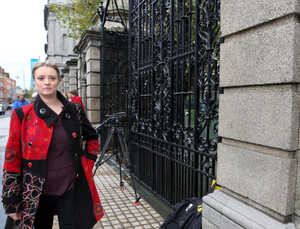
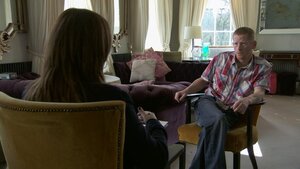
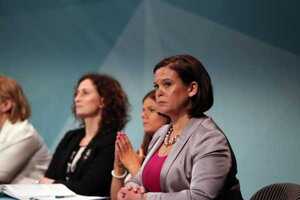
From top: Mairia Cahill, Paudie McGahon on BBC Spotlight and Mary Lou McDonald
Sinn Féin deputy leader Mary Lou McDonald went on Today with Sean O’Rourke on RTÉ Radio One this morning to defend Sinn Fein’s record on reporting of sex abuse within its organisation and answer allegations made by Paudie McGahon that he was sexually abused by a member of the IRA and then subjected to an internal IRA kangaroo court.
Sean O’Rourke: “Now I gather you heard what Mairia Cahill had to say at the top of the programme. Are you, as she suggested you should be, raising merry hell in Sinn Féin about all of this?”
Mary Lou McDonald: “Well, I’m as disturbed and upset for Paudie, and indeed Maria, as anybody else, listening to their stories, and I’m as anxious as the next person that they achieve justice and I’m, em listened to what Maria had to say and I also got a chance to listen to Paudie, he was on your rival radio station, and, to my way of thinking Paudie has said something very important and he has said it far more eloquently than I can, and I want to reiterate it, and that is that nobody should be afraid to come forward and I’m very anxious that that message would go out that any one who has experienced any kind of sexual violation, the trauma of a rape, however long ago, at the hands of whomsoever but in this instance we’re talking about those that would have called themselves republicans, perhaps IRA volunteers or anybody else, Paudie has said it and he has it in one, no body should be fearful, nobody should be afraid, the only way that we deal with the insidious and awful crime of child sex abuse and sexual violence more generally is when people feel comfortable and empowered to speak out.”
O’Rourke: “But I suppose people are…”
McDonald: “And I want to commend Paudie and indeed Mairia Cahill, both of them, for doing that.”
O’Rourke: ““Now you are saying this and people may or may not take it at face value. i suppose the problem is, when they look at the Republican movement, they hear not just you but they read, albeit something that’s been withdrawn and apologised for, people like [Sinn Fein councillor] Francie Molloy saying another load of rubbish on Spotlight, joint Indo-Blueshirt Production or whatever and they see as well that while you may accept he is telling the truth about being abused, immediately the details are seized on of his story and they are denied about for instance how the IRA dealt with him in the aftermath and they look as well at situations like what happened int he aftermath of the murder of Robert McCartney but all these calls of that type ‘oh come forward tell all you know’ and nobody comes forward.”
McDonald: “Well I hope that people will hear my words and more importantly Paudie’s words and take them beyond face value, I say that, and I mean it, Sinn Fein representatives have said it and it’s been re-echoed and we mean that, and we mean that most sincerely, I would have to say to you that in circumstances where abuse occurred, in any scenario it’s never easy for people to come forward and I understand the difficulties very very, very very clearly m self in regard to that but I just want to repeat that in order for justice to be served and there is an ongoing garda investigation in respect of Paudie’s case, albeit very belatedly, I know all of us wish that investigation to be speedy and to be successful and anybody else out there who has had a similar experience needs to come forward, and then it is a job for an Garda Siochana to investigate matters.
To, just to take the point of you saying that people are picking over details, here’s the position and let me specify it to Paudie since his story, he has come so recently and told his story, the position is this, Paudie tells the story of his abuse he alleges a particular individual who allegedly was a member of the IRA who allegedly was in his home in a spirit of good trust and good faith, just to say to your listeners I’m using those terms very carefully because I’m conscious there is an investigation under way.
Paudie has named a particular individual in respect of what he says was an IRA investigation the person that he has named has refuted through their legal representatives that it was them at all and has said that they’re happy to co-operate with the Garda Siochana to clarify that matter and then you come to somebody like me and you ask me questions about it and the only thing that I can say and I think in all fairness the only thing you could say if you were called on to make any kind of definitive statement about this is that the Gardai are best placed to actually adjudicate what precisely happened and I want to emphasise…”
O’Rourke: “Well I’m not sure that they are, actually. If they don’t get the full co-operation they’ll find out nothing.”
McDonald: “Oh, well they need to get full cooperation.“
O’Rourke: “Well do you think the Gardai are in a better position to find out who ran that kangaroo court than for instance you or Gerry Adams?”
McDonald: “I think absolutely, I think the Gardai…”
O’Rourke: “Well who’s going to tell them?”
McDonald: “Sean, I think the Gardai are best equipped to investigate any and all of these matters. That’s not my job, I’m not equipped to do it.”
O’Rourke: “We don’t have to go into the whole history of all this, of nationalism, Sinn Fein and the Republican movement, who held what position or who was and who wasn’t a member of the IRA. The fact is, there was an internal IRA investigation into the allegations made by Paudie McGahon, an individual he named has said, nothing to do with me, I was never there and I never met this man. Surely there are people you know and who Gerry Adams knows… if it wasn’t the individual named by Paudie McGahon, who was it?”
McDonald: “Well listen, let me say this Sean there is a Garda investigation underway in respect of Paudie’s experiences, his abuse and all that flowed from it and everybody needs to co-operate fully with that.”
O’Rourke: “And part of that co-operation might be finding out, Gerry Adams, the local TD in Co Louth, finding out who did run the kangaroo court and giving those names to the Gardai?”
McDonald: “Now Gerry has made it very, very clear that he will bring forward as is absolutely correct any information, any names, anything that he comes across he’s furthermore called on people to come forward…”
O’Rourke: “Now hang on, isn’t that being far too passive, is he not in a position to go and find out?”
McDonald: “I don’t accept, I don’t accept that that’s passive, in fact I would say to you Sean this is the only method by which you actually get to the truth and get information, that’s to call on people to come forward, to emphasise the absolute necessity of it, and then to create the atmosphere in which people actually come forward.”
O’Rourke: “But the track record, the track record is such that nobody believes that will happen.”
McDonald: “Well, I don’t accept that that’s the case, em, and I believe that it will happen, I believe that people will come forward, I believe that people must come forward and I believe…”
O’Rourke: “So do you believe that the people who…”
McDonald: “And i believe Sean that if for instance and I hope that this will happen if for instance the Taoiseach were to respond positively to what has been proposed by Martin McGuinness by way of a joint effort and initiative between the Dail and the government here in Dublin and the selective in the north I think that many many people will come forward and I think that it could create exactly the atmosphere in which people who have been reluctant or afraid to speak would in fact come forward.”
O’Rourke: “But you see, the people who come forward, if they are to come forward, won’t be people who run internal IRA investigations they will be people perhaps who pick up the courage to do as Mairia Cahill and Paudie McGahon have done and say this happened to me too this was how it was dealt with and then what we can expect is that senior Sinn Fein people will say, well we accept that that person was abused, of course they’re telling the truth and if there was an IRA inquiry they should never have dealt with this, this should have been dealt with by the authorities and by the way further the person who is said to have chaired or presided over that internal inquiry well they say well you know nothing to do with me I wan’t there you got the wrong guy here and I’m prepared to go and tell the guards I had nothing to do with it and again another brick wall…”
McDonald: “There’s no brick wall here but I think I think the difficulty is Sean you’re asking me to do something that in fact I can’t do…no hear me out, heer me out and I want to emphasise that this isn’t me gainsaying Paudie, Paudie is Paudie, he tells his story and I respect the integrity of that but you are asking me in circumstances where not Sinn Fein or me but the person who is named asserts it is not them through their solicitor, you are asking me, a person who was not there who isn’t possession of all of the information, who isn’t in possession of any witnesses or any individuals to make a judgment call on things.”
O’Rourke: “No, I’m not suggesting that for a minute…”
McDonald: “Sorry, that is, that is what you’ve asked me to do and because, Sean, I’m not prepared to do that because it’s not my function or my appropriate role to do it it’s appropriate for the Gardai to do it, because I say that, you accuse me of brick walling, can I just say I’m not interested in brick walls on this I’m not interested in the standing or the sensitivities of Sinn Fein or anybody else, I’m interested that a young man Paudie says he was raped and brutalised at the age of 17 and the person who did that needs to face the full rigours of the law, the full consequences and the full penalties for his actions. That’s my only concern.”
O’Rourke: “Well now…”
McDonald: “And my further concern if there are other people who have had that experience listen to what Paudie is saying listen to why I am saying and take that in good faith, don’t be afraid, step forward step forward now don’t delay.”
O’Rourke: “Yeah that’s grand and that’s very welcome and I don’t for a minute question your sincerity in saying that, by the way, and also I’m not suggesting for a minute either is that you stand in judgment on anyone or to make a judgment what I’m suggesting to you is that if it is the Sinn Féin position that the individuals named by Paudie or an individual as having presided over the internal disciplinary process is not the one who did that you and others at senior level in the republican movement are in a position to find out who did so preside and to persuade and direct those people to they themselves come forward and assist the Gardai in bringing about a conclusion with justice for people like Paudie.”
McDonald: “And let me reiterate over the airwaves, if I might, anybody with any information on this, anybody who is approached by an Gardai Siochana the appropriate investigating authority should co-operate fully…”
O’Rourke: “But what I’m saying is that people like Gerry Adams are in a position to find out information that others in the Republican movement have no intention of giving to the Gardai…”
McDonald: “Well look, and what I’m saying by way of response that its for the Gardai to investigate all of those matters and I’ve also said that I fully expect any person who has information on this, Gerry Adams or any other to bring that forward and to it without delay and then I expect and I have confidence in the capacity of the Gardai in this instance to investigate to examine evidence to speak to witnesses, to cross examine them and go back again and again to build a case,
I have no doubt about their capacity to do this and I am urging people in the strongest possible terms, to co-operate and I believe that they will, and more so saying to people who may have been victimised and traumatised in this way and who are listening to all this playing out again on the airwaves to please come forward in the manner that is best for them, and to bear in mind also that there are support networks and services for people for whom a story like this isn’t just a story, it’s a very personal thing because they have been through something very similar themselves.”
O’Rourke: “Mary Lou McDonald, Deputy Leader of SinnF thank you very much for joining us.”
Listen here
Meanwhile…
A message is being advanced that what happened, and how it was handled, in both rape cases has to be viewed in context: either the Troubles, or the swirling aftermath. Just as we’re told that all the killing and maiming through those lost decades has to be seen against the background of an unjust society.
Listening to the way Sinn Féin people speak about victims sexually abused by their members, and abused in a different way by those operating kangaroo courts, I hear echoes of an earlier form of rigidly rehearsed language. I hear the unconvincing apologies offered for the ‘collateral damage’ caused when civilians were killed in explosions. That was supposedly all about context, too.
Has nothing been learned? Nothing at all about humility or fellow feeling? I understand that war strips people of some or all of their humanity, and that a number of those in the upper echelons of the party have come through a war. I accept it is a brutalising process. These men and women look whole, but they aren’t. They left part of themselves behind.
But there is a generation behind the Troubles leaders in Sinn Féin. Where is their compassion for rape victims? Why are they unable to step outside the formulaic phraseology about victims, and communicate directly? Why do all of them toe the party line so obediently on every issue, even this one?
No amount of Sinn Féin spin can undermine these victims’ stories (Martina Devlin, Independent.ie)




