


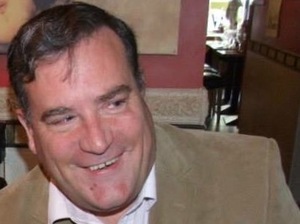
From top: Dáil; Dan Boyle
The current situation in Leinster House should be seen as the best opportunity since the inception of the State to bring about a real democratic revolution.
Dan Boyle writes:
The Green Party I joined, with its single town councillor in Killarney, sought to push all the right counter culture buttons. To be a political party trying to bring about a different political culture, everything was done differently often just for its own sake.
The cult of personality was frowned upon. There would be no party leader. The sole leadership position was that of co-ordinator, really an administrator. Even this had to be rotated every six months lest anyone become drunk with power.
Group decisions were made by consensus- agreed unanimity. This led to many long, fruitless discussions on the most banal of subjects. It also led to the development of individual ‘conscience’ of the party events, where one person on a whim could block any decision.
The Greens eventually decided, somehow, that a party leader was necessary, that the general public had the right to expect a consistent representative of the party, emblematic of its values, with whom to interact.
Consensus decision making eventually made way for weighted majority voting. It still requires two thirds of the membership to approve major decisions for the party.
The experiments in democratic decision making have had their uses. Frustrating, and often ridiculous, these experiments may have been, but traditional methods deserve to be challenged. They certainly haven’t delivered better outcomes.
The idea that those who acquire 50% support in a parliament get the right to make 100% of decisions, is itself and always has been perverse.
This is why the current situation in Leinster House should be seen as an opportunity. The best opportunity since the inception of the State to bring about a real democratic revolution.
Minority government could see so many changes being brought about quickly. Accountability becomes a prerequisite. The culturally corrupt elements of government, like jobbery, become impossible to implement.
Backbench TDs would have the ability to change, even initiate, legislation. Something other than fixing the road.
A minority government persistently below the artificial level of 50% support would constantly have to think about what it does and how it justifies what it is doing.
Why couldn’t this be calibrated even further?
The more important the decision the more weighted the majority to secure it should be. This would help give adequate consideration to each decision, as well as help achieve a better sense of ownership of what is eventually decided.
Democracy should be more diffuse. It has to be more diverse. A word of warning though. A broader democracy removes the possibility of being able to blame ‘someone’ else.
The Yes Minister series had a running joke that to bring about changes was ‘brave’, meaning politically naive and stupid. The current situation makes change possible. It also requires some level of courage to move our politics beyond the party political.
Ego and self aggrandisement remain the prime motivators in our politics. We need to get to the we did this instead of I did this type of politics.
At the election count when I was elected to the Dáil I quoted The Smiths “I was looking for a job and then I found a job. And Heaven knows I’m miserable now”. Today the appropriate Morrissey lyric would be “How soon is now?”.
Dan Boyle is former Green Party TD and campaign manager for the Greens in Wales. Follow Dan on Twitter: @sendboyle