
Tag Archives: Dr Rory Hearne

90438185

rory-624x936

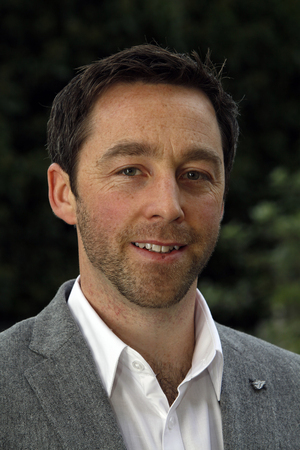
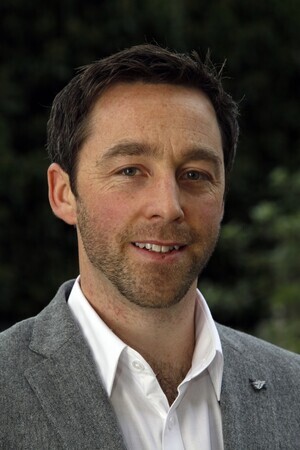
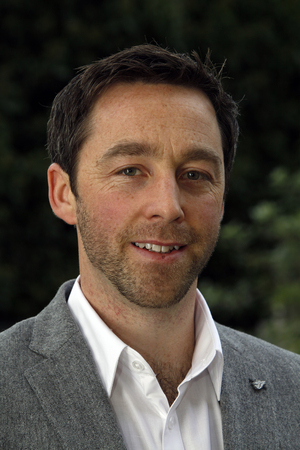
From top: Apollo House last Wednesday; Dr Rory Hearne

Before Apollo, there was a feeling that we were collectively stuck in a sad and shameful silence – a sense of powerlessness that there was little we could do.

Dr Rory Hearne writes:

Thank you, Apollo and Home Sweet Home.

Before Apollo the only sound was silence. The homeless suffered in silence.

We saw their suffering and were silent. The dignity of our fellow human beings was stripped from them on our streets and was stripped from them again in hostels more dangerous than the cold and rainy streets.

There was silence about the thousands of children and their families being forced to live in unsuitable emergency accommodation with hugely traumatic impacts.

There was silence in relation to the thousands of families in mortgage arrears facing the threat of repossession and eviction, the thousands whose homes have been bought by vultures and Real Estate Investment Trusts.

There was only silence as thousands of families, renting in the private rented sector, struggle to afford the rents and face eviction, and as 100,000 households languish on social housing waiting lists.

Before Apollo, there was silence as the Government and NAMA went about selling our land and houses at knock-down prices to vulture property speculators.

But, of course, in saying there was just silence – I am just deliberatiely being provocative. There wasn’t complete silence about the housing crisis.

There was a lot of noise being made, particularly by Government. But it was loud and empty political rhetoric. Empty phrases. Hollow platitudes and feigned concern. Policies without sincerity. Plans without substance. Media interviews without analysis.

There was fictitious numbers of imaginary social houses that would only ever exist on paper; NAMA strategies based on feeding the speculative vultures and starving our people of homes.

It was, in fact, a post-colonial re-colonisation by vultures – facilitated once more by our own quisling class – the so-called political ‘leaders’, the so called ‘experts’. Those who know better than us. Those who make the ‘right’ decisions.

So, of course, there was a lot of ‘official’ noise about the housing crisis but much of it was no better than silence. In fact, it was worse than silence because it gave the impression officialdom actually cared and they were doing something that would solve it.

But, most importantly and most shamefully, there was too much silence from the Irish people. Did we care? Did anyone make any real noise? Yes, in fact there was a growing move for change. The housing crisis and homelessness was raised by ordinary people as a major election issue. It forced politicians to give it some focus.

And, of course, it is not true that before Apollo House the only sound from the Irish people was silence. In the communities of North Dublin, of St Michael’s Estate – the seeds of Apollo were being sown in the pioneering actions and vision of a new generation of housing activists involved in the Irish Housing Network, Housing Action Now, the Dublin Tenants Association, Erica Fleming, the Ringsend Glass Bottle Site Housing Action Campaign, the North Dublin Bay Housing Action Community, Uplift, and many more.

A new trade union-led campaign had just emerged to focus on rent certainty and security. The NGOs such as Focus, Simon and the Peter McVerry Trust were actively responding – providing services and constantly highlighting the growing tsunami of homelessness.

But, before Apollo, there was a feeling that we were collectively stuck in a sad and shameful silence – a sense of powerlessness that there was little we could do.

But that has all changed and changed utterly.

Apollo and Home Sweet Home have brought about an unprecedented level of public and political focus and attention on the housing crisis, in particular:

· The extent of the homelessness crisis

· The illogicality and immorality of empty State-owned NAMA buildings while people are homeless on our streets

· The unacceptable standards that exist in some emergency accommodation

· The necessity of homes rather than emergency hostels

· The inadequacy of the Government’s plans to address the housing crisis outlined in ‘Rebuilding Ireland’.

Apollo and Home Sweet Home have stirred the spirits and hearts of the Irish people. It touched and activated the deep sense of social justice and solidarity that exists in people. Across social classes and across the country, it captivated and captured the majority of the country in a wave of optimistic belief that we can end this national shame of ever-worsening levels of homelessness.

In Apollo, homeless people, artists, ordinary citizens, trade unionists and activists together created a transformative space that inspired, motivated, and connected with the country in a myriad of magical ways.

Apollo evoked in all of us the urgent and giddy dream of an equal Republic.

Apollo was always going to be temporary – given the priority the courts and Government gives to private property rights – it could only but be so.

But, that short moment of courage and vision has opened up a societal conversation and debate and the beginnings of a societal wide social movement that would not have existed. Indeed was unimaginable prior to Apollo House.

And after Apollo, the Minister for Housing Simon Coveney can no longer use his misleading figures to silence us. Home Sweet Home have highlighted the policies required to really address the homelessness and wider housing crisis. Principally, these include::

· A new major investment programme in social and affordable housing that actually builds tens of thousands of new social and affordable housing units each year

· The changing of NAMA’s commercial mandate to a social one and converting it into an affordable homes agency that would use its land and assets to build tens of thousands of social and affordable housing rather than selling off to vultures

· Real protection for tenants renting and families in mortgage arrears from eviction

After Apollo, there is no longer silence or powerlessness. There can no longer be silence and passivity. Property rights and profit rights can no longer be allowed to obstruct the human right to a home.

The question is where to now? Across the country people want to take action to address the homelessness and housing crisis. They know the crisis is only going to worsen. Those most affected require on-going support. Apollo inspired and provided a focus for solidarity, practical support, and a symbol of hope and defiance.

At its heart – Apollo was (and Home Sweet Home remains) a community and a coalition of diverse groups and individuals all willing to work together to achieve the one common aim – the right to a home for all. By keeping that common heart beating, we will find a way forward.

Apollo is not over. It has just begun.

Dr Rory Hearne is a policy analyst, academc, social justice campaigner. He writes here in a personal capacity. Follow Rory on Twitter: @roryhearne

Rollingnews

90436647 apollo

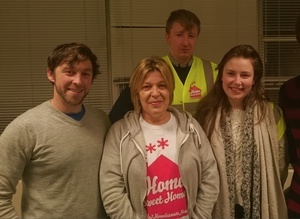
Rory Hearne (left) with Apollo volunteers Anne Farrelly, Emily Duffy, Tommy Gavin (back)

Keep her lit.

Dr Rory Hearne writes:

The Apollo House occupation has achieved significant commitments from the Minister for Housing, Simon Coveney, to improve homelessness services and provide decent accommodation for Apollo residents

These achievements show that the Apollo House occupation has been an incredible victory for citizen’s power.

The Home Sweet Home campaign has lit a new flame of hope in Ireland that everyone can and should have the right to an affordable and secure home.

Apollo House marks the point at which ordinary citizens have said ‘no more’ and ‘enough’ of this shameful housing crisis.

The citizens have declared that the homelessness crisis is not acceptable and it is a national emergency.

Home Sweet Home, through the Apollo House action, have mobilised the support of the majority of people of Ireland, to state clearly to the government and Dublin City Council – that they are not doing enough and that citizens are going to take direct action where the state fails – and that citizens will monitor and pressure the Government until everyone has the dignity of a home.

Specifically, the Home Sweet Home campaign has secured accommodation for its homeless residents and that “the short, medium and long term needs, including care plans for all current Apollo House residents, will be met according to their needs”.

They also secured the commitment by Government of the provision of two new additional facilities addressing the homelessness emergency (at an investment of €4million).

Importantly, they have also raised the bar “on the agreed minimum standards” for emergency accommodation as these facilities, the campaign states, “will include residents having their “own key” to a place they can call home”.

This minimum standard will also be achieved “with the direct participation of residents” and include units suitable for single persons and couples”.

Dublin City Council and the Peter McVerry Trust have told Home Sweet Home that the extra beds in new hostels are now six-month beds with 24-hour access as a result of the campaign.

The Minister for Housing has also guaranteed that there will be no families in commercial accommodation (hotels or B&Bs) by 1st July 2017.

They also achieved the rollout of community-based homeless services which can address the major challenges faced by families facing homelessness and lack of services in local communities.

As the campaign explains,

“Home Sweet Home has achieved an enormous amount in a very short period of time. This is down to the profound outpouring of public support for the campaign with more than 2,500 people volunteering their time and services along with donations of food, clothing, beds and more than €160,000 in funds. It has facilitated the assessment of 72 individuals by homeless services with 42 people moving into six-month beds…and helped more than 200 people to access a secure bed through the homeless Freephone number.”

Speaking at the Home Sweet Home press conference yesterday – where these achievements were outlined – spokesperson Aisling Hedderman explained how Apollo House has given homeless people a sense of dignity and raised the bar of what is acceptable in terms of emergency accommodation.

She said:

“The Home Sweet Home intervention allowed the homeless to have their voices heard and it allowed the public backing of them…it has given them a new chance at life…The homeless in Apollo have smiles on their faces. They are different people – accessing education and looking to get jobs. They have been given a chance. They thought that society had forgotten about them but the campaign showed that we haven’t forgotten about them.”

Aisling explained that she has been a housing activist with the North Dublin Bay Housing group where they had “screamed and shouted and occupied and had sit-ins to try have the voices of the most vulnerable heard – because they are not heard in public policy”.

But Apollo House has achieved a “victory” as “their voices are being heard”.

At the press conference Home Sweet Home spokesperson Brendan Ogle explained that Apollo House “is just the beginning” as Home Sweet Home “will be a permanent intervention in the nation’s housing policy and discussion”.

To do this, they are opening a permanent Dublin support, advice and activist centre assisting people with their housing information needs. The campaign is also taking a legal challenge arguing that the 1937 Constitution contains within it a right to housing.

They are going to have regular monthly meetings with Dublin City Council and other local authorities to review and assess housing and homelessness policies, particularly the issues of “hidden homelessness”.

The other really vital achievement of Home Sweet Home is the highlighting of NAMA’s role in worsening the crisis and its potential role in addressing it.

The campaign still awaits a response to their letter from the Minister for Finance where they called on the Minister to prioritise NAMA’s social mandate over its mandate to “maximise financial return” and to use NAMA’s land and buildings to address the crisis.

NAMA’s end-of-year review, released last week, again showed the potential role that NAMA could be playing in providing affordable housing (it showed NAMA has €2billion in cash reserves and will be building the 20,000 houses on a “commercial” basis, i.e. pushing up prices to sell to vultures) but because it is focused on maximising a commercial return it is selling its land and property assets to vulture funds and property investors.

After Apollo ends, it is vital to keep the focus on NAMA and the fact that it still can play a major role in addressing the crisis by using its land and cash reserves to build upwards of 20,000 social and affordable housing – not selling it to the vultures and property investors.

This year NAMA expects to build 3,500 houses – these should all be sold for social and affordable housing to local authorities and housing associations. This needs to be monitored closely.

The continuation and expansion of Home Sweet Home is essential because the harsh reality is that the housing crisis is going to worsen.

The homelessness crisis is just the tip of the iceberg of a wider housing crisis where hundreds of thousands of families and individuals are in circumstances of housing distress – unable to afford their mortgage or rent and facing potential eviction and repossession.

Vulture funds are circling – as the RTE documentary The Great Irish Sell Off showed last night, they have bought up 90,000 properties and are holding almost €10.3billion worth of assets in Ireland.

They will evict to get in higher paying tenants or repossess and sell houses in mortgage arrears.

There are 90,000 households on social housing waiting lists and 35,000 families in two years or more of arrears on their mortgage.

And, alongside this, we have the Government consistently refusing to act in ways that could address the crisis – by providing proper security of tenure for private tenants, by funding the construction of social and affordable housing on a massive scale and by stopping NAMA selling its land and property to vulture funds and using it instead to provide social and affordable housing.

There is, as Fr Peter McVerry has said before, “a tsunami of homelessness” on its way.

And it needs to be remembered. We have been here before with this, and other, governments making big promises to solve the homelessness and housing crisis.

But the Government and Irish state should not see the ending of the Apollo House occupation as a signal to ‘return to business as usual’, ignoring the humanitarian crisis and focusing on rising property prises and subsidising private investment.

The Apollo occupation and Home Sweet Home mark a very significant transformation in the politics of housing in Ireland. Prior to this it was housing charities, NGOs and a small number of housing activist groups, academics and politicians that were raising the severity of the housing crisis.

Home Sweet Home has brought it to another political level – the majority of the Irish people have been mobilised in support behind a new coalition of activists, trade unions and artists who are espousing the need to deliver a right to a home for all.

As Brendan Ogle explained, there has been a realisation amongst people that “all of us have to step out of our silos and work in a unified way”.

And the groups and individuals involved are no longer just pointing to someone else and saying ‘that is your job to solve the crisis’ – they are now stepping up and seeing that it is all our job to take action.

Ogle highlighted that “we as a nation had crossed the threshold of decency and we had gone too far” and the Home Sweet Home campaign “has shown that it has a power to force change in the area of housing and homelessness”.

It is this power – the power of direct citizen-led action of practical humanitarian solidarity with the homeless (not just protesting but actually stepping in and providing a solution), and the unprecedented public mobilisation of support behind it, that is at the heart of why the Apollo House action and the Home Sweet Home campaign has been so successful – and why it is so vital to be continued in various forms in the coming months and years.

It was only such a high-profile action undertaken by this broad societal coalition that managed to raise sufficient awareness and focus public and political attention on this unprecedented housing crisis.

And that broad coalition has the potential to end homelessness and the broader housing crisis – by extending to every corner and community of Ireland – by mobilising every citizen affected and every citizen who cares, and bringing it together into a mass movement of community and solidarity demanding the right to a home for all.

Home Sweet Home has started the movement.

They have lit the flame.

It’s up to all of us to take up that flame for a right to a decent and affordable home for all and carry it forward – in our homes, families, in our communities, our workplaces, our towns and cities and make it real. It is possible.

We are the only limitation to its achievement. We can do it. Just imagine it – if Ireland was known around the world – as the country that actually delivered a human right to a home for all its people.

Wouldn’t it be incredible?

The country that emerged from famine and evictions – that resisted through peasants’ land leagues and revolution – only to collapse, over a hundred years later, back into evictions, homelessness and a new form of colonialism, the takeover by speculative vulture funds.

Imagine this little country finally managing to realise its people’s long-held historical dream for justice and equality.

Apollo has begun that journey of moving from the dream of a right to a home for all – towards achieving the reality.

As Aisling Hedderman so eloquently put it: “We can do this – we can continue this. It’s only the start. It’s not the end. Apollo house is only a building but Home Sweet Home is a community. It’s a community that we want to see in all our communities – we want our voices heard and we will continue to do so.”

Home Sweet Home are inviting the public to join them at 12 noon tomorrow at Apollo House for a ‘Victory March’ “to celebrate our first step towards ending homelessness. Everyone that has been involved and that supported us in this movement, join us on the streets to help celebrate a victory we all should be proud of. Solidarity marches will take place in Kildare and Belfast at noon and Cork at 10am.

Dr Rory Hearne is a policy analyst, academc, social justice campaigner. He writes here in a personal capacity. Follow Rory on Twitter: @roryhearne

Rollingnews
90436379

rory

From top: Simon Coveney TD and Minister of State for Housing and Urban Renewal Damien English TD 

The Rebuilding Ireland Plan has allocated insufficient funding, is manipulating the use of the term ‘social housing’ and misleading people with its promises

Dr Rory Hearne writes:

The government has been responding to the Apollo House action by stating that dealing with the housing crisis is its “number one priority” and that their housing plan, Rebuilding Ireland, will address the crisis through the investment of €5bn in “a truly ambitious social housing programme of 47,000 units to 2021”.

Minister Coveney claims that “There’s a real acceleration happening here in terms of delivery” and has stated that there will be more than “21,000 social housing solutions provided in 2017”. With Budget 2017 providing “for a very significant increase in housing funding (of €1.3 billion).

But the Minister’s figures and the Rebuilding Ireland Housing Action plan just don’t add up.

graph1

The graph above is the forecast provision of social housing in the Rebuilding Ireland Plan from 2016-2021. But in this you see that the new construction of social housing (represented by dark blue shade at the bottom) is only a very small proportion of the overall 100,000 ‘social housing’ units to be provided over the next 5 years.

The majority of ‘social housing’ is in fact not new build social housing at all but are various housing support schemes provided through the private rented sector such as the Housing Assistance Payment and the Rental Accommodation Scheme.

These social housing ‘solutions’ (as the Minister’s refers to, note change of language from ‘new build housing units’ to ‘solutions’) are temporary, do not provide tenants with security of tenure and most importantly do not increase the much needed supply of real permanent social housing homes.

The schemes such as RAS and HAP have not met their delivery targets due to lack of availability of private rental housing (thus the governments social housing strategy also exacerbates the rental crisis – as it is taking supply from a sector that requires greater supply – a third of all tenancies are state funded social housing schemes.These should not be classified as social housing as it is not providing a secure form of tenancy).

Of course the HAP schemes suit government because they can reduce the housing waiting lists and make it appear as if the housing crisis is being dealt with – also while subsidising private landlords and avoiding allocating the necessary increase in funding to government/local authority state provision of affordable housing.

The Rebuilding Ireland Quarterly Review published in November gave the first official figures for what is represented in the graph above and breaks down the 47,000 ‘new social housing’ units figure.

This outlines that of the 47,000 social housing units by 2021:·

It is expected that 26,000 units will be built (construction, voids, Part V) exclusively for social housing

11,000 will be acquired (by LA, AHB & HA) from the market

And 10,000 units will be leased by LAs and AHBs – this will be a mix of units from the existing housing stock and newly-built units

Now the key figure here is the new build one because this provides additional housing supply. This is particularly important in Dublin, the commuter counties and other large cities (Galway, Cork) which need new units built and do not have the same vacancy level as other parts of the country. So the actual figure for ‘new build’ social housing units is 26,000 units (just over half the headline 47,000 figure).

Now as is mentioned this also includes bringing local authority voids back into use and new housing built under Part V (the 10% social housing provided in large private housing developments). But Part V delivered just 65 units in 2015 (but 286 were in progress).

Given that Part V delivered 3,246 units in 2007 (4.5% of total 71,000 private units delivered), and that was when Part V was 20% of all developments – which has since been reduced to 10% (but developers could pay cash to the local authority in lieu of the units and this is no longer available), then using the same percentage, then on the basis of 25,000 private units per annum, Part V is likely to deliver no more than 1,250 units per annum in the coming years.

That brings the 26,000 ‘new builds’ down to 24,750.

It was also estimated that 800 local authority voids would be brought back into use in 2017 so taking that away it leaves us with 23,950 new real social housing units planned to be built between now and 2021: which is 3,991 units per annum.

At that rate of delivery it would take 22 years to house all those of the current social housing waiting lists (90,000 households) into real permanent social housing homes.

How can that, in any way, be deemed an acceptable time frame of delivery to address the crisis? Particularly given that housing need is increasing significantly.

So what about the increase in the allocation in social housing investment in Budget 2017? The total exchequer Housing allocation in 2017 will be €1.2 billion –up from €814million in 2016.

However this is the same trick – the main increase is on temporary social housing through the private rental sector. Current (mainly spent on private rental sector schemes and leasing from private sector) increases from €382m to €566m while capital expenditure (includes new building and purchase of permanent social housing) only increased by an additional €150 million from €432m in 2016 to €655m in 2017.

But the ‘housing’ capital budget appears also includes €50m for an ‘infrastructure’ fund for local authorities to enable the development of private sites for housing, the payment for previous social housing already built by housing associations, the mortgage to rent scheme, urban regeneration, €70m for retrofitting existing social housing stock, €45 million for grants for private housing and funding for schemes such as the Pyrite Remediation Scheme. So while we don’t have an exact figure we can see that the actual budget allocation for new building (and purchase) of social housing is certainly under €400 million.

Therefore, the social housing units outlined in the Rebuilding Ireland plan are in fact largely various forms of private sector and privatised housing delivery. They are dependent on various forms of private financing, ‘off-balance sheet’ mechanisms, Public Private Partnerships, acquisition from the private market and delivery from Part V mechanisms.

The plan itself acknowledges that securing the social housing output is “dependent on a number of critical factors” including, most importantly,

“A functioning private residential construction sector, with levels of supply to meet demand (delivering 10% social housing units under Part V and providing a supply for targeted acquisitions)”.

Social housing provision is being privatised onto the private rented sector– which has meant a failure to achieve social housing targets and reduced private rental stock available to the wider population. This is not a ‘social housing’ strategy!

And this is where the plan ultimately fails. Its output of social housing is dependent on a very significant increase in supply in the private housing market which has already proven in its inability to do so.

What is required is an increase of the social housing capital allocation to €2bn per annum to local authorities and housing associations to ensure the building of at least 12,000 new permanent social housing units. This is alongside the changing of NAMA’s mandate to prioritise its social mandate over the maximising financial return and to ensure the 20,000 units it builds are affordable and public housing units – and to use its 3bn cash reserves to build an additional affordable and social 30,000 units.

It is only when we get close to building at least 20,000 new affordable and social housing units per annum that we can get close to addressing the national emergency of the housing crisis.

Ultimately the only guarantee of affordable supply of housing to a broad range of income groups (from the lowest income to middle income workers) is by the state through local authorities (with support from Housing associations). A social mix in developments can be achieved by the state building affordable housing available to different income groups.

This should be a mix of traditional public housing, cost rental housing, shared ownership, equity partnerships and cooperative housing. It is the time for a ‘New Deal’ in housing where we take this opportunity to ensure the provision of affordable and high quality homes as a right to all in this country.

It is great to see that Home Sweet Home’s Emergency Housing Plan includes these ideas as some of its core proposals.

Home Sweet Home outlines that there should be the provision of “a minimum of 10,000 new social/public housing units owned by Local Authorities and Approved Housing Bodies per year for the next decade in order to clear all social housing lists”.

The government should “suspend all sales by NAMA of land and assets and use its finances to deliver 10,000 new social and affordable housing units for families and low-income households”.

Most importantly Home Sweet Home outlines that this new social and affordable housing building programme can be financed through “ceasing all tax cuts until the current housing and homelessness crisis has been averted”. It states that it “is morally reprehensible that we have so far given more than €2.5 billion in tax cuts while homelessness has doubled and thousands of children are spending their childhoods growing up in hotel rooms”.

They also highlight correctly that “should borrowing be necessary, the National Treasury Management Agency (NTMA) has borrowed €500m at an interest rate of 0.81%. This low cost borrowing could provide up to 5,000 social housing units per year”. F

urthermore, they point out that in 2014 the Irish League of Credit Unions formally proposed making up to €5bn available for social and affordable housing schemes but “two years on and Government has yet to formally respond. This source of funding should be accessed as a matter of urgency”.

The reality is that the government in its Rebuilding Ireland Plan has allocated insufficient funding to the new build of permanent real social housing homes. It is manipulating the use of the term ‘social housing’ and misleading people with the figures it is using in order to suggest its plans will address the crisis – when in fact there is much less new build of real social housing in the plans than the government is trying to portray.

Rebuilding Ireland is a fundamentally flawed plan as it driven more by an ideological aversion to the state building affordable homes than evidence-based policy solutions based on meeting the housing needs and right to housing for people.

The Plan is based on the taxpayer incentivising and subsidising the private construction industry and private speculative finance through the various private rental social housing schemes, the ‘help-to-buy’ subsidy (for which there was no cost-benefit analysis done!), Real Estate Investment Trust tax breaks, the sell-off and leasing of local authority land to developers and the sale by NAMA at discount of land and property to vulture funds and investors.

The alternative approach outlined above is, therefore, urgently required. And that is why it is really important that the Apollo House and Home Sweet Home campaign gain sufficient public support to achieve this policy change.

Dr Rory Hearne is a policy analyst, academc, social justice campaigner. He writes here in a personal capacity. Follow Rory on Twitter: @roryhearne

Rollingnews

 

screen-shot-2017-01-05-at-10-46-15

screen-shot-2017-01-05-at-11-08-09

From top: Fine Gael TD Damien English, Rosie Leonard, of the Irish Housing Network, and Dr Rory Hearne, of TASC; a Dublin Region Homeless Executive graph showing the number of adults who have accessed homeless accommodation in Dublin since January 2014

Last night.

On TV3’s Tonight with Vincent Browne, presented by Michael Clifford.

Fine Gael TD and Minister of State for Housing and Urban Renewal Damien English, Rosie Leonard, of the Irish Housing Network, and Dr Rory Hearne, of TASC discussed the occupation of Apollo House by the group Home Sweet Home and the current homeless situation in Ireland.

They also discussed vulture funds with Ms Leonard recalling Focus Ireland’s ‘Vulture Shock’ campaign from earlier this year when it proposed legislation to protect homeowners and tenants from being evicted, via vulture funds.

At the time, Focus Ireland estimated that 47,000 homes in Ireland were owned by vulture funds.

Readers will recall how, in it’s most recent annual report published just before Christmas, the Simon Community said it had worked with 8,297 people – including 897 families – in 2015.

In addition to that, nearly 7,000 are currently using emergency accommodation.

Further to this…

From last night’s discussion…

Michael Clifford: “Damien, what do you think of Apollo House and Home Sweet Home?”

Damien English: “Well, look, as you said, there’s great energy there and it’s provided people with accommodation over the Christmas. You know, it is true to say that there is other, there is emergency accommodation there. We generally believe we have, there is enough of a supply there, we’ve increased it by 200. But this, it’s a worthy cause… again, it’s temporary and we are, as a government, as priority number one, to put in place long-term solutions. We can’t fix everything, every item, overnight but we’ve an action plan, you’ve read it yourself and we can talk through that but, you know, what Home Sweet Home are doing is certainly, you know, raised the profile a bit, there’s no doubt about that but for us, in Government, and for anybody involved in politics for the last year or two, it’s been a high priority, priority number one.”

Later

English: “…there is enough accommodation there and what’s happening at Apollo House it’s, again, it’s temporary…

Rosie Leonard: “Then why are people sleeping in doorways?”

English: “Well…I mean, there is enough accommodation. Not everyone wants to choose to use it, for different reasons. I accept all that. But I can say to you, there is enough accommodation there and already we’ve engaged, through the Peter McVerry Trust, with all the members in Apollo House, who are there. That 68 people have been taking up residence there, 42 have left…just to be clear Michael…42 have transitioned out of there now into accommodation.”

Clifford: “OK. Do you have any problem with people, like Home Sweet Home, highlighting this issue…occupying buildings as they…”

English: “I can’t condone the occupying buildings that are illegal, right? I’ve no problem with raising the profile of the issue and on the thousands of people who want to help, absolutely, that’s great. There’s a lot of NGOs, who are doing great work, working with government over the last number of years on this as well. I’m sure they’ll avail of the energy. I can’t say. To me, it’s unnecessary to occupy homes. I believe we’re providing enough emergency accommodation. But apart from that, people are also transitioning out of emergency accommodation. And just to be clear, Michael, people need to know, because Rosie’s right, there’s some hope here – 3,000 people left homelessness this year and went into permanent accommodation but the problem was 3,000 more came…”

Clifford: “Homelessness is higher this year than it has been ever…”

English: “But I’m saying to you, the problem is, many more come onto it. But we have said, and we’re committed to it that, by June next year, there’ll be nobody living in emergency accommodation…we will fix this.”

Later

English: “The trends that we can see are beginning to go the right way…”

Leonard: “They’re not.”

English: “Just…I want to make the point…”

Leonard: “There’s an average of 60 families that are going to continue becoming homeless every month this year…”

English: “From my point of view, from the department, from [Minister for Housing] Simon Coveney, myself and the department, we believe and we are confident, that we will have tackled that end of it by June.”

Later

Rory Hearne: “Nama has been used as a way to show the international markets that Ireland is recovering and the way in which the Government has approached that is, trying to sell off, Nama is selling as much assets as possible, showing we’re paying down the debt. Nama itself being wound up early, returning, making a return to the taxpayer. But the fact, the problem with that approach has been that, in fact, that has worsened the crisis. Because Nama, by Nama selling off the assets so quickly, and in particular I would focus on the Irish ones, the international are different, it has meant that, for example, Nama itself has said that it has sold land that could build 20,000 houses but only 5% of those houses have been built because it has sold them to vulture funds, to investors who are hoarding the land. Also…”

Clifford: “On that, a lot of developers claim that one of the big problems they have is that it’s not worth their while building because of the cost at the moment and that that is much of the reason for the fact that only 5% of those lands have been developed.”

Hearne: “And that is exactly the point that why Nama should have sold that land and the point is it can still…Nama still has the land, it said itself, it can build 20,000 houses in the coming five years which would make a dramatic impact in the crisis but the problem is that those 20,000 houses, only 10% will be social, if even. And the rest will be sold to vulture fund investors because Nama’s mandate – that it’s operating under, under direction from the Minister for Finance – is to maximise the financial return to the taxpayer. The problem with that is it’s just selling assets that could be used for affordable housing and the issue is that Nama now has €3billion in cash reserves; it has paid down the majority of its debt. Those houses could be built as affordable houses if it sold them to local authorities, to housing associations and I think what has happened is the Government have looked on the housing system and the housing market and seen recovery in property prices as part of feeding into the narrative of economic recovery, rather than actually looking at how are we providing affordable housing and I think Nama is one key way that things could be done differently and can still be done differently.”

“The other issue is that they’ve promoted the introduction, the influx of real estate investment trusts. The Government introduced a tax break in 2013 which allowed real estate investment trusts write off a certain amount of their profits for rent because the Government has been about bringing in these investors to buy up the property, to give the impression that Ireland’s property bubble, crash has been dealt with…”

Later

Hearne: “Kennedy Wilson [US investment fund] it’s been shown by the Freedom of Information Act, wrote to the government in 2014 and 2015, when there were talks of introducing rent controls…they were against the introduction of rent controls and the 4% increase in rent that’s been put in the rental strategy, there’s no evidence behind that. Why 4%? Why was it not inflation [Consumer Price Index]? And 4% is a yield to attract in private investors…at the heart of the problem is that the Government has not gone about approaching the housing issue with providing housing as a human right and a home. If you look at the action plan, the right to a home is not mentioned once in that plan.”

Clifford: “Rosie?”

Leonard: “There’s no…another thing to add to that, there’s no preventative measures to stop the homeless figures from increasing. For example, there was an amendment proposed by Focus Ireland, into the new rental strategy bill. Focus Ireland have said that a third of all families being made homeless and presenting to them are because they’re in buy-to-let houses, the owners are selling up and they’re being forced out, evicted, because of terms of sale. And there was an amendment put in by Focus Ireland – to stop the terms of sale being used as the cause for an eviction in a buy-to-let house and that was voted down by Fine Gael. That would have immediately stopped a third of families who are becoming homeless and the 60, a month, on average, who are becoming homeless next year and that’s not even including people who are sofa surfing, who are hidden homeless, who are living in overcrowded situations and you declined that. So you’ve actually, you’ve actually said no to preventative measures that would have eased off the number of…”

Clifford [to English]: “Deal in general with the idea that Nama is not being used predominantly for the social good, as it could be, and it would tackle this issue, rather than as a vehicle to generate money to show the international community that the economy is doing well. Just deal with that issue.”

English: “I’ve heard that commentary and I’ve read a lot of what Rory has written on this aswell and it actually isn’t true…”

Watch back in full here

Previously: Apollo, Nama And You

15800675_1619074225054407_1820073798751828790_o
rory

From top: Banners inside Apollo House; Dr Rory Hearne

There is still time to use NAMA to do what it should have been used to do from the outset- to help heal the scars of the crash and austerity and the injustices of the bailouts.

Dr Rory Hearne writes:

Today at 12 noon the HomeSweetHome campaign will march from Apollo House to hand in a letter [at link below] and petition to the Minister for Finance, Michael Noonan, calling on him to direct NAMA to use its property assets to address the homelessness and housing crisis.

The government and NAMA have been trying to hide from the public the significant role that NAMA could be playing in addressing the housing crisis. But the Apollo action means there is no more hiding for NAMA and the government.

This article provides a detailed overview and analysis of why and how NAMA should be used to address the housing crisis. A number of these points are included in the HomeSweetHome letter to the Minister.

While myself and other academics and housing activists have been making the case about NAMA for a number of years it has taken the innovative and inspiring Apollo House action to bring widespread public attention to this.

And it has become even more urgent as the homelessness crisis continues to worsen. The latest monthly figures show that there are now 1,205 families, with 2,549 children, living in emergency accommodation in Ireland.

These figures how that the occupation of the vacant NAMA building, Apollo House, and its transformation into safe and secure accommodation for homeless people is the correct, and socially just, thing to do in order to get public and political attention focused on our housing and homelessness crisis which is a national humanitarian emergency.

The figures show that the the dismissive criticisms made recently by various politicians and Dublin City Council officials about Apollo House are wrong.

Those comments are part of an-going attempt to undermine the massive groundswell of public support for the HomeSweetHome action.

This truth is the core injustice of NAMA itself– it is a truth that government and NAMA officials have attempted to hide from the Irish people.

The NAMA injustice is that NAMA is a state (i.e. belongs to me and you) agency that has the buildings, land and finance that is being used to enrich wealthy property investors rather than being used to end a homelessness crisis that sees hundreds forced to sleep on our streets and thousands of homeless families and children traumatised living in emergency accommodation.

The central problem with NAMA is that senior NAMA officials (operating under direction from the Minister of Finance) have prioritised NAMA’s purpose outlined in Section 10 of the NAMA Act 2009 which is to “obtain the best achieveable financial return for the state”.


The problem with this is that while it might appear that NAMA is maximising the commercial return to the state and taxpayer, it is in fact playing a major role in worsening the housing crisis and thus adding to the economic and social costs of dealing with the housing crisis.

NAMA has sold off loans, land and property to foreign vulture funds who have evicted tenants and raised rents to unaffordable levels.

Most disgracefully NAMA has sold development land (sites) to investors that had the potential for up to 20,000 housing units. However, just 1,100 (5%) of these have been built or are under construction. The investors have hoarded the land, waiting for (and contributing to) housing prices to rise.

NAMA’s current approach is thus worsening the housing crisis and resulting in a significant cost to the state through the necessity for increased spending on homeless accommodation and private rental schemes such as RAS, HAP etc.

It also means that there is no guarantee that the sale of its land and assets will be used in the provision of affordable housing (or other uses). In all likelihood in the current market – financiers are purchasing them to hoard and accrue value before resale in future years rather than redevelopment.

As I wrote in an opinion piece published in the Irish Times on NAMA in 2014:

“By pushing for maximum commercial returns, Nama is working against the interests of those looking for an affordable and secure home. It is continuing the speculative-asset approach to housing that fuelled the crisis. This promotes residential property as a commodity rather than a social good.

Nama is facilitating a massive transfer of wealth created by the Irish people to foreign and domestic capitalist investors.

But Section 2 of the NAMA Act 2009 states that NAMA’s mandate is “to contribute to the social and economic development of the State”.

So why is this not NAMA’s priority?

Furthermore, under the provisions of section 14 of the NAMA Act the Minister for Finance has the power to issue a direction to NAMA.

The Minister Finance could, therefore, as part of converting NAMA into an affordable housing agency, direct NAMA to prioritise its Social Mandate (section 2) over its commercial maximising mandate (Section 10) in all of its operations. Also this Social Mandate should be made to include the prioritisation of the delivery of social and affordable housing.

The Minister should then direct NAMA to sell its property related assets in Ireland (loans relating to land and residential property and holdings of property and land) to local authorities, housing co-operatives, community land and housing trusts, and housing associations rather than vulture funds and REITs.

NAMA should also use the 6000 residential units currently in its possession to house homeless and people off the housing waiting lists as these units become vacant.

Most importantly, NAMA is planning to build (finance and develop) 20,000 houses by 2020 and 90 % of these are to be in the greater Dublin area).

However, the only legal obligation on NAMA is to provide 10% of these units for social housing.

Furthermore, while NAMA states that these units will be ‘starter homes’, at market rates they will be out of reach for many first-time buyers. In 2017 3,500 of these are expected to be built (2,500 are already under construction in the Dublin area). A third of these units- 1,100 of these units – should be used to house all families who are currently living in emergency accommodation, such as hotels and B and B, in Dublin.

Such accommodation is totally unsuited to their needs and particularly those of children who may suffer lasting damage from such accommodation.

It should be noted that NAMA has provided around 2000 social housing units to date. In fact, local authorities have been offered 6,635 units by NAMA e.g. over 800 houses were offered to Dublin City Council but only were 400 taken up, largely because of insufficient funding being made available to local authorities by government and issues relating to over concentration of social housing in certain areas.

The Minister for Environment, should immediately direct local authorities to take up all NAMA offers of social housing and that these will be funded and sanctioned by his Department.

Furthermore, NAMA could build tens of thousands of additional homes on its own and local authority land through the use of its cash reserves and delaying the repayment of its remaining debt. NAMA has already paid off 81 per cent of its debt of €31 billion (€25 billion), so that only €5 billion remains to be repaid.

Currently the Minister Finance and NAMA are planning to pay down the remainder by 2020 and Michael Noonan, has repeatedly defended NAMA’s ‘maximising of the commercial return’ from the sale of its land and buildings in order to pay back this debt as soon as possible.

But that timeframe is arbitrarily set by NAMA and the Minister for Finance. NAMA can fulfil its commercial mandate and pay down the debt – just over a longer time frame – through the development of affordable housing schemes using its cash reserves and ability to raise low interest finance to fund development.

This can be staged over a longer time frame than that currently fixed. For example, NAMA could fund through its cash reserves and lending to local authorities and housing associations the building of upwards of 50,000 affordable (affordable homes for broad range of income groups through social rental, cost rental and affordable purchase) housing units in coming years using NAMA and other state land.

The 50,000 figure is based on 20,000 units on NAMA land and using NAMA’s cash reserves and other assets at a cost of €500 million per 10,000 units of affordable housing and €1bn per 6000 public/social units.

This would save the State a substantial proportion of the €100 million annual expenditure in emergency accommodation and hundreds of millions more euro on various social housing schemes in the private rental sector.

So if NAMA, for example, provided 20,000 social and affordable units, it could save the State at least €1 billion over five years, and at least €2 billion over ten years (this would increase if 50,000 units were built), which equates to the return NAMA is supposed to provide to the taxpayer anyway.

Furthermore, this approach would provide a longer term rental income stream and housing assets to the State, and would address the humanitarian disaster of homelessness and the social and economic costs of the wider housing crisis. NAMA has already developed a model for doing this using its NARPS special purpose vehicle, and is building some social and affordable housing across the country, although at very low numbers.

But there is still time to use NAMA to do what it should have been used to do from the outset- to help heal the scars of the crash and austerity and the injustices of the bailouts.

It could do this by contributing to the social recovery through social and affordable housing provision for the Irish people rather than fuelling the economic recovery of the already wealthy global and Irish investors.

As I wrote in 2014:

“When our financial system was in peril there was no obstacle too large for the State to overcome. Now we face an equivalent crisis in housing needs. It is legitimate to ask why the same radical approach is not applied to the housing crisis. It appears the Government is unwilling to stand up to the financial and property investors”.

The Receivers appointed by the NAMA to Apollo House obtained an injunction from the High Court directing the occupiers to vacate the premises by noon January 11 2017. The effect of this is that at least 40 people, currently housed at Apollo House, will be rendered homeless and forced to live on the streets.

In the coming days a lot of public support is required to convert this brave citizen’s act into an unstoppable movement for a right to an affordable and secure home for all in Ireland.

You can start by signing the HomeSweetHome Open Letter to Michael Noonan, demanding he use NAMA’s resources to help end the homelessness crisis here:

Dr Rory Hearne is a policy analyst, academc, social justice campaigner. He writes here in a personal capacity. Follow Rory on Twitter: @roryhearne


90436915-1screen-shot-2016-12-21-at-00-09-52
screen-shot-2016-12-21-at-00-10-47 rory-624x936

From top: People arrive to donate items at Apollo House on Tuesday night; gardaí also arrive at the building on Tuesday evening; and Dr Rory Hearne

Tonight/this morning

Lawyers for the receivers of Apollo House, Mazars, will bring their case to the High Court at 10.30am. It follows Mazars serving injunction papers on the occupants yesterday [Tuesday] to leave the building.

Further to this…

Dr Rory Hearne, at Apollo House, writes:

The most inspiring and radical direct action taken, so far, to end the worsening homelessness crisis in Ireland – which is now a humanitarian crisis – has been the occupation of Apollo House in Dublin and its conversion into homeless accommodation. But, the occupation urgently needs your help.

Yesterday [Tuesday] I went inside Apollo and saw first-hand the incredible achievement of this citizens’ ‘civil disobedience’ that is now providing a volunteer self-organised home for 35 homeless people. Those homeless people would otherwise be sleeping on the wet and cold streets of Dublin.

However, just days before Christmas they, and the Home Sweet Home campaign, face eviction from their new temporary homes in occupied Apollo House.

Lawyers for the receivers of Apollo House served injunction papers yesterday [Tuesday] evening to the occupants to vacate the property and the case is to be heard in the High Court this morning [Wednesday morning]. The public is being asked by the Home Sweet Home campaign to support their protest at the court this morning.

The amazing transformation of Apollo House, in just a matter of days, from being an empty disused building to homeless accommodation (and a ground-breaking movement to end homelessness in Ireland) is an example of what ordinary people can achieve when they get together and work in community towards the common goal of social justice and solidarity.

I was in Apollo House on the first morning of the occupation last week, and while the building was functional it was quite bare – being made up of mainly empty offices. The housing campaigners who lead the occupation were determined but very apprehensive about how it all might go.

In just a few days the place has been transformed – with a kitchen set up, rooms for the homeless residents, a number of organising offices and a relaxing area for the residents – with TV, tables and eating area.

But the most inspiring and heartening aspect in Apollo house is the creation of a community of volunteers (of which there have been hundreds helping and thousands offering their help) who are giving up their time to make this homeless accommodation and citizens’ ‘act of defiance’ a success. The volunteers include electricians and maintenance workers from the trade unions, to doctors, nurses, social care workers, security workers, media experts (and media is a vital focus with Rosie Leonard of the Irish Housing Network playing a vital role here) and other volunteers providing cooking, cleaning, administration and other essential support.

There are also bags and bags, and boxes and boxes of food and other donations given in by the public – an entire floor of the building has been taken up by it. Also last night a packed public meeting was held in the Teachers’ Club, Dublin 1, with hundreds in attendance offering their support.

And it is this massive wave of public support that gives this occupation a real power that a court injunction or eviction attempt by gardaí will find hard to stop.

This is because the campaign has won the hearts and minds of the Irish people. There is majority public support for the occupation as RTÉ’s Clare Byrne opinion poll showed that 75 per cent of the public support the occupation of NAMA-controlled office blocks to house the homeless.

And the reason why it has received such public support is because the objective of the Home Sweet Home occupation is urgent, practical, and yet also profound. It is urgent, as Aisling Hedderman, one of the coordinators of the occupation and an activist with the Irish Housing Network explained, because it is “about saving lives”.

And it is a practical solution to the crisis. Aisling said: “It is a practical way in which ordinary people can show their solidarity with the homeless”.

It is also profound, unique and powerful because it is an unlikely and innovative alliance of high profile musicians, housing activists and trade unionists. The support and involvement from the outset by much-loved Irish musicians and high profile ‘celebrities’ including Glen Hansard, Christy Moore, Damien Dempsey, Hozier, and Jim Sheridan has given it a positive media profile and wide public appeal.

But, most importantly, as Aisling explains, at its heart are the hundreds of people supporting through volunteering and donating who are from a cross-section alliance of Irish society – with volunteers from working class and professional backgrounds working together – and business people donating and trade union workers helping to fix up the building.

I saw in Apollo a very impressive level of structure and organisation. It is a huge task of co-ordination to make emergency accommodation run on a voluntary basis to work. That they have done it in just a few stays is testament to the capacity and ability of ordinary people to achieve real change.

Volunteers are divided up into different teams such as outreach, support, and media – with everyone being given a role and a responsibility – and the homeless residents being empowered to be involved as well.

I sat in on one meeting where a team planned the practical support service for the homeless residents. These were people from different backgrounds – including professionals who have worked with people sleeping rough and it also people who were formerly homeless or suffered addictions themselves and wanted to offer support for those now affected.

In that meeting alone, there were 20 or so people there – all giving up their own time – to try make things betters for others.

This is what makes it different from the ‘usual’ left activist campaign. It is very different from marching in the streets. Here, in Apollo, people can see the change happening in front of their eyes that they are achieving.

It is similar to the broad societal coalition that made the water movement such a success (and involves some its key co-ordinators such as Brendan Ogle and the Unite Trade Union, David Gibney from Mandate along with artist, producer and activist Dean Scurry) but this campaign extends even further into the hearts of middle Ireland, people who want an Ireland of social justice and where the vulnerable are cared for – not left to die on our streets.

Niamh McDonald, one of the coordinators and activists with Irish Housing Network, accurately explained the purpose of the occupation.

She said: “It exposes the government’s inadequate response to the homelessness crisis and the way in which through NAMA they are putting profits and economic gain before the needs of our most vulnerable citizens”.

She also explained that it has received such public support because of the “frustration of the Irish people. The Irish people are frustrated with the lack of practical/workable solutions for people who are suffering the most. The people see the government prevaricating and promising policies but failing to deliver.”

Apollo House with its single rooms and its provision of a ‘home-like’ building for the homeless highlights the inadequacy of some of the existing multi-bed emergency accommodation in the city where there are issues of drugs, the lack of safety and lack of accommodation for couples.

As one activist explained to me – “the multi-bed (dormed) emergency accommodation treats homeless people worse than dogs. There is no dignity or decency in that. Here they are treated with dignity and respect – given their power to make choices – not treated like cattle put into a stall in a shed in Dublin city centre”.

The Apollo building is not due to be demolished for at least six months. It has been converted into an effective homeless accommodation. So there is no justification for evicting the tenants. It has been made safe – and is safer for the homeless than being on the streets. So why can’t the building be left to provide this much-needed accommodation? And where will these homeless people go if they are evicted? Back on the streets?

The reality is that the Government and Minister for Finance can direct NAMA to intervene and get the receivers to stop the injunction process. This is what should happen. The public need to see this and put the focus back onto the Government to change what NAMA is doing with its properties.

Rather than using them to build offices and penthouses for the wealthy, they should be used for affordable housing. This can be done if the government directs NAMA to do it. These are our public buildings, and there are many hundreds of them vacant across the city.

Even worse there are almost 200,000 vacant homes across the country. And the Government could, if it wanted, solve the housing crisis.

As Home Sweet Home stated tonight: “Dublin has 32,000 millionaires and the second highest rents in europe, seems like we must be doing pretty well. So, how then do we nationally have over 7,000 people and children in immediate need of housing with many more on waiting lists, we have people sleeping and dying on our streets, we have over 190,000 empty homes and we have tax breaks for the rich and crumbs for the rest.”

We know that the homeless on our streets are only the top of the iceberg of the housing crisis – with thousands of families, children and individuals sleeping in emergency accommodation, cars, tents, on couches, floors, and overcrowded houses and apartments, not to mention the tsunami of people who will become homeless as the tens of thousands in mortgage arrears are repossessed, and as people are evicted by landlords charging unaffordable rents.

So, it’s not just more emergency accommodation that is needed – but an immediate country-wide government programme of building tens of thousands of affordable, community and social housing.

It is clear to me that if there is an attempt to evict the occupants of Apollo house there will be a massive public backlash and uproar.

Apollo, and the public response to it, is evidence of a re-awakened spirit of the Irish people – after being beaten by bailouts, austerity and inequality – are now standing up for social justice. It has spread from the Right to Water to now – the movement for the right to housing and a home. People are leading where the Government has failed.

Rather than the closure of Apollo House – we should see its extension. We need more Apollo Houses – to show up the idiocy, injustice and immorality of a society where state owned buildings are being left empty and sold to vulture funds while citizens die on the streets because they do not have a home.

In the face of growing cynicism, of disgust with politics, of the rise in other countries of movements of hate, in an era of greed and individualism – the Apollo house occupation is a ray of light – of a community of hope and collective action emerging in our battered Republic.

Finally, support their call today to go to the High Court. They say: “Apollo House has through hard work created a massive community of people who stand against this crisis. Please support us outside the High Court from 10am”.

You can donate or volunteer through their Facebook page here

Dr Rory Hearne is a policy analyst, academc, social justice campaigner. He writes here in a personal capacity. Follow Rory on Twitter: @roryhearne

Previously: Live At The Apollo

904366539043665190436650 rory-624x936

From top: Apollo House, Dublin this morning; Dr Rory Hearne

Further to last night’s occupation of Nama-controlled Apollo House, Tara Street, Dublin 1

Dr Rory Hearne writes:

Ordinary citizens have stepped up and acted where politicians and government have failed over and over again.

Ordinary citizens have bravely challenged the on-going shameful situation whereby hundreds of people are forced to sleep on our streets while there are 35,000 vacant (and liveable) housing units and thousands of empty buildings in the city.

An empty NAMA building, Apollo House, in Dublin’s South inner city has been opened up by a citizen’s alliance of housing campaigners, homeless people, high profile musicians and trade union activists to house homeless people.

In the last year the number of homeless families and children in Dublin has doubled – from 770 families and 1185 children last year to 1,353 families and 2020 children this year.

While thousands more face possible homelessness from the lack of social housing, unaffordable and rising rents and landlords evicting to sell their properties, receivers selling off private rented accommodation, repossessions of family homes in mortgage arrears, and the lack of appropriate emergency accommodation for the homeless and particularly, victims of domestic violence.

And while the government wrings its hands and dithers and promises plans, strategies, ‘rapid build’, new supply and fails to provide affordable housing – at the same time they won’t use the thousands of empty buildings (particularly offices) that the state owns – through NAMA, local authorities and other state agencies to house homeless and those in need of emergency accommodation. There are 200,000 vacant (not derelict actually houses liveable in) across this country, as I said earlier, 35,000 in Dublin.

Yet don’t forget NAMA is ours – it is a state agency – belonging to the public. All these empty NAMA and public buildings are ours – belonging to you.

So why are they not being used to address this humanitarian disaster here on our streets? It is because the government has prioritised the profitability of the banks, the bailing out of the European and Irish financial system, our ‘reputation’ on the international financial markets, and the bailing out of their developer friends.

They have ploughed €64 billion of Irish people’s money into the banks – essentially into the top 10% – the super wealthy. They argued that it was an emergency and when they needed to be bailed out– and there was no limit to taxpayer’s money they would provide and no limit to what they would do for the financial institutions.

Yet when it comes to the the human right to a home, for our citizens – we are told there isn’t enough funding, they can’t refurbish offices, they have to sell off these buildings to pay back loans etc etc.

With NAMA the government continues to push it to use its buildings and land to secure the ‘highest return’ which means NAMA is hoarding vacant buildings and land, waiting for prices to rise, before it sells them on. It is investing in office and high-end residential rather than affordable housing provision.

NAMA holds significant building and land assets and therefore has the potential to develop affordable housing if the government directs it to do so. Remember – NAMA is a state agency that has to do what the Minister for Finance tells it to!

So it boils down to one simple truth – it’s about priorities and political decisions.

If they so wished, our government could solve the homeless crisis within weeks by directing NAMA to refurbish the empty NAMA and public buildings in this city and opening them as hostels and emergency accommodation.

They could hire a few hundred support workers, security, social workers and accommodation managers to run them. That would require a simple political decision just to do it. They have the money to do it- they have the buildings. Isn’t it time to prioritise the needs of our people ahead of the financial institutions?

I visited the occupied building this morning to meet with and express my support to the activists and they told me that this is about trying to do something practical to address the homelessness crisis.

I saw clearly that by undertaking this inspiring action this citizen’s alliance is revealing to the people of Ireland the shame of our current policies.

It is a hugely symbolic and practical act of solidarity and social justice. It shines a head light on a potential (temporary) solution to growing numbers sleeping on our streets. They will need all the public and political support possible in the coming days and weeks.

So if you can do one thing – contact them at the Home Sweet Home facebook page – donate and lend a hand. And please – everyone should email their local TDs and the media to say you support this the campaign to open up and refurbish the empty NAMA and state owned buildings to solve the homelessness crisis and for the government to start building affordable homes now.

We have had many commemorations of 1916 this year. But this setting up of homeless accommodation in a vacant NAMA building is actually the most truly genuine commemorative act in this centenary year.

They are fulfilling the Republic of equality envisioned in the Proclamation. There is light at the end of this austerity tunnel of inequality and they are providing it.

Uplift and Home Sweet Home ask you to sign their petition here: The time for broken promises is over. Take action today to support the powerful action by the #HomeSweetHomecampaign.

Dr Rory Hearne is a policy analyst, academc, social justice campaigner. He writes here in a personal capacity. Follow Rory on Twitter: @roryhearne

Earlier: The 2016 Reclamation

Rollingnews

Update:

90436645

This morning.

Sinn Fein president Gerry Adams (right) and Sinn Fein Dublin City Councillor Chris Andrews join Dean Scurry , from Home Sweet Home, to lend their support to the occupation at Apollo House.

Pic via Sinn Féin


trump-1

rory-624x936

US president-elect Donald Trump and Dr Rory Hearne

We are in an unprecedented time of political upheaval. All the political rule books are being torn apart. Anything is possible.

Dr Rory Hearne writes:

What is the impact of Trump’s election on Irish politics? Could we see an Irish Trump or new right-wing party elected into the Dáil or even lead a new government?

This potential nightmare scenario is possible given the economic crisis and distrust in political parties and government in Ireland. However, this means that there is also an opportunity for a new progressive political movement in Ireland that would direct people’s anger and frustration towards achieving equality and social justice rather than fuelling hate and the scapegoating of immigrants.

Firstly, does the current state of our economy (and our future economic situation) provide the basis for an anti-establishment populist politics? The reality is that it does.

A significant proportion of people remain excluded from the so-called ‘economic recovery’. It is increasing inequality. Those at the top are gaining the most from increases in income and wealth. Small wage increases will make little difference for people struggling with debt and crippling costs of living (particularly families with children).

A third of our population suffers material deprivation, a fifth of households cannot cover their monthly bills, 86,000 are still in mortgage arrears, while unemployment disproportionally affects young people and disadvantaged rural and urban areas. A lot of the new jobs are ‘precarious’ – low wage, short term and insecure.

On top of this, we have the lack of affordable housing for renters and those looking to buy their home while over 6,000 are homeless (2,500 of those children). We have a two-tier apartheid health system and continuing emigration. Things are extremely difficult for most lower income and working class families and an increasing proportion of the ‘middle class’. The future is not just uncertain, but for many it is terrifying, and parents cannot see a positive future for their children in Ireland.

For decades, Irish governments have developed an unsustainable economy built on neoliberal policies of corporate tax avoidance, low wages, low public expenditure, privatisation and a lack of indigenous Irish enterprise. This model now faces a major crisis from Brexit, the Apple tax ruling and Trump’s potential reduction in corporation tax. This increases people’s sense of insecurity.

Not to mention the injustices of the bank and Troika bailouts – where the ECB and EU lumped us with the costs of bailing out the French and German banks. Fianna Fáil, Fine Gael and Labour then ensured we paid for it through enforced austerity that devastated our public and community services and investment.

And we still pay up to €2bn a year extra of interest on our debt solely to cover the costs of the bailing out the banks and the European financial system. The scars and wounds of the crash, austerity and the bailouts run deep while the political establishment has shown that it has no interest in understanding this, or responding in a progressive manner.

This also explains why the Irish people have completely lost faith and confidence in our political institutions of the Dáil, the government, and political parties. The Eurobarometer (EB) survey of the Irish public carried out in November 2015 (below) shows the collapse in trust after the crash in 2008 [i] and again after the election in 2011 when Fine Gael and Labour failed to fulfill their election promises.

It highlights the collapse in trust in political parties.

screen-shot-2016-11-22-at-12-32-18

This disconnect between the people and political parties and government is shown by that fact that just 65% of registered voters actually voted in the general election in February. In Dublin just 62.8% voted (which is down from 68% in 2011) [ii].

This means that over one million registered voters did not vote at the election – which is twice the number who voted for Fine Gael. While the two dominant conservative parties, Fianna Fáil and Fine Gael, got their lowest combined vote, falling for the first time below 50%.

And little has changed since February.

The most recent Irish Times opinion poll showed that in terms of their core vote, Fine Gael had 20% and Fianna Fáil, 21%, while Independents had 20 per cent and 19% were undecided. These figures show, firstly, the large section of the population who are alienated from the mainstream parties (non-voters, independents and ‘undecideds’) and thus potentially open to new political alternatives, and secondly, that we are in a period of political volatility with support for parties changing dramatically in short periods of time.

But the election and recent opinion polls also show that the anti-establishment mood in Ireland is more supportive of broadly ‘left’ policies than right-wing Trumpism. Just contrast the increase in electoral support for the left (AAA/PBP and Sinn Fein) to the failure of the right-wing Renua.

The conservative tax-cutting and austerity agenda of Fine Gael was also rejected in the election as people sought investment in public services, particularly health and housing. This is backed up by the recent polls which showed people wanted the Budget to prioritise investment in healthcare, housing/homelessness and childcare over tax cuts.

This is why Fine Gael and Fianna Fail are panic-stricken over the public sector unions threatening action over pay. They are worried that the defiant spirit of the water movement is spreading across Irish society as people are no longer just passively accepting growing inequality and political corruption.

So the FF/FG government are trying to spread fear about the rise of the ‘militant’ left. Fine Gael Minister, Simon Coveney this weekend ‘warned about the rise of left-wing populism in Ireland’.

He said “There has been a rise in the politics of street protests in Ireland and there has been a rise in small political parties and movements that spend most of their weeks thinking about when they are going to organise the next protest”[iii].

They know that the corrupt conservative establishment is in major trouble. Of course if this approach fails to deter the increase in public support for the Left, where will they turn next to blame for the mess and inequality the government has caused?

It won’t be the corporate tax avoiders or growing wealth inequality. It is more likely to be the immigrants, Travellers, or ‘welfare scroungers’. And that is how Trumpism could develop in Ireland – in the near future a Fine Gael or Fianna Fail party declining in support in the polls or some revitalised Renua, will try whip up hate and blame immigrants (or the homeless or public servants or the militant ‘left’) for the on-going misery faced by so many people excluded from the ‘recovery’.

So far, here in Ireland, we have not seen this blaming of immigrants for the crisis. This is largely thanks to the water movement and the left political parties and independents who have focused people’s anger, correctly, on austerity, the bailouts, the ‘neoliberal’ privatisation model and thus offered a political alternative to the establishment parties, particularly Labour, who failed to stand up for ordinary people.

However, while the existing left parties (Sinn Féin, AAA/PBP and the Social Democrats) and independents are doing a good job, February’s election showed that combined, they achieved just under 20% of the vote. That is significantly short of the required support levels to deliver a progressive, equality orienated, government.

For all their own reasons the existing left are limited in their ability to win the support of a majority of people in Ireland. This means that there is a political space open to be taken by conservative right wing populists who could then gain a majority support if the left parties fail to take that space.

That is why now, more than ever, there is a need for a new, genuinely progressive, political movement in Ireland that can reach out and win the support of a majority to challenge the politics of inequality.

Such a new political alternative, if it is to be successful, must go way beyond what the existing left is doing and reach out to involve all those unrepresented – the non-voters, independents, the undecideds, the trade unionists, small business people, young people, the excluded rural and disadvantaged communities. It needs to break the ‘consensus’ framework of Irish politics –and offer a way of doing politics, a new vision for Ireland, beyond the narrow left/right and civil war divides.

Some might ask if there is likely to be support for another political party on the left? The answer is likely to be no there isn’t. And that is why if a new alternative is to be successful it can’t just be another traditional party. To fill the political space and gain public support it will have to be a new, flexible, open, hopeful, broad, and inclusive political movement not a party.

To be successful in this age of social media and citizen empowerment it should be citizen-led, a cross country (rural and urban), cross society and social class alliance, with no one particular group or sector dominating it.

It will have to present as its aim the unity of the people against the political establishment and their unequal and destructive policies. Like Right2Water it must be something that, when ordinary Irish people look at it, they are inspired and want to support it.

I have shown here that the political space is clearly there for such a new progressive alternative. A significant proportion of the Irish population do not feel represented by the existing parties. It is thus a time of opportunity and possibility for new political forces to emerge and capture the public mood and attention. The many social and economic crises, particularly growing economic inequality are likely to continue into the future.

This shows the growing need for a new people’s movement of unity and solidarity to address this. And, it would not have to start from scratch. There is a large potential activist base in the water movement potential support from progressive Independent TDs, civil society groups (such as the Right2Water unions), academics, community workers, artists and many others.

We are in an unprecedented time of political upheaval. All the political rule books are being torn apart. Anything is possible. The victory of Trump should serve as a warning of what can happen if there is not a progressive political alternative available to people. Can we make sure that mistake is not repeated here in Ireland?

Dr Rory Hearne – author and researcher – writes here in a personal capacity.

90367935
rory

From top: IMF chief Christine Lagarde and Michael Noonan at an IMF conference in Dublin, January 2015; Dr Rory Hearne

Ireland is a study in failure of the neoliberal financial capitalist model.

Rory Hearne writes:

The mainstream economic theory and policy being followed by governments around the world has failed to produce economic growth and worsens inequality.

So say the International Monetary Fund (IMF) in a sensational new report entitled, ‘Neoliberalism Oversold?‘

The report is written by three of the IMF’s top economists. For the first time it accepts that the main economic policies of neoliberalism and austerity that the organisation has been forcing governments around the world since the 1970s to implement (including Ireland as part of our recent Troika bailout) do not actually work.

The IMF is not some insignificant organisation. It is one of the central international organisations in global capitalism and it oversees the international monetary system.

The report finds that core aspects of neoliberal policies have resulted in increased inequality and have failed to increase economic growth, and that increased inequality in turn hurts the level and sustainability of growth.

Neoliberal policies, known as “the neoliberal agenda” or the “Washington Consensus” are essentially policies that promote a free market or laissez faire form of capitalism.

Neoliberalism was first implemented in Chile in the 1970s through the brutal regime of General Pinochet (which the IMF conveniently fails to mention) and then advocated for by free market economists such as Milton Friedman and was implemented savagely in other developing world countries under the Structural Adjustment Programmes of the World Bank and IMF, Reagan and Thatcher.

Neoliberal policies include introducing free market competition into all aspects of the economy and society (such as de-regulating the financial sector and opening up economies to foreign investment and capital flows, reducing the role and size of the state by privatisation, public spending cuts, and limiting borrowing), and reducing worker and environmental protections (seen as a barrier to profit and enterprise).

It also includes the commodification of natural and public resources like water, housing, education, health care, that is, opening them up to private companies to convert everything into a commercial product that can be bought and sold for profit.

The Report highlights that two aspects of the neoliberal agenda (removing restrictions on the movement of capital across a country’s borders and austerity (public spending cuts and repaying debt) are the policies that have caused the most problems.

In particular, they are critical of capital flows such as “portfolio investment and banking and especially hot, or speculative, debt inflows” as “Surges of foreign capital infl­ows increased the chance of a financial crisis, and such in­flows worsen inequality in a crisis”.

This has significant implications for Ireland. Ireland has one of the most globalised economies that is built around an openness to foreign capital and financial flows.

Ireland experienced this through the flow of investment from across the world (and particularly from European banks) that inflated our housing boom in the 2000s and we are now again experiencing it through the flow of speculative finance into housing through NAMA and financial capital flows through the IFSC, one of the largest hubs for financial flows in the world.

Ireland is, in fact, a study in failure of the neoliberal financial capitalist model. The Celtic Tiger was built on belief in the private market and in complete integration with globalised markets and this has continued after the crash. The Irish economic model is thus still built on the strong potential of crises and inequality.

Underneath the glow of the economic recovery, therefore, lies these dark clouds of potential financial crisis and growing inequality that suggest major problems lie ahead.

And yet no Irish media outlet (as far as I can ascertain) has covered the findings of the IMF report in any way.

This reflects a major failing in the Irish media to provide any serious analysis or critique of mainstream economic policy, despite the central role that neoliberal economic policies played in causing our crash and the devastating impact of austerity on Ireland.

The IMF report is very important because these mainstream economists have actually used the term neoliberalism to describe these policies.

Up to this point those of us who used the term neoliberalism to describe the phase of global capitalism post 1980s were dismissed as simply being overly ideological or political.

The IMF article gives important legitimacy to the critique of this policy.

It is highlighting that there is in fact an ideology underlying mainstream neoliberal economic policy – it is not an objective science but based around a belief and perspective that free market capitalism is the best way to organise the economy and that this ideology benefits the wealthy social classes and therefore represents their interests.

The problem is, as the IMF paper explains, neoliberal economic policies are not even working to reach their own narrow goals of increasing economic growth.

Global growth is sluggish (Ireland is an outlier and our economic growth has a lot to do with profit shifting by multinationals rather than real economic activity).

In the 2000s, critics demonstrated the unprecedented rise in inequality in countries that had most intensely implemented neoliberalism and that neoliberalism was actually a political project using the guise of free market ideology to redistributing wealth away from the welfare state and worker’s and back to the wealthy.

In my book on neoliberalism in Ireland published in 2011 () I highlighted how neoliberalism was pursued through the use of privatisation policies such as Public Private Partnerships (PPPs) in Ireland.

I found, in contrast to the IMF claims, the danger of these policies which profit corporations and financial investors, but result in rising costs and ineffective services for public service users, and the erosion of workers’ rights.

The IMF do point out that many neoliberal policies have worked well. This shows that they remain blinded by their adherence to free market ideology and the interests of the global wealthy 1%.

Neoliberalism has worked perfectly for the bondholders, banks, the wealthy 1%, big corporations, financial markets financial firms, global wealth funds etc.

It has worked for the corporations and private firms profiting from the commodification and commercialisation of water, housing, education, health etc.

It has certainly not worked for the poor and middle classes of Europe and the US who have lost wages, working conditions, public services and face increased insecurity and poverty.

By the 1990s neoliberalism had achieved global hegemonic status as the dominant political and economic policy and ideology. Francis Fukuyama wrote in 1992 that:

“…what we may be witnessing is not just the end of the Cold War…but the end of history as such: that is, the end point of mankind’s ideological evolution and the universalisation of Western liberal democracy as the final form of human government”

Thus neoliberal capitalism had apparently triumphed. Now, even the IMF are beginning to realise that it doesn’t work.

It’s now time for alternative equality and sustainability based economic models.

Dr Rory Hearne is a policy analyst, academc, social justice campaigner. He writes here in a personal capacity. Follow Rory on Twitter: @roryhearne

90414447

rory

From top: Michael McDowell launching his successful Seanad campaign at the Royal Irish Academy last month; Dr Rory Hearne

Politicians might publicly agree with Seanad reform yet their inaction shows that they want to keep the status quo.

Dr Rory Hearne writes:

Most people do not trust politicians or our political institutions of government like the Dáil and the Seanad.

Too many unfilfilled promises, a consistent failure to deal with the key issues affecting people, cronyism, corruption and a failure to respect ordinary people’s wishes and concerns have left people cynical and tired of politics.

This is a major problem for our democracy which is founded on the principle of ‘rule by the people and for the people’ – all the people and not just the elite, wealthy and insiders.

Take the Seanad, for example. The Seanad is the second most important institution in our democracy, next to the Dail. It is the upper house of the Oireachtas (the Irish legislature or houses of parliament).

It does not have anything like the powers of the Dáil but Senators are part of the important ‘watchdog’ Dail committees that investigate various issues and hold state and other authorities to account, like for example the recently formed housing and homeless committee.

The Seanad can also delay laws and propose amendments to laws.

Yet only a tiny proportion of our population can vote to elect Senators. Of the 60 seats in the Seanad, the Taoiseach appoints 11 Senators, three Senators are elected from registered NUI graduates, three Senators are elected from registered Trinity graduates and the remaining 46 are elected on various ‘panels’ from local councillors, TDs and Senators.

Last week the election was held for 49 of the 60 senators. Understandably given the lack of ability of people to vote in it, it received little attention. It was unfortunate though that there was not more critical analysis by the media of this undemocratic and elitist process.

We had a referendum on the Seanad in 2013. Remember? And a majority of Irish people voted to retain it and not to abolish it. They gave a clear message that they wanted it reformed to be given more powers and for all citizens to have a vote rather than abolished.

Furthermore, an all party Oireachtas working group on Seanad Reform 2015 concluded that

“a parliamentary assembly such as Seanad Éireann whose electoral system excluded the majority of its citizens from participation lacked popular legitimacy”

They recommended opening it up to all citizens to vote.

So why has it not been reformed and why have all citizens not yet being given a vote in the Seanad Elections?

From my recent experience as a candidate in the Seanad NUI colleges election the only conclusion I can draw is that the current system suits those in power and the traditional establishment parties.

They might publicly agree with reform and opening it up to make it democratic for all citizens yet their inaction shows that they want to keep the status quo. Of course it suits them – a new Taoiseach can use the existing system to appoint almost a fifth of all new Senators.

Shamefully it has been used by some failed politicians who actually campaigned against the Seanad as a route to re-election.

Unfortunately I was unsuccessful in my bid this time for election to the Seanad on the NUI panel. After getting 837 first pref votes (11 out of 30 candidates) I was eliminated on the 21st count with a final tally of 1451 votes. Former PD and long time supporter of inequality – Michael McDowell got elected as did the right wing conservative Ronán Mullen.

That these two topped the poll says a lot about those who voted in the election – a bastion of conservative views.

It also points to a major flaw when only a third of NUI graduates are actually on the electoral register and then only a third of those on the register actually voted!

So in the end only 10% of NUI graduates actually voted in the election.

Thankfully, the excellent progressive community activist Lynn Ruane got elected on the Trinity Panel while Alice Mary Higgins was elected on the NUI Panel. I know they will both be strong voices for social justice and equality in the Seanad.

While I was very disappointed not to get elected I am proud of how I used my campaign to raise some of the key social crises that are affecting people in this country – like the scandal that 1,900 children are homeless, rents are unaffordable for many, 138000 children are in poverty, almost 60% of lone parents and their children suffer deprivation.

I decided to run late in the game and I also had to balance running the campaign with looking after a very young family and a full time job. It’s clear to me that if you are going to successfully run for election then you need to have a lot more resources, people and time for your campaign.

Either way I will continue in whatever ways I can to raise these issues and develop solutions that can make Ireland the best country in the world in which to be a child, to have a family, to grow old in – the best country in which every person is valued equally and can live with dignity and flourish to their best potential.

Its a long road ahead but I know that a majority of us in this country want to bring about a Republic of Social Justice and Equality.

Finally, we clearly do not have a true democracy when the right to vote for representatives in our second house of parliament is restricted to a tiny proportion of the population. Another issue is citizen’s initiated referendums – which I will come back to again.

Before the next election our politicians and new government should demonstrate their genuine commitment to democracy

Providing for free and fair elections to the Seanad where the franchise (entitlement to vote) is extended to all Irish citizens over 18 including Irish citizens in Northern Ireland and to holders of Irish passports living overseas
A majority of Seanad seats to be elected by popular vote on the principle of one person one vote
Strengthen the powers of the Seanad to scrutinise, amend, and initiate legislation
Introduce citizen-initiated referendums

And we can judge the commitment to starting this process of real reform and democracy in how Enda Kenny uses his power (assuming he is re-elected as Taoiseach) in the next few weeks to appoint 11 new Senators.

Will he use it for patronage and reward for loyal Fine Gael servants or will he take a bold step and appoint diverse voices who represent the most marginalised in our society?

Voices for those with a disability (Tom Clonan?), Travellers (Brigid Quilligan?), the homeless (Peter McVerry or Erica Fleming?), marginalised communities (Rita Fagan or John Bissett?).

I won’t be holding my breath on this one….

Dr Rory Hearne is a policy analyst, academc, social justice campaigner. He writes here in a personal capacity. Follow Rory on Twitter: @roryhearne

Rollingnews