Best for workers, eh?
Best and worst: Ireland (Bloomberg)
Best Places To Work (Bloomberg)
Thanks Brian Healy



Best for workers, eh?
Best and worst: Ireland (Bloomberg)
Best Places To Work (Bloomberg)
Thanks Brian Healy

You may have seen yesterday’s Irish Examiner, in which PJ Mara, above, former Government Press secretary and now a director at Denis O’Brien’s Digicel – revealed
…how, as a lobbyist, he accessed key officials and ministers after he stopped working for Fianna Fáil.
He also shared his views on Fine Gael and Labour’s proposed lobbying regulations, warning:
“If that’s what they want to do, away with them [the Coalition]. But it’s still not going to stop people having quiet words in corners. People are going to find their way around that, if they want to.”
He should know, in fairness.
But is he right?
In a global comparative investigation of lobbying laws, Dr Raj Chari, of Trinity College, Dr Gary Murphy, of DCU, and Dr John Hogan, of DIT, adopted a ranking system developed by the Center for Public Integrity (CPI) in the US to measure the effectiveness of lobbying legislation.
A score of 1-29 is seen as lowly regulated, 30-59 is medium regulated and 60 to 100 is highly regulated. A score of 60 is a pass.
They later added scores for Fine Gael and Labour’s proposed policies…

Hmm.
Dr Chari and Dr Murphy concluded:
“These scores would place both proposed pieces of legislation in the low‐regulation category.
This is particularly disappointing in the case of the Fine Gael proposal, coming 11 points below the lowest regulated jurisdiction in Canada—Manitoba. In fact, the Labour Party’s proposed legislation is very close to being in the medium‐regulation category. If this Bill included a ‘cooling‐off’ period for former legislators, then it would achieve a score of 31.That neither proposal contains a ‘cooling‐off’ period for former legislators raises questions as to why this rule, common in both medium and high‐regulation jurisdictions, is absent here.
Even more ironic is the fact that such a cooling‐off period does exist in Ireland since 2004 for former senior civil servants and government officials, but not for politicians.”
International Trends in Lobbying Regulation: Lessons Learned for Ireland
(Mark Stedman/Photocall ireland)

Sexy and we know it.
IDA Ireland’s latest TV ad designed to try entice some more foreign direct investment.
“An emerald isle. So European. The Green.
Hub. Hive. Source. Thrive.”
Moynes?
Publicis and IDA Ireland

http://www.youtube.com/watch?v=UStoTjhcipE
Finally.
Some welcome spherical plastic-plated defiance in Canada.
Richard Buggy writes:
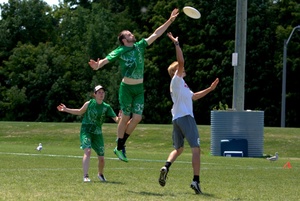
Highlights of the Mixed Division Irish Under 23 Ultimate Frisbee team who recently finished 5th at the Under 23 World Championships in Toronto. The tournament featured teams from 5 different continents and over 1000 athletes competed.
Chucking ar la.
Chucking.
Suit yourselves.

http://vimeo.com/71509267
A reworking of Coach Flowers speech by Dublin Rebels, Fergal O’Hanlon ahead of a grand final battle in the Shamrock Bowl 2013.
Fergal O’Hanlon says:
“I rehearsed that for two solid weeks, the neighbour banged my door down thinking the worst, only to find a man wearing spandex and pads clutching some tattered script listening to the Last of the Mohicans soundtrack.”
Mmf.
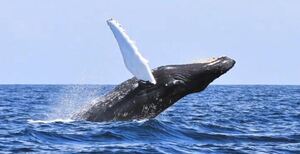
Sean Mac an tSithigh writes:
“A previously unrecorded humpback whale has been spotted off the Kerry coast. Feeding near the Blasket Islands, the whale is only the 23rd individual humpback ever recorded in Irish waters. Its sighting marks the beginning of humpback season in the southwest. TG4 News report. 29 July 2013.”
Talk to me not of Blaskets, man.

The eight man Irish team taking part 2013 Homeless World Cup at Lake Malta, in Poznan, Poland, visit the Mansion House
DCTV says:
“We attended the official reception put on for them at the Mansion House by the Lord Mayor. We were lucky enough to gauge the thoughts of the Lord Mayor, Oisin Quinn and the coordinator of the Longford Street Soccer League, Antem Eyong.”
G’wan the lads.

A timelapse shot at sunset two nights ago near Fanore, County Clare, by David Hunt.
David writes:
“This footage was all taken in the space of about 3 hours on a magical evening… Shot with a 5DII and a 5DIII, with a custom build motorised rail.”
Get him.
Previously: Settle Down, Sun

A study by ‘boffins’ J.D Wood, J. Dykes and A. Slingsby plots internal migration over our little green, rain-sodden plot.
They say:
“We study internal migration in Ireland, an aspect of migration that is little-studied. OD Maps have enabled us to characterise aspects of spatial patterns in county to county migration more effectively than with other techniques. We found that internal migration is relatively local, but relatively national for Dublin. Although migration increased between 1851 and 1911, there was a decrease in more local migration. This work explores the origins of trends that would continue for over a century and had a profound effect on the population geography of the island.”