Tag Archives: Rory O’Neill

Screen Shot 2014-02-02 at 21.20.11

Panti Bliss made a guest appearance and performed a ‘Noble Call’ after the final performance of James Plunkett’s The Risen People in Dublin’s Abbey Theatre tonight.

Hello. My name is Panti and for the benefit of the visually impaired or the incredibly naïve, I am a drag queen, a performer, and an accidental and occasional gay rights activist.

And as you may have already gathered, I am also painfully middle-class. My father was a country vet, I went to a nice school, and afterwards to that most middle-class of institutions – art college. And although this may surprise some of you, I have always managed to find gainful employment in my chosen field – gender discombobulation.

So the grinding, abject poverty so powerfully displayed in tonight’s performance is something I can thankfully say I have no experience of.

But oppression is something I can relate to. Oh, I’m not comparing my experience to Dublin workers of 1913, but I do know what it feels like to be put in your place.

Have you ever been standing at a pedestrian crossing when a car drives by and in it are a bunch of lads, and they lean out the window and they shout “Fag!” and throw a milk carton at you?

Now it doesn’t really hurt. It’s just a wet carton and anyway they’re right – I am a fag. But it feels oppressive.

When it really does hurt, is afterwards. Afterwards I wonder and worry and obsess over what was it about me, what was it they saw in me? What was it that gave me away? And I hate myself for wondering that. It feels oppressive and the next time I’m at a pedestrian crossing I check myself to see what is it about me that “gives the gay away” and I check myself to make sure I’m not doing it this time.

Have any of you ever come home in the evening and turned on the television and there is a panel of people – nice people, respectable people, smart people, the kind of people who make good neighbourly neighbours and write for newspapers. And they are having a reasoned debate about you. About what kind of a person you are, about whether you are capable of being a good parent, about whether you want to destroy marriage, about whether you are safe around children, about whether God herself thinks you are an abomination, about whether in fact you are “intrinsically disordered”. And even the nice TV presenter lady who you feel like you know thinks it’s perfectly ok that they are all having this reasonable debate about who you are and what rights you “deserve”.

And that feels oppressive.

Have you ever been on a crowded train with your gay friend and a small part of you is cringing because he is being SO gay and you find yourself trying to compensate by butching up or nudging the conversation onto “straighter” territory? This is you who have spent 35 years trying to be the best gay possible and yet still a small part of you is embarrassed by his gayness.

And I hate myself for that. And that feels oppressive. And when I’m standing at the pedestrian lights I am checking myself.

Have you ever gone into your favourite neighbourhood café with the paper that you buy every day, and you open it up and inside is a 500-word opinion written by a nice middle-class woman, the kind of woman who probably gives to charity, the kind of woman that you would be happy to leave your children with. And she is arguing so reasonably about whether you should be treated less than everybody else, arguing that you should be given fewer rights than everybody else. And when the woman at the next table gets up and excuses herself to squeeze by you with a smile you wonder, “Does she think that about me too?”

And that feels oppressive. And you go outside and you stand at the pedestrian crossing and you check yourself and I hate myself for that.

Have you ever turned on the computer and seen videos of people just like you in far away countries, and countries not far away at all, being beaten and imprisoned and tortured and murdered because they are just like you?

And that feels oppressive.

Three weeks ago I was on the television and I said that I believed that people who actively campaign for gay people to be treated less or differently are, in my gay opinion, homophobic. Some people, people who actively campaign for gay people to be treated less under the law took great exception at this characterisation and threatened legal action against me and RTÉ. RTÉ, in its wisdom, decided incredibly quickly to hand over a huge sum of money to make it go away. I haven’t been so lucky.

And for the last three weeks I have been lectured by heterosexual people about what homophobia is and who should be allowed identify it. Straight people – ministers, senators, lawyers, journalists – have lined up to tell me what homophobia is and what I am allowed to feel oppressed by. People who have never experienced homophobia in their lives, people who have never checked themselves at a pedestrian crossing, have told me that unless I am being thrown in prison or herded onto a cattle train, then it is not homophobia.

And that feels oppressive.

So now Irish gay people find ourselves in a ludicrous situation where not only are we not allowed to say publicly what we feel oppressed by, we are not even allowed to think it because our definition has been disallowed by our betters.

And for the last three weeks I have been denounced from the floor of parliament to newspaper columns to the seething morass of internet commentary for “hate speech” because I dared to use the word “homophobia”. And a jumped-up queer like me should know that the word “homophobia” is no longer available to gay people. Which is a spectacular and neat Orwellian trick because now it turns out that gay people are not the victims of homophobia – homophobes are.

But I want to say that it is not true. I don’t hate you.

I do, it is true, believe that almost all of you are probably homophobes. But I’m a homophobe. It would be incredible if we weren’t. To grow up in a society that is overwhelmingly homophobic and to escape unscathed would be miraculous. So I don’t hate you because you are homophobic. I actually admire you. I admire you because most of you are only a bit homophobic. Which all things considered is pretty good going.

But I do sometimes hate myself. I hate myself because I fucking check myself while standing at pedestrian crossings. And sometimes I hate you for doing that to me.

But not right now. Right now, I like you all very much for giving me a few moments of your time. And I thank you for it.

Noble Call?

Thanks Conor

Transcipt via Cormac Flynn

90327784

Responding [to the apology and payment to John Waters and members of the Iona Institute by RTE] in a press release issued within the last hour, Minister for Communications, Energy and Natural Resources Pat Rabbitte gave his two cents.

“Speaking personally, I have never used the term ‘homophobe’ to describe those who disagree with me on issues of gay equality in general or gay marriage in particular. It is too loaded a term to be used to categorise those who hold contrary views on what is a matter for legitimate public debate.

That said, I would also hope that people and institutions that hold themselves out as commentators on, or contributors to, public debate fully appreciate – as most politicians do – that debate can be robust, heated, personal and sometimes even hostile. If you enter the arena, you cannot expect that the Queensbury Rules will always apply.

It would be a matter of serious concern if recourse to our defamation laws was to have a chilling effect on the conduct of public debate on this issue, in the lead-in to the forthcoming referendum on gay marriage.

I have no intention of interfering in RTÉ’s management of the litigation claims against it. But I do expect that RTÉ remains fully committed to its chief obligation as a public service broadcaster – to ensure the full and free exchange of information and opinion on all matters of legitimate public interest.”

Defamation law must not have chilling effect on legitimate public debate – Rabbitte (Dept of Communications, Energy and Natural Resources)

Queensbury Rules?

Sasko Lazarov/Photocall Ireland


90314011BfOfeZxCAAEurAY.png large


Labour TD John Lyons submits his question to Minister for Communications Pat ‘Phat’ Rabbitte for reply next Tuesday.

Earlier: Panti Power

Previously: Panticipation

power

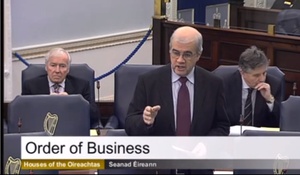
In the Seanad this morning.

Fianna Fail Senator Averil Power on the RTE apology and payment to members of the Iona Institute over comments made by Rory O’Neill, Miss Panti on the Saturday Night Show.

Tis on.

Update:

seanad


Fianna Fail Senator Jim Walsh defends the Iona Institute and tastefully introduces the death of Tom O’Gorman into the proceedings.

Meanwhile…
Panti-1

Dee Reddy writes:

“The Streisand effect is the phenomenon whereby an attempt to hide, remove, or censor a piece of information has the unintended consequence of publicising the information more widely, usually facilitated by the Internet.” This seems to be working for Panti so I’ve created this little meme to encourage people to show their continued support. If we all continue to talk about this issue then it won’t go away.”

PantiprotestGet her.

On Sunday the 2nd of February LGBT Noise will host an event for the LGBT community and supporters to respond to the recent controversy over comments made by LGBT rights advocate, Rory O’Neill, on the RTE’s Saturday Night Show on January 11th. 

The protest will take place at 2pm on South King Street, Dublin outside the Gaiety Theatre

Thanks Buzz

90236110

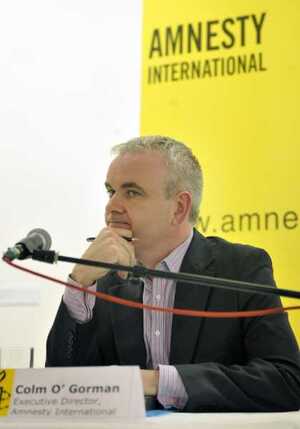
Breda O’Brien, of the Iona Institute, and Colm O’Gorman, of Amnesty Ireland, appeared on last night’s Late Debate on RTE Radio One.

The programme hosted by Audrey Carville began with a discussion about the recent Saturday Night Show/Miss Panti brouhaha…

Audrey Carville: “Before we get into the substantive discussion tonight, I want to mention the fact that, over the past number of days, RTÉ issued an apology and made a financial settlement to you, Breda, and to a number of others, including the Iona Institute and this followed allegations made on the Saturday Night Show, on television two weeks ago, during an interview with Rory O’Neill, who’s better known as drag queen, Panti Bliss. Now RTÉ have not issued a statement to us about this matter for our programme tonight. But Breda, as far as you’re concerned, has a line now been drawn under this?”

Breda O’Brien: “Yes, I think it’s really important that we have a rational and a calm debate and that people don’t reduce it to hurling insults at people to close down debate. I think RTÉ let its standards slip in that regard but they were big enough to come forward and to apologise and I’m certainly very pleased with that, very pleased to accept the apology and move forward..”

Carville: “Colm, O’Gorman, as an openly gay man, what do you make of all of this?”

Colm O’Gorman: “Well to be honest, I’m, I’m, well, to put it simply, I’m rather stunned by where all of this has gotten to and I don’t understand how we’re ever going to have a reasoned, or reasonable debate, if we can’t challenge each other’s viewpoints and even question what those viewpoints might be based upon. As it happens, I didn’t see the programme but when I saw it being reported, and some of the comments, that were being attributed to Rory, in the programme, I was lucky enough to grab before it was, on foot of legal action by Breda and others, removed and censored from the public airwaves. So I went into it and I listened to it and I have to say, I thought it was one of the most considered, inclusive, insightful explorations of how we are all capable of holding views that are discriminatory and that can cause us to make statements that are hurtful, that are damaging, that are destructive of other people. And what I heard Rory say is that we’re all capable of holding homophobic or racist, or xenophobic views and that we occasionally need to check ourselves, now I think that’s a really important discussion that we need to have. You know, to be honest, I don’t understand why anyone feels enormously insulted by being accused of being homophobic. I mean I’m a gay man and I’ve certainly been guilty of holding homophobic views – both views that I held about myself but also views I held about other sections of the LGBT community and other people who live lives in ways I perhaps didn’t understand.”

Carville: “You’re saying we’re all capable of being bias?”

O’Gorman: “We’re all capable of bias. We’re all capable of holding views that are based on discriminatory views, or internalised bigotry that we’ve taken on in other ways and I simply do not understand how challenging people, to examine the basis upon which they put forward certain arguments is defamatory and, you know, equally, quite frankly, I don’t think..People have a right, I think, to express views that other people might be offended by. Nobody has a right not to be offended. And I will defend Breda’s right and anybody else’s right to say things that I find offensive but I think I also have a right to name them as offensive and to seek to have a clear, rational, reasonable discussion about that.”

Carville: “Do you want to come back on that, Breda?”

O’Brien: “If it had been a case that it was talking about, in general, about all of us examining our consciences, I don’t think that I would have been, and other people would have been, in discussions with RTÉ. What it was about was naming a specific individual who was not there to defend herself and another individual who was not there to defend himself. It was claiming bad faith on their part, that they were, that my position, which is that a child, where possible, should be reared by their own mother and father, is now deemed homophobic commentary. RTÉ obviously felt that they had something to apologise for and the reason that they did so is because the legal definition of homophobia is that you have a fear and loathing, and suspicion of people who are gay, which is an appalling thing to throw at somebody. And I…it was then compounded later on by people in the Irish media, in their columns, saying that people who are against marriage equality, if you want to use that term, that people who are against that, are people who are responsible for gay people being beaten, murdered, fired from their jobs and that there should be a defamation watchdog set up so that people couldn’t express these views. Now this is very far from a rational and calm debate. This is actually going way into the territory of saying that we will declare your views out of order before you even begin. And I don’t think the Irish people want that. Like, during referendums regarding abortion, people were immoderate on my side of the fence and I always called them out when they were, when they used appalling expressions. I think we have a right in this debate to have the same level of respect, mutual respect and that you don’t label people and that you don’t dismiss their good faith. And, really, I think, I came here tonight to talk about Catholic education, I think it would be really good if we got onto that debate.”

O’Gorman: “Well..”

Carville: “Just briefly, Colm..”

O’Gorman: “Yeah, absolutely. I do think this has been a very, very damaging incident. and I really do think RTE needs to explain the basis upon which they felt entitled or required to pay damages from taxpayers’ funds on the basis of this. If this was indeed defamatory then indeed the rationale or the basis, upon which RTE believes this was defamatory, needs to be explained.”

Meanwhile:

Listen in full here.

Eamonn Farrell/Photocall Ireland, YouTube

murphy


Context.

Meanwhile…

In an open letter to RTE, Brian Barrington, a legal expert on equality and human Rights, writes:

“…it is now incumbent on RTE to provide clarification on what it will not permit to be stated in other contexts also. RTE should therefore make clear what it will and will not tolerate in the following scenarios:

a. a person states that women should not be allowed to work outside the home. Is it permissible on Irish Television to offer the opinion that the person is a misogynist, even if one makes clear that he or she believes that misogyny includes discrimination against women?

b. a person states that Ireland should have fewer immigrants. Will RTE censor any person who states that the speaker is xenophobic?

c. a Northern Ireland politician objects to an Orange Order march, stating that the Orange Order is sectarian. Will RTE prevent the broadcast of such utterances and provide compensation to leading lights in the Orange Order?

If, however, any of the above is permissible, will RTE explain why it is not equally permissible to state that a group that campaigns against same sex marriage is homophobic?

Full letter here

Meanwhile…

hetero


“In its apology to the Iona Institute, RTÉ stated “is an important part of democratic debate that people must be able to hold dissenting views on controversial issues”, in terms presumably agreed in advance with the Iona Institute.

What these words tell us that it isn’t just a definition of marriage or homophobia that the Iona Institute seeks, but the power to enforce definitions that maintain proper order, including the definition of democracy.

According to the idea of democratic debate shared by RTÉ, the Iona Institute and Irish Times columnist Noel Whelan (and many other people), democratic debate doesn’t need to account for inequalities and prejudices enforced by dominant institutions.

It doesn’t need to account for the power to summon lawyers to threaten and prosecute.

It doesn’t need to account for the history of violence perpetrated against oppressed minorities and communities and the social wellsprings of such oppression.

It doesn’t need to account for conflicting interests and motives (‘it is also a very important part of democratic debate that individuals do not constantly have their motives and intentions called into question’)

It doesn’t need to account for the fact that calls for tolerance and respectful debate and liberal persuasion are a great deal easier in these parts when you are invited to speak up on behalf of the oppressive tendencies of the State, not against them.

By Definition (Cunning Hired Knaves)

Hat tip: Gavan Titley and Buzz

iona-670x300

Like cash money?

Really?

REALLY

REALLY?

Yes.

Via The Iona Institute

“ON Saturday Night Live (sic) last weekend, presenter Brendan O’Connor read out an apology to Breda O’Brien, The Iona Institute, and writer and broadcaster John Waters after a guest a fortnight before had accused all of the aforementioned parties of being ‘homophobic’.

RTE has also agreed to pay damages to the injured parties.

The apology read: “On the Saturday Night Show on the 11th of January last, comments were made by a guest suggesting that the journalist and broadcaster John Waters, Breda O’Brien and some members of the Iona Institute are homophobic. These are not the views of RTÉ, and we would like to apologise for any upset or distress caused to the individuals named or identified. It is an important part of democratic debate that people must be able to hold dissenting views on controversial issues.”

We might add that it is also a very important part of democratic debate that individuals do not constantly have their motives and intentions called into question.

Accusations of ‘homophobia’, which are made with great regularity in the debate about same-sex marriage and adoption, are precisely an attempt to demonise and impute the worst of motives to those who believe that marriage is the sexual and emotional union of a man and a woman by definition, and that children deserve the love of both a mother and a father whenever possible.

The accusations are an attempt to bring the debate to an end.

It is similar to what sometimes happens in the abortion debate when extremists on both sides attribute nothing but the worst possible motives to their opponents.

It should be noted that no-one can ever point to a quote from The Iona Institute that can be any stretch be called genuinely abusive or ‘homophobic’.

The problem is that merely believing that marriage is the sexual union of a man and a woman, and that children deserve the love of both a mother and a father whenever possible is automatically deemed to be ‘homophobic’ by those wishing to close down this debate.

Apart from accusations of ‘homophobia’, The Iona Institute also receives abusive and even threatening phone calls and emails from those opposed to our point of view.

Yesterday, for example, we received an email which said: ‘Please, if you are reading this, kill yourself.”

The email added: “I will put it to you this way, if I had met anyone from your institute I would not think twice about kicking their f**king face in.”

During the various national debates on abortion there are always calls for a ‘calm and reasonable’ debate.

We must also have a calm and reasonable debate about same-sex marriage and adoption.

The RTE apology is an extremely valuable and important contribution to having such a debate.”

Hardcore.

RTE Apologises to Iona Institute (Iona Institute)

Meanwhile,

John Waters’ replacement on the Broadcasting Authority.

mepic


The Cabinet has approved the appointment of former Irish Times journalist Séamus Martin to the board of the Broadcasting Authority of Ireland.

You’ll know de brother.

Journalist Séamus Martin appointed to Broadcasting Authority of Ireland (Irish Times)


rtemaxresdefault

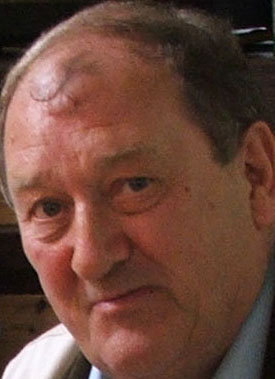
[Rory O’Neill, above, and the RTE campus]

The following is part of a submission by Mark Cullinane, a student and member of the RTÉ’s Audience Council,  to the RTÉ Board yesterday,

Although this topic has received minimal coverage and discussion in print and broadcast media, this issue has generated enormous amounts of interest and amongst friends and acquaintances offline and online. I am raising all of this here today simply because this sequence of events raises a series of important questions concerning not only how public debate is and should be conducted on RTÉ but also the operation of power in this country.

Firstly, why did RTÉ in their initial statement make a link between the interview being edited and Tom O’Gorman’s tragic death? Mr O’Gorman was not mentioned in the interview, and his death took place afterwards. The statement’s claim that the show’s removal from the RTÉ Player is ‘standard practice in such situations’ is simply untrue.

Although programmes are occasionally withheld from the Player for reasons of sensitivity, for example the recent Prime Time segment on the direct provision regime and the créches investigation from last year, in this case, editing the interview to remove a reference to the Iona Institute simply because it happened to be Tom O’Gorman’s employer is quite extraordinary. Censoring an interview on the basis of a link this tenuous, were it to actually become ‘standard practice’, would mean that censorship would occur on a daily basis. For RTÉ to draw an unnecessary link between the interview’s removal and O’Gorman’s death is unseemly.

The legal basis for removing the segment of the interview, in the absence of RTÉ elaborating on both the content of any legal complaint and RTÉ’s subsequent legal advice, it is difficult to comment. What is known however is that John Waters, if he is indeed the complainant as the Irish Independent has asserted, was until a couple of days ago effectively one of RTÉ’s regulators. As solicitor Simon McGarr has pointed out, this “was not merely a letter from an aggrieved citizen to a broadcaster. It was also a letter from one of that Broadcaster’s regulators seeking to have that broadcaster censor a citizen, who was both contributing to a matter of public debate and engaging in a defence of a minority of which he is a member, bona fide and without malice.”

I do not purport to represent the LGBT community in Ireland, but as a member of that community, like Rory O’Neill, I feel it important to bring to your attention how many people feel about RTE’s handling of this situation.

Having suggested on Twitter I may raise this topic today, I put out a further message soliciting views on this issue. I received a range of responses (some of whom, I should say, were supportive of RTÉ’s actions) but what most of them boiled down to was this: many people feel that their national broadcaster is condoning prejudice against them and other LGBT people.

Many feel that RTÉ have, in the interests of legal expediency, protected the sensitivities of those who regularly make discriminatory remarks about LGBT people and even the sensitivities of those surrounding an entirely unrelated death, but that the sensitivities of the group whom Rory O’Neill was speaking up for have been ignored. This is evident in the original statement, the subsequent apology and the act of censorship itself.

The apology read out by [Brendan] O’Connor illustrates just how problematic RTÉ’s response has been. In particular, the line: “It’s an important part of democratic debate that people must be able to hold dissenting views on controversial issues…” simply begs a whole series of new questions.

What counts here as the ‘dissenting view’ and what in fact is the ‘controversial issue’ being referred to? Are racist or sexist views categorised as ‘dissenting views’ on ‘controversial issues’ which must be similarly protected and will those who name these views as such be subject to legal threats and censorship?

Many feel that in this instance, anti-gay commentary has been accorded a legitimacy that would not be shown towards other forms of discriminatory views. A strong view exists that RTÉ should have stood by its man, O’Connor, and O’Neill, for a host of reasons- on the merits of any such legal case, on the principle of free speech, and on the principles of public service which RTÉ is supposed to cherish.

Despite the virtual media blackout on this whole issue, to many who have familiarised themselves with events, it appears that RTÉ took the easy route out and has been cowed. Even if that is not the case, this perception now exists and something must be done to rectify it.

I believe that RTÉ needs to answer why a link was drawn between the death of Tom O’Gorman and the removal of the interview, and why an apology was subsequently issued.

I say all this and ask these questions not to bash RTÉ but because this affair and the reaction to it reflects the growing pains of society, and how the media should respond to a society that has at least nominally has rejected sexism and racism, but where negative reactions to homosexuality still exist and which have real consequences.

The ongoing existence of anti-gay discrimination which O’Neill sought to highlight in the censored portion of his interview will come into clearer public view with the upcoming referendum on gay marriage. It is essential that this affair does not become a template for how negative attitudes towards homosexuality may be responded to in the future, and in my view imperative that the organisation formulates a better way of managing the balance between respecting human dignity and upholding freedom of expression.

By apologising to a few, RTÉ have hurt many. But something good can come from this, if RTÉ sees this as a signal that this is a topic that must be met head on. I look forward to a response from the broadcaster in this spirit.”

Mark Cullinane

Previously: Waters, Panti And RTE

Panti’s Back On

Thanks Buzz

Pix: Photocall ireland/RTE

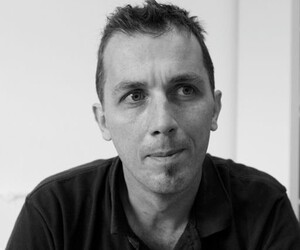
Philip-OConnor1[Philip O’Connor]

Further to the Iona/ John Waters Saturday Night Show apologia.

A missive from Team Panti.

Philip O’Connor writes:

Rather than being cowed by legal threats, surely the media has very valid questions to ask – starting with exactly who Iona represent, and where they get their money.

The views expressed by Iona – especially in relation to gay people – are very much at odds with the liberal secular society that Ireland has become. Indeed, Rory O’Neill suggested that the only time he experiences homophobia is online or at the hands of Iona and Waters.

When they’re done with that, they can ask why Iona is given so much room in the media. In any other country in the world, an organisation as litigious as Iona would never be asked to participate in anything. Nor would anybody else with their solicitor on speed dial.

When all that is over, perhaps someone would sit down and ask David Quinn, Waters et al to explain how their utterances – perceived by many outside themselves and their supporters as being homophobic – are acceptable.

For Iona, Quinn and Waters, it might be a hard sell. Take this quote from an interview with Waters:

“This is really a kind of satire on marriage which is being conducted by the gay lobby. It’s not that they want to get married; they want to destroy the institution of marriage because they’re envious of it…”

Now if you believe – as Waters suggests earlier in that interview – that marriage is a fundamental building block of society, then he is essentially accusing the gay lobby (many of whom are presumably gay themselves) of trying to destroy it.

How, exactly, is that not homophobic?

Is it reasonable to suggest that gay people are, in trying to secure equal treatment in the eyes of the law, trying to destroy the very fabric of society?

No, it isn’t.

So what should they have done?

Well, if he disagreed with the apology, O’Connor – a columnist with the Sunday Independent and thus not without either power or a platform to exert it – should have resigned.

In the interests of public service, RTE should have stood by its man. If they were to go to court – as evidenced above, examples of the irrational fear of homosexuality displayed by both Waters and Iona are not hard to find – they wouldn’t be without hope of winning.

But it is the Irish Times and the rest of the media that is probably deserving of the most criticism. It is one of the functions of mass media to provide a platform for debate, but yet again they have abdicated this responsibility.

It may be expensive to defend oneself against even the most frivolous of libel accusations in Ireland, but the price for not doing so is the ability to report and to comment without fear or favour.

The views expressed by Rory O’Neill are not those of RTE, but they are those of many people in the gay community.

His airing them on an RTE programme is the very point of public service, and of mass media in general – to provide a platform for debate and scrutiny, and for holding people to account.

It should be remembered that Ireland has, since its inception, struggled in terms of holding those in power to account, whether it be politicians, religious leaders or captains of industry.

All have at various points used the solicitors to muzzle reporting and debate.

But in the end, all of them were eventually caught with their Pantis down.

Caught with our Pantis down (Philip O’Connor, Our Man In Stockholm)

Earlier: Alternatively

Thanks Philip

Meanwhile…on #teampanti

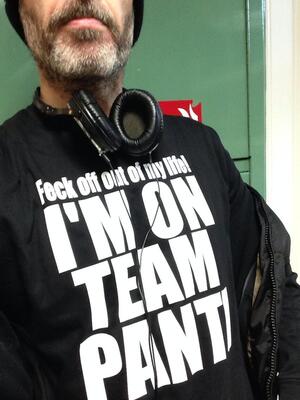
BeMkgxwCcAA2-5t.jpg largeTeam_Panti.jpgBeq1OXUCAAEkWKq.jpg largeteam-panti-high-res

Via Mark O’Halloran, Panti, WellNowUniverse, Anthony Finucane