Tag Archives: Simon Harris

“Remember this is coronavirus Covid-19, that means there’s been eighteen other coronaviruses and I don’t think they’ve successfully found a vaccine for any.”

Minister for Health Simon Harris on RTÉ Radio 2FM earlier.

According to the World Health Organisation (WHO), COVID 19 stands for, Corona (CO) Virus (VI) Disease (D) and 19(2019).

Good times.

Coronavirus in Ireland – Simon Harris criticised for ‘eighteen other coronaviruses’ gaffe during RTE radio interview (The Irish Sun)

Rollingnews

Thanks Piece of Pi55

Meanwhile…

Update:


Minister for Health Simon Harris

This morning/afternoon.

Anyone?

Earlier: Fruit Of The Loon

Previously: “We Are Not Planning To Close Our Airports” (March 16)

Ireland Is Closed Until March 29 [Updated] (March 12)

Rollingnews

Minister for Health Simon Harris in the Dáil this evening

This evening.

In the Dáil.

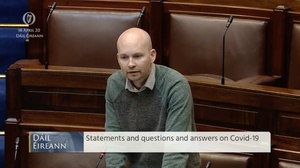
Health Minister Simon Harris responded to points made by Green Party TD Ossian Smyth.

During his contribution, Mr Smyth asked Mr Harris if he would support Google and Apple “in their announcement that they want to co-operate to produce an app that can help with contact tracing on the basis that it respects privacy”.

Mr Smyth also told Mr Harris that he wanted to see Ireland become prepared “for the next microbial pandemic after Covid” and asked the minister to create a “pandemic preparedness unit” or a “pandemic readiness unit” within the Department of Health.

In relation to the point about an app, Mr Harris said:

“On the issue of the app, I’m very supportive of the app. I think we really need an app. The HSE is at a very advanced stage, and my department, of launching one.

“I know we’ve been discussing with mobile phone operators…I know other companies are also thinking of it. It would involve people opting in. I think the Irish people would opt in though.

“I think they’d opt in in overwhelming numbers once they knew, you know, that the parameters in terms of their own data protection and the fact it could save their lives and the lives of their family…”

In relation to the point about a pandemic unit, Mr Harris said:

“In relation to preparing for future public health pandemics, I mean you’re right. Public health has been the poor relation of health in this country for a long time, for a really, really long time.

“The Department of Health has often been the department of illness, what do we do when somebody gets sick? Not only do we realise the real value of public health at a time like this, whether we go the road of establishing, like they have in the UK, Public Health England, as a separate stand-alone organisation? Or whether you look, as you suggested, a unit or something as part of the HSE?

“My one personal view is that it should be integrated as part of the health service, rather than setting up other bodies. But I’m open to discussions in this House.

“And sure maybe whoever forms the next Government can help us in that challenge.”

Earlier: Question Time [Updated]

Previously: The CovidTracker App And You

New Brand

Rise TD Paul Murphy

This afternoon.

Rise TD Paul Murphy asked Taoiseach Leo Varadkar if a newspaper report today – stating that the estimated monthly cost of the State’s leasing of private hospitals will be €115million – a month is accurate.

Mr Varadkar replied:

“That’s deputy, that’s an estimate. So it’s as accurate as any estimate can be. If that answers your question, it may be right, it may be wrong but it’s an accurate estimate. It’s not necessarily what the accurate cost will be because we won’t know that until the end ’cause the costs, they’ll have to be calculated.

“But the agreement that was made between the HSE and the Private Hospital Association was told that this would be done on the basis, on a not-for-profit basis, so it’s the covering of the costs of the hospitals.”

EARLIER:

Independent TD Catherine Connolly

This afternoon.

Independent TD Catherine Connolly told Taoiseach Leo Varadkar:

“I gave my support to draconian legislation where absolutely no attempt was made to contextualise such legislation within a human rights perspective or to frame, indeed, the operation of the powers given to Garda and undefined medical officers so that such powers would be time-limited and used in a proportionate and undiscriminatory way.

“I was full aware of the implications of such legislation and I gave my support reluctantly, on the basis of a number of issues. One, we improve the legislation as best we could. Two, we made it time-based. Three, we insisted that it would come back before the Dáil.

“But the most important one on which I gave my consent was that we would have full and frank disclosure, full information on every issue from you and the Government. And I have to say, significantly, and unacceptably, that part of the bargain has not been kept.

“I look at testing. I look at the information on that, totally contradictory and I know, as we all do, of people waiting for tests. Four weeks on Saturday, in relation to the one that I’m mentioning.

“In relation to the operation of laboratories, whether they’re functioning or not functioning.

“On the first of April we were told that it was sufficient to meet the demand. Perhaps the first of April is an indication of how we should take that piece of information.

“In relation to nursing homes, I’m absolutely appalled that they weren’t number one on the list with a risk assessment carried out.

“On the 30th of January, the public health emergency was recognised. On the 11th of February, it was given a name: the coronavirus. On the 11th of March, a pandemic was declared by the World Health Organisation. And I haven’t heard one simple explanation from ye, as to why the nursing homes, direct provision centres and residential centres weren’t number one on the list, where our most vulnerable people live. 

“Why an assessment wasn’t carried out. I have looked through all of the briefing documents prior to coming in here, I have eight from the month of April. Of all those briefing documents, we’ve two lines on nursing homes, to tell us there would be screening introduced, never was it mentioned again.”

EARLIER:

People Before Profit TD Richard Boyd Barrett

This afternoon.

People Before Profit TD Richard Boyd Barrett put to Taoiseach Leo Varadkar:

“How do Fianna Fáil and Fine Gael believe that they are fitted to return to power or that we should believe their promises of a new political departure when, after the last financial crisis of 2008 they made the same promises and then proceeded to absolutely savage the staffing levels and capacity levels of our health service prior to this public health emergency.

“To the point where we have some of the lowest levels of ICU capacity, GP cover and staffing levels, hospital bed numbers in the whole of the Western world.

“Isn’t it the case, Taoiseach, that the privatisation and austerity policies that were pursued for the last ten years by these parties have contributed to the emergency that is now emerging, tragic emergency that’s emerging in our nursing homes because of a largely privatised, completely fragmented, under-resourced, under-supported nursing home sector.

“Isn’t it, Taoiseach, unacceptable but a legacy of the policies and priorities of those two parties. That 600 private consultants can hold this country over a barrel in the face of a public health emergency. It is absolutely shocking.

“Can you please explain to me the incredible situation where this country has one of the biggest pharmaceutical and medical equipment industries in the world and yet we are suffering chronic shortages of Personal Protection Equipment, vital medical equipment and chemical reagents necessary to bring the level of testing up to that which we need to exit this crisis.

“And where [HSE CEO] Paul Reid cites proprietorial issues as an explanation for this. In layman’s terms, that means private patents and profit seeking by the companies that own these patents for chemical reagents.

“Can the Taoiseach explain why a private consultant, with no medical expertise whatsoever, was given the job of recruiting from the 70,000 heroic volunteers on the Call for Ireland, to recruit those people and integrate them into the health service.

“A job, from when I look at the numbers, doesn’t look to be going too well in that integration, CPL, CPL.

“Can the minister explain the extraordinary appointment of a management consultant from an accountancy firm, Ernst & Young, to spearhead the ramping up of the testing and contact-tracing regime which we desperately need rather than public health experts, scientists and medics and that that same person has now been given the job to spearhead the transition back to, quote, ‘business as usual’.

“Rather than the public health experts, the scientists and the doctors, who should be deciding when we lift restrictions, how we lift restrictions, how we transition back to the normality that our citizens desperately want to return to…”

EARLIER:

Labour leader Alan Kelly in the Dáil this afternoon

This afternoon, Labour leader Alan Kelly asked Taoiseach Leo Varadkar:

“Today, Taoiseach, we, in the Labour Party are proposing to you and to the rest of this House that we would pay all of our healthcare workers a one-off €1,000 solidarity gesture on May 1 [International Workers’ Day] in these unique circumstances when we know that all these workers are going way beyond anything they’ve ever done before or anything they’ll ever, ever do again.”

EARLIER:

From top: Minister for Culture, Heritage and the Gaeltacht Josepha Madigan and Taoiseach Leo Varadkar; Fianna Fáil leader Micheál Martin in the Dáil this afternoon

At 2pm.

The Dáil, with reduced numbers, got under way with Taoiseach Leo Varadkar, Minister for Health Simon Harris, and Minister for Finance Paschal Donohoe scheduled to answer questions concerning the State’s response to Covid-19.

During his opening comments, Mr Varadkar said he doesn’t know if the current movement restrictions will be relaxed on May 5, saying they would need to be relaxed over several months.

He said:

“I don’t know yet if we’ll be able to relax restrictions on the 5th of May. But I do know that if we can, at all, it’s going to be gradual and will happen over a number of months. As we know from Asia, they may even need to be reimposed  again because only a scientific breakthrough, a vaccine or an effective anti-viral medicine will truly allow life to got back to being as it was.

“Other breakthroughs, like a reliable anti-body test, could really help though. And I am optimistic about the capacity of the brilliant minds in our international pharmaceutical companies and universities to deliver.”

During his initial contribution, Fianna Fáil leader Micheál Martin told the Dáil:

“Unfortunately, I have to report to the House that I know of at least one case where relatives of a person in a nursing home has been informed that the nursing home has been told by the Department that it should not give out information about the number of cases in the home.”

The proceedings can be watched above or here.

The last time the Dáil sat, on April 3, Fine Gael TD and Minister for Culture, Heritage and the Gaeltacht Josepha Madigan refused to answer a single question that TDs raised about health matters concerning Covid-19, after castigating the TDs who called for the Dáil to sit.

Among the contributions from TDs was that of Fianna Fáil Stephen Donnelly who told the Dáil that he was told that out of 200 members of staff at one nursing home, 70 had tested positive for Covid-19 and that 19 of the home’s 100 residents had also tested positive.

Ms Madigan told the Dáil:

“I thank the deputies for their contributions. However, the members here today who have insisted on this Dáil sitting have shown a complete disregard for our national fight to contain Covid-19. Shame on you.”

More to follow.

Earlier: ‘A Growing Sense Of Public Unease’

Previously: A Refusal To Hold Themselves Accountable [Updated]

Minister for Health Simon Harris

This morning.

George Lee, of RTÉ, reports:

Minister for Health Simon Harris said he expects to be advised tomorrow to keep the significant restrictions to slow the spread of the coronavirus in place for a period of weeks but that Ireland will have to move onto a “different terrain” after that.

“What’s highly likely tomorrow is that the National Public Health Emergency Team will recommend that we continue with the very strict restrictions … I expect that to be a period of weeks,” Mr Harris said.

Harris expects Covid-19 restrictions to remain for ‘period of weeks’ (RTÉ)

Previously: Will We Rise Again On The Third Day?

Rollingnews

Health Minister Simon Harris speaking to journalists outside government buildings. merrion this morning

No.

This afternoon.

Breakingnews.ie reports:

Restrictions on movement will not be lifted on Easter Sunday.

While the National Public Health Emergency Team (NPHET) have yet to make a formal recommendation to extend the measures, the Health Minister says its highly unlikely they will be relaxed.

NPHET is meeting today to discuss restrictions but will not make a final call until Friday.

‘We know they are working’: Harris says ‘highly unlikely’ restrictions will be lifted on Sunday (Breakingnews.ie)

Pic: Gavan Reilly

Meanwhile…

From top: Dublin city centre under lockdown; President of the Garda Representative Association Detective Garda Jim Mulligan on The Tonight Show last night

Last night.

On Virgin Media One’s The Tonight Show.

President of the Garda Representative Association Detective Garda Jim Mulligan told host Ivan Yates that he didn’t know the specific details of the new powers that emergency legislation has bestowed on gardai during the Covid-19 pandemic.

He said that he had discussions with the Department of Justice yesterday about the new regulations but added that he’s still waiting on them.

Detective Mulligan said:

“There needs to be clear and unambiguous understanding of these regulations and there needs to be clarity. The public need to know where they stand, our members need to know where they stand…”

His comments follow the Minister for Health Simon Harris moving the Health (Preservation and Protection and other Emergency Measures in the Public Interest) Bill 2020 through the Dáil on March 19 without a vote.

In response to submissions from TDs and civil liberties groups, the Government agreed to include a “sunset clause” in the bill. Mr Harris subsequently set the “sunset” date for November 9th, a date he acknowledged was “arbitrary”.

Last night, Det Mulligan told Mr Yates that he read this bill but added:

“We’re hoping they’re [regulations] quite clear and everybody knows where they stand.”

Ultimately though, he said, the gardai will largely be helping the HSE enforce measures in the bill which provide for the forced detention of people who will not self-isolate.

Part 3 of the bill includes powers to restrict the movement of people, including the detention of people whom a medical officer believes is a “potential source of infection”, who cannot be “effectively isolated” or who refuses to remain in their home or in accommodation arranged by the HSE.

The bill defines a person who is a “potential source of infection” as someone who has been in recent contact with a person who is a “probable source of infection of Covid-19” or someone who is suffering from Covid-19, or a person who has attended an event which was attended by another person who is a probable source of infection of Covid-19 or suffering from Covid-19.

The bill provides that a medical officer of health who makes a detention order must ensure that a medical examination of the person who is the subject of the order is carried out as soon as possible and “no later than 14 days” from the time the person has been detained.

It also includes powers to quarantine an area or region where there is thought to be human transmission of Covid-19 and from which there is a “high risk” of contamination emanating by travel from that area.

It also includes powers to close premises, close events, and to arrest people without a warrant in certain circumstances.

Those found to have breached certain restrictions will find themselves subject to fines and/or possible imprisonment of up to three months.

Section 10 of the bill also confers on the Minister “any other measures that the Minister considers necessary in order to prevent, limit, minimise or slow the spread of Covid-19”.

In other words, it gives the minister powers to introduce any measure he wishes in this section by statutory instrument or regulation that does not have to be approved by the Oireachtas.

When the bill was being debated on March 19th, Independent TD Catherine Connolly, a former barrister and clinical psychologist, said the following in respect of the bill’s sections dealing detention.

She said:

“We have a crisis but in times of crisis when we want to put through legislation such as this that is giving seriously broad and excessive powers in my opinion to the Garda Síochána, to the Minister and not just to doctors but to medical officers undefined, then there is a great onus on the Government to place that in context, in particular in the context of our rights under human rights legislation and the European Convention on Human Rights, which we have adopted in our Constitution.

“The absence of protections in the Bill is of great concern to me. I got the amendments to the Bill a half an hour ago and I understand the staff are under pressure.

“Let me pay tribute to the staff of the Dáil but I do not want to waste my time paying more tributes. Take it as given. When we are in a situation where we are looking at amendments and trying to get our heads around the other amendments tabled by my colleagues, it is difficult.

“Then we are looking at legislation we are being asked to pass by 5pm or 6pm today with no sign of protection for human rights.

“That is of great concern to me and if I am prepared to do that, I at least ask the Government to remove the section where an order can be made automatically to renew it.

“The Government should at the very least show good faith and bring this legislation back before us so it gets the approval of the Dáil. If the Government wants us to support it in this extraordinary and “draconian” legislation, then it must show good faith.

“To allow a Minister to renew this on the advice of a medical officer or on some other advice, without bringing it back before us is not showing good faith. It is very important that we show leadership and acknowledge what people are doing on the ground in addition to the staff.

“We must show leadership at this level and bring in legislation that is framed in human rights. It is not that difficult. The Government has to show in this case that the powers are necessary, proportionate and non-discriminatory. We could have all tabled amendments but they will not be heard.

“The general principle – non-discriminatory, proportionate and necessary – is nowhere to be seen in this Bill.

“In addition, the preamble talks about citizens. The Minister might take the opportunity to tell me why we are only talking about citizens. Is it simply because we are referring to the Constitution and citizens? Surely we are talking about residents and other people in the country.

“Not alone is the word “citizens” used in the preamble but it is used in another section of the Bill. That is of great concern to me. As I said, extraordinary powers are being given to a Minister, medical officers undefined and the Garda Síochána, with powers of arrest without warrant on a reasonable opinion.

“…This inconsistency throughout the Bill is of great concern. We have detention and isolation for a period of 14 days mentioned. It should be more specific that the person should be tested more quickly than that, not after 14 days.

“Of even more concern is that there is a provision for a review but there is no provision to tell the person he or she can take a review and there is no time date on that review. I am not sure why that was done.”

Continue reading →

Taoiseach Leo Varadkar and the Minister for Health Simon Harris at a press conference at Government Buildings this evening

This evening.

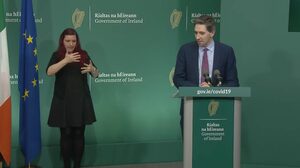
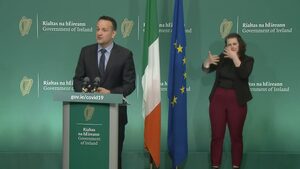
Taoiseach Leo Varadkar and the Minister for Health Simon Harris are holding a press conference at Government Buildings to speak about the new public private partnership with private healthcare providers in response to Covid-19.

During the press conference, Hugh O’Connell, of the Irish Independent, asked Mr Varadkar if he could indicate when Ireland might “start to return to normality”.

Mr Varadkar said he didn’t know.

The question follows Dr Jenny Harries, deputy chief medical officer for England, saying yesterday that normal life will not likely resume in the UK for at least six months.

In his response, Mr Varadkar said:

“To be honest with you, we don’t know for sure. You know, this is a new virus and you can only be so much of an expert on a virus that’s only been known to the world for three or four months and some of the estimations and assumptions we might have had two or three weeks ago are different now and they may be different again in two or three weeks again.

“What is going to happen this evening is Philip Nolan, who’s heading up our group on modelling, is going to speak at the press conference tonight with the chief medical officer [Tony Holohan] and the idea is that every week or so the model will be updated and that will be shared with the public because we want to be as transparent as possible.

“But in being transparent we need people to understand that by putting information out there, and we want to put all the information out there, it may turn out to be incorrect and you’ll just have to bear with us on that in many ways or it may change over time.

“Certainly what the UK is talking about and I think what a lot of people around the world are talking about now is that there will come a point after the epidemic is peaked and the number of new cases starts falling, when we will start to ease the restrictions and then we’ll have to see what happens so we won’t be in a situation whereby I suddenly go on TV and make an address to the nation and say everything is going back to the way it was on the 11th of March.

“That’s probably not what’s going to happen. What is likely to happen is that the number of new cases will continue to rise, we’ll reach a peak, hopefully that will be in a few weeks’ time and not in a few months’ time.

“The number of new cases will start to fall and will reach the point where we can start to ease some of the restrictions and then see what happens, whether the number of cases starts to rise again or not.”

Nucleocapsid?

Meanwhile…

Later, Jennifer Bray, of The Irish Times, asked Mr Harris about the shipments of personal protective equipment (PPE) that Ireland has ordered from China.

Ms Bray asked if Ireland has any “guarantees” about the quality of the items, in light of the Netherlands recalling hundreds of thousands of masks that it received from China.

This morning, China’s Ambassador to Ireland He Xiangdong told RTÉ’s Rachael English that China would do its best.

Mr Harris said:

“In relation to the quality of the PPE coming into the country, Paul Reid [CEO of the HSE], the head of the HSE, has publicly said that any PPE purchased by the HSE needs to meet World Health Organisation standards and also will be checked on arrival.

“So it’s a job that the HSE needs to do, they’ve a duty of care to their staff and we obviously need to ensure that any PPE distributed throughout the health service meets the WHO standards and they certainly said that’s absolutely their intention and view in relation to the equipment they bought.”

Earlier: “I Think That We Will Try Our Best”

This morning.

Government Buildings, Dublin 2.

Minister for Health Simon Harris speaking to the media on his way into Government Buildings in Dublin, as the Cabinet met to consider updated recommendations on tackling the coronavirus from the National Public Health Emergency Team. To wit:

The measures are likely to take in restaurants, cafés, hairdressers and a range of other service sectors regarded as non-essential.

Restrictions will also be introduced for outside gatherings.

While the measures will not be an exact replica of what has been announced in the UK, they will be significant.

Cabinet set to agree significant new restrictions (RTÉ)

Leah Farrell/RollingNews

Health Minister Simon Harris speaking to Bryan Dobson on RTÉ’s Morning Ireland

This morning.

Further to repeated calls from politicians and health experts for people to maintain “social distancing” of two metres, and suggestions that further restrictions on people’s movement will be put in place on account of the coronavirus, Health Minister Simon Harris told Bryan Dobson on RTÉ’s Morning Ireland:

“We did see, over the course of this weekend see scenes of large gatherings, the one in Glendalough perhaps might have been the one that most people were talking about.

“I’m very pleased that the council stepped in there and said ‘look, we can’t properly socially distance here, we’re shutting down the car park, we’re shutting down the food premises. That’s the sort of decisive action that needs to be taken…

“To be very clear to everybody in Ireland today, you need to abide by the social distancing, that means there should be two metres between you and other people.

“If you can’t do that, you shouldn’t be operating. Tomorrow the National Public Health Emergency team will meet. We’ve been very clear, myself and the Taoiseach, we won’t be making decisions based on kind of Twitter trends or political populism, we’ll follow the public health advice.

“Tomorrow Tony Holohon’s team will consider if there are further recommendations to be made to Government and I quite frankly expect that it’s likely we’re going to be receiving further recommendations from them…

“…we know that the two metres needs to be abided by and perhaps we know that there are some places where that hasn’t been possible to happen. So perhaps greater guidance in relation to playgrounds and public spaces could be useful as well and perhaps greater supports and guidance for businesses too…”

Meanwhile…

Alternatively…

Paul Cullen, in today’s The Irish Times, reports that 40,000 people across Ireland are waiting for a coronavirus test.

Mr Cullen reports:

The HSE is now acknowledging people are waiting an average of four to five days to get tested; add in at least another two days for the swabbed sample to be processed and results reported back to the patients, and that gives an average delay of a week.

This is bad news for a system allegedly following the World Health Organisation advice to “test, test, test”. It is also of concern that it has taken so long for the system to admit to the delays, after journalists were last week being fobbed off with non-specific answers to their questions.

…The real problem is that the delays in testing are causing knock-on delays in contact tracing, the other essential element in the two-pronged approach used by Asian countries to successfully tackle their epidemics.

…The weekend has been dominated by discourse about a minority of people not observing social distancing rules. In reality, we are more likely to need a lockdown as a result of misfiring testing and contract tracing systems than because people chose to take walks on beaches and in parks.

Coronavirus: Delays in testing and tracing are the real problem (Paul Cullen, The Irish Times)