


In this latest instalment of their ‘100 years of Fashion’ series, Mode showcases the TARDIS of personal luggage, inside and out.



In this latest instalment of their ‘100 years of Fashion’ series, Mode showcases the TARDIS of personal luggage, inside and out.

A chilling chronicle 121 years of influential horror flicks from The Execution Of Mary Stuart (1895) to The VVitch: A New England Folktale (2016) by Brazilian editor Diego Carrera. To wit:
1 year = 1 film. “A History of Horror” is a video essay which proposes a timeline of influential and aesthetically beautiful horror movies around the world since 1895 until 2016.


Scott De Buitléir, of Dublin-based digital creative agency TinderPoint, writes:
FBD are sponsors of the Men’s Irish Open today, and to mark the occasion, we’ve produced an interactive timeline of memorable moments in tennis history.
Includes IRISH players.
No really.
Explore it here.


From top: Mural in West Belfast; Liam Adams (top); Gerry Adams and his late father
As Gerry Adams rose through the Republican ranks in West Belfast his father and brother were molesting and raping children.
How did the Sinn Féin President deal with revelations of abuse within his own family while suspected paedophiles were being executed at the orders of the Army Council?
Warning: contains inappropriate tweeting.
1942: Gerry Adams Senior jailed for 8 years for shooting policeman. On release from prison, he goes on to found the Felons’ Club, a political centre on the Falls Road in West Belfast, which serves as a social centre for ex-prisoners throughout the Troubles. In 1948 his eldest son, Gerry Junior (“Gerry Adams”) is born, followed by a number of other children, including another son, Liam Adams.
1964: Gerry Adams joins Sinn Fein. Maria Cahill, granddaughter of Frank Cahill, brother of leading Sinn Fein member and subsequent IRA Chief of Staff Joe Cahill, is reported in the Irish Independent, 20 October 2014, as stating that her grandfather recruited Gerry Adams into the IRA.
1970-76: Liam Adams is IRA commanding officer in the Maze Prison. He marries Sally Corrigan and their daughter Aine is born. According to a source quoted in The Daily Mirror on October 20, 2014, during this period Joe Cahill was photographed abusing a 14-year-old girl in his car and the photographs subsequently used to ‘turn’ him into a double agent. The Daily Mail, of April 19, 2014, also states that during this period, “Sinn Fein figures” were patrons of the Elm Guest House, a celebrity paedophile brothel in London.
1977: Liam Adams commits his first sexual offence against his daughter Aine, then aged 4. The abuse continues for the next seven years, while Liam and Sally are together and (following their separation in 1982) during periods of parental access.
1980: 100 Republican women protest outside the home of Sinn Fein politician and IRA man Martin Meehan against the abuse by his wife, Briege Meehan, of her stepdaughter, Mary Meehan, during his imprisonment.
1983: Gerry Adams elected as West Belfast MP and President of Sinn Fein.
1984: Liam Adams smuggled out of Northern Ireland to America, for unidentified reasons, where he stays for 8 months, initially living with priest Patrick Moloney.
1985: Liam Adams moves back to Dundalk, in the Republic of Ireland, where he subsequently works with Cox’s Demesne Youth and Community Project.
1986: Liam Adams’ daughter Aine, now aged 14, informs her mother Sally of the sexual abuse and rape perpetuated by her father. Sally informs the Adams family, including Gerry Adams, who meets with Aine.
1987: Sally takes Aine to Grosvenor Road RUC Station, where she reports the abuse. Under pressure, Aine does not press ahead with the case because of Republican distrust of the RUC. Sunday Life, December 20, 2009, quotes an ex-intelligence agent as stating that subsequently the RUC used its knowledge of the allegations to turn Liam Adams into a double agent.
1995: Gerry Adams tells Sinn Fein supporters in North Belfast that they should not report incidents such as child and drug abuse to the RUC.
1996: Liam Adams, now the most senior Sinn Fein party official in Louth, seeks nomination to run for Sinn Fein in the 1997 election. He subsequently withdraws his nomination, allegedly at the behest of his brother Gerry, and, according to Gerry Adams, leaves the party at this point. The same year, Gerry Adams’ autobiography ‘Before the Dawn’, in which he refers to Liam ‘affectionately’ as ‘our Liam’, and thanks him for his help, is published.
1997: Gerry and Liam Adams pictured talking and laughing together on a Sinn Fein canvass in Dundalk. The same year, Liam Adams chairs 40th anniversary commemoration at Edentubber for five IRA men killed in the Border campaign and introduces as the main speaker Sinn Fein National Chairman Mitchel McLoughlin.
1997-1998: Sexual abuse of a number of family members by Gerry Adams Senior is disclosed to Gerry Adams, who has ‘no previous recollection’ of the abuse.
1998: Liam Adams warns the media about a child abuse ring in Dundalk and Donegal.
1999: Liam Adams commences part-time work for a youth project in lonard Monastery in Gerry Adams’ Belfast constituency.
2000: 17-year-old West Belfast teenager claims in the Belfast News Letter, September 12, 2000, to have been shot by the IRA after having spoken out about being abused by a senior member of the organisation. This individual, an close friend of a prominent IRA chief, was allegedly allowed to escape to Donegal after admitting offences against young girls in the course of an IRA interrogation. Sinn Fein denies that this person was ever a member of the party and states that it knows nothing about the claims. The same year, Liam Adams confesses the sexual abuse of Aine to his brother Gerry Adams during a ‘walk in the rain’ in County Louth.
2001: The same year, Breige Meehan is elected Sinn Fein councillor for Newtownabbey.
2002: Speaking in relation to Catholic Church sex abuse, Gerry Adams states that the State “has to ensure that no institution in our community is immune from civic accountability”. The same year, a series of meetings commence between Gerry Adams, Aine and Sally regarding Aine’s allegations against Liam.
2003: Death of Gerry Adams Senior, who receives a full Republican funeral. Liam Adams ceases to work at Clonard. Statutory rapist Wally Bowens, having left Ireland with his 14- year old pregnant girlfriend, is reported by the People, August 3rd, 2003 to be posing as ‘Gerry Adams’ brother in law’.Continue reading →

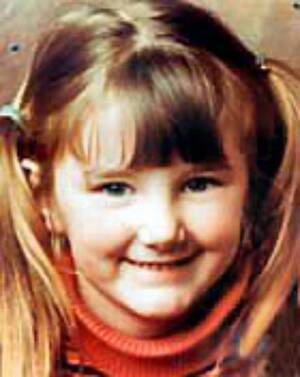
Donegal (top) and Mary Boyle
Yesterday a man was arrested in connection with the kidnapping of Mary Boyle in 1977.
It has put the spotlight on the existence of a possible paedophile ring that has operated in the South Donegal area for decades.
1977: Six-year-old Mary Boyle disappears while visiting her grandparents’ home near Ballyshannon. An intensive search of the area yields no results.
1998: Speaking to the Irish Independent in his capacity as ‘youth community worker’, Liam Adams, Gerry Adams’ brother, references a ‘very well-organised paedophile ring’, which may have links in Donegal.
2000: Eugene Greene, a priest from Gort an Choirce in the Raphoe Diocese, which covers most of Donegal, is sentenced to 12 years’ imprisonment after being convicted of abusing up to 26 boys in a number of parishes within the diocese during the period 1965 and 1982.
2002: Denis McGinley, a teacher from Gort an Choirce, who also abused a multiplicity of victims, is sentenced to 30 months in respect of offences committed between 1978 and 1995.
2004: Allegations that up to 22 men had sexual relations with a 13 year-old Ballyshannon girl in various locations in Ballyshannon, Rossknowlagh and Donegal Town in 2003.
2006: In February, a teenage girl is raped in Bundoran.
2007: Following an almost three-year investigation 6 men are charged with sexual assault on the 13-year-old Ballyshannon girl.
In March, another 13-year-old girl is attacked and raped in Donegal Town by a local man in his twenties. In September, a teenage girl is sexually assaulted by a 22-year-old man on the main street of Donegal Town while walking home from school. In the same month, another teenage girl is sexually assaulted in Bundoran.
Trials of six men charged in relation to the 13-year-old Ballyshannon girl take place. Five men, aged between 22 and 34 years of age, are convicted, four of whom are sentenced to periods of imprisonment of between two and three years, with the other being given a suspended sentence., pleads not guilty, is convicted on two counts, and sentenced to 2 years and six months.. The sixth man successfully pleads genuine mistake as to age and is found not guilty.
2008: In September, a 16-year-old girl is attacked by an 18-year-old youth at the Harvest Fair in Glenties.
Retired Garda Martin Ridge, who led the investigation into Greene and McGinley, publishes a book about the investigation ‘Breaking the Silence’ (Gill & Macmillan). This book alleges that Eugene Greene was known to clergy in Raphoe as a paedophile at least as early as 1976.
2009: In April, a 57-year-old Bundoran man is convicted of sexually assaulting a 19-year-old girl.
2010: In June, it is reported that the gardai have files on 16 additional men who had sexual intercourse with the 13-year-old Ballyshannon girl in 2003 but against whom charges were not brought by the DPP due to insufficient evidence. The girl’s diary records that she had sex 57 times with 22 men over a six-month period.
In July, paedophile William John Paden – one of Britain’s most wanted sex offenders – is arrested in Ballyshannon.
2011: A schoolgirl is raped by a schoolboy after the Ballyshannon Carnival. Two other girls come forward to allege rape by the same boy, whom the Mirror states is “believed to have links to a notorious pervert from the county who was jailed in the past for a sex attack”.
In June, the Irish Independent reports that the gardai have begun an investigation into an organized child sex ring in Donegal.
The following month, paedophile Michael Ferry is convicted of having raped four boys on the premises of an Irish language summer school in Gweedore. Ferry was allowed to carry out odd jobs on the school despite the management being aware of his past conviction for a sexual offence in 2002. Justice Minister Alan Shatter orders an investigation. One of the victims, Derek Mulligan, waives his anonymnity and expresses concern that Ferry – who took pictures of the boys when abusing them – may have been part of a paedophile ring operating in the area. Highland Radio reports that the Gardai are investigating claims against four other persons linked to Ferry. Two men are subsequently arrested and released in what are believed to be Ferry-linked investigations, although no charges are subsequently brought.
An unidentified source involved in social work is quoted in the Donegal Democrat as stating that child sex abuse is rampant in parts of Donegal and has been for many years. In August, the Guardian reports that new evidence has emerged of a lay paedophile ring in Donegal paralleling the church paedophile ring to be detailed in the forthcoming Raphoe Report, in which the Gardai was complicit, and in relation to which an investigation is now under way.
In November, the National Board for Safeguarding Children in the Catholic Church publishes the Raphoe Report. This review of sexual abuse in the Raphoe Diocese purports to examine all case files from 1975 to 2010 to determine how allegations and concerns were dealt with. The report identifies 52 allegations against 14 separate priests in the diocese since 1975, eight of whom have left the priesthood or are no longer serving in a ministry and four of whom have been convicted of offenses against children or young people. The only priest named in the report is Father Greene. The Report was described as a whitewash by the local Tirconaill Tribune newspaper, which criticised the reviewers for not having spoken with the persons abused.
The same month, an abuse survivor, John O’Donnell of Flacarragh, demands a full state enquiry into alleged cover up of a 1970s Donegal paedophile ring. Mr O’Donnell alleges that his attempt to report his abuse by a lay church member to the Gardai in 1973 resulted in him being slapped and slung out.
The same year, the Gardai begin a review into the case of Mary Boyle.
2012: In February, a youth is arrested following a sexual attack on a 15-year-old girl in Ballyshannon.
In May, the BBC airs a documentary about clerical child abuse in Donegal “The Shame of the Catholic Church.” The documentary focuses on a secret church inquiry in 1975 when a 14-year-old Donegal boy, Brendan Boland, was questioned by the church after he had disclosed he had been abused by Fr Smyth during time spent by him in a parish Donegal. Three priests took part in the process, among them Cardinal Brady, then Fr John Brady – a canon lawyer, bishop’s secretary and school teacher.
In the documentary, retired Garda Martin Ridge is quoted as saying:-“I don’t believe a week went by in West Donegal where you hadn’t a child or a number of children sexually abused . It’s horrendous. Anywhere you look around here which is so hard to fathom: by-roads, side roads, churches, schools – the abuse here was something unbelievable, unbelievable. And the fact that nobody in the public spoke out about this after the total carnage here.”
2013: A 63-year-old man is convicted and sentenced to two years’ imprisonment for 35 charges of indecent assault on two young brothers in Ballyshannon between 1966 and 1971.
A 44-year-old Ballyshannon man pleads guilty to approaching schoolboys in their early teens, showing them porn and offering them money for sex.
Peter Cororan of Falcarragh is sentenced to 12 years’ imprisonment for the abuse of seven victims, some aged as young as 7, over the course of 16 years.
In October, Liam Adams is convicted of raping and sexually assaulting his daughter, Aine Dahlstrom, over a six-year period between 1977 and 1983.
2014: In January, TG4 programme Micheál Ó Fearraigh: Feall i ndiaidh Fill airs. The programme states that, although an interim Garda report supplied to the Justice Minister in the months following Ferry’s 2011 conviction claims that gardaí had alerted both the school’s directors and the then North Western Health Board (now HSE) about Ferry’s first conviction shortly after it occurred in 2002, the Health Service Executive has yet to publish its own internal report into what actions it took after receiving this information from gardaí.
In April, Arline Murphy, aged 50, from Ballyshannon, publishes her story in the Donegal Democrat, detailing a history of abuse between the ages of 7 and 16 by a number of different Ballyshannon people, both male and female, known to one another.
Gardai investigating the disappearance of Mary Boyle inspect and take forensic evidence from a bowl-shaped area of land near where she was last seen, and where neighbours reported seeing what appeared to be a shallow grave some days after her disappearance. Although they informed the Gardai, no body was found in the spot by the time it came to be searched.
On October 21, it is reported that a 64-year-old man has been questioned about the kidnapping of Mary Boyle. The man, resident in the Ballyshannon area at the time of Mary’s disappearance, is currently serving time for indecent assault.
Mary Boyle: Man arrested over Donegal girl’s 1977 disappearance (BBC)
(Google Maps)


Having turned an emotional ten years old this week, Facebook is now offering a Look Back service – an embeddable video timeline highlighting your activity on the social network.
Here, lolsters Tripp and Tyler present their version of an honest Look Back movie.
UPDATE: Contains Breaking Bad spoiler.
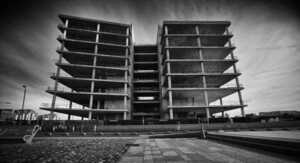 (The shell of the Anglo HQ soon to be the new home of the Central Bank)
The members of PoliticalWorld.org site are currently compiling a timeline of the banking collapse and back to back loan scandal from 2007-2009.
This is how it’s shaping up:
January 2007: Sean Quinn is reported to have secretly built up a 5% stake in Anglo Irish Bank using CFDs.
February 2007: Banking shares hit record highs, trebling in value since 2000. March 2007: Residential property prices fall for the first time.
January 2008: Legal advice taken on Sean FitzPatrick ‘s hidden loans. He is given the all clear.
May 7 2008: Anglo Irish Bank chief executive David Drumm states that Anglo Irish bank is in a “robust funding position”.
July 2008: 10% of Anglo Irish Bank is placed with 10 of its clients in a move not disclosed to the Irish Stock Exchange.
July 15, 2008: Sean Quinn states his family controls 15% of Anglo Irish Bank.
September 5, 2008: Anglo Irish sold its Austrian Division to Valartis.
September 9, 2008: Alan Gray met Lenihan at 11.30 in the Department.
September 11, 2008: The Anglo Board “first” realised that the bank was massively threatened by Quinn’s “gambling on its share price”.
September 15, 2008: Collapse of Lehmans.
Anglo begins to haemorrhage deposits. FitzPatrick and Drumm meet to discuss a possible merger with IL&P with directors, Gillian Bowler and Denis Casey
When this falls through, Anglo approach EBS
Haemorrhaging of deposits means Anglo has breached its regulatory liquidity ratios. Turns to Central Bank.
September 18, 2008: That leaked phone conversation between Bowe & Fitzgerald on how Anglo Irish was trying to get the Government on the hook for €7billion.
September 19, 2008: Anglo makes a presentation to the Dept of Finance, saying it will be “highly profitable” in 2009, with bad debts of just €300million.
Later, Government and regulatory officials meet Brian Lenihan to discuss the “great strain” on the liquidity of the Irish banks.
They decide to increase the State deposit guarantee scheme from €20,000 to €100,000.
Central Bank governor John Hurley suggests a €10 billion emergency fund and the possibility of nationalising or supporting Anglo.
September 20, 2008: The regulator meets the banks and building societies to gather further intelligence on how much they are losing in deposits.
They are told the Government will announce the increase on the deposit guarantee that day and that the announcement will contain “generous wording” signalling that the Government stands behind the banking system.
The Government says publicly that it wants to “protect the whole financial system, secure its stability”.
The statement contained what officials called ‘constructive ambiguity’.
It was never quite clear what the Government was saying, but it was so ambiguous it could be seen constructively by the market.
September 21, 2008: Goldman Sachs advisers to Irish Nationwide tell Government the building society is in danger of running out of funds in 11 days.
September 22, 2008: Mergers and liquidity borrowing from the Central Bank discussed.
September 25, 2008: With impeccable timing – Ireland becomes the first country in the eurozone to declare it is in recession.
Merrill Lynch brought into advice Department of Finance. Range of options presented.
“At this stage, things were getting worse and worse – it was dire,” says one insider. (Simon Carswell reports)
September 26, 2008: Merrill Lynch tells Brian Lenihan a blanket guarantee “could be a mistake” that would damage the country’s credit rating.
However.. Lenihan, Cowen & the Dept decide a blanket guarantee would be “best, most decisive, most impactful” from the market’s perspective.
Anglo formally requests a short-term liquidity loan of €1.7 billion from Central Bank to tide it over the end of the month.
The same day, Irish Life Permanent begins providing up to €3.45 billion in cash deposits to Anglo over the next four days.
September 27, 2008: PricewaterhouseCoopers says Anglo has lost €10 billion in deposits over the crisis period.
They warn that Anglo is heading towards a cash shortfall of €12 billion. Deposits are now being monitored five times a day.
September 28, 2008: Merrill Lynch warns Anglo is close to collapse, has exhausted all sources of liquidity, and faces deficit of €100 million by Tuesday.
Merrill Lynch recommends the Central Bank provide €5bn in overnight liquidity in addition to a €20bn State-backed emergency lending scheme.
Government advisers say, as an alternative to overnight liquidity, the Government could guarantee the six banks, but that this could raise credibility issues given its scale – involving covering bank liabilities of about €500 billion.
Government Meeting: Gormley says that a Bank Guarantee was discussed and agreed. (Meeting recorded in Lenihan’s diary).
September 29, 2008: Crisis meeting at Department of Finance after Anglo loses another €4 billion. AIB and BoI push for nationalisation of Anglo.
Merrill Lynch draws attention to Quinn’s position.
The back-to-back transfers involving €7.5 billion between ILP & Anglo took place over these last few days of September.
Just before 30 September 2008: IL&P sent €4billion to Anglo “in line with the previous discussions on the green jersey agenda”.
September 29: Night of the Bank Guarantee:
Director of Central Bank Alan Gray rings Cowen. Meets Lenihan
Brian Cowen apparently thumps table at meeting and says “No way are we effing nationalising Anglo Irish”.
Both AIB and BOI were asked by Government for €5billion each to loan to Anglo.
September 30, 2008: The Government announces a €400billion guarantee of the liabilities of all six Irish banks.
Department of Finance sends Letter of Comfort to Anglo Irish Bank.
October 2008: PricewaterhouseCooper completes its report on the Irish banking system.
October 14, 2008: Lenihan calls an emergency budget.
December 3, 2008: David Drumm describes Anglo as “performing strongly” and describes profits as “robust”.
December 18, 2008: Sean FitzPatrick resigns after shareholders find out about his €87m hidden loans.
December 19, 2008: David Drumm resigns.
December 21, 2008: Government announces a €1.5 billion bail-out for Anglo.
December 29, 2008: Anglo shares hit 12c.
January 15, 2009: Anglo Irish Bank Nationalised, Finance Minister Brian Lenihan finds out about €7 billion in loans from IL&P to Anglo.
January 16, 2009: Angry shareholders call for Anglo’s board to be sacked. Five Anglo non-executive directors resign.
January 25, 2009: The existence of a group of investors who secretly took on 10% of Anglo is revealed by The Sunday Times.
January 30, 2009: The financial regulator Patrick Neary resigns on a €143,000 a year pension. “Fair play to ya Willie”.
February 10, 2009: IL&P’s €7 billion transfer to Anglo is reported publicly for the first time.
Opposition parties call for Lenihan to resign.
February 12, 2009: Two directors of IL&P resign.
CEO Brian Goggin admits Bank of Ireland made “mistakes”, and “lending decisions in the past are now coming home to roost”.
February 13, 2009: Denis Casey resigns from Irish Life & Permanent.. Poll shows support for Fianna Fáil has fallen to a record low of 22.
To be continued….
Thanks Oireachtas Retort
(Eamon Farrell/Photocall Ireland)


