
 A low-tech ex-reader poo-poos the Irish Daily Mirror’s political coverage.
Via Sarah Bardon



A low-tech ex-reader poo-poos the Irish Daily Mirror’s political coverage.
Via Sarah Bardon


 A pleasingly shaped, utterly indulgent carbon fibre hammock tub created by design company Splinter Works in the UK, what sez:
The peaceful experience of kicking-back in a hammock has been further enhanced by combining it with the immersive comfort of soaking in a hot bath. By literally elevating the experience of bathing into a suspended sculpture the bathroom has been reinvented as a contemplative sanctuary for artful relaxation. Designed for use in a wet room, Vessel is suspended from the walls and does not touch the floor. It is fixed with stainless steel brackets that can be covered over, or left revealed. The bath is filled using a floor standing tap and the waste water released through the base into a floor drain. A downpipe drain can also be installed if a wet room setting is not possible.
@drivetimerte A small protest group (#BallyheaSaysNo) meeting Istvan Szekely in Brussels (Google him) doesn’t interest ye? Even slightly?
— Diarmuid O’Flynn (@ballyhea14) June 24, 2013
At Dublin Airport, slightly baffled; small campaign group getting to meet the most influential EC person in relation to Ireland – not news?
— Diarmuid O’Flynn (@ballyhea14) June 24, 2013
 (The Adtruism troop, from left: Hannah McCarthy, Brian McCormick, Tim Delany and Gabriel Corcoran)
One of those oxymoron whatsits?
NO.
Hannah McCarthy (above left) writes:
In a nutshell, Adtruism is a social tech initiative that lets bloggers and website owners raise money for the causes they care about without spending any of their own money.
They can go on to the Adtruism website, select a cause they’d like to help such as the Make-A-Wish Foundation or UNICEF, then select a widget, place it on their website and then advertisers pay to display their advert through the widget. All the revenue then goes to the cause they’ve selected.
But who are you?
All of us working on the project have just graduated or are still in college so we really are all doing it because we think it’s important that our generation isn’t just a bunch of slacktivists mindlessly liking things like Kony2012 and that if they are able to do something about a cause, even if it’s just something small, that they do it.
Jaykers.
Do you have a promotional video?
Yes, here.
A fancy infographic?
 Thank you.

Standing next to Edward Snowden’s seat on flight to Cuba. He ain’t here. pic.twitter.com/NVRH3Pzved
— max seddon (@maxseddon) June 24, 2013
A plane full of thirsty journalists flying from Moscow to Cuba teetotal while their quarry heads for Ecuador.
 Economist Colm McCarthy spoke with Myles Dungan on Today with Pat Kenny on RTE R1 earlier in relation to this morning’s Anglo tapes story in the Irish Independent.
Things have certainly moved up a gear, in fairness like.
Colm McCarthy: “It’s remarkable that almost five years on, from these events now we still haven’t had a proper inquiry.
Myles Dungan: “And should this material now form the basis of an inquiry by the BAC for example?”
McCarthy: ‘Well there was a referendum run and lost by the Government about 18 months ago which would have re-empowered parliamentary committees to conduct proper inquiries. There powers had been circumscribed by the Abbeylara judgement as you may recall, it was about something completely different, but the courts decided that there were limits to the power of parliamentary inquiries. Limits that do not apply to parliaments in other countries, I might add. And the Government ran a referendum to restore those powers and they were kind of ambushed at the end of a poor campaign by a group of barristers and the referendum was narrowly defeated. There’s a very interesting piece on page 25 of today’s (Irish) Independent by John Downing , one of their regular columnists, in which he makes the point that it might be best now to actually rerun that referendum and win it this time.”
Dungan: Talk to us a little bit about the mentality of those involved in this conversation, because the tone is very strange. I was suggesting to Fionnan Sheahan this morning that it does not appear that those involved felt particularly stressed by the circumstances or by the enormity of the situation that faced their institution?”
McCarthy: “Well, you know banks, when they begin to face a run on liquidity, react in a manner which says ‘let’s, let’s find the fingers to stick in the dyke’ and that might be the finger of the Central Bank and that comes across a bit from the tapes. It’s worth recalling that for a couple of months after the guarantee, I mean these tapes relate to the middle of September, the guarantee was at the end of September 2008, but for a month or two after that, public officials were still pretending that the Irish banks were sound, that they had adequate capital buffers and so on. And, one of the implications of today’s revelations is that they may have been better informed than that.”
Dungan: “Now this conversation took place just a couple of days after Lehman Brothers had been allowed to collapse. A huge institution.”
McCarthy: “Yeah.”
Dungan: “It had been allowed to collapse by the US Government. The Anglo officials didn’t seem to think that that was going to happen in their case or they didn’t seem to be concerned.”
McCarthy: “Well I’m sure they must have been concerned but at that stage the Irish Government had not prepared bank resolution legislation and they had ample time to have done that because Northern Rock, in the United Kingdom, got into trouble 12 months earlier. The Bear Stearns bank in New York had been rescued by the Federal Government in March of 2008. The Feds obviously decided they’d had enough of that and they decided to let Lehman’s go. So one of the unexplained mysteries of the whole affair is why the Irish Government had not equipped itself for some broader options by the time the decision was taken to guarantee all its liabilities, or virtually all its liabilities of the Irish banking system.”
Dungan: “Would you agree that one of the other things that comes across from this transcript is that there was scant respect in Anglo Irish Bank for the Financial Regulator?”
McCarthy: “It has that air to it but I, I don’t think one should draw broad conclusions like that until there’s been a full inquiry. What this shows to me again is that journalists have written books about Anglo, they’ve written books about Irish Nationwide, it has been left to journalists to try and dig up as much as they can about what really happened. Nobody who was directly involved is saying anything, they’re all getting advice from lawyers, and so on. This is a classic example of a situation that needs a well-resourced, patient public inquiry and inquiries of that kind have been conducted and long since completed in various other jurisdictions.”
Dungan: “But this underscores the need for a properly constructed inquiry in this jurisdiction?”
McCarthy: “Yes, and it needs to be properly resourced. And if it requires a rerun of the referendum that was rather carelessly lost by the Government then so be it. But the public I think must now begin to realise that the country has been bankrupted and we still don’t really know why.”
Eamonn Farrell/Photocall Ireland

Redditor Andrew Johnson – diagnosed with Parkinson’s Disease 4 years ago at the age of 35 – demonstrates the profound effects of deactivating and then reactivating the neurostimulator surgically implanted in his brain to counter the effects of his condition.
Damn, science.
 C&H
C&H

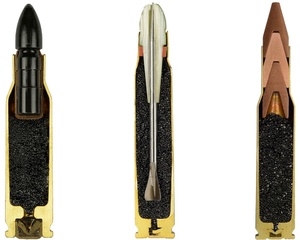
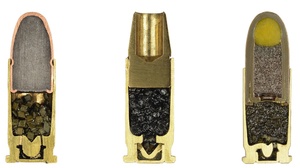
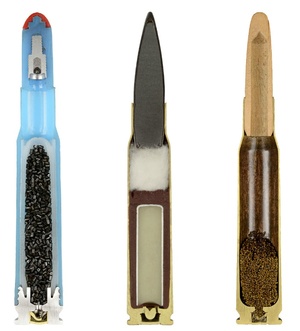
 Colourful sweeties, filled with a variety of deaths.
From AMMO – a photo series of 900 pieces of dissected ammunition ‘shot’ by photographer Sabine Pearlman in a WW2 bunker in Switzerland. Sez she:
I was originally intrigued by the ambiguous nature of the subject matter. The cross-sections reveal a hidden complexity and beauty of form, which stands in vast contrast to the destructive purpose of the object. It is a representation of the evil and the beautiful, a reflection of the human condition.

