
Yearly Archives: 2016

90413458derek

From top: Members of the Irish Defence Forces take part in a parade for the 100th anniversary of the Easter Rising in Dublin last Easter; Derek Mooney

The author shoots down the prospect of a Europe Army and urges a fact-based assessment of Ireland’s defence needs.

FIGHT!

Derek Mooney writes:

Though you may not have noticed it – there was, over the last few weeks, an attempt to start a public debate on Irish Defence policy. While the Irish Examiner, in particular, did its level best to get it going, the discussion soon fizzled out.

The reason why the debate never really got going may be due to the fact that we tend to only discuss defence policy in public in response to some significant event or, more frequently, to some outlandish and unfounded claim.

On the rare occasions that we have any debate on defence in Ireland, they tend to be either end of the extreme ranging from claims that we are abandoning neutrality, a claim made continuously since the 1970s, to questions as to why we even have a Defence Force.

Though there is a real and clear public pride in our Defence Forces, both at home and abroad, there is also a surprising paucity of knowledge about Defence policy.

With this in mind, I want to use this week’s Broadsheet.ie offering to put some basic facts about Irish Defence policy out there, in the vain hope that the next public debate on Defence may be based on fact and reality, not myth and assertion.

Let’s start with a few basics.

The Irish Defence Forces comprise the Army, Air Corps and Naval Service and should total 9,500 men and women. The current manpower figure as set out in a parliamentary reply to Fianna Fáil’s Lisa Chambers, is just under 9100.

There are approximately 460 Irish troops currently serving overseas on a range of UN led and mandated peace-keeping and humanitarian missions.

These include: 60 naval service personnel on the humanitarian search and rescue operations in the Mediterranean; about 210 troops on the UNIFIL mission in Lebanon and approx 140 troops serving in the UNDOF mission on the Golan Heights in Syria.

Though these numbers are way down from the average of 800 plus personnel serving overseas less than a decade ago, it still represents a sizeable Irish contribution to international peace and security, which in turn contributes to our own national security.

We spend about €900 million per year on Defence, though the vast bulk (over 70%) is accounted for by wages and pensions.

When it comes to value for money the Defence Forces lead the way.

The reform and modernisation programme undertaken between 2001 and 2010 make it a model of how public sector reform can be done right. Productivity was increased, numbers were reduced and the savings were invested in vastly improved equipment and training.

Now let’s turn to the policy side. First and foremost, Ireland is militarily neutral. While this is usually defined as not being a member of a military alliance, it also means that we decide for ourselves how much we spend on defence and – most importantly – how, where and when we deploy our troops overseas on humanitarian and peace-keeping/peace enforcement operations.

This is done via the “Triple-Lock” mechanism of UN mandate, Cabinet and Dáil approval. Triggering this triple lock is required before 12 or more Defence Force personnel are deployed overseas under arms.

This enshrines not only our military neutrality but our commitment to multilateralism and the UN.

We use the phrase UN mandated, which means that a UN resolution is required. Nowadays many UN mandated missions are not UN led, i.e. “blue helmet”, but rather led by regional organisations – such as the EU, The African Union, NATO etc – on behalf of the UN. This was the case in the 2008 EU For Chad mission, which was commanded by an Irishman, Gen. Pat Nash.

I was in the Dept. of Defence during the Chad/Central African Republic mission, which was established to deal with the crisis created in the region on foot of the Darfur famine.

I saw how the Triple Lock was implemented smoothly and speedily. UN resolution 1778 was passed at the end of Sept 2007, Cabinet Approval was given in October, unanimous Dáil approval by the end of November and by December an initial deployment of Army Rangers and support elements were on the ground in Eastern Chad establishing the Irish Camp.

Any difficulties in deployment were not due to the Irish or the Triple Lock but rather to the frustrating slowness of other EU countries, particularly the non-neutral ones, to respond especially when it came to offering air and medical support to the mission.

Nothing I saw at those defence meetings in Brussels led me to think that an EU Army was a realistic possibility, leaving aside the fact that we have a veto (EU requires unanimity on common defence) on it and that the Irish Constitution (Art 29.4.9) precludes Irish membership of a common defence.

Speaking of air support brings me back to the Irish Examiner article mentioned at the outset. From my perspective this appears to be based on the inaccurate, if not sensationalised misreading, of an already inaccurate report.

I say inaccurate as the original material suggests that is not Ireland which has asked the RAF to protect our airspace from terrorist threats, but rather that it is the British who have asked for Irish permission to fly into our air space in the event of terrorist air attacks heading for Britain.

When viewed this way the story is not quite as sensational, nor is it the slam dunk argument for Ireland rushing out and purchasing a fleet of F-16s.

I am not absolutely opposed to our buying a few F-16s – though if we are going to go into the fighter aircraft market why not opt for some newer F-35s?

I am sure the Air Corps would be overjoyed to have them, though I suspect the Departments of Finance and Public Expenditure might baulk at the tripling or quadrupling of annual defence expenditure necessary to keep these fighters in the air 24/7, especially when we consider the real and actual threat assessments.

So, let us have a full debate on defence (and foreign) policy by all means, but let us ground it in fact and reality.

Derek Mooney is a communications and public affairs consultant. He previously served as a Ministerial Adviser to the Fianna Fáil led government 2004 – 2010. Follow Derek on Twitter: @dsmooney

sonia
f8@23-08-2016-09-38-52

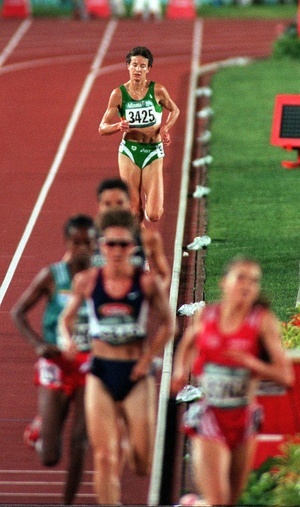
From top: Sonia O’Sullivan at the Atlanta Games 1996; Fr Liam Kelleher at the closing ceremony of the Rio Olympics

Readers may recall the Atlanta Olympics in 1996.

It was the year Cork athlete Sonia O’Sullivan was forced to strip naked in front of other athletes in order to change her running gear – from Reebok to Asics – in the tunnel next to the track just before her 5,000m heat.

It happened amid a row between the Olympic Council of Ireland, who had a reported £75,000 deal with Reebok, and the then national athletics organisation Bord Lúthchleas na hÉireann (BLE), who had a contract with Asics.

It was reported at the time that Pat Hickey, of the OCI, personally told Sonia she could wear her gear from Reebok – with whom she had a sponsorship deal – even though BLE had registered the Asics strip as the official Irish team strip three days before the competition began.

Following the incident, Mr Hickey held a press conference on the issue – which was attended by Ms O’Sullivan.

Further to this, Cork priest and long-time athletics coach, Fr Liam Kelleher, who was national PRO for BLE at the time, writes:

Pat Hickey has done some fantastic work which cannot be denied but his obsession for power has finally been his undoing.

I have known him since 1972, from my first Olympic Games in Munich all of 44 years ago, and I was not happy with the antics that happened in Atlanta in 1996 during the “Sonia saga” which again was well documented at the time.

I was Press Officer for the then Irish athletic organisation BLE and was totally embarrassed by what transpired.

I saw Sonia dragged to the press conferences after the gear-changing, controversy which must have adversely affected her performance, and remember being acutely sorry for her having to try to give answers to the assembled media.

What really transpired we will probably never know.

I was hugely upset too, and when I returned to Ireland, I resigned my position as National Press Officer of BLE.

I went on national radio on the News at One, then with Seán O’Rourke to explain my reasons. My great friend Frank Greally [of Irish Runner magazine] covered the issue with five pages on Irish Runner with title “Pastor departs”. It was written by Sean McGoldrick whom I actually met at the stadium in Rio last week.

At that time, in 1996, I issued a broadside against the Olympic Council of Ireland which made banner headlines in the papers and for which I was castigated, in many parts, for being way off the mark.

But, I got huge support from people in the know.

One thing I said and wrote was: “The Olympic Council of Ireland are democratically elected by nobody, are answerable to nobody and dictate to everybody.”

So, you can see, the warning signs were there 20 years ago, if they were heeded.

My outburst came at a cost. Four years later, at the Sydney Olympics in 2000, there was no way I could get a press pass – which had to be signed by the President of the OCI [Pat Hickey] – to cover the events for Marathon Athletics Magazine which I had been publishing since 1984.

In Sydney, I tried every day for six days in a row with the help of Frank Greally from Irish Runner and John O’Sullivan [Sonia’s father] but no joy.

Tickets were impossible to get so I was resigned to watching it on TV. Two hours before Sonia was due to run, I was with Frank Greally when Pat Hickey passed by.

Frank said,’Now is your last chance, bury your pride and go and ask him’, but I turned down Frank’s plea. We went again to the press accreditation centre  put a bundle of magazines on the table and, to her eternal credit, the lady at the desk who at this stage must have been fed-up with me, decided to ring the communication chief and he gave the OK.

To my knowledge, it was the only accreditation given out without the signature of the President.

If I were asked now about the Olympic Council, I would have mixed views.The obvious one has to be transparency, and too much power must never again be the domain of any individual.

What do I think of Pat Hickey now?

I genuinely feel sorry for him as I stated at the outset he did a fantastic amount of work, he moved in high places with people like Russian President Putin numbered as one of his allies and goodness knows how many more, who can do little to help him now.

He is obviously suffering huge trauma and distress and if we want to put it in terms of punishment perhaps this is enough and let him go free. He has paid a huge price already.

Pics: Getty/FrKelleher

Previously: Calling It

REPRO FREE 29 August 2016 Rhino Calf Born at Dublin Zoo Dublin Zoo is delighted to announce the arrival of a southern white rhinoceros calf. The male calf, who is yet to be named, was born to mother Ashanti and father Chaka at 1.45pm on Thursday 25th August and weighs approximately 60kgs. The youngster joins the rest of the herd – Sam, Reni, Chaka, Zanta, Nyala and of course his mother Ashanti - at the African Savanna. © PATRICK BOLGER The children of Ireland are invited to suggest a name for the newest arrival based on his African origin. Name suggestions can be submitted at www.DublinZoo.ie  Dublin Zoo, a not for profit organisation, is open seven days a week from 9.30am to 6pm. For further information on Dublin Zoo visit www.facebook.com/dublinzoo, www.dublinzoo.ie. ENDS For more information, please contact: Heidi O’Sullivan: 01 634 2583 / 087 297 2046 Siobhan Grogan 01 6342561/ 085 2249485 PSG Communications dublinzoo@psgcomms.ieREPRO FREE 29 August 2016 Rhino Calf Born at Dublin Zoo Dublin Zoo is delighted to announce the arrival of a southern white rhinoceros calf. The male calf, who is yet to be named, was born to mother Ashanti and father Chaka at 1.45pm on Thursday 25th August and weighs approximately 60kgs. The youngster joins the rest of the herd – Sam, Reni, Chaka, Zanta, Nyala and of course his mother Ashanti - at the African Savanna. © PATRICK BOLGER The children of Ireland are invited to suggest a name for the newest arrival based on his African origin. Name suggestions can be submitted at www.DublinZoo.ie  Dublin Zoo, a not for profit organisation, is open seven days a week from 9.30am to 6pm. For further information on Dublin Zoo visit www.facebook.com/dublinzoo, www.dublinzoo.ie. ENDS For more information, please contact: Heidi O’Sullivan: 01 634 2583 / 087 297 2046 Siobhan Grogan 01 6342561/ 085 2249485 PSG Communications dublinzoo@psgcomms.ie

‘sup?

Heidi O’Sullivan at Dubliun Zoo writes:

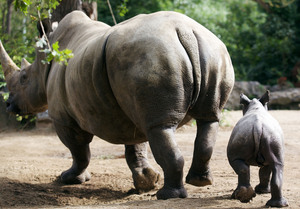
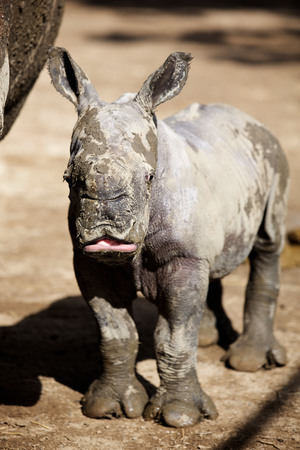
Dublin Zoo is delighted to announce the arrival of a southern white rhinoceros calf. The male calf, who is yet to be named, was born to mother Ashanti and father Chaka at 1.45pm last Thursday and weighs approximately 60kgs.

The youngster joins the rest of the herd – Sam, Reni, Chaka, Zanta, Nyala and of course his mother Ashanti (top left) – at the African Savanna.The newborn is Ashanti’s fifth calf and is another significant success for Dublin Zoo as part of the European Endangered Species Programme established to assist the survival of the near threatened southern white rhinoceros….

…The children of Ireland are invited to suggest a name for the newest arrival based on his African origin. Name suggestions can be submitted here…

Dublin Zoo

Screen Shot 2016-08-29 at 12.41.25

Tonight.

On RTÉ One at 9.35pm.

The first episode in a five-part series called Keeping Ireland Alive: The Health Service In A Day.

Gareth Naughton writes:

The clip [above] features Naas man Tommy McCormack, who is living with dementia, and his wife Annette as she brings him to take part in one of the highlights of his week – singing with the Kildare Pastimes Choir, which works with people living with dementia, their families and carers.

Keeping Ireland Alive: The Health Service In A Day brings viewers the health service as they’ve never seen it before. Filmed over one 24-hour period in May with 75 cameras at locations throughout the country, this five-part series pushes beyond the headlines to tell the human stories at the heart of this often controversial but most vital service.

Keeping Ireland Alive (RTE)

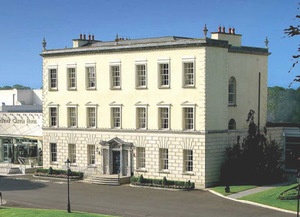
Dunboyne Castle Hotel is a hotel and spa in Co Meath but a section of the older part of the hotel used to be Ard Mhuire Mother and Baby Home.

The home was run by the Good Shepherds from 1955 until it closed in 1991 – when it was sold.

On Saturday, RTÉ journalist Brian O’Connell accompanied several mothers, who had lived in the mother and baby home for a time, and who revisited the building at the weekend.

The visit had been organised by Irish First Mothers.

One of the mothers whom Mr O’Connell spoke to was Emer, who would have been one of the last mothers to enter the home, in 1989, when she was in her early 20s and had a baby boy.

She has since met her son.

She now lives in Scotland and returned to Ireland to give evidence to the Commission of Investigation into Mother and Baby Homes the day before she met with Mr O’Connell.

In an item broadcast on the Today with Sean O’Rourke Show earlier this morning, Emer told Mr O’Connell:

“I was one of the older mothers, I was 23/24 when I came here. I go over it and over it and over it and over it in my head and I think: you know, I’m capable of making my own decisions and how on earth did I come to be here?”

“Coming here is like having that feeling of having this dark cloud over you that’s going to take away your baby when it’s born.”

Speaking about meeting her son for the first time since she was in the home, she said:

“He looks like lots of my family. He came into the room and I wanted to put my arms around him but I thought ‘that’s not fair on him, maybe he doesn’t want to, maybe he wants to hit me’. I just  thought why, why have we been kept separate all our lives. I didn’t do anything wrong, he didn’t do anything wrong.”

About giving evidence to the Commission of Investigation into Mother and Baby Homes, she said:

“[It was] difficult but useful, to be able to actually tell your story. I would like people to understand how difficult it was for women and what they had to go through. I would like to get an apology for what was done to us.”

Previously: ‘They Exclude And Stall While We Die’