
Yearly Archives: 2016

Screen Shot 2016-03-29 at 11.14.17

You may recall a post regarding an article on music website  Pitchfork (above) in relation to Ireland’s rap scene and, specifically, how the children of African migrants and asylum seekers in Ireland have ‘legitimatised’ the scene.

Further to this…

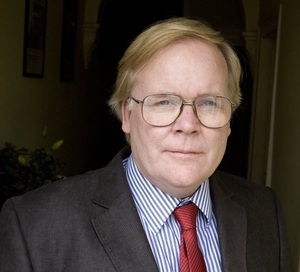
Derek Hopper writes:

Love it or loathe it – and as many people loathe it as love it – Pitchfork is the millennial generation’s MTV. The hipster’s bible of all things musical, it reaches millions of fans every month and is so influential that its rating system has even been the subject of an hilarious hatchet-job by those masters of satire The Onion (“Pitchfork gives music 6.8”).

That’s why it was so troubling for me to read their article about up-and-coming Dublin hip-hop acts who just so happen to comprise young black men.

The headline read “Meet the African Immigrants Who Are Legitimizing Ireland’s Hip-Hop Scene”.

Legitimizing Ireland’s hip-hop scene.

Not “contributing to” or “improving”, both of which would have been fine and probably true. No, apparently they’re “legitimizing” it.

That’s the first problem. How exactly are Irish people of Nigerian (i.e. a country in Africa some five thousand miles from The Bronx) parentage “legitimizing” the Irish hip-hop scene?

Hip-hop’s exact origins are the subject of some debate but everyone accepts that it is an American art form, just like jazz or the blues. And the vast majority will agree that it has been predominantly an African- American music. Not African. Not black. But African-American.

Pitchfork’s article was no doubt well-intentioned, but it betrays a troubling ignorance of black America in its failure to distinguish between black people in the United States and black people in Africa and elsewhere.

Believe it or not, this isn’t the first time someone has conflated “African-American” with “African”. The legendary drummer Art Blakey and many other jazz musicians had to regularly contend with this blunder too, when white critics sought an absurd and patronising link between jazz and the “natural rhythm” of the dark continent’s noble savages.

Blakey stated, “No America, no jazz. I’ve seen people try to connect it to other countries, for instance to Africa, but it doesn’t have a damn thing to do with Africa”. Sorry Pitchfork and sorry Dublin rappers, but it’s the same thing with hip- hop.

What is it that makes hip-hop “legitimate”?

If it’s poverty then these guys are in the wrong place, because they left actual hardship back in Nigeria. Many will acknowledge that much of modern hip-hop is founded upon a sense of victimhood.

If your mom was a crack-whore and your dad abandoned you as a toddler and your brother was shot by a racist cop and you grew up in the Baltimore projects it means you’re genuine. You’re street.

But Ireland has a humane welfare state. The cops don’t shoot black people. Lame, I know, but cops in Ireland don’t even carry guns. When you’re poor in Ireland you get free healthcare and free education.

So where’s the edge going to come from if you want to be the Irish Kendrick Lamar? You don’t sell records rapping about the injustice of water charges.

The article goes on to talk about “entrenched racism” in Ireland and in the same breath mentions the country’s skyrocketing Nigerian population.

As a white man I’m not going to say black people in Ireland don’t experience racism from time to time, but don’t insult my intelligence and the reputation of the Irish people by suggesting that Africans are immigrating to a country that treats them like garbage. That’s not how humans operate.

Forgive me also for finding rather dramatic Dah Jevu’s burning of a KKK-style mask, which they say is symbolic of their rejection of Irish racism.

The average joe in the street may be forgiven for thinking the Klan were simply a bunch of assorted white racists who took pleasure in lynching black folk, but hip-hop heads can’t be given carte blanche, especially when they’re putting the KKK and Ireland in the same postcode.

If they want to spit political venom they have a responsibility to read their history books, and if they did that they’d quickly learn that the Klan were no friends of the Catholic Irish. History is rarely as black and white as the narrative in people’s heads.

It seems that Pitchfork wants to define hip-hop not as a uniquely African-American music and an art-form born of the black experience in the United States, but as something centred on the melanin content of a person’s skin.

Hip-hop’s origins are in 1970s New York, yet many of the “New Irish” – whose roots are in African countries like Nigeria and Zimbabwe – are being viewed as bona fide producers of hip-hop music because they happen to look like black people in America.

This is ridiculous. It is also racist: it posits the existence of a single, global “black people” of uniform experience while totally ignoring the specifically African-American reasons for hip-hop’s efflorescence at a particular time and place.

This new generation of Irish hip-hop acts may be black, and they may be talented, but the truth is they have no more legitimacy than the white Irish rappers who came before them.

Previously: Decent Irish Rappers

From the Outside In: Meet the African Immigrants Who Are Legitimizing Ireland’s Hip-Hop Scene (Dean Van Nguyen, Pitchfork)

Rusangano

Rusangano Family – launching album Let the Dead Bury the Dead throughout April

What you may need to know…

1. From an intersection of cultures, to the forefront of Irish hip-hop, Limerick/Zimbabwean outfit Rusangano Family have come into their own since assuming the name for their collaborative efforts in late 2014.

2. In keeping with themes of society, identity, belonging, and the celebration of difference and diversity, the trio specialises in a fusion of hip-hop and electronic sounds/sub-genres.

3. Comprised of DJ mynameisj0hn, and MCs GodKnows and Murli, the project came about from their collaborative work in 2013, which resulted in that year’s EP with producer Graeme S, and their first album (and namesake) Rusangano/Family in May 2014.

4. The resultant critical acclaim for their records and riotous live excursions led to supports for Snoop Dogg, Run the Jewels, Young Fathers and BadBadNotGood, as well as festival appearances all over the country. Most recently, they went Stateside to play this month’s SXSW festival in Austin, Texas.

5. Second LP Let the Dead Bury the Dead releases this month, preceded by single Heathrow (streaming above, featuring Windings/Givemanakick man Steve Ryan on guitar), unveiled late last year.

6. The band explains the long-player’s somewhat cryptic title: “Let the Dead Bury the Dead can mean a lot of things to a lot of people. A phrase that conjures ideas of regret, remorse, hope, change, letting go and the resolve to follow one’s own path. To move forward, we must also leave things behind.”

7. The trio are launching the record with a string of dates around Ireland throughout April. Friday the 8th sees them hit The Kino in Cork with Lakerama in support, while on Saturday the 9th, they head for Dublin’s Sugar Club with support from Ben Bix and Feather. Friday the 22nd, they’ll be at Dolan’s Warehouse in Limerick, before playing DeBarra’s in Clonakilty on Saturday the 23rd.

Verdict: One of the country’s most exciting live acts, and one of our most vital and forward-thinking propositions, full stop. Get involved.

Rusangano Family

StressedOfficeWorker_large
Michael-Taft

Does anyone really think that in the last hour of the last day of the working week that productivity is much above zero?

Michael Taft (above) writes

One of the main demands of the trade union movement in its infancy was to limit the working week. In 1866 the International Workingmen’s Association called for a 40 hour work week – a radical demand at a time of 60 hour working weeks.

It took well into the 20th century before this was implemented in the industrialised countries.

And now, in Sweden, there is a new experiment – the 6-hour working day, or 30 hour working week. It is not a law, it is not being implemented across the board. But a number of public and private sector workplaces are implementing a shorter working week on a trial basis.

Why? In the first instance, it is not about lowering unemployment though that will be an increasing consideration in the future with the rolling out of labour-displacing technology.

Rather, it is about increasing productivity, efficiency and health.

Here are some examples of the Swedish experiments:

In the Svartedalens nursing home, nurses have had their working day reduced to six hours at the same wage. This is a controlled trial and will end at the end of 2016 to assess the results.

A similar experiment is occurring in Gothenburg’s Sahlgrenska University hospital where orthopaedic surgery has moved to a 6-hour day, as have doctors and nurses in two hospital departments in Umeå.

At Toyota service centres in Gothenburg, employees moved to a six-hour day 13 years ago and have never looked back. Customers were unhappy with long waiting times, while staff were stressed and making mistakes, according to Martin Banck, the managing director, whose idea it was to cut the time worked by his mechanics.

From a 7am to 4pm working day the service centre switched to two six-hour shifts with full pay, one starting at 6amand the other at noon, with fewer and shorter breaks.

The Brath internet firm has a page on its website explaining why it is starting a six-hour day. The company, which has 22 staff in offices in Stockholm and Örnsköldsvik, produces as much, if not more, than its competitors do in eight-hour days.

And it’s not just in Sweden where this experimentation is taking place. In the UK, Agent Marketing is experimenting with a six-hour workday. Employees switched from an 8:30 to 5:30 shift to a 9:00 to 4:00 shift, with a one-hour lunch break.

This reduction in work is equivalent of more than one working day a week; on a monthly basis, it is equivalent to nearly a full working week; and on an annual basis, it is equivalent to ten working weeks.

All of the above, however, is just experimentation. Very few are actually proposing to introduce a 30-hour work week across the board. Currently, the headline cost would be extremely high in both the public and private sectors, especially as employees in these experiments are paid the same wage.

Further, we have to sort out our labour market, where a number of people want to increase their working hours because they are trapped in under-employment (though reducing full-time working hours could help).

A reduction in working hours will affect different sectors in different ways – a little easier in capital-intensive industries, more difficult in labour-intensive workplaces.

But the point here is that reducing working hours can actually increase productivity. Does anyone really think that in the last hour of the last day of the working week (e.g. Friday), that productivity is much above zero? Or that people at their desk for all hours are producing anything, apart from the image of being industrious to impress their boss?

Would the increase in productivity off-set the extra costs to enterprises in reducing hours? Probably not fully. It would require reconfiguring our tax and social protection benefit system – a hard task, but not impossible.

All of this will have to be measured, assessed and analysed. So why not set up a programme of experimentation? Select a scientific sample of workplaces in different sectors to implement a working week reduction trial.

This would require a pre-reduction analysis of productivity and efficiency to compare with the post-reduction output. It would require subsidies for those firms to ensure they don’t lose out during this experimentation.

Let’s see where that takes us. The decisions we make would then be informed by evidence and data, rather than prejudice and assumptions.

But the most important element of a programme to reduce working hours is the impact on people – the benefit in terms of health and well-being, work/family balance, the opportunity to engage in other pursuits with more free time.

What a boon that could be to people’s lives.

Let’s put on our lab coats. Let’s start testing.

Michael Taft is Research Officer with Unite the Union. His column appears here every Tuesday. He is author of the political economy blog, Unite’s Notes on the Front. Follow Michael on Twitter: @notesonthefront

90411391

Independent Alliance TDs Finian McGrath TD (centre)  Shane Ross (right)

John Halligan was heard to roar,
That he finds long discussions a bore,
If the deal is to stick,
Then they must make it quick,
He’s not sure he can take much more.

John Moynes

Leah Farrell/Rollingnews