

Don’t waste your money.
Free and inexpensive things to do this weekend.
Map designed by Jennifer Farley for Energia.
G’wan the Sea Fest.
Clever Map Of Free And Cheap Stuff To Do , July 1-2 (Energia)
Thanks Yvona Ostruszkova



Don’t waste your money.
Free and inexpensive things to do this weekend.
Map designed by Jennifer Farley for Energia.
G’wan the Sea Fest.
Clever Map Of Free And Cheap Stuff To Do , July 1-2 (Energia)
Thanks Yvona Ostruszkova
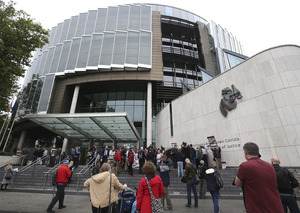


Outside the Criminal Court of Justice this afternoon were, from third left: Scott Masterson, Paul Murphy, Michael Murphy, Kieran Mahon, Frank Donaghy and Michael Banks
The jury have found the defendents in the #Jobstown trial not guilty #JobstownNotGuilty
— Gemma O’Doherty (@gemmaod1) June 29, 2017
Unanimous not guilty verdict in #Jobstown trial greeted with cheers of “No way, we won’t pay”. Several supporters broke down in tears. pic.twitter.com/UIDUdXyYzA
— Courts News Ireland (@courtsnewsIRL) June 29, 2017
Yay.
More as we get it.
Jobstown trial: Six cleared of Burton false imprisonment (Irish Times)
Earlier: Reverse Logic
Meanwhile…
Mick Barry reads the names of the people acquitted in the Jobstown Trial & asks the Tánaiste was there an orchestrated conspiracy by Gardaí pic.twitter.com/AWwhJ7Ej3O
— RTÉ News (@rtenews) June 29, 2017
Jobstown trial: Six cleared of Burton false imprisonment Iirish Times)
Meanwhile…

Hmm.
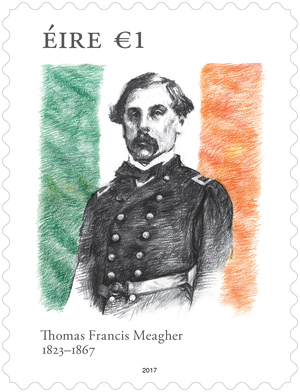
Finally.
Eimear Breen writes:
The ‘Father of the Irish Tricolour’, revolutionary and soldier, Thomas Francis Meagher is celebrated in a new stamp released by An Post today.
In 1848, Meagher brought the flag which was later to become the flag of the Irish Republic, from Paris to his home city of Waterford….
Designed by Dublin design studio WorkGroup, the stamp is based on a portrait of Meagher, by Charles, the stamp and a very collectable First Day Cover (FDC) are available from main post offices, at the stamp counters at Dublin’s GPO or online (at link below)

Miriam O’Callaghan
Miriam O’Callaghan ‘returns’ with Saturday Night with Miriam…
Sionead Harrington writes:
Joining Miriam in studio this week is comedian John Bishop who will discuss his long awaited return to stand-up comedy later this year.
Actor and former Dancing with the Stars finalist Denise McCormack will discuss what life has been like since she came nail-bitingly close to the glitter ball trophy.
Irish football legend John Giles will chat to Miriam about his new RTÉ One documentary called Giles. There will also be a performance from upcoming music sensation Wyvern Lingo.Plus one lucky viewer will be in with a chance to win a whopping €10,000 at the end of the show.
*rips up imaginary telly licence*
Saturday Night With Miriam at 9:25pm on RTÉ One
Pic: RTÉ

They’re back!
Are Ya Having That writes:
‘LeatherJacketGuy’ & ‘JohnnyBS’ Taste Test ‘UTAH’ – Salt Lake City!!

Jobstown jury looking for Garda Air Support footage of Jeep which Joan Burton and her adviser were in, to see if it could reverse#3news
— Sarah O'Connor (@sarahoc3news) June 29, 2017
More as we get it.

In Britain, two general elections had been held within a short time period of each other. The party in government had sought a stronger mandate. The attempt backfired badly, with that party returning to the parliament in a minority situation. Government would only be possible, if support could be gained from an Irish party.
The year was 1910. The party was the Liberal Party, which would never again win a majority of seats in the British parliament. Its lifeline was provided by the Irish Parliamentary Party, led by John Redmond, leader for almost two decades since the regicide of Charles Stewart Parnell.
The price sought for the Irish Party’s support would be the introduction of a third Home Rule Bill.
After these elections, the main opposition party the Tories, chose a new leader. The job fell to a candidate who was without a large support base in the party, who was thought of as a compromise candidate. He was Andrew Bonar Law, who had an Ulster Scots background.
Already under the Tory tent were prominent Irish Unionists Edward Carson and James Craig. This Tory leadership developed and used tactics, meant to undermine the Home Rule Bill, which over the following century created the conditions that have caused the unnecessary deaths of thousands of people on the island of Ireland.
Under Law’s leadership, spurred on by his unionist friends, Tories talked up the position of Ulster, as being deserving of a special status.
Direct Tory support was offered to initiatives like devising and signing the Ulster Covenant; and the establishment of the Ulster Volunteers, leading to the gun running at Larne.
Each of these measures would/should have been considered treasonous, but because of the support of the main opposition party, they were thought of instead as actions that were necessary in defence of the realm.
The political intent of Law and Irish Unionists was less than certain. The definition of Ulster itself was proving difficult to agree.
Different amendments to the Home Rule Bill suggested the four counties with the largest unionist majorities could opt out. Edward Carson preferred the actual nine counties of Ulster, but no unionist majority existed for that arrangement. The six county formula was settled on, when it assured there would be a guarantee of an overall unionist majority between those counties.
The Home Rule Bill became law in 1914. The Great War intervened. Ireland was set on a course that has determined our political history since.
As leader of the Tories, Bonar Law, also had to deal with perennial Tory preoccupations of free trade and Britain’s relationships with the rest of the World. He stood down as party leader having disturbed much, but achieved little.
Lloyd George’s coalition government continued post war, overseeing the Treaty of Versailles and the Anglo Irish treaty. The coalition fell over a desire for ‘normal’ politics.
Contesting the election would be two Liberal factions and two Tory factions. This allowed Labour to become the main party of opposition for the first time in its history.
The main Tory faction turned again to Bonar Law to become party leader. This saw him become Prime Minister. Due to ill health he would only serve 211 days in office. For this he would receive the soubriquet of the Unknown Prime Minister.
His story is interesting to the extent that the themes that predominated then, continue to do so today. Tory obessions on trade and Britain’s role in the World seem to be as wearily cited as ever.
The willingness of the Tories to lean into Irish politics to vampirically sustain itself, regardless of the consequences, as a political tool to be used whenever desperate times require, remains unchanged over 100 years on.
Dan Boyle is a former Green Party TD and Senator. His column appears here every Thursdyay. Follow Dan on Twitter: @sendboyle

A sort from Berlin-based f°am Studio in which a sentient Mercedes Benz messes about on deserted city streets singing ‘It’s Not Unsual’ in the voice of Hatsune Miku.
The vehicular codology then takes a whole different slant in an accompanying interview with the car known as Autonomous Rolf.

If you’re planning to go and see Ed
There’s something that needs to be said
He’s the reason why
Hotel prices are high
So be sure to save up for a bed.
John Moynes
