

Eoghan Roe O’Donnell writes:
Peg’s pub in Collinamuck, Co. Galway was turned into the GPO at the weekend.



Eoghan Roe O’Donnell writes:
Peg’s pub in Collinamuck, Co. Galway was turned into the GPO at the weekend.

Becky Fallon writes:
Rip off motorway! That’s €4.85 for a roll with three hash browns in it, ironically not a sausage bought at all.

Are Ya Having That writes:
‘LeatherJacketGuy’ Drinks the information out of the best Books/Beers he can find when the TV is Broken – and all is ‘Gluten Free’

Rusangano Family – launching album Let the Dead Bury the Dead throughout April
What you may need to know…
1. From an intersection of cultures, to the forefront of Irish hip-hop, Limerick/Zimbabwean outfit Rusangano Family have come into their own since assuming the name for their collaborative efforts in late 2014.
2. In keeping with themes of society, identity, belonging, and the celebration of difference and diversity, the trio specialises in a fusion of hip-hop and electronic sounds/sub-genres.
3. Comprised of DJ mynameisj0hn, and MCs GodKnows and Murli, the project came about from their collaborative work in 2013, which resulted in that year’s EP with producer Graeme S, and their first album (and namesake) Rusangano/Family in May 2014.
4. The resultant critical acclaim for their records and riotous live excursions led to supports for Snoop Dogg, Run the Jewels, Young Fathers and BadBadNotGood, as well as festival appearances all over the country. Most recently, they went Stateside to play this month’s SXSW festival in Austin, Texas.
5. Second LP Let the Dead Bury the Dead releases this month, preceded by single Heathrow (streaming above, featuring Windings/Givemanakick man Steve Ryan on guitar), unveiled late last year.
6. The band explains the long-player’s somewhat cryptic title: “Let the Dead Bury the Dead can mean a lot of things to a lot of people. A phrase that conjures ideas of regret, remorse, hope, change, letting go and the resolve to follow one’s own path. To move forward, we must also leave things behind.”
7. The trio are launching the record with a string of dates around Ireland throughout April. Friday the 8th sees them hit The Kino in Cork with Lakerama in support, while on Saturday the 9th, they head for Dublin’s Sugar Club with support from Ben Bix and Feather. Friday the 22nd, they’ll be at Dolan’s Warehouse in Limerick, before playing DeBarra’s in Clonakilty on Saturday the 23rd.
Verdict: One of the country’s most exciting live acts, and one of our most vital and forward-thinking propositions, full stop. Get involved.

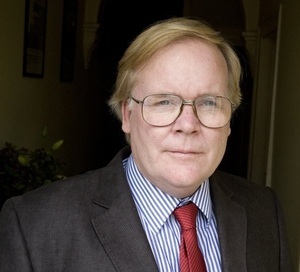
Does anyone really think that in the last hour of the last day of the working week that productivity is much above zero?
Michael Taft (above) writes
One of the main demands of the trade union movement in its infancy was to limit the working week. In 1866 the International Workingmen’s Association called for a 40 hour work week – a radical demand at a time of 60 hour working weeks.
It took well into the 20th century before this was implemented in the industrialised countries.
And now, in Sweden, there is a new experiment – the 6-hour working day, or 30 hour working week. It is not a law, it is not being implemented across the board. But a number of public and private sector workplaces are implementing a shorter working week on a trial basis.
Why? In the first instance, it is not about lowering unemployment though that will be an increasing consideration in the future with the rolling out of labour-displacing technology.
Rather, it is about increasing productivity, efficiency and health.
Here are some examples of the Swedish experiments:
In the Svartedalens nursing home, nurses have had their working day reduced to six hours at the same wage. This is a controlled trial and will end at the end of 2016 to assess the results.
A similar experiment is occurring in Gothenburg’s Sahlgrenska University hospital where orthopaedic surgery has moved to a 6-hour day, as have doctors and nurses in two hospital departments in Umeå.
At Toyota service centres in Gothenburg, employees moved to a six-hour day 13 years ago and have never looked back. Customers were unhappy with long waiting times, while staff were stressed and making mistakes, according to Martin Banck, the managing director, whose idea it was to cut the time worked by his mechanics.
From a 7am to 4pm working day the service centre switched to two six-hour shifts with full pay, one starting at 6amand the other at noon, with fewer and shorter breaks.
The Brath internet firm has a page on its website explaining why it is starting a six-hour day. The company, which has 22 staff in offices in Stockholm and Örnsköldsvik, produces as much, if not more, than its competitors do in eight-hour days.
And it’s not just in Sweden where this experimentation is taking place. In the UK, Agent Marketing is experimenting with a six-hour workday. Employees switched from an 8:30 to 5:30 shift to a 9:00 to 4:00 shift, with a one-hour lunch break.
This reduction in work is equivalent of more than one working day a week; on a monthly basis, it is equivalent to nearly a full working week; and on an annual basis, it is equivalent to ten working weeks.
All of the above, however, is just experimentation. Very few are actually proposing to introduce a 30-hour work week across the board. Currently, the headline cost would be extremely high in both the public and private sectors, especially as employees in these experiments are paid the same wage.
Further, we have to sort out our labour market, where a number of people want to increase their working hours because they are trapped in under-employment (though reducing full-time working hours could help).
A reduction in working hours will affect different sectors in different ways – a little easier in capital-intensive industries, more difficult in labour-intensive workplaces.
But the point here is that reducing working hours can actually increase productivity. Does anyone really think that in the last hour of the last day of the working week (e.g. Friday), that productivity is much above zero? Or that people at their desk for all hours are producing anything, apart from the image of being industrious to impress their boss?
Would the increase in productivity off-set the extra costs to enterprises in reducing hours? Probably not fully. It would require reconfiguring our tax and social protection benefit system – a hard task, but not impossible.
All of this will have to be measured, assessed and analysed. So why not set up a programme of experimentation? Select a scientific sample of workplaces in different sectors to implement a working week reduction trial.
This would require a pre-reduction analysis of productivity and efficiency to compare with the post-reduction output. It would require subsidies for those firms to ensure they don’t lose out during this experimentation.
Let’s see where that takes us. The decisions we make would then be informed by evidence and data, rather than prejudice and assumptions.
But the most important element of a programme to reduce working hours is the impact on people – the benefit in terms of health and well-being, work/family balance, the opportunity to engage in other pursuits with more free time.
What a boon that could be to people’s lives.
Let’s put on our lab coats. Let’s start testing.
Michael Taft is Research Officer with Unite the Union. His column appears here every Tuesday. He is author of the political economy blog, Unite’s Notes on the Front. Follow Michael on Twitter: @notesonthefront




MORE to folly

A video essay from filmmaker Stephen Murphy, to wit:
… bad films can be as influential as good ones. This episode focuses on The Phantom Menace, a film that is particularly influential and particularly bad. Modern blockbuster culture started in 1999 when George Lucas released his prequel into the world and cinema changed forever…
MORE: The Phantom Menace: The Most Influential Film Of The 90s (City Absurdia)

The Frank and Walters – We Are The Young Men
Here’s what you may need to know…
01. As synonymous with the real capital’s culture as Tanora, Roy Keane, and music journalists reaching for lazy, obvious cultural touchstones in articles about the city the English Market, The Frank and Walters are one of the quintessential Cork bands, formed in 1990 and named after two local eccentrics of the day.
02. Success found the indie-pop outfit quickly, signing for Setanta in 1991 and releasing EP1. EP2, featuring the enduring Fashion Crisis Hits New York, shortly followed. Following EP Happy Busman, debut album Trains, Boats and Planes hit the UK album chart, with single After All hitting number 11 on the UK singles chart and number 5 in the Irish singles chart.
03. Taking a sabbatical after a busy few years, the band returned in the mid-nineties and have been gigging and releasing records at a steady clip ever since. Having celebrated their 25th anniversary last year with a sellout performance at Cork Opera House (pictured above), the band is currently readying new album Songs for the Walking Wounded for release via drummer Ashley Keating’s FIFA Records.
04. Streaming above is the band’s new single, We Are the Young Men, released ahead of the album’s launch at the Cork Opera House on April 15th. In support are reunited Cork indie group Rubyhorse and The Smiths’ Mike Joyce on DJ duties.
Verdict: A seemingly jaunty, jangly tune, layered with subtle sarcasm (a Franks specialty) and casting a somewhat cold eye on youthful exuberance. Great stuff from a band that’s stood the test of time.
Photo: Kieran Frost. Thanks to Peter Dempsey for corrections.

