

Last night.
Maxol service station, Templeogue Village, Dublin 6.
Anyone?
Thanks CarlosFandango
Meanwhile…

Thanks Niall O’Keefe



Last night.
Maxol service station, Templeogue Village, Dublin 6.
Anyone?
Thanks CarlosFandango
Meanwhile…
Thanks Niall O’Keefe
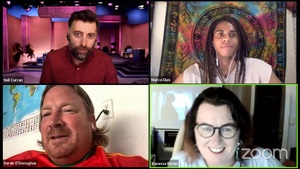
Clockwise from top left: Neil Curran, Marco Dias, Vanessa Foran and Derek O’Donoghue
Indeed and you probably are.
Broadsheet on the Telly returns at 9.30pm for its first show of the new year streaming LIVE above and on our YouTube channel.
Join old friends, new pals and our pets as we discuss the news of the week, including the Mother and Baby Home Commission report
All viewers must be tested rona negative.
Hosted by Neil Curran.

Gay Byrne in 1990
‘Dear Gay’
A documentary for RTÉ One, celebrating the ‘Irish people’s unique relationship with one of their best-loved broadcasters’.
You, or someone you know, may have received critical financial support from the Gay Byrne Show Radio Fund. You may have been moved by an item on the show to share your own experiences. You, or someone you know, may have been one of the thousands who wrote to the radio show after the tragic death of Ann Lovett and her baby son in 1984 to tell your own story.
You, or a loved one, may have been one of those who came out to Gay, anonymously, as the campaign to decriminalise homosexuality in Ireland gathered pace. You may have appeared on the Late Late Show, campaigned to be a child reviewer or performer on the Toy Show, been nominated for a Gay Byrne Show Local Hero Award or Calor Kosangas Housewife of the Year and be willing to tell us how that experience changed your life.
Whatever the reason for writing to Gay during his time in RTÉ, if you have an interesting story to tell and would like to share it with us, please log on to rte.ie/gaybo and fill in the form.
Or simply write an old-fashioned letter to us at:
Dear Gay
RTÉ,
Donnybrook,
Dublin 4
(And don’t forget to include your contact details!)The documentary will air on RTÉ One later this year. We look forward to reading your stories!
*cough*
*sneeze*
Fight!

Paul Reid, CEO, HSE at Dr Steevens’ Hospital for the weekly HSE operational update on the response to Covid-19 this afternoon
A total of 77,303 #Covid19 vaccines had been administered in Ireland up to yesterday, according to the Heath Service Executive | https://t.co/0UGEHa8tcF pic.twitter.com/AM8niIIZHe
— RTÉ News (@rtenews) January 14, 2021
This afternoon.
At the HSE weekly briefing at Dr Steeven’s Hospital Dublin…
The HSE’s chief executive Paul Reid said 69,378 of them were received by frontline healthcare workers and 7,925 were received by people in long term care facilities.
He said said Ireland has received 152,100 doses of the Pfizer/BioNTech vaccine to date, along with 3,600 doses of the Moderna vaccine.
He confirmed that there are 1,792 people with Covid-19 being treated in hospital.
Paul Reid said that equated to over 100% more than at the first peak.

This afternoon.
RTÉ has reported a net deficit of €7.2m in 2019, according to the annual report for that pre-Covid year released today.
Via RTÉ (to be said in the voice of Fergal Bowers):
The broadcaster said there was a decline in commercial revenue in 2019 of €4.2m due to Brexit uncertainty and changes in media consumption habits.
Operating costs, including the costs of special events, were reduced by €2m while there was an increase in total revenue of €342.1m.
Licence fee income increased by a net €7.2m to €196.3m due to the €8.9m increase in public funding in Budget 2019 .
Meanwhile…
the Chair of the RTÉ board Moya Doherty said.
“The current funding model is broken, and RTÉ will face a material uncertainty about its capacity to provide the same level of services in the medium term if it is not resolved quickly and definitively,”
Save Tubs.


Both!
By popular demand.
Millie’s Spiced Banana Bread
Reader Millie writes:
This is one of my favourite bakes ever. I confess, I’m not a huge fan of banana bread – but this loaf changed my mind. There is something immensely comforting about this bake, whether it be how easy it is to make or the delicious smell that wafts through the house as it bakes and lingers for hours after. It’s a very forgiving recipe too, in that you can adjust the spices to your personal taste and in that you can swap the Greek yogurt for sour cream or natural yogurt, and you will still get a delicious loaf. It lends itself especially well to toasting, requiring only a minute under the grill before the sugar begins to caramalise. I like it slathered with butter and a good-sized cup of coffee.
You will need:
115g butter, softened
200g caster sugar
2 large eggs
190g plain flour
1tsp baking soda/bicarbonate of soda
1 tsp cinnamon
½ tsp mixed spice
½ tsp ginger
½ tsp nutmeg
240g mashed banana (roughly 2-3 bananas, depending on size)
120g greek yogurt
1 tsp vanilla extract
How To:
1. Preheat oven to 170C/160C (fan). Cream together butter and sugar until light and fluffy.
2. Whisk eggs together and slowly add to the butter-sugar mixture, making sure to beat the mixture well after each addition. Make sure to scrape down the sides of the bowl too, as this will ensure your mixture is fully combined. This, according to Her Majesty Queen Mary Berry of Cakes, will help to avoid the dreaded curdling of the egg. I’d also recommend keeping your butter and eggs at an even temperature, as this can also help. In any event, I usually carry on with the bake, even if it has curdled a bit.
3. In a separate bowl, sift together flour, baking soda, and spices. Add to butter, sugar and egg mixture and fold together until just combined.
4. Next, mash your bananas. I should add that I never actually weight out the bananas, just throw in 2 or 3 ripe bananas and the loaf has always turned out well. Add mashed banana, Greek yogurt and vanilla extract and mix again.
5. Pour mixture into greased and floured loaf tin and bake for approximately 50-60 minutes, until a deep golden brown and a skewer, when inserted, comes away clean.
Oo-er.
Pics via Millie

‘sup?
This morning.
Carlosfandango writes:
Mr Hugh in the Winter sun….existential city dog.
Name that park,anyone?

Brenda Fricker
On The Late Late Show…
…Jennifer O’Brien writes:
Brenda Fricker will pay a very special tribute to the women and children of Ireland’s Mother and Baby Homes following the publication of the report from the Commission of Investigation earlier this week.
Her role in Derry Girls catapulted Galway’s Nicola Coughlan to fame, and she will be joining Ryan to discuss her part in the hit Netflix series Bridgerton, a raunchy period drama that has also taken the world by storm.
Friday marks three years since the tragic death of Dolores O’Riordan. Tomorrow night, rising star Lyra will be in studio to give a very memorable performance in tribute to the much-missed lead singer of The Cranberries.
Ryan will speak to former boxer Barry McGuigan about how his family is coping since the death of his daughter, Danika, in 2019…
As they come to the end of their second week on the Operation Transformation plan, Ryan will be meeting all five leaders of the show – Hazel Hartigan, Susuana Komolafe, Paul Devaney, Andrew Burke-Hannon, and Sharon Gaffney…
The Late Late Show on RTÉ One at 9.35pm.

This morning.
Further to a call by Fianna Fáil Senator Timmy Dooley for the Leaving Cert to be scrapped this year….
…on Today with Claire Byrne on RTÉ Radio One
The Association of Secondary Teachers in Ireland has again said that the Leaving Certificate exams should run as normal in June, despite a call for it to be called off this year.
…the unions President Anne Piggot said students are not in the classroom because of level of virus transmission and that students and teachers will be returning to the classroom as soon as possible…
….Ms Piggot said that it seems quite unusual that someone from the Minister for Education’s party should be calling for the cancellation of the state exams, particularly when the Minister has committed to them going ahead


Yesterday.
The Dáil at the Convention Centre, Dublin
Independent TD Catherine Connolly’s statement in response to the Report on the Commission of Investigation into Mother and Baby Homes:
“This document I have to hand is what the report looks like. I hold it up to show survivors because they do not have it. It is the executive summary with the recommendations and one or two other things. Not a single survivor has it. I have it since yesterday, when it was put in the pigeonholes of Deputies.
I am not sure whether the media colluded with the Government or whether it was pure ignorance on their part but in every bulletin, they said the report would be made available to survivors prior to us getting it. That has not happened.
I see two female Ministers of State are present here today and I would love them to address this point. No report was ever given to the survivors. They were invited to a webinar, where they were told the Government’s version and then they were invited to download 3,000 pages.
The Government has had the report since October. Members were told there was urgency to the legislation that went through the Dáil and the Government forced the legislation through.
That report has sat with it since then. The three wise men running the country – in a worse moment I might refer to the three unwise men – decided to hold on to that report, to still not give it to the survivors and to stand up here today with sweet words and tell us they are apologising.
I welcome the Taoiseach’s apology but I will place it in perspective. I will deal with 21 years very quickly. In 1999, we had an apology from Bertie Ahern for the treatment of 15,000 to 20,000 children in industrial schools, reformatory schools and what were called orphanages.
I am only picking some of the reports across those 21 years. That apology was followed by the Ferns report in 2005 and the Ryan report in 2009, which found that sexual abuse was endemic in industrial and reformatory schools for boys. Girls and boys suffered emotional abuse on a great scale.
In 2009, we had the Murphy report; in 2011, we had the Cloyne report; and in 2013, we had the Magdalen report of an interdepartmental committee, following by a review under Mr. Justice Quirke and the establishment of an ex gratia scheme, which was subsequently found by the Ombudsman to have been maladministered.
We then set up Caranua. It was appalling to name it that and call it a “new friend” when it was really the old enemy in disguise. This was followed in 2017 by a technical report on the Tuam site, since which nothing has happened.
I wish to pay tribute to a number of people. Mr. Mike Milotte published a book in 1997, entitled Banished Babies: The Secret History of Ireland’s Baby Export Business, which was republished in 2012. RTÉ ran documentaries by Ms Mary Raftery, Ms Patricia Burke Brogan and Mr. Cónall Ó Fátharta.
Leading to this report was Ms Catherine Corless’s discovery through painstaking work paid for by herself that there were 798 bodies. What was the response from the Sisters of Bon Secours at the time through Ms Terry Prone, the organisation’s PRO? It was that not a single bone would be found and that not a single child would be found. There was a longer press release from the organisation.
This report comes almost six years since the commission was established by a Fine Gael-Labour Government in February 2015. We have waited and there have been seven interim reports, most of which were published belatedly. The sixth interim report, which dealt with the database, was not published until yesterday. I thank the Government for publishing it, but the Taoiseach has given no explanation for it not being published at the time. It refers to a document relating to Bessborough that was not included in it.
I look at this report and struggle for words, but I owe it to the survivors to find words. The Government has heaped abuse on abuse through the manner in which this subject has been addressed. It might change its approach from today with its full apology, which I welcome, and quick action in terms of a compensation scheme and proper supports. I doubt it will, but I will work with and support it in that.
Forgive me for my lack of trust, but it is based on personal, family and professional experience and having taken the trouble to read each of the reports that I referred to and more besides. My trust is stretched, and if I am just a Deputy, how does the Government think the survivors who were sitting in on the webinar yesterday were left feeling when the Government’s language and the language of the media told them that they had the report when they did not?
The language of the patriarch and the three unwise men continues to tell women what is good for them and, indeed, the men who spent time in these homes.
Regarding this report, I will pay tribute to the survivors who came forward. Deputy [Alan] Kelly mentioned a figure of more than 1,000. It has been difficult for us all to come to terms with this report quickly, but there were not 1,000. Rather, just over 500 came forward to the confidential committee and told their stories. My experience is that people who spent time in institutions rarely talk about it. A lifetime might go by and they will not talk about it. There are intergenerational consequences. When the 500 came forward to tell their stories, they did so in trust.
The story jumps off the pages – the role of the church, the priest and the county council. Indeed, the Tuam home distinguishes itself by being one of the worst in the country, and although the county council was not actively involved, the home was under its control. It was also under the control of the county manager, who took an active role.
There was even a policy there whereby if the woman got pregnant a second time, she was destined for the Magdalen laundry, not the mother and baby home. Can the Taoiseach imagine that? Listen to what I am saying about the county manager being actively involved.
The women tell a story in this report of rape and sexual assault. Nearly 12% of the women in the homes were under 18 years of age. Some were as young as 12. However, the commission found that there was no evidence that they were forced by the church or the State. It is incomprehensible to draw that conclusion or the many other conclusions I have great difficulty with based on the testimonies of the women when they told their stories. The priest jumps off the page.
Solicitors jump off the page. GPs who phoned the doctors and priests jump off the page. Some of the sexual abuse was carried out by family members, including cousins and uncles, and priests. All of that is set out in this report, but according to the commission’s conclusions, there was no evidence of compulsion.
Either we believe the women or we do not. If we do not, then we are adding to their hurt and their fear that they would not be believed. I will use my few minutes in this debate to say that I absolutely believe the survivors who have come forward despite these difficult memories. The commission tells us that there was no evidence of compulsion or forced adoption. All of the evidence given confirms there was.
I would like the Taoiseach to have dealt with this issue in a more nuanced manner in his contribution. I do not expect him to have read all of the report – none of us could have in the time allowed – but the inconsistencies in it are nothing short of shocking. The writing is unprofessional and amateurish in parts and there are inconsistencies in how people are referred to.
Sometimes they are called “people”, sometimes they are called “witnesses”, sometimes they are called “other witnesses”, sometimes they are called “a woman”, sometimes they are called “a survivor”. There is no consistency. If something bad was said, the narrative sought to balance it by finishing on a positive note. I find the whole narrative repulsive. What I do not find repulsive are the stories of the women, which I have read and with which I was familiar.
The spin continues as regards the way this report was undertaken. That spin came from the then Taoiseach in 2017, which the current Taoiseach is continuing with today. The then Taoiseach stated that the nuns and priests did not come in the middle of the night and take our children. They did on some occasions, but not often because what happened was far more subtle and controlled than that.
The powers that be were the church, with politicians playing a subservient role. I will use the county council in Galway as an example because it jumps off the pages. It held its meetings in the home. The absence of records and the appalling mortality rate were known at the time, but the Taoiseach is saying now that we are all responsible. I am not responsible. My family is not responsible.
The people I know are not responsible. Those least responsible were those put into the homes.
The Taoiseach should not stand here today and expect me to listen to him with patience when he tells us that society did that. It was done by a society composed of the powerful against the powerless. As with the old distinction between public and private medicine, if someone had the money to pay and came from a middle class family, she was treated differently. She paid her way and did not spend as long in the home.
In Tuam, children stayed until they were seven years of age if they were girls and five or six if they were boys. Among many other gaps, what is absent in the report is a failure to acknowledge the importance of bonding and the implications for human interaction of those bonds being broken. There is a dismissal of how children were taken from mothers and an acceptance that adoption was much better. There are statements to that effect in the report – that children were better off being adopted than staying in mother and baby homes.
I could go on. We are being shown more leniency today, but I will not dwell and take it. I have enough said for today. I find the report’s narrative disturbing. I accept the Taoiseach’s apology. I would like to see it being accompanied by meaningful action, including swift redress, and learning from the debacle of the Magdalen redress scheme and Caranua.
Stop making distinctions between children who were accompanied by their mothers and children who were not. Let us accept that this was an inhuman unacceptable system. The one occasion on which the word “inhuman” is used in this report, strangely enough, is with regard to England, which took mothers and their children if they were lucky and have them.
The only time the word “inhuman” is used is in connection with the Catholic charities in England that sent the mothers back to Ireland. Imagine, they were repatriated. Does the Taoiseach know what that means? Generally, it means returned. In this instance it means that they were forced to return to Ireland. The word “inhuman” is used simply on that occasion and at no other point in the report.
I hope this is the start of a truly meaningful debate and action where language means something and the Government actually listens to the people on the ground and never, ever repeats a webinar or the leaking of a report so it can control the narrative. It is simply disgraceful.”
Last night: Unfuppingbelievable
Transcript via Oireachtas.ie