
Author Archives: Chompsky

Behold: the six fastest rotating disk galaxies known to man. But why? To wit:

If you estimated each spiral‘s mass by how much light it emits, their fast rotations should break them apart. The leading hypothesis as to why these galaxies don’t break apart is dark matter — mass so dark we can’t see it. But these galaxies are even out-spinning this break-up limit […] It is therefore further hypothesized that their dark matter halos are so massive — and their spins so fast — that it is harder for them to form stars than regular spirals. If so, then these galaxies may be among the most massive spirals possible. Further study of surprising super-spirals like these will continue, likely including observations taken by NASA‘s James Webb Space Telescope scheduled for launch in 2021.

(Images: Top row: NASA, ESA, Hubble, P. Ogle & J. DePasquale (STScI); Bottom row: SDSS, P. Ogle & J. DePasquale (STScI))

apod

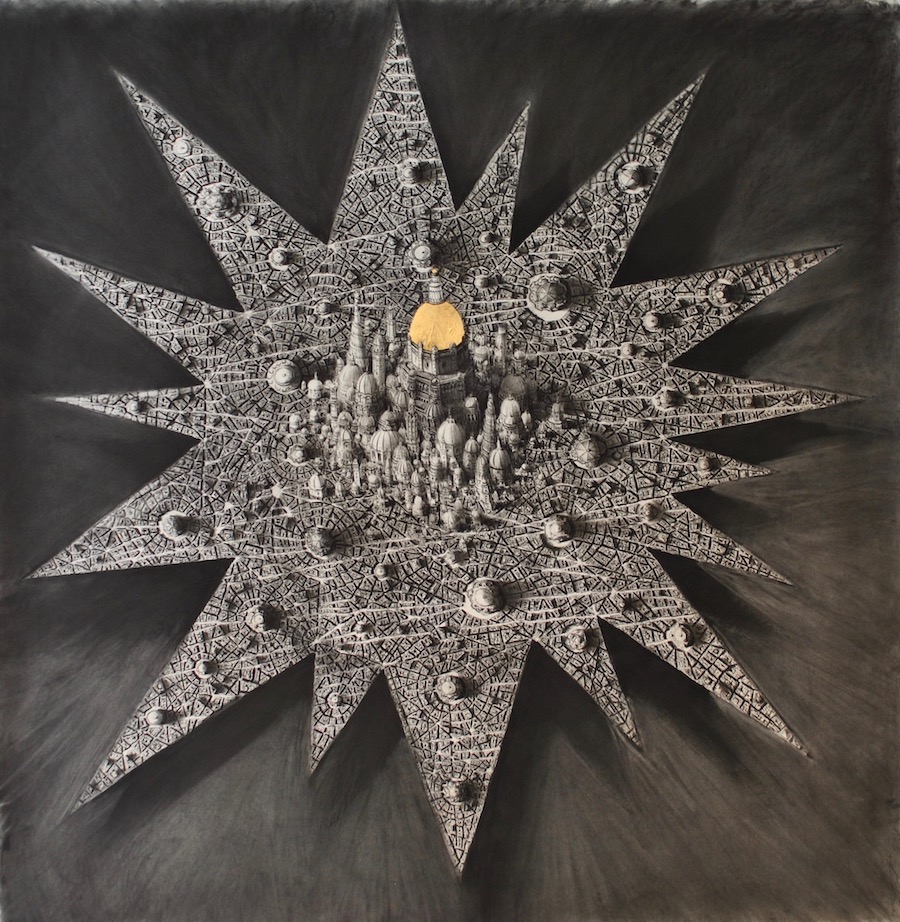
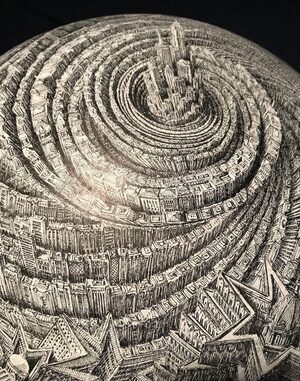
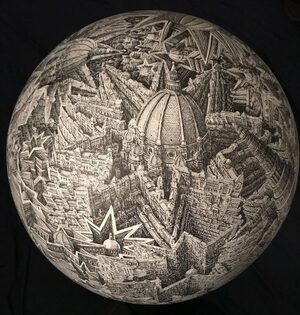
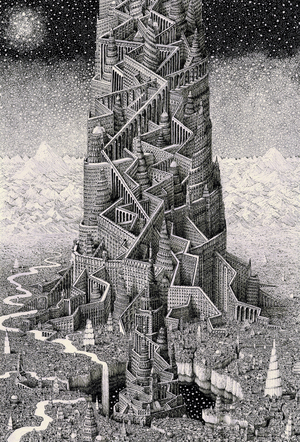
Incredibly detailed architectures by artist Benjamin Sack – surreal geometries and labyrinths rendered in pencil and pen, many inspired by cosmological symbols and what the artist describes as his own ‘fear of blank spaces’.

Sack’s work ‘Labyrinths’ exhibits at the Direktorenhaus Museum in Berlin until next January, if you’re passing.

colossal

Behold: M8, the Lagoon Nebula – a vast interstellar cloud where the stars battle to be seen amid the dust and gas. To wit:

…this photogenic nebula is visible even without binoculars towards the constellation of the Archer (Sagittarius). The energetic processes of star formation create not only the colours but the chaos. The glowing gas results from high-energy starlight striking interstellar hydrogen gas and trace amounts of sulphur, and oxygen gases. The dark dust filaments that lace M8 were created in the atmospheres of cool giant stars and in the debris from supernovae explosions. The light from M8 we see today left about 5,000 years ago. Light takes about 50 years to cross this section of M8.

(Image: Zhuoqun Wu, Chilescope)

apod