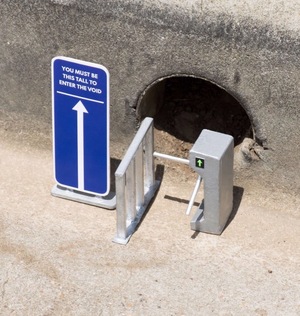
Last night.
Colum Cronin tweets:
Bright Lights, seahorse city. Grattan Bridge, Dublin





An interesting little short by Chicago based animator Rohan McDonald exploring the ‘connections between mental and physical spaces.’


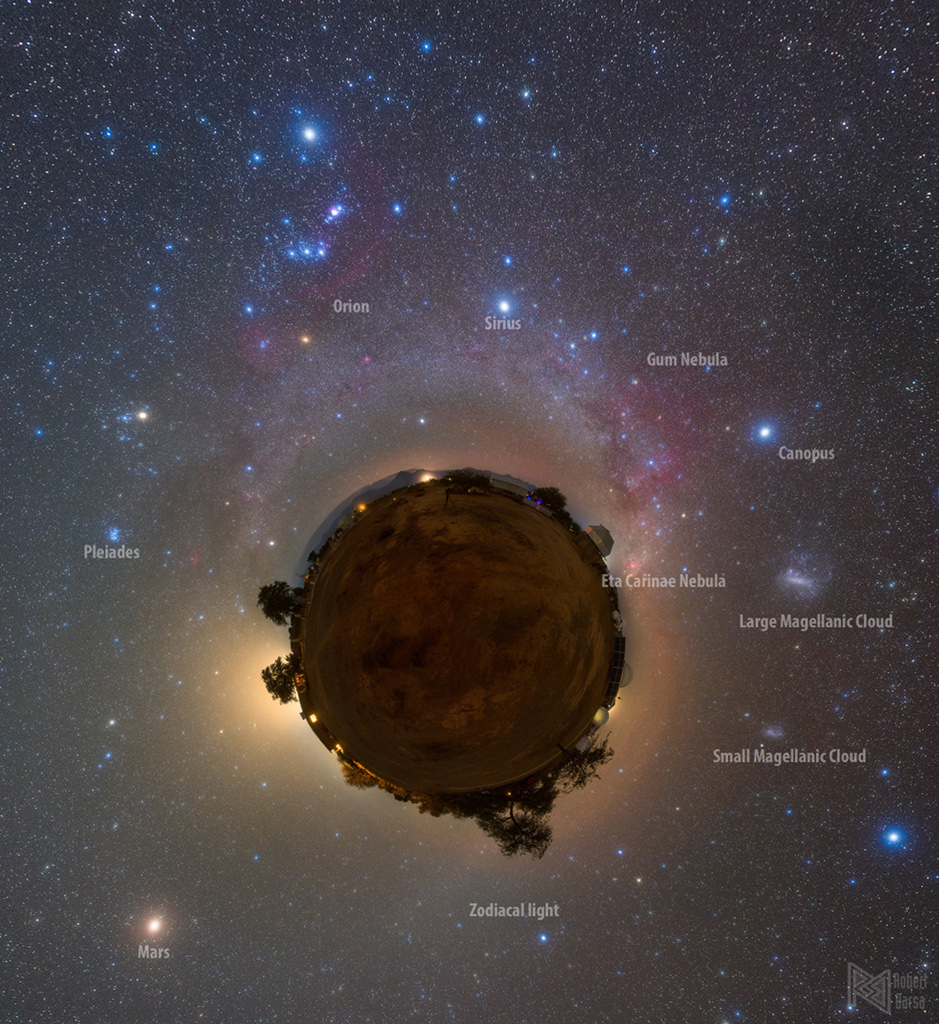
What’s this curious little Mars-like planet? Well, it’s not Mars, but that’s there too. To wit:
In a digitally stitched little planet projection, the 360 degree mosaic was captured near San Pedro in the Chilean Atacama desert. Telescopes in domes on the horizon are taking advantage of the arid region’s famously dark, clear nights. Taken in early December, a magnificent Milky Way arcs above the horizon for almost 180 degrees around the little planet with Orion prominent in the southern sky. A familiar constellation upside down for northern hemisphere skygazers, Orion shares that southern December night almost opposite the Large and Small Magellanic clouds. But the Red Planet itself is the brightest yellowish celestial beacon in this little planet sky.
(Image: Robert Barsa)




Behold: the Highland Storm MPV – an armoured amphibious vehicle currently in development for the British military by United Arab Emirates company Highland Systems.
Resistant to high calibre projectiles and IEDs, the Storm can be operated by remote control or programmed for autonomous use. With half a metre ground clearance, it can climb 75% gradients, traverse rivers and cross any terrain or lack thereof at up to 140km/h.

Behold: countless newborn stars forming in the Eagle Nebula. To wit:
Gravitationally contracting in pillars of dense gas and dust, the intense radiation of these newly-formed bright stars is causing surrounding material to boil away. This image, taken with the Hubble Space Telescope in near infrared light, allows the viewer to see through much of the thick dust that makes the pillars opaque in visible light. The giant structures are light years in length and dubbed informally the Pillars of Creation. Associated with the open star cluster M16, the Eagle Nebula lies about 6,500 light years away. The Eagle Nebula is an easy target for small telescopes in a nebula-rich part of the sky toward the split constellation Serpens Cauda (the tail of the snake).
Previously: Behold The Pillars Of Creation
(Image: NASA, ESA, Hubble, HLA; Processing: Luis Romero)


Who doesn’t have six minutes to watch a single cell grow into an Alpine newt salamander? Not you.
Also – more controversially* – when exactly does a collection of cells become an Alpine newt salamander?
(*rolls grenade into cave entrance, backs away, returns later, retrieves dud grenade, walks out of shot, pause, distant explosion.)