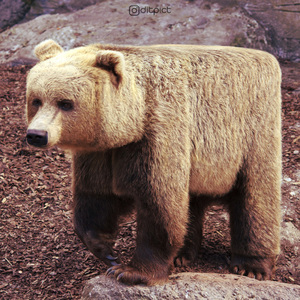


Wrong.
Behold: the ongoing ’Minecraft In Real Life’ project of Indonesian digital artist Aditya Aryanto.
Important work, you’ll agree.



Wrong.
Behold: the ongoing ’Minecraft In Real Life’ project of Indonesian digital artist Aditya Aryanto.
Important work, you’ll agree.

What does fire look like without gravity? Like this. To wit:
In the gravity on Earth, heated air rises and expands, causing flames to be teardrop shaped. In the microgravity of the air-filled International Space Station (ISS), however, flames are spheres. Fire is the rapid acquisition of oxygen, and space flames meet new oxygen molecules when they float by randomly from all directions — creating the enveloping sphere. In the featured image taken in the ISS’s Combustion Integration Rack, a spherical flame envelopes clusters of hot glowing soot. Without oxygen, say in the vacuum of empty space, a fire would go out immediately. The many chemical reactions involved with fire are complex, and testing them in microgravity is helping humanity not only to better understand fire — but how to put out fire, too.
(Image: NASA)
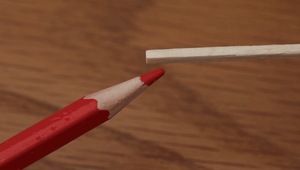

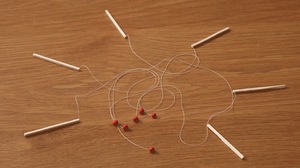
A striking stop motion short by Tokyo based designer Tomohiro Okazaki in which matches distort, buckle and bend in increasingly complex and pleasing ways.
Striking.
Oh suit yourselves.

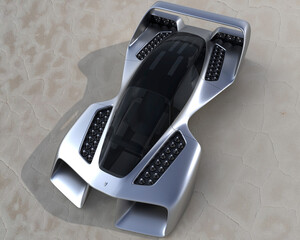


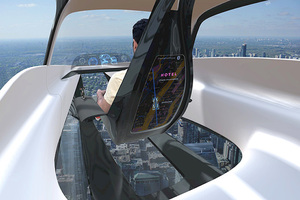
Behold: the LEO – a conceptual eVTOL that actually looks likely to make it to production for consumer use.
Along with Blade Runner styling, gullwing doors and a frankly terrifying see-through floor, the LEO will likely have a fully-shrouded, DARPA-funded Electric Jet Aircraft propulsion system enabling autonomous piloting, one-hour flight times, and top speeds up to 400km/h.
Unlike more ungainly peers, it has a relatively compact 3x6m footprint and so can be parked on a kerb or in a two-car garage.

How best to watch a meteor shower? Well, later this week, the annual Perseid Meteor Shower will hit its peak. So what next for the avid skywatcher? To wit:
One thing that is helpful is a dark sky, as demonstrated in the featured composite image of last year’s Perseids. Many more faint meteors are visible on the left image, taken through a very dark sky in Slovakia, than on the right image, taken through a moderately dark sky in the Czech Republic. The band of the Milky Way Galaxy bridges the two coordinated images, while the meteor shower radiant in the constellation of Perseus is clearly visible on the left. In sum, many faint meteors are lost through a bright sky. Light pollution is shrinking areas across our Earth with dark skies, although inexpensive ways to combat this might be implemented.
(Image: Tomas Slovinsky (Slovakia) & Petr Horalek (Czech Republic; Institute of Physics in Opava)



More fanciful wildlife watercolours by French artist Steeven Salvat – from bejewelled beetle carapaces to entanglements of wild flora – inspired by 18th century engravings and biological illustrations, each piece the result of hundreds of hours of painstaking linework.
Previously: Shield Bugs

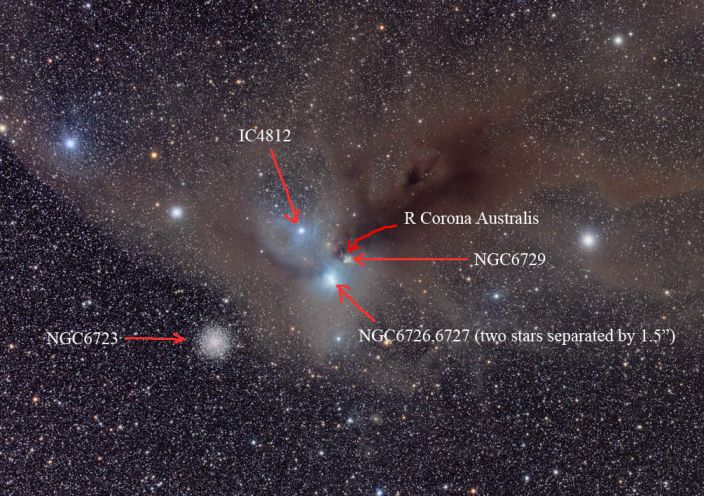
Behold: the picturesque result of cosmic dust clouds crossing a rich field of stars in a telescopic vista near the northern boundary of Corona Australis, the Southern Crown. To wit:
Less than 500 light-years away the dust clouds effectively block light from more distant background stars in the Milky Way. Top to bottom the frame spans about 2 degrees or over 15 light-years at the clouds’ estimated distance. At top right is a group of lovely reflection nebulae cataloged as NGC 6726, 6727, 6729, and IC 4812. A characteristic blue color is produced as light from hot stars is reflected by the cosmic dust. The dust also obscures from view stars in the region still in the process of formation. Just above the bluish reflection nebulae a smaller NGC 6729 surrounds young variable star R Coronae Australis. To its right are telltale reddish arcs and loops identified as Herbig Haro objects associated with energetic newborn stars. Magnificent globular star cluster NGC 6723 is at bottom left in the frame. Though NGC 6723 appears to be part of the group, its ancient stars actually lie nearly 30,000 light-years away, far beyond the young stars of the Corona Australis dust clouds.
(Image: Vikas Chander)


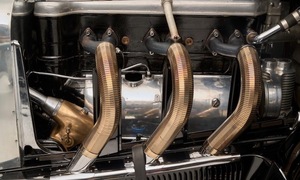
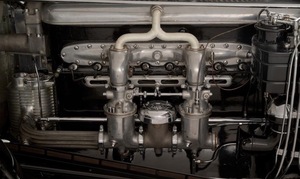
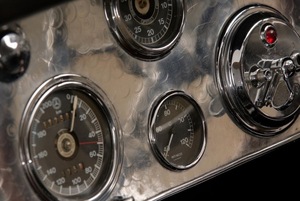

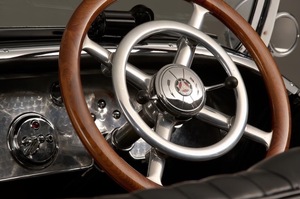
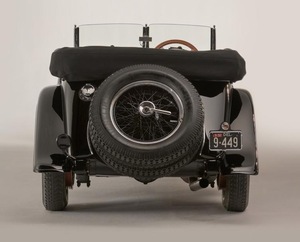
Behold: the 1928 Mercedes Benz Sports Tourer: designed by Ferdinand Porsche shortly after the merger of Daimler and Benz, only 146 were made between 1927 and 1930 when the Great Depression put an end to production.
This vehicle – which has been in the same family since 1964 – was extensively restored in 1968 and has been immaculately maintained and driven regularly ever since.
Currently accepting bids from €2,500,000 to €3,400,000.