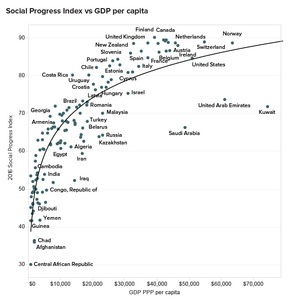
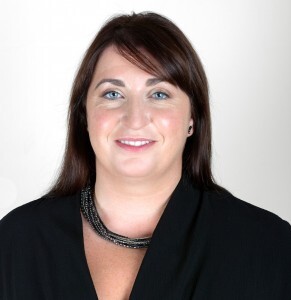
From top: The Social progress Indicator 2016, Anne Marie McNally
According to the 2016 Social Progress Indicator Ireland is among the top 20 best countries in the world in which to live.
So why aren’t we feeling it?
Anne Marie McNally writes:
Ireland is the 12th best country in the world in which to live.So we were told yesterday. The annual Social Progress indicator – conducted, ironically, in conjunction with one of the largest global finance companies, Deloitte, has placed us 12th based on a number of factors including health, education, equality and opportunity.
If you’ve been following the recent press regarding the difficulties faced by single parents trying to get into education; or the patients languishing on waiting lists or trolleys you might be surprised to see that health and education were two of the factors which raised our ranking to its slot just outside the top 10.
While the social justice campaigner in me wants to point out the hypocrisy of such a high ranking in both those areas I feel it’s only fair to look at things objectively and agree that in the grand scheme of things we have, in theory at least, the foundations for decent public health and education systems.
The premise of a universally accessible publicly funded health care system is there – it has not been realised and it has only recently become centre stage when the majority of the Dáil agreed to Róisín Shortall’s request to set up a specific health committee tasked with establishing a system that actually works on those principles.
And not just one that says it does while effectively forcing citizens to engage in a two-tier system for fear of not receiving treatment when and if needed.
Our education system is similar. On the face of it we have a fantastic education system that can be available to all with hard-work and studious dedication.
Yet time and time again the league tables and attrition rates to third level show us that hard work and dedication is not always enough because by and large the same areas go forth and prosper in that system while lower income areas whither on the bottom of third level admission rankings.
Don’t try and tell me that children from these areas don’t begin their schooling with the same drive and capability for hard-work and dedication as those from more affluent areas yet somewhere along the way a chasm opens up and far too many fall through the cracks.
The system itself may be based on laudable principles but the lived reality of it is very different for far too many.
Equality of opportunity is one thing; equality of outcome is an entirely different thing.
We fared exceptionally well for equality no doubt aided by our fantastic Yes vote in the Marriage Referendum yet at the same time we rank poorly when it comes to personal freedoms and personal rights and choices – I’d hazard a guess that our continuing denial of bodily autonomy to half the population may have something to do with that. Go figure.
The indicators used to measure basic human needs and wellbeing included things such as availability of affordable housing; broadband availability; and quality of the water infrastructure. No need for me to tell you how we fared in those regards -nsuffice to say not good!
Now I’m sure there’ll be those who shout ‘aha – there’s the proof that we shouldn’t be protesting water charges and should just get on with paying our bills so that our infrastructure may be repaired’.
To that I say ‘observe the extreme wastage of public funds that have been squandered on PR operations, golden handshakes, bloated salaries, quango-esque bonus payments and the general ‘two-finger to Joe citizen’ behaviour that has come to epitomise Irish Water and ask yourself where the investment in our infrastructure has been despite the spending of billions on the entity thus far (and that’s not hyperbole – in excess of €1 billion has been spent)’.
It’s also worth bearing in mind that Deloitte itself (one of the partners involved in the compilation of this ranking) has earned itself a tidy little sum in ‘consultancy fees’ from the Irish Water enterprise!
The simple fact remains that all these indicators and ranking tables can judge things based on the paper version of our systems or we, as citizens living with them daily, can judge the systems based on our lived realities and the society we have in front of us today.
On that basis I would guess that the majority of us would agree – even if on varying levels- that while yes, some things are good and most things are better than many other countries, we can and we should do better.
Anne Marie McNally is a founding member of the Social Democrats. Follow Anne Marie on Twitter: @amomcnally