
Category Archives: Science

A stunning composite of 325 photos taken  every 30 seconds over 162 minutes shortly after sunset in southwest Iran earlier this month. In the desolate snowy scene, illuminated by moonlight, the bright streak behind the lone tree is the planet Venus setting. To wit:

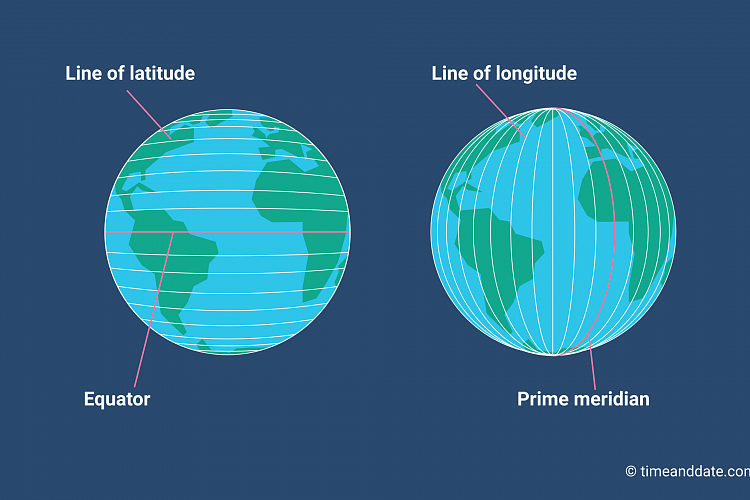
What divides the north from the south? It all has to do with the spin of the Earth. On Earth’s surface, the equator is the dividing line, but on Earth’s sky, the dividing line is the Celestial Equator — the equator’s projection onto the sky.  You likely can’t see the Earth’s equator around you, but anyone with a clear night sky can find the Celestial Equator by watching stars move.  Just locate the dividing line between stars that arc north and stars that arc south. Were you on Earth’s equator, the Celestial Equator would go straight up and down.  In general, the angle between the Celestial Equator and the vertical is your latitude.

(Image: Saeid Parchini)
apod

Behold: the Trifid Nebula, aka Messier 20. Familiar to most stargazers, being 30 light-years across and a mere 5,500 light-years away in the constellation Sagittarius.  To wit:

As its name suggests, visible light pictures show the nebula divided into three parts by dark, obscuring dust lanes. But this penetrating infrared image reveals the Trifid’s filaments of glowing dust clouds and newborn stars. The spectacular false-colour view is courtesy of the Spitzer Space Telescope. Astronomers have used the infrared image data to count newborn and embryonic stars which otherwise can lie hidden in the natal dust and gas clouds of this intriguing stellar nursery. Launched in 2003, Spitzer explored the infrared Universe from an Earth-trailing solar orbit until its science operations were brought to a close earlier this year, on January 30.

(Image: J. Rho (SSC/Caltech), JPL-Caltech, NASA)

apod

How does the weather on the Sun affect the weather here? If a bid to find out, NASA and the European Space Agency launched the Solar Orbiter, naturally, last Sunday. To wit:

This Sun-circling robotic spaceship will monitor the Sun’s changing light, solar wind, and magnetic field not only from the usual perspective of Earth but also from above and below the Sun. Pictured, a long duration exposure of the launch of the Solar Orbiter shows the graceful arc of the bright engines of United Launch Alliance‘s Atlas V rocket as they lifted the satellite off the Earth. Over the next few years, the Solar Orbiter will use the gravity of Earth and Venus to veer out of the plane of the planets and closer to the Sun than Mercury. Violent weather on the Sun, including solar flares and coronal mass ejections, has shown the ability to interfere with power grids on the Earth and communications satellites in Earth orbit. The Solar Orbiter is expected to coordinate observations with the also Sun-orbiting Parker Solar Probe launched in 2018.

(Image: Derek Demeter (Emil Buehler Planetarium))

apod

Behold: NGC 7331 – something similar to our own Milky Way but 50 million light-years distant in the northern constellation Pegasus. To wit:

NGC 7331 was recognized early on as a spiral nebula and is actually one of the brighter galaxies not included in Charles Messier’s famous 18th century catalog. Since the galaxy’s disk is inclined to our line-of-sight, long telescopic exposures often result in an image that evokes a strong sense of depth. This Hubble Space Telescope close-up spans some 40,000 light-years. The galaxy’s magnificent spiral arms feature dark obscuring dust lanes, bright bluish clusters of massive young stars, and the telltale reddish glow of active star forming regions. The bright yellowish central regions harbor populations of older, cooler stars. Like the Milky Way, a supermassive black hole lies at the core of spiral galaxy NGC 7331.

(Image: ESA/Hubble & NASA/D. Milisavljevic (Purdue University))

apod

Behold: the south pole of the Moon. It’s up there amid the rugged lunar highlands near the top of this image captured recently from southern California. To wit:

At the Moon’s third quarter phase the lunar terminator, the sunset shadow line, is approaching from the left. The scene’s foreshortened perspective heightens the impression of a dense field of craters and makes the craters themselves appear more oval shaped close to the lunar limb. Below and left of centre is sharp-walled crater Tycho, 85 kilometres in diameter. Young Tycho’s central peak is still in sunlight, but casts a long shadow across the crater floor. The large prominent crater to the south (above) Tycho is Clavius. Nearly 231 kilometres in diameter its walls and floor are pocked with smaller, more recent, overlaying impact craters. Mountains visible along the lunar limb at the top can rise about 6 kilometres or so above the surrounding terrain.

(Image: Tom Glenn)

apod

An image captured by the crew of Apollo 14 in 1971 from their command module Kittyhawk. To wit:

With Earth’s sunlit crescent just peaking over the lunar horizon, the cratered terrain in the foreground is along the lunar farside. Of course, while orbiting the Moon, the crew could watch Earth rise and set, but the Earth hung stationary in the sky over Fra Mauro Base, their landing site on the lunar surface. Rock samples brought back by the Apollo 14 mission included a 20 pound rock nicknamed Big Bertha, later determined to contain a likely fragment of a meteorite from planet Earth.

(Image: Apollo 14, NASA, JSC, ASU (Image Reprocessing: Andy Saunders))

apod

Behold: the interstellar bow wave of runaway’ star Zeta Ophiuchi, seen here in infrared. To wit:

In the false-colour view, bluish Zeta Oph, a star about 20 times more massive than the Sun, lies near the centre of the frame, moving toward the left at 24 kilometres per second. Its strong stellar wind precedes it, compressing and heating the dusty interstellar material and shaping the curved shock front. What set this star in motion? Zeta Oph was likely once a member of a binary star system, its companion star was more massive and hence shorter lived. When the companion exploded as a supernova catastrophically losing mass, Zeta Oph was flung out of the system. About 460 light-years away, Zeta Oph is 65,000 times more luminous than the Sun and would be one of the brighter stars in the sky if it weren’t surrounded by obscuring dust. The image spans about 1.5 degrees or 12 light-years at the estimated distance of Zeta Ophiuchi. Last week, NASA placed the Spitzer Space Telescope in safe mode, ending its 16 successful years of studying our universe.

(Image: NASA, JPL-Caltech, Spitzer Space Telescope)

apod

Behold: a glorious star-field toward the northern constellation Perseus spanning some four full moons (about 2 degrees), composed over three nights, last weekend. Yeah, so? What about it? To wit:

…it holds the famous pair of open or galactic star clusters h and Chi Persei with comet PanSTARRS (C/2017 T2) captured each night as it swept left to right across the field of view. Also cataloged as NGC 869 (right) and NGC 884, both star clusters are about 7,000 light-years away and contain stars much younger and hotter than the Sun. Separated by only a few hundred light-years, the clusters are both 13 million years young based on the ages of their individual stars, evidence that they were likely a product of the same star-forming region. Discovered in 2017 while still beyond the orbit of Saturn, Comet PanSTARRs is a new visitor to the inner solar system and just over 13 light-minutes from planet Earth. Always a rewarding sight in binoculars, the Double Cluster is even visible to the unaided eye from dark locations. C/2017 T2 could remain a telescopic comet though. One of the brightest comets anticipated in 2020 it makes its closest approach to the Sun in early May.

(Image: Rolando Ligustri (CARA Project, CAST))

apod

Masters of video comparisons Reigawr (statistics – not English – is their first language) calculate the odds of possessing a rare human ability. to wit:

From being immune to pain and electricity, to being a prodigy in music, art or even a human calculator, we shall compare the rarest superpower humanity ever known. What is the probability of being ambidextrous, having unbreakable bones or even super endurance? How many people have Myostatin related muscle hypertrophy? How many are born with a superior IQ above 178? Odds of being born with 5+ octave range or tetrachromacy colour vision?

Previously: The Rarest Stuff On Earth

laughingsquid