


MORE to folly



MORE to folly


This afternoon.
Sinn Féin President Gerry Adams unveils his front bench family in government buildings.
How many fadas can you count?
Gerry Adams: I made ‘yet another mistake’ talking about retirement (Breakingnews)
Pic of Paper via Conor Hunt


This afternoon.
O Connell Bridge
Finishing off the Luas cross city connection. Taken from the 10th Floor of O Connell Bridge House, D’Olier Street, Dublin 2 (Heineken Building).
Soon we will all walk those lines.
FIGHT!
Sam Boal/Rollingnews

Former Justice Minister Alan Shatter, right, and former Garda Commissioner Martin Callinan
Further to the lunchtime publication of the O’Higgins report into allegations made by Sgt Maurice McCabe – which was prompted by the Guerin report.
Former Justice Minister Alan Shatter responds…
I want to thank Mr Justice Kevin O’Higgins and his team for the manner in which the Commission’s investigation was conducted, their careful and thorough approach to establish the truth and to ensure the application of fair procedures.
I welcome that the O’Higgins Commission, having conducted an independent sworn statutory Commission of Investigation, has concluded that, when Minister for Justice, I took “very seriously” the complaints and allegations of 23rd January 2012, made by Sgt Maurice McCabe through the Confidential Recipient and that there were “compelling considerations” which justified my response to them. (These are detailed in Para 13.123 & 124 of the Commission’s Report).
Contrary to the Guerin Report’s assertion that I failed “to heed the voice” of Sgt McCabe, I also welcome that the O’Higgins Commission found that I had “very substantial concerns” about Sgt McCabes’ complaints and that at all times I dealt “professionally”, “promptly”, “reasonably” and “appropriately” with them.
Moreover, contrary to the Guerin Report, the O’Higgins Commission also found that I was “intimately” aware of the relevant applicable legislation, as were officials in the Department of Justice.
The O’Higgins Commission also rejects the contention of Sgt McCabe, given credence in the Guerin Report, that in my initially seeking a report from the Garda Commissioner on the serious allegations made by Sgt McCabe I was asking the Commissioner to “investigate himself”.
The Commission concludes that my doing so was “an obvious, prudent and sensible thing to do” and had I “acted otherwise” I would have been “open to justified criticism”.
I further welcome the conclusion that I “cannot be faulted” for “not taking further action” concerning a request for an inquiry, made in September 2012 by Sgt McCabe’s solicitors, “in circumstances where Sgt McCabe continued to assert a claim of confidentiality over relevant correspondence and enclosures”.
The Commission acknowledges this prevented the obtaining of “observations” from the then Garda Commissioner “as a preliminary step before deciding whether to establish such an inquiry”.
In fact, the Commission finds that my “personal input” in seeking to resolve this difficulty “displayed personal and active concern” on my part.
I am relieved that the truth has been established and that the O’Higgins Commission “unreservedly” accepted my evidence that I never held views, opinions or attitudes “wrongly attributed” to me by Mr Oliver Connolly, the former Confidential Recipient and recorded and transcribed by Sgt McCabe.
These got widespread currency and resulted in substantial controversy. The Report states that my evidence on this matter was “unchallenged and uncontradicted” in the hearing before the Commission. Both Sgt McCabe and Mr Connolly were present and legally represented at the relevant hearing.
One of the matters of major concern was the alleged Garda failings preceding the appalling murder of the late Sylvia Roche Kelly in 2007.
Charges made against me of ignoring the concerns of Sgt McCabe connected to this tragic event have now been independently established to be unfounded.
The O’Higgins Commission acknowledges that I was aware that a complaint had been made by Mr Lorcan Roche Kelly to GSOC which was engaged in an independent investigation into what occurred.
The Commission describes GSOC’s investigation as “thorough and necessarily lengthy” with certain aspects ongoing.
It is very regrettable that Mr Roche Kelly, prior to my appointment as Minister for Justice, as the Commission finds, was “not well served by the fact that a considerable period of time elapsed” in GSOC deciding whether it or An Garda Siochana on its behalf should conduct the required investigation and due to some confusion within GSOC as to the relevant statutory provisions.
In short, the findings of the O’Higgins Report, like the earlier Cooke and Fennelly Reports, have unequivocally established that, when Minister for Justice, I dealt properly and truthfully with Garda related matters that gave rise to substantial controversy in the Spring of 2014 and many false allegations by opposition politicians, including Micheal Martin, the Fianna Fail leader of the opposition.
The conclusions of the O’Higgins Commission totally contradict and are incompatible with the adverse findings made against me in the Guerin Report.
The O’Higgins Commission rightly praises Sgt McCabe for highlighting deficiencies in investigations, failures in procedures and practices, and poor conditions in Bailiboro Garda station.
It records that eleven, but not all of his complaints had previously been upheld by the internal Garda Byrne/McGinn Investigation concluded in 2010.
Some of the complexity of dealing with issues raised by Sgt McCabe is derived from the fact, as found by the O’Higgins Commission, that he is “prone to exaggeration at times”.
In this context, the Commission records that some of his complaints have been upheld by it whilst “others have proven to be overstated or exaggerated”.
Some of a very serious nature were determined to be “without foundation” or “any evidence” or “unreasonable”. A number of complaints of long duration were withdrawn during the course of the Commissions’ hearings.
The Commission found “there was not a scintilla of evidence” for his “hurtful” allegations that former Garda Commissioner, Martin Callinan, was guilty of corruption and arranged to have a Superintendent placed on a promotion list, this being the primary complaint received by me as Minister on 23rd January 2012 which was at the foundation of allegations made by Michael Martin on the Dail plinth and later in the Dail Chamber in February 2014.
What the Commission also described as “hurtful” allegations of corruption made against Asst Commissioner Byrne, Chief Superintendent Rooney and Superintendent Clancy and an implied allegation against Superintendant Cunningham were all also determined to be “unfounded”.
Of course, these allegations of corruption should never have been made.
Garda related events in which I was engaged, when Minister for Justice, which gave rise to substantial public controversy have now been examined by three different independent retired judges of our Superior Courts.
They have irrefutably established that serious charges and accusations made against me, both inside and outside the Dail, were entirely untrue.
For over two years, I have had to live with the public opprobrium, criticism and abuse they generated. I hope that with the publication of the O’Higgins Report, I can now move on to a new chapter.
It is clear from the O’Higgins Report that the Garda failings indentified in it occurred well before my appointment as Minister for Justice, at a time when Micheal Martin was in Government.
It is now for Micheal Martin to explain why, in February 2014, he chose to ignore that all of the matters detailed in Sgt McCabe’s letter of 23rd January 2012, save for the allegations of corruption against the Garda Commissioner, related to events that occurred in 2007/2008 when Fianna Fail was in Government, and why he chose, together with his Fianna Fail colleagues, to accuse me of “undermining the administration of Justice in the State” and to target me with a torrent of false allegations about my conduct as Minister for Justice.
The truth has now been irrefutably established. Now that we are in the era of “new politics”, I hope that Michael Martin and all of my accusers, then in opposition, will now reflect on how they dealt with these matters and withdraw on the Dail record the false allegations they made.
Before my resignation and in my resignation letter and also following publication of the Guerin Report in engagements with the Taoiseach and, later, on 19th June 2014, in the Dail Chamber, I disputed the approach of Mr Sean Guerin SC in the conduct of his Inquiry.
Both in my engagements with the Taoiseach and in the Dail Chamber, I disputed his findings against me.
My concerns were entirely ignored by the Taoiseach and my Dail contribution was not only ignored by all sides in the Dail Chamber, including the Minister for Justice, but also ridiculed and criticised by some commentators.
The Guerin Report was laid before both Houses of the Oireachtas, its flawed conclusions and opinions were accepted in full by the Government and the Taoiseach put on the Dail record its adverse conclusions concerning my conduct as Minister for Justice.
If the Government, as it must, accepts the O’Higgins Commission findings in full, the Taoiseach now has a duty to correct the Dail record.
The Government also has a duty to ensure the now discredited adverse conclusions and opinions contained in the Guerin Report are acknowledged to be in error and corrected and that the Report is withdrawn from circulation in its present form.
These are important issues of relevance to standards in public life, fair procedures and the importance of truth in politics. I will be writing to the Taoiseach on issues of relevance and importance following on from publication of the O’Higgins Report and seeking a substantive response.
Previously: Garda Confidential
Via Gavan Reilly
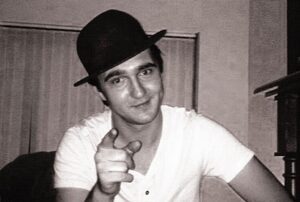
Trevor Murtagh
Trevor Murtagh was the only child of Seamus and Carole Murtagh of Dundalk, Co Louth.
A busy political activist and writer, Trevor graduated from Trinity College Dublin with a masters degree in Psychoanalytical Studies.
He took his own life the day after his 29th birthday.
In Village magazine, where Trevor interned, Trevor’s cousin Jon-Paul Faulkner documents the family’s struggle to get him help in a system that made things worse.
Jon-Paul writes:
I was living up in Dublin. Trevor was at home in Louth. We were close cousins who had lived next door to each other our whole lives – he was my brother really, to be honest. Trevor, apart from my Mum, was the closest person in my life, he was my family.
I always thought Trevor was fine, he was honestly the most positive and encouraging person I had ever met, he seemed to have a philosophy on life that was all about living and having fun and loving. In all my life I never once heard Trevor say he disliked anyone, and that was the kind of person he was; it was the kind of person I aspired to be.
Whenever I felt down, I’d be really quiet; Trevor was the opposite: he could always talk ‘til the cows came home and was really outgoing. This made me think that Trevor was happy.
He had changed a little since he had had a bout of depression in 2011, just after he finished his Master’s in Psychology. His family and friends knew about it. He was still Trevor, positive and outgoing, but when we’d go socialising he would sometimes be more hyperactive than usual, talking non-stop, but still so, so much energy, so outgoing, clever, and apparently happy.
I got a phone call from his parents to say Trevor had been admitted to hospital. His friends had found a suicide note crumpled up in a basket and he had been hospitalised. I couldn’t believe it. It came as a complete shock.
I had seen him the previous weekend, and he seemed ok, though not his usual cheerful self, certainly a bit quieter than usual. Trevor was admitted to hospital on 20 June 2014 and was discharged nine weeks later on 22 August.
It took me a long time to write this, mainly because we wanted to wait until Trevor’s inquest before telling our story, and that didn’t happen until 3 November 2015, but also because, going through in detail what happened to Trevor during his stay in hospital is so, so painful for me: I don’t want to remember him that way.
I think of Trevor from the moment I wake up to when I lie in bed at night, but I try to remember the real Trevor, the happy one – of those memories I have so many. The perverse images of Trevor, once so full of life, lying in a coffin, these memories come to me and I struggle to push them away and think of happier times.
Trevor’s family, and particularly his Mum, Carole, struggled in vain to get help for her only child. We thought we were lucky that Trevor was actually admitted to a psychiatric hospital, but unfortunately we were not lucky with a minority of his healthcare professionals, including his head consultant. His mental health actually deteriorated during his stay in hospital.
When I came in to the hospital that evening of 20 June it broke my heart. It was surreal; Trevor wasn’t Trevor, he was manic, he was so distressed, he kept rubbing his fist against the side of his head, “there’s nothing, there’s nothing in here”, he was saying. “I’m nothing”. It didn’t make sense, Trevor thought he had nothing in his head, nothing to say, the guy could talk for two hours straight about most topics, he was an intelligent guy! He was also saying he had no friends, yet Trevor had such a huge number of friends, and they were ‘real’ friends, they all really loved him, and they were from all walks of life.
Trevor was delusional. I tried to comfort him. “Trevor”, I said, “look, you’re going to get better, trust me, these doctors are the best in Europe, this is one of the best hospitals in Ireland, they’re going to find out what’s wrong with you and you’re going to get better, soon, trust me!”.
But I was wrong, and it didn’t take long to realise it.
(continued at link below)
Documenting A Suicide (Jon-Paul Faulkner, Village)
Trevor Was A Scholar And Environmental Campaigner (Obituary, Independent.ie)

An iSmart charger purchased on Amazon by Liya Hoshi, who noticed something odd about the logo.
Following a rigorous Redditing, manufacturer RAVPower cleared things up by explaining that the inadvertent upside-downism had been spotted and fixed last year (below).


First three episodes of Dolin’ It Out
Cork writer and artist Dylan Fitzgerald, of weekly webcomic Joe Dole, writes:
Joe Dole is about the main character Match-head and his buddies Mo and Bob who are factory workers but are laid off at irregular intervals. It deals with the trials and tribulations of being employed and unemployed in that system.
The theme of the strip is that not all people on the dole are trying to screw the system and this story follows those people who rarely get reported about in the media.
The first part is up (Dolin’ It Out) which is 13 episodes and each is done in the style of a newspaper strip (4 panels an episode).

Some Dad tweetz:
Spotted in Dublin 24. Like some kind of woman’s bra.
Like some kind of woman’s bra, Joe.


From top: Garda Commissioner Noirín O’Sullivan and SIPTU’s Jack O’Connor perusing the Dublin Metropolitan Police prisoners’ books this morning; and one of the books
This morning.
The UCD Digital Library, with SIPTU and the Garda Museum and Archives, launched four sets of Dublin Metropolitan Police prisoners books.
Ros Pan writes:
The Dublin Metropolitan Police (DMP) Prisoners Books for 1905-1908 and 1911-1918 are amongst the most valuable new documents to come to light on the revolutionary decade.
They include important information on social and political life in the capital during the last years of the Union, from the period of widespread anticipation of Home Rule, to the advent of the 1913 Lockout, the outbreak of the First World War in 1914, the Easter Rising and its aftermath in 1916, and including the conscription crisis of 1918.
They will also be invaluable to those interested in criminology, genealogy, and family history.
The collection comprises of four large leather bound, double ledger volumes containing hand written entries that record the details of daily charge sheets issued by DMP members to offenders or alleged offenders.
Each volume contains the name, age, address, occupation, alleged offence and, in most cases, outcome of cases involving over 30,000 people arrested by the DMP.
Each volume also contains an index of prisoners with references to the pages containing details of the charge. The information in these volumes serves, therefore, to provide new perspectives on life in Dublin during a time of war and revolution.
The collection can be viewed online here
Pic: Sinéad Hussey

“The Islamic Republic of Iran is gravely concerned about the high rate of racial discrimination, related intolerance and racial profiling, especially against Muslim people and people of African origin in Ireland.”
“We know the measures taken by Irish government to address these human rights however we share the Committee on the Rights of the Child’s concerns regarding the state of health of children in single-parent families, children in poverty, Travellers, Roma children is significantly worse than the national average.”
“Therefore we would like to make the following recommendation to Ireland: to put in place a robust mechanism in order put an end to racism, discrimination and related intolerance, especially against Muslim people and people of African origin…”
A representative from the Islamic Republic of Iran speaking at the UN Human Rights Council in Geneva this afternoon.
More to follow.
Watch proceedings live here
Previously: Free At Lunchtime?
UPDATE:
#India recommends the Government to take steps to revise legislation on #abortion in line with international human rights standards #UPR2016
— IFPA (@IrishFPA) May 11, 2016
Racism, high unemployment of Travellers & Roma & pple with disabilities in Ireland criticised by 6 countries already #UPR2016 #UN
— Mariaam Bhatti (@bmariaam) May 11, 2016