

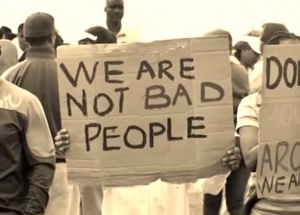
asylumScreen Shot 2015-05-25 at 13.19.59Screen Shot 2015-05-25 at 13.20.51

Charts from the HIQA report into child protection and welfare services provided to children living in direct provision accommodation

The Health Information and Quality Authority (HIQA) examined the child protection and welfare services provided to children and families in direct provision centres in four areas across Ireland.

The four areas – the Midlands, Sligo/Leitrim/West Cavan, Louth/Meath and Dublin North city – had approximately 650 children living in seven centres.

The HIQA inspection team did not meet with children and their families with the report stating: ‘Inspectors did not wish to raise false hopes or expectations with families in relation to accommodation arrangements or asylum applications.’

In relation to the Reception and Integration Agency – which is responsible for accommodating asylum seekers and coordinating services for asylum seekers – the inspectors met with the manager of the Child and Family Services Unit of the RIA to find out how the unit interacts with the Child and Family Agency in relation to child protection and welfare referrals.

HIQA also sent six questionnaires to the RIA and to managers of the direct provision centres involved. Just three completed questionnaires were returned.

From the report:

Data from the Child and Family Agency showed that there were 209 referrals of child protection and welfare concerns about 229 children living in direct provision accommodation in the 12 months between August 2013 and 2014. This represented approximately 14% of the population of children living in direct provision. This is a significantly higher referral rate than for the general child population of 1.6%.

Of the 209 referrals, 178 (85%) reached the relevant threshold criteria for an initial assessment. This is considerably higher than the average threshold of 50% of all referrals in 2013 that required initial assessment and, as with the higher referral rate for children in direct provision, requires further analysis by key stakeholders to determine reasons for the disparity.

Following initial assessments, the breakdown of the primary report type was 91 (51%) referrals relating to welfare concerns and 87 (49%) relating to child protection concerns which reflects the national breakdown of all referrals to the Child and Family Agency in 2013.

During fieldwork in four areas, inspectors found common themes arising from welfare concerns including physical or mental illness of parents impacting on their capacity to care for their children, children’s mental health issues, and gaps in the provision of practical support.

The child protection concerns included exposure of children to domestic violence, physical abuse due to excessive physical chastisement, protection concerns about older children left caring for younger children, and children being left alone unsupervised.

For a small number of children, action was not taken to protect them. Cases were closed prematurely and in one area, Louth/Meath, there were significant delays in completing assessments and sharing information, which placed children at risk and some children were not interviewed as part of the assessment process. In this area children did not receive the services they needed, initial assessments were not completed and some risks were not addressed.

Inspectors found that on occasion the Reception and Integration Agency moved families for safety reasons but gaps in communication between the providers and the Child and Family Agency at local level meant that this information was not always passed on and, as a result, some social work interventions were delayed or did not happen and potentially placed children at risk.

Of the 87 child protection referrals nationally in 2013 about children in direct provision accommodation, the Child and Family Agency sought and obtained care orders for 13 children, made 18 notifications to An Garda Síochána about abuse, identified 11 children as being at risk of ongoing harm and five children were placed on the child protection and notification system.

In Louth/Meath, there were significant delays in social work interventions. Of particular concern was that in 27 out of the 38 cases reviewed, children were not met with or seen by social workers to inform their decision making about the referral even though records indicated concerns about their safety and welfare. For example, in one case there were significant concerns about an allegation of physical abuse of two children and the case was closed without children being visited.

One referral about a child threatening suicide was waiting three years for a response from the team in Laois/Offaly.

Read the report in full here

HIQA concerns over children in direct provision referred to Tusla (RTE)
f7aa282bc6dc444fd9ed023a22b6496c

DryShiteDublin writes:

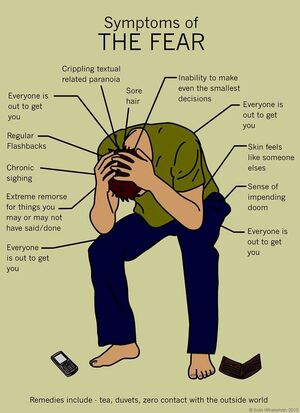
The Fear: How we accepted a self induced depressive mood swing into everyday life.

To wit:

Having ‘The Fear’ is something that I think has been rolled into the Irish weekend experience. It’s an accepted and joked about phenomenon.

I didn’t really know what this was referring to when it crept into the parlance. I dialed up the arbiter of actual everyday speech, Urban Dictionary, and found what it apparently meant. The Fear, and stop me if I’m wrong, seems to be a foreboding feeling of regret with regards to one’s drunken behaviour the night before. From my own experience and from talking to my acquaintances, cases of the fear can go one for hours or days.

It has been embraced into the weekend warriors programme of events. ‘The Fear’ enables the fear-ee (the sufferer of The Fear) to comfort ones self. A Saturday afternoon spent keeping an eye on your facebook feed should throw up statuses and pictures of people indulging themselves with pajamas, any manner of comfort food, Disney movies,  and so on and so forth.

By publically glamorising ‘The Fear’ it becomes accepted into socitey and then leads the ‘fear-ees’ to feel like this is just a part of the weekend. In my experience, The Fear is a depressive mood swing brought on by aggressive consumption of alcohol.

I fear that accepting ‘The Fear’ as a cultural phenomenon is legitimising people bringing themselves into serious depressive states.

There is a real acceptance and openness to discussion of mental health in Ireland at the moment. Yet, at the same time we seem to embracing how drink effects our mood.

(Image: Eoin Whelehan)

wasitforthis?

Splutter.

‘Tea-d Off’ writes:

“Us Brits?” Really? Hire back some of those subs, lads! Or at least have someone read stuff before it goes online…

Fight!

From peppermint to oolong: The health benefits of different teas (Saffron Alexander, Independent.ie)

hometovote

#hometovote, above, by Annie West

You may recall cartoonist Annie West’s Gathering print which adorned the back of The Broadsheet Book Of Unspecified Things That Look Like Ireland (New Island) and  was  later sold to raise money for Aware.

Last Friday – as Irish citizens living abroad arrived home to vote in the marriage referendum – Annie (artist by royal appointment) tweaked the Gathering print to turn it into a new print, called #hometovote.

Now she’s selling the #hometovote prints for €50 – with the proceeds, after printing and shipping, going to youth LGBT group SpunOut.ie

Fair play in fairness.

Spunout

90381792

Senator Averil Power announcing her resignation from Fianna Fail today


Last weekend we witnessed politics at its finest.

In the marriage equality campaign, we saw what can be achieved when people dare to believe progress is possible and work together to make it happen.

We saw that bravery, vision and leadership can win people’s hearts and help deliver major social change.

And we saw that politics can make a real difference to people’s lives.

I’m not in politics for the sake of it.

I ran for election in 2011 because I wanted to make a difference.

I believed our country needed a strong opposition to hold the Government to account.

I wanted to champion issues I care about such as education and social justice.

And I thought Fianna Fáil would learn from its mistakes and work hard to rebuild the trust of the Irish people by showing it had changed for the better.

Over the past four years, I have tried hard to help deliver that change.

However, I have repeatedly been rebuffed by my own party.

When I called publicly for Bertie Ahern to be expelled from Fianna Fáil in 2011, I was reprimanded by the party leader. It would be another year before he was prepared to recommend that course of action.

The strategy I was asked to develop on improving female participation in the party has largely been ignored.

And I have become increasingly uncomfortable in a parliamentary party that is out of touch with the needs and concerns of ordinary people.

I stuck with it because, despite everything, I still believed I could help deliver change from within. I was encouraged by the support of like-minded members. And I thought things would improve over time.

They haven’t and I no longer believe they will.

The party’s cynical and cowardly approach to the marriage equality referendum was the last straw.

For me, a referendum on equality went to the core of what real republicanism should be about. Our members knew that when they voted for a motion calling for the party to support marriage equality at the 2012 Ard Fheis.

Despite this, the vast majority of the party’s public representatives refused to campaign for it. In fact, I was the only TD or Senator who did a proper canvass for the referendum in their constituency.

Some Fianna Fáil representatives declared publicly that they were voting No. Worse still, others told me they would be voting Yes but were afraid of campaigning for it in case they would lose votes.

Fianna Fáil’s overall approach to the referendum symbolized everything that is wrong with the party.

Fianna Fáil lacks vision, courage and leadership.

It doesn’t know what it stands for and lacks credible policies on most major issues.

It is afraid of taking clear positions in key debates for fear of losing support.

And Micheál Martin has become a leader without any followers. His frontbench are all pulling in different directions and prioritising their personal political success over the needs of the party and the country.

Having lost my faith in Fianna Fáil, I cannot in good conscience knock on doors in Dublin Bay North and ask people to vote for the party. In my view, they are simply not fit for government.

I know I would have a strong chance of being elected for Fianna Fáil in the next election. But I have come to the conclusion that I don’t want to be a Fianna Fáil TD. I want to be true to myself and have the courage to walk away from the party.

I am therefore resigning from Fianna Fáil, effective immediately.

I am doing so with a heavy heart as I have many good friends in the party. I am also immensely grateful to everybody who has supported me over the last few years.

It was not an easy decision to make but I am convinced it is the right thing to do.

I intend to serve out my term in the Seanad as an Independent Senator.

I feel I have made a strong contribution there and would like to continue to do so.

The day my Adoption Information Bill passed the Seanad with unanimous support is one of the proudest days of my life. I was delighted to secure the support of the Seanad, and later the Dáil, for the motion I initiated calling for Ireland to formally recognise the State of Palestine. I have also enjoyed working with members of all parties and none on issues like education, health and mental health.

I look forward to continuing this work and also taking other initiatives to help address the struggles people are facing in their daily lives.

I have not made any decision yet about whether I will run in the Dáil election or not. I will discuss that with my supporters over the next few weeks.

Today’s decision was a big enough one for now. But I know I have done the right thing.

Senator Averil Power announcing her resignation from Fianna Fáil this afternoon.

(Sasko Lazarov/Photocall Ireland)

UPDATE:

Meanwhile, in Cork…

And in University College Dublin’s Ógra Fianna Fáil…

Related: UCD political societies united on marriage equality (College Tribune)

Pic: Mary Minihan

00043173

Bill O’Herlihy, RTÉ broadcaster, much loved host of the station’s football and Olympics coverage and public relations executive has died aged 76.

More as we get it.

Broadcaster Bill O’Herlihy dies aged 76 (RTE News)

(Leon Farrell/Photocall Ireland)

Broadsheet.ie