

Your ‘equal right’ to vote no.
Wait, what?
Joe writes:
Spotted outside UCD Dublin…Pretty sure that’s Trinity College’s front arch….
Fight!



Your ‘equal right’ to vote no.
Wait, what?
Joe writes:
Spotted outside UCD Dublin…Pretty sure that’s Trinity College’s front arch….
Fight!

‘sup?
Tomas writes:
I found this student Leap card on the corner of Benburb street and Blackhall Place. As the Students’ Union is probably closed could you post the picture? Will be handing it in to the Bridewell Garda station at the end of the day if no one contacts me
Update: Cian located. Thanks all
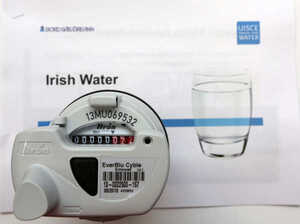
 Water meter (top) supplied by Sierra (above), a subsidiary of Siteserv
The siteserv transaction.
Everything you wanted to know about the government’s priorities.
Dr Julien Mercille writes:
A lot of attention has been paid to the ongoing Siteserv controversy—but the implications for progressive politics have largely been missed in media commentary.
To begin, let’s recap some basic facts.
Siteserv is a construction services company that borrowed a lot from Anglo Irish Bank between 2006 and 2008 and accumulated a debt of €150 million. When the economic crisis struck, the government took over Anglo Irish and changed its name to IBRC.
The government (i.e., taxpayers) was thus made responsible for Siteserv’s debts and tried to get whatever it could out of those bad loans.
But instead of appointing a receiver to Siteserv to recoup those monies, IBRC let Siteserv handle the process themselves… and in 2012, Siteserv was sold to a company controlled by Denis O’Brien for €45 million.
A number of issues have been reported about the deal (although a full investigation has yet to be conducted).
First, Siteserv shareholders received €5 million from the sale. This is important because normally, shareholders, especially when they invested in a company that couldn’t even pay its debts back, are supposed to be wiped out before the creditors (in this case, IBRC). But here, taxpayers absorbed the losses.
Second, the result from the sale are as follows: shareholders got €5 million; state-owned IBRC got €40 million; and IBRC wrote off €110 million of debt it was owed by Siteserv—so the taxpayer took a hit of €110 million.
Third, it has been reported that there were other, more lucrative offers on the table for Siteserv that were rejected.
Fourth, Davy Stockbrokers and Arthur Cox solicitors acted for both sides of the transaction (Siteserv and Denis O’Brien’s company), which is not a transparent practice as it is difficult to obtain the best deal for the government when those overseeing the process simultaneously work for the buyer and the seller.
Fifth, the Central Bank of Ireland reviewed the deal just after it was finalised, but did nothing. The Irish Stock Exchange was also asked recently about a reported spike in Siteserv shares trading just before IBRC received bids from parties interested in buying Siteserv.
The Stock Exchange refused to comment, saying it was precluded from doing so on such matters.
Sixth, the government now wants to review the 2012 sale of Siteserv by using the audit firm KPMG. That is, even if KPMG was involved in the sale. In fact, so far, KPMG has been paid more than €70 million for its services in the liquidation of IBRC.
So asking KPMG to review itself is not exactly an instance of accountability. Indeed, Transparency International Ireland urged the government to remove KPMG from the review.
But our Minister of Finance, Michael Noonan, appointed a former judge to supervise KPMG in the review process. So, the plan is that a judge-reviewer will review the KPMG reviewer. It seems to be difficult to find an objective and neutral reviewer.
Seventh, in 2013, a year after it was bought by Denis O’Brien, Siteserv won several contracts to install water meters in Ireland (through its subsidiary GMC/Sierra). It was bad enough that taxpayers absorbed losses in the sale as stated above, but now Siteserv is benefiting again from the water charges.
A couple of points may be made about all this.
First, there have been accusations that the whole thing shows once again that the government is incompetent, mismanages everything and doesn’t learn from the mistakes of the past.
For example, Shaun Connoly wrote in the Examiner an article entitled “Incompetent Government will Bury the Controversy” in which he wonders if Enda Kenny “really not understands the laws of this country”? He also complains that we are faced with a “rotten system where nothing gets done properly and no lessons are ever learned”.
But the problem with this view is that it assumes that the government is actually trying to manage things properly for the common good, and that if only it could be more competent at doing so, things would improve.
However, in fact, the nature of the state is not to serve the people and to govern for the population as a whole. This should be clear after a €64 billion bank bailout, a blanket guarantee making ordinary people responsible for €365 billion of bank liabilities, and six years of harsh austerity directed at the general population and the more vulnerable that has pushed the deprivation rate from 11.8% of the population in 2007 to 30.5% in 2013.
So by that standard government performance in the Siteserv deal is not too bad at all.
Siteserv shareholders have benefited. Denis O’Brien has benefited. Firms that have been paid fees to oversee the process have benefited. Taxpayers absorbed losses instead of private interests and bondholders, thanks to the socialisation of Anglo Irish debts.
And everything was kept quiet for about three years until one TD, Catherine Murphy, asked sustained questions—that’s not too bad, although in an ideal world, the deal would have been kept quiet forever.
Second, and related, how can we make sure this won’t happen again? UCD Professor of Politics David Farrell writes in the Irish Times that the controversy highlights “two major weaknesses in our political system”: first is “a Government that is not held adequately into account by parliament” and second is “a mindset that privileges secrecy over openness”.
Farrell’s solution is thus that “there needs to be a culture shift”, meaning that Ministers and civil servants “need to appreciate the principles that underline Freedom of Information—namely, to provide citizens with the information they deserve to know”.
Therefore, “instead of waiting behind closed doors” for information requests, the government should “simply put the information out there as a matter of course”.
The problem with this approach is that again, it assumes that if we could only convince those politicians to be more aware of the need for openness and transparency, things would get better.
It’s not incorrect per se, but the problem is that those politicians know very well that secrecy benefits them and those in power—that’s why they’re keeping things secret! Therefore, hoping they will change on their own won’t work.
So what are we left with? The way to change things is by redistributing economic and political power in society—that’s how you keep the powerful accountable, and in fact, that’s how you make sure nobody is too powerful relative to others.
If ordinary people had the same economic and political power as elites, there simply wouldn’t be too many elites around, by definition. A minority would not make decisions that affect everybody else’s lives.
Power would be decentralized, not concentrated in the hands of a few. In short, what we need is a drastic reorganization of power in society.
@JulienMercille is lecturer at UCD and the author of The Political Economy and Media Coverage of the European Economic Crisis: The Case of Ireland (2015, Routledge). His new book, Europe’s Treasure Ireland (Palgrave), will be out in July 2015.

They can’t be here to vote…
David Burns writes:
Under Irish electoral law, the vast majority of emigrants are excluded from voting in the upcoming referendum on May 22.
Our legislation is amongst the most restrictive in Europe regarding an overseas vote. 60,000+ emigrants can potentially vote under law if they return home but most Irish abroad are disenfranchised.
This video from the recently launched “#BeMyYes” campaign puts out a message from across the world from those people – including James Vincent McMorrow, Peter Stringer and Laura Whitmore.

Archbishop Eamon Martin (right) and Bishop of Limerick Brendan Leahy
The Church say that if their side lose,
On equality they might refuse,
To join man and wife,
In wedlock for life,
It sounds like they have blown a fuse.
John Moynes
(Laura Hutton/Photocall Ireland)
 Fr Niall Molloy
Following the publication of the McGinn review of the investigation onto the 1985 violent death of Fr Niall Molloy which highlighted shortcomings in the initial Garda investigation.
Via Justice for Fr Niall Molloy:
The family of Fr Niall Molloy is taking a case for ‘neglect of duty’ against the Gardai for failing to properly investigate the death of the Roscommon priest 30 years ago.
Relatives of the murdered priest plan to a complain to the Garda Siochana Ombudsman Commission (GSOC) over serious shortcomings in the initial 1985 investigation, which they have described as “botched” and “shambolic”.
The shortcomings were identified by the Garda’s own Serious Crime Review Team, which re-examined the unsolved killing of the 52-year-old cleric between 2010 and 2013.
“We have carefully considered the findings of the McGinn report and the serious shortcomings identified in the initial Garda investigation, which we believe cannot now be ignored by the Garda Ombudsman,” Henry McCourt, a nephew of Fr Molloy’s, said.
“The McGinn report has only confirmed our long held opinion that the initial investigation in 1985 was botched at best and we intend to make a complaint for neglect of duty to the Garda Ombudsman.”
Family members were previously advised that they were outside the permitted time period to make a complaint. This time, however, the family believes that the McGinn findings arm them with certain new facts to take a case against Gardai.
“Based on what the McGinn report has found and other official documentation that has come to our attention we’re going to make a fresh complaint to the Garda Ombudsman, which has some discretion to consider complaints relating to cases that are more than 12 months old,” Bill Maher, another nephew of Fr Molloy’s, said.
“We have no doubt that Gardai did not investigate Fr Niall’s death properly. The shortcomings identified are so basic that we’re left wondering was it pure incompetence on the part of Gardai or has there been a cover-up,” he added.
Mr Maher said that Garda Commissioner Noirin O’Sullivan should also clarify comments that the McGinn report would bring “some comfort” to the family.
“We are confounded and deeply upset by the Garda Commissioner’s remarks. How could this report, which shows such flagrant failings in basic policing, bring us any comfort?” Mr Maher said.
Previously: The McGinn Report : A Conclusion
Previously: Fr Molloy on Broadsheet

Michael writes:
I am a TEFL teacher in Dublin, formerly a member of the teaching staff at the recently and scandalously closed MEC (Modern Educational Centre).
My colleagues and I had not been paid for six weeks, students lost hefty course fees of which many saved over years, and yet while all of us are left literally short-changed and betrayed by the mercenary School owners, we cannot but view this in systemic terms, because it is patently a deficiency of government regulation once again which is responsible for this the 14th EFL school closure in 12 months.
Please broadsheet readers come and support our protest going from Merrion Square, Dublin at 12 noon in the direction of Dáil Éireann!

An eyecandiful compilaion of the winners of the Nikon Small World In Motion Photomicrography competition by The Atlantic.

From yesterday’s Indo classifieds
(Thanks Gerry Hoban)
