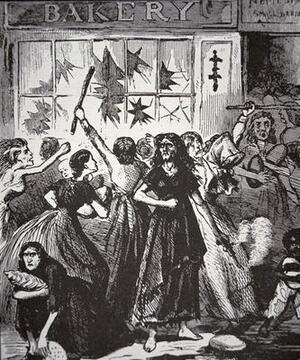
 Dublin 1740.
The hungry rising.
Sibling of Daedalus writes:
“Tonight is the anniversary of the start of the Great Dublin Bread Riots which began in the early hours of 31 May 1740 and lasted until the 2nd June. According to this account:-
“Several hundred persons banded themselves together, and, proceeding to the bakers’ shops and meal stores, took the bread and meal into the streets, and sold them to the poor at low prices… Some days after the riot the Lord Mayor issued a proclamation giving permission to “foreign bakers and others” to bake bread in Dublin; he also sent to all the churchwardens of the city to furnish him with information of any persons who had concealed corn on their premises; he denounced “forestallers,” who met in the suburbs the people coming in with provisions, in order to buy them up before they reached the market; thus in a great measure justifying the rioters who were whipped and transported. The bakers began to bake household bread, which for some time they had ceased to do, and prices fell”
The riots took place against the context of the other Great Famine of 1740 during which it has been suggested 38% of the population died.Some of the rioters paid for the bread; others did not, all were threatened with excommunication by their respective churches. Quite a few ‘respectable’ citizens participated in the riots, and were subjected to transportation as a result. Harsh times indeed.”
Sibling of Daedalus
Extract Via History of the Great Irish Famine






![SUN: SUN-PAGES-NEWS [1RM] ... 31/05/14](http://cf.broadsheet.ie/wp-content/uploads/2014/05/SUN011RM31.jpg)