BY9CrzyCQAM-B4E.jpg largeOh my.

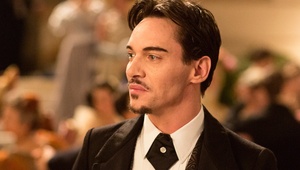
The first photograph of Jamie Dornan in character as Christian Grey has been revealed – along with an amusing admission the Co Down actor was in his pyjamas when he got the big phonecall from Hollywood. Dornan, 31, posed with co-star Dakota Johnson, playing Anastasia Steele in the much-hyped Fifty Shades of Grey movie, for the front cover of US magazine Entertainment Weekly.

Splendid.

But does the Irish Christian Grey pull YOUR drawstring bottoms?

First photo of Jamie Dornan as Christian Grey – as the actor reveals he was in his pyjamas when he landed kinky Fifty Shades role (Claire Cromie, Belfast Telegraph)

joe_duffyIf you sell your home at the end of this year YOU are still liable for property tax until November next year.

Yeah whatever

But all is not lost.

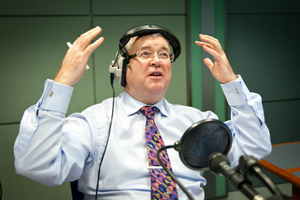
Dublin solicitor Caroline Fanning contacted Liveline on RTE R1 this afternoon to tell Joe Duffy about a potential loophole the revenue overlooked.

It may involve throwing a “sickie”.

Caroline Fanning: “I decided to go back and have another look at the Finance Act 2012, which is the relevant legislation – and in that Act, it imposes this tax on people who are deemed to be liable persons, as of the 1st November 2013 – so they are liable for the 2014 tax.
“But if you read on further through that Act, if you look at Section 5.2, Sub Section A2. Sub Section 5.2 says that, ‘A residential property won’t be deemed to be a relevant residential property where the property has been vacated by the liable person for a period less than 12 months.’
“It doesn’t specify if that period is one day, or one hour – it just says less than 12 months – and where a GP is satisfied that that person is unlikely to resume occupation of that property, provided that the property is not occupied by another person.
It’s an interpretation of this section, because it’s very loose, because the rest of the section is in terms of a person who has a long term mental or physical infirmity, which is Section 5.2A Sub Section 1, but there’s no link between Sub Section 1 and Sub Section 2 – so you can read Sub Section 2 in its entirety as a stand-alone sub section.
So, therefore, if somebody sells their property tomorrow and goes to their doctor and says, ‘I’ve sold my property, I’ve given my keys to them, I’ve got the money in my bank account, I’m never going to live there again.’ – and their doctor is satisfied that that is the case, and that the new owner hasn’t immediately resumed occupation of the property – say a couple of days’ grace, moving stuff out, or builders, or whatever, their GP, if they certify that that person won’t be resuming occupation, that person has complied with Section 5.2A, Sub Section 2, that the property is not going to be a relevant residential property and therefore, they are not liable for the tax.”

Joe Duffy: “But they would say there is subsidiarity in Sub Section 5.2A1?”

Caroline Fanning: “The last word in Sub Section 5.2A1 is ‘or’, which means that either one will apply – so I think that under this interpretation of statute for a penal tax, or something penal is happening to the citizen that you’re able to construe that legislation in favour of the citizen – and I think that in this case, it’s definitely a case to be made.”

Joe Duffy:
“And Caroline, you are a solicitor, I see, it’s very very well spotted. Have you ever beaten Revenue in interpretation?”

Caroline Fanning: “I’ve beaten – I’ve won on certain things in going back..{Joe interrupts}.”

Joe Duffy: “You’re saying, your belief is that if you read this in a particular way – in the way it’s written, that anyone who does sell their house in November or December this year – at the moment they are being hit by the property tax – even though they have no access or use of the house, or ownership of the house, they will be hit for property tax for next year. You’re saying that what you should do is, regardless of your mental or physical state, you go to a GP, and you get a letter from a GP saying, ‘I will not be…{Caroline interrupts}

Caroline Fanning: “…they are satisfied that you will be unlikely at any stage to resume occupation of the property’ – which is the wording in the legislation.”

Joe Duffy:
“And you can send that into Revenue and that exempts you?”

Caroline Fanning:
“Well, there’s definitely a case to be made.”

Joe Duffy: “Revenue will say that this was aimed at people going into a nursing home?”

Caroline Fanning: “But there’s no link between the two, you can read them in their entirety.”

Joe Duffy: “So what you’re saying is 5.2A2 should actually be 5.2A and should be part of 5.2A1 and there shouldn’t be a break?”

Caroline Fanning:
“Well, that would be up to the drafters of the legislation, but there’s definitely an interpretation to be made that could apply to those people that are being hit for property tax for next year.”

Joe Duffy: “But the GP will laugh – if you were to say, ‘Will you exempt me from my property tax?”

Caroline Fanning: “That would be up to the GP, I’m sure some would be sympathetic.”

Joe Duffy: “That’s fascinating, well spotted – and best of luck with it Caroline!”

Caroline Fannning: “Thank you.”

FIGHT!

Listen Here

(Photocall Ireland)

HumePaywall Fight!

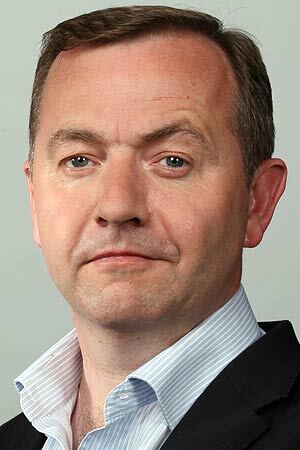
Mick Hume, above, is the editor-at-large at Spiked, and the author of There Is No Such Thing As a Free Press.

Last week he delivered a speech at the National Newspaper of Ireland Journalism Awards. We asked him for a copy of the speech but he didn’t have one “just had a few notes.” However, he’s kindly written the following from memory:

I have been asked to talk about the theme of my book, in defence of press freedom. Some might wonder if that is really necessary in the 21st century. After all, these days everybody in public life in the UK, Ireland, the US and the West will say that they support freedom of the press. When I debated these matters in London with His Holiness Hugh Grant, patron saint of statutory regulation, even he insisted that he supported a free press “in an ideal world”. Who exactly would want to live in Hugh Grant’s ideal world is another matter.

But the idea that everybody supports the principle of press freedom is one of the great lies and delusions of the age. In reality, press freedom is distinctly out of fashion in political and intellectual circles. The mantra of today is “I believe in a free press BUT…”. Then they go on to explain how they don’t really believe in freedom of expression at all – or at least, only for those views of which they approve. “I believe in a free press BUT…” And the “Buts” are getting bigger.

This is why, as journalists and writers, I think it is high time we started speaking up more vociferously for the freedom of the press, with no buts. Press freedom is not some woolly but impossible ideal, like Free Love, to be “butted” into submission by practicalities. Freedom of expression and of the press is the lifeblood of any free and civilised society.

And we need to defend it as an indivisible liberty. You cannot say you abolish slavery, but only for white people and Christians. You cannot say you defend press freedom, but only for the “respectable”, highbrow publications and not those “vulgar” tabloids.

These are ideas that have largely been lost sight of in Western debate, where the emphasis today is on depicting the press as a problem, as something has been “too free” and needs to be reined in somehow.

Look at our experience in the UK. For two and a half years now, since the phone-hacking scandal exploded, the British press has been on trial. The Leveson Inquiry was really a showtrial, since the popular press had been found guilty before proceedings began, and all that remained to be decided was the sentence.

Now the politicians are trying to impose a system of press regulation using the ancient anti-democratic instruments of the Royal Charter, the Crown prerogative and Her Majesty’s Honourable Privy Council. It smacks of the seventeenth century – the first attempt at state-backed regulation since the despotic system of Crown licensing of the press ended in 1695.

In the old days King Charles II had an official censor called Roger L’Estrange, who hated new fangled newspapers because they told the “Multitude” what their “Superiors” were up to, and gave the masses “an itch…to be meddling with the government”. To put a stop to such wickedness, L’Estrange published government-approved newspapers and stamped on those who sought to publish freely. As late as 1663, a printer was hanged, drawn and quartered for daring to infringe the Crown monopoly. (That was not, of course, the end of British state interference in the Irish press. As late as 1848, the publisher of the rebellious United Irishmen newspaper was sent, not to the Tower, but to Tasmania.)

Exactly 350 years after the brutal execution of that printer, today’s more civilised British rulers still share that fear and loathing of “the Multitude” and insolent publications. The difference is that they wish to use the ancient instruments of the Royal Charter, Crown Prerogative and Privy Council only to have the popular press neutered and lobotomised, rather than put to death.

The spirit of the moment was summed up by an Old Bailey judge last week, at the start of the trial of two former editors of the News of the World. M’lud told the jury not to look at the latest issue of the satirical magazine Private Eye, because its front cover was a joke involving one the accused, Rebekah Brooks, which was “in exceedingly bad taste”. That is what all of this has been about. The phone-hacking scandal, which nobody wants or needs to defend, has been used as a pretext for a wider purge of that which the elites deem to be “in exceptionally bad taste” in the popular press. We should remember that the Leveson Inquiry was not into phone-hacking at all, but was set up to probe the far wider “culture, practice and ethics” of the press. It was an exercise in what I call Ethical Cleansing.Continue reading →

Broadsheet.ie