

Tag Archives: Derek Mooney

From top:  Tánaiste Leo Varadkar ( left) and Taoiseach Micheál Martin; Derek Mooney

Writing traditional political analysis at a time when the usual power play and open practise of normal politics has been suspended is not easy. Writing it when people are worrying about the damage this pandemic is inflicting on their lives and livelihoods is uncomfortable.

The ups and down of this junior minister or that opposition frontbencher are so unimportant when compared with the concerns of people worried about whether their jobs will be still there, or their business will still be viable after the pandemic.

Even in normal times, the reporting of political processes, the who’s in and who’s out, only serves as a distraction from the real stuff of politics when its discussion is detached from the consequences of those movements on the formulation and implementation of policy.

While these are not normal times, their gradual return is almost within sight, and with those normal times will come a return to the normal practice and discussion of politics.

While no one is foolhardy enough to dare suggest a hard date for that return, I’d wager that we will not see a return to this normal politics this side of the wet pubs re-opening. I say this with deference to the many publicans who may now fear my forecast will act as an incentive for Micheál Martin to keep them closed to 2022!

So, while it may still seem untimely to discuss some of what is happening inside the political parties right now, yesterday’s Ireland Thinks/Mail on Sunday opinion poll does give us licence to explore some broader points.

Though the poll does not report any significant developments, the shifts are within the margin of error, it is still worthwhile as it shows existing trends solidifying via incremental shifts of support from the government parties to a mixed range of opposition parties and independents.

I am not trying to downplay the gains made by Sinn Féin. Its progress is clear to see. Two of the three most recent polls now show it ahead of Fine Gael – 1pt in this poll and 5pts in the December B&A/Sunday Times poll, with the other one showing them level pegging.

Look across the seven national polls published since last October and you find Fine Gael poll support averaging 31.3%, Sinn Féin’s averages at 29.3%, Fianna Fáil’s at 16.1%. In terms of the smaller parties, the Greens and Labour average around 4% each, behind them are the SocDems, Solidarity-PBP and Aontú on around 3% 2% and 2% respectively, while Independents and others score an impressive 7.5%.

So far, so what, says you. All the parties are roughly where they have been for the last six months but track the combined support for the three government parties and you detect a slow trend away. Their combined support has slipped from the mid-50s in Sept and Oct, to the low 50s in November and December and to just 46% in yesterday’s poll.

We shall see if other polls confirm this trend of gradual slippage in support, particularly the upcoming Red C/Business Post Poll. We shall also see if they too point to Fianna Fáil being the polling weak spot of the government.

While all three parties have seen rises and falls in their support over those polls, Fianna Fáil has seen its levels fluctuate most. They have swung wildly from the devastating 11% in an October poll to the morale bolstering 22% in a December one. That said, not even the most besotted Martin-ite cumann secretary thinks they are on 22% or within an asses’ roar of it.

The latest Ireland Thinks poll comes in the middle of some significant anniversaries for Micheál Martin and Fianna Fáil. This day last year (Jan 18, 2020) the party was one-week into the election campaign. It was still basking in the first national poll of the campaign (Sunday Times/B&A) which had it 12 points ahead of both Fine Gael and Sinn Féin. That changed on Jan 18th with the Irish Times/MRBI poll that suggested the race might be tighter than Martin had hoped, picking up on the scale of Sinn Féin surge.

What a difference a year makes!

Last year might as well be a decade ago… speaking of which brings us to another key anniversary. Last Saturday marked the tenth anniversary of Micheál Martin’s Martin Luther moment, when he metaphorically nailed his disputation to the doors of the old Burlington Hotel. On Jan 16, 2011 Martin proclaimed that Fianna Fail’s dismal poll ratings* meant it was time to change leader, saying.

“I believe that Fianna Fáil must recognize the reality of the current climate of public opinion… I have reluctantly concluded that, in these circumstances, Fianna Fáil should change its leader.”

* (A Paddy Power/RedC poll on 7/01/2011 showed: FF 14%, FG 35%, Lab 21%, and SF 14%)

Even that notional Martin-ite cumann secretary of whom I spoke earlier wouldn’t dare claim his parties languishing poll numbers are down to Covid-19.

They might, however, have a case if they were to argue that the party cannot expect to see any faint recovery in its fortunes until the country is safely out of lockdown. Something that depends on An Taoiseach and his Minister for Health delivering a speedy and effective vaccination program.

A few weeks ago I said that the State’s vaccination program looked unambitious. and lacklustre. It has since been re-tuned and upgraded. It now looks and sounds a bit more ambitious, with clearer targets and specific timelines, but there is a long way to go.

Right now, the UK is on course to have 15 million of its citizens vaccinated (with their first dose) by mid-February. About 22% of the population. Minister Donnelly says the Irish plan is to have 700,000 people vaccinated by the end of March. So, it will take us six weeks longer to get just three quarters of the way to a target of vaccinating 20% of the population.

The State needs to quickly build confidence in its capacity to roll out a serious vaccination programme. This task is not made easier by people finding the only information they can easily obtain is via a link to an online calculator they got from a mate via email or WhatsApp. Especially when that programme is telling many of them that they should not expect to get their first or second vaccine dose until late this year or early 2022.

This is not down to malign intent. The calculator assumes the State’s vaccination rate will remain at 42,000 per week (it even allows you increase this rate). The builders of the app based it on the information the minister had released, and as of Sunday night the Covid data hub still only showed the vaccination figure for up to January 13.

Posting fancy charts in March or April showing how well we are doing well compared to Serbia, Bulgaria, or Luxemburg (or whoever is trailing us by then) won’t cut much ice with the public, especially when they can daily see how far both Northern Ireland and Scotland will be ahead of us.

People will be tolerant and patient with Minister Donnelly and Taoiseach Martin until March, but that patience will not stretch far beyond then. Come March, if not before, the public will rightly want to feel they can look forward to some limited semblance of normality before the end of the summer. For that to happen they will need two things.

The first, they will want to know, with a reasonable degree of confidence, how long more they will have to wait to receive their vaccinations.

The second, they will want to be absolutely reassured by government and by NPHET that there will be no long-term return to level 5 lockdowns once we reach the early summer.

If Donnelly and Martin do not succeed in convincing the public on both scores, then one of the principal upshots of the reopening of the wet pubs, whenever that may eventually happen, could be their party colleagues calling time on them.

Derek Mooney is a communications and public affairs consultant. He previously served as a Ministerial Adviser to the Fianna Fáil-led government 2004 – 2010. His column appears here every Monday. Follow Derek on Twitter: @dsmooney

RollingNews

From top left to right: Micheál Martin, Tánaiste Leo Varadkar, Minister for the Environment, Climate and Communications, Eamon Ryan and Minister for Education Norma Foley’ Derek Mooney

When, in five- or ten-years’ time, we look back on January 2021 will we think of it as the month:

…when President Trump launched a failed coup that resulted in his being banned from office;

…when a Covid-19 peak drove authorities to get serious about speeding up vaccinations or,

….when Marks & Spencer stores in Ireland ran out of packets of Percy Pig.

I suspect, in a darkest hour is just before dawn way it will be a mix of Trump and the vaccine. Hopefully, we will look back and see this as the inflection point when, to quote Arnold Schwarzenegger’s excellent video message, a jailed or exiled Trump became as “irrelevant as an old tweet.” Similarly, we will see this as the month when Covid-19 was arrested in in Ireland via a pincer of suppression and mass vaccination.

While I hope this is how our future selves will see things, I know there is a cohort of maybe 70,000 young citizens for whom January 2021 will still invoke memories of doubt and uncertainty. I refer to the 6th year students who want to know what will happen with this year’s leaving cert.

An old political maxim states: Standing in the middle of the road is very dangerous; you get knocked down by the traffic from both sides.

The maxim is usually attributed to Maggie Thatcher, but that is not the only reason I am unconvinced by it. It is very possible for someone, with their wits about them, to walk along the line in the middle of a standard road or street, never mind the big central reservations the have along carriageways.

The political unfortunates who get hit by traffic from both directions are the eejits who spend less time staying in the middle, and more time veering left and right of it, trying to cover more ground.

This, in part, is what the government did on the leaving cert last week. By deciding one thing and then deciding the opposite, they managed to rile all and please none.

I have no doubt the original decision to have three-day-a-week school sittings for leaving cert students was made with the earnest hope of ensuring the leaving cert exams could go ahead, in person, in the Summer… but… while the government’s motivation was commendable, the execution was lamentable.

I know from talking to the various Fianna Fáil TDs who are still willing to take my call, that they were inundated with calls, texts and emails from parents, teachers, and local unions officials all concerned by the prospect of going back into classrooms today.

The same TDs also reported that no sooner had the government reversed its position than their phones were erupting with messages from almost as many parents and students concerned that not holding classes will disrupt their exam preparations.

It is impossible in politics to please everyone, but as government TDs and representatives learned this week, it is quite easy to piss-off everyone.

I have no informed view as to whether the leaving cert should proceed as it traditionally did in previous years, or as a teacher-assessment as happened last year. I am agnostic on both options. But I do know a few related things.

The first, is that attacking teacher unions for voicing legitimate concerns is not a smart political move. Especially when: (a) your government does not give them the reassurance or access to medical data proving that schools are sufficiently safe, and (b) your Health Minister tells teachers in December 2020 that they will be 11th in his 15-phase Vaccine Allocation Strategy.

The second thing I know is more pertinent to sorting out this problem. Leaving cert students want and need certainty, and they need it now. Some of them favour assessment, as many of them favour traditional exams.

They are divided on that, but the critical point that the government must realise is that all of them are united on just wanting to know, one way or the other… and soon. Last week’s, you’re back, no you’re not, exercise only served to add to the stress levels of an already anxious group. Whatever the decision is to be, it should be made soon, very soon, otherwise the government risks annoying everyone, again.

This year’s group of leaving cert students have gone through a very bizarre and surreal educational experience, even more surreal than last year. The 2020 leaving cert cohort had these tensions and extra problems visited on them from a few months before their exams. This year’s cohort have endured them since last September.

They have been in school, attending socially distanced classes, all the while being unable to mingle, hangout with friends, play sports or enjoy any of the ancillary in-school-benefits that, in normal times, ease the stress and tensions of preparing for the leaving cert.

The 2020 leaving cert class clearly faced huge pressures, but it would be churlish not to accept that this year’s class faces even greater ones, including hearing themselves, and other young people, unfairly vilified, both online and in the media, for the Covid-19 spread.

It is not that this year’s leaving cert students know better than the education experts or policymakers whether is it better to proceed with exams or with assessment, but they certainly know what pressures they are feeling and how the uncertainty is impacting them. Their thoughts, their concerns and their needs must be a major element in any decision.

While many areas of public policy making that can benefit from a let’s wait-and-see approach, particularly as some problems to have a habit of sorting themselves out, this is not one of them.

The government needs to focus hard, decide and stick with that decision, even if it discovers, in two-or-three months’ time, that going the other way remains an option. I know there will be a temptation to announce that the exams will proceed knowing that the option to switch to an assessment process remains there as a Plan B. I would advise against this approach as it just retains and maintains the uncertainty.

Standing back from the specifics of the leaving cert conundrum, the government must not allow itself to be excessively worried by opposition taunts on changing its mind or doing a U-turn.

The Scottish First Minister, Nicola Sturgeon has announced several policy U-turns on handling Covid-19 over the past few months and suffered no appreciable loss of support because she has been direct and taken responsibility and owned the changes. She has also benefitted from having her firm leadership contrasted daily with the vague, blame-others, approach of Prime Minister Johnson.

Governments everywhere are playing catch-up as they see struggle to get ahead of the virus, particularly when it does not precisely follow the paths the system modellers suggested. There is no shame in changing course when the event or outcome you planned for and expected to materialise, doesn’t. To quote Keynes: “When the facts change, I change my mind – what do you do?”.

Postscript. Before I finish, I should probably add two more items to the list I imagined in the first paragraph, though we probably won’t have to wait for a year to see if these come to pass.

First: will we see this as the moment when the worm turned on social media regulation with Facebook etc., being treated as a publisher, not just tech platforms.

Second; will we look back and see the Minister for Children’s justified anger at the leaking of the Mother and Baby homes report as the moment that triggered the countdown on this government denouement?

Derek Mooney is a communications and public affairs consultant. He previously served as a Ministerial Adviser to the Fianna Fáil-led government 2004 – 2010. His column appears here every Monday. Follow Derek on Twitter: @dsmooney

RollingNews

From top, left to right: Minister for Health, Stephen Donnelly TD , Paul Reid, CEO, HSE and Professor Brian MacCraith, Chairperson of the High-Level Task Force  as the HSE took delivery of the first doses of Pfizer BioNTech Covid-19 vaccine on St Stephen’s Day; Derek Mooney

Though the daily Covid-19 numbers are spiraling ever higher and the prospect of even tighter restrictions looming large, we must hold on tightly to the belief that we are almost through the worst of this pandemic.

For most of the last year we have fought this pandemic on just one front, that of containment. It is a fight that we have waged with reasonable success, due to the efforts of the government and – most especially – the thousands of essential workers from medical staff to delivery workers to retail personnel.

Now, a critical second front against the vaccine has been opened with the approval and distribution of vaccines. We now have two fronts and the speed of progress on both fronts will decide whether we are weeks or months away from progressing steadily back to some form of normality.

But, as if to prove the adage that the darkest hour is just before the dawn, the vaccines have come on stream just as the pandemic surges across the globe.

Here, the massive community spread of the virus has left the HSE struggling to do the necessary contact tracing and testing at precisely the very moment when it also must deliver the biggest vaccination programme in our history. They are not alone in this predicament. Across Europe we are seeing other countries struggle too.

It is undoubtedly a difficult task, but as the Israelis and others are showing, it is not an impossible one. Not long ago Israel was in the depths of a massive infection surge, but now it leads the world in vaccination roll out with over 12% of its population already vaccinated, including 50% of its seniors and others at risk. Israel vaccinates 150,000 people per day, every day, calling up army reserves and others to help deliver the vaccination programme.

It is clear from what the Taoiseach, Minister Donnelly and HSE say about the strains the current surge has placed on the services here, that we will not come close to matching what Israel is doing. It is equally clear however, that we need to put the same effort into the vaccination front as we have put into suppression front.

I was astonished, at the end of December, to see several Fine Gael and Fianna Fáil TDs and councillors proudly posting vaccination timetables for nursing homes in their constituencies. Timetables which, in many cases, didn’t start until mid-January and didn’t finish until early February.

It was if someone at a senior political level thought this was an acceptable time frame. It wasn’t. We hopefully are seeing some signs this week that this reality has dawned on them.

No matter how you look at it – and I am not looking to criticise anyone in the government, NPHET or HSE here – the government’s vaccination rollout plan still looks unambitious.

Minister Donnelly says that 78,000 people in the nursing home settings will be vaccinated by the end of January, as well as tens of thousands of hospital staff (HSE employs about 120k medical personnel). The government is right to prioritise both groups. But it should be looking to add other front line works to that list too.

This is possible as within that end of January timeline, Ireland will receive around 200k doses of the Pfizer vaccine (40k per week), this should be enough to cover a first jab for everyone in the nursing home and health service. But that is just one vaccine.

On Wednesday (Jan 6th) the European Medicines Agency (EMA) is expected to authorise the use of the Moderna vaccine. So, within that same January timescale we can expect to receive supplies of the Moderna vaccine. The EU has purchased 300 million doses of the Pfizer vaccine and 160 million doses of the Moderna vaccine.

Taking these numbers pro-rata, Irish authorities should reasonably expect to receive up to 300,000 vaccine doses by the end of January. Doesn’t this mean we should have a matching capacity to vaccinate 300,000 people with the first of their two shots by the start of February?

I mention February as the EMA is expected to authorise the AstraZeneca/Oxford vaccine, which is already in use across the UK, including Northern Ireland, for use in the EU in February. The EMA is then expected to approve the single dosage Johnson & Johnson vaccine sometime after that.

While the EU has bought 460 million doses of the Pfizer and Moderna vaccines (to be delivered over several months) it has also purchased a combined total of 800 million doses of the AstraZeneca and the Johnson and Johnson (400 million) vaccines.

Securing doses of these vaccines and others (such as CureVac and Sanofi-GSK) is positive, but the key is getting folks vaccinated. The focus must therefore be on getting vaccines into people’s arms as soon as possible. This means front loading the immunisation programme.

Starting today, we need to be every bit as focused on the daily vaccination numbers as we are on the new Covid19 cases. In truth, we need to be even more focussed on these vaccination numbers as these will determine how long it takes for us to start safely unlocking our communities.

We must treat the vaccination programme and suppressing the spread of the virus as national emergency. If the expert advice is that we introduce curfews or close schools beyond January 11th then we will have to do that, but we also must direct the same energy and vigour into vaccinating 24/7.

In time, when this crisis is over, we can assess the effectiveness of the state’s emergency response. There will be plenty to laud with agencies and individuals performing to the best of their ability, and beyond. But, looking back, we will also see just how much we have lost by sustained under investment in our emergency services in the years before the pandemic. Covid19 has exposed how little spare capacity we possess to cope with such sudden emergencies.

Whether we like it or not, we do not have enough Gardaí. It is not that we are critically under policed or in the throes of a huge crime wave, but we do not have enough Gardaí to cope with the huge range of responsibilities and duties beyond policing and crime investigation we assign to them. As we so tragically saw in Dublin 15 last Wednesday, we don’t just expect the Gardai to tackle crime, we expect them to deal with critical mental health issues.

The situation is even more obvious when it comes to the Defence Forces. In an excellent analysis piece in the Business Post, RACO’s Sec Gen, Conor King, highlights how, with just over 8,100 fully trained personnel, the Defence Forces are operating at only 85% of their minimum designed strength.

Mr King is being unduly charitable to the government here, as he uses the government’s 9,500 figure as the minimum force strength baseline. The true baseline number is higher. 1,000 higher. The landmark 2000 White Paper on Defence set the establishment strength of the Defence Forces at 10,500. This figure wasn’t plucked randomly out of mid-air but decided after months of discussion and debate.

That 10,500 was summarily reduced by 1,000 by an Bord Snip Nua to 9500 as part of the 2009 public spending cuts. The cut was based on bottom line accountancy and intended a temporary measure, one to be corrected when the economy returned to growth. The last government ignored this fact and has tried to make a perfunctory cut permanent to understate its neglect of our Defence Forces.

Take the true 10,500 number as the baseline and you realise that the Defence Forces are operating closer to just 75% of their establishment strength.

Yet, as with the Gardaí, despite these pressures on manpower and resources they have been a vital component in delivering the State’s Covid19 response.

The Defence Forces’ Operation Fortitude has provided vital logistics and hard capabilities to the State’s response from supporting contact tracing and constructing community testing centres, to flying Irish Covid tests to German laboratories and delivering vital PPE.

As I say, there will be time for these discussions when the crisis has passed. In the meantime we must all do everything we can to suppress the virus so the HSE can get the country under a vaccination programme as soon as is possible.

Derek Mooney is a communications and public affairs consultant. He previously served as a Ministerial Adviser to the Fianna Fáil-led government 2004 – 2010. His column appears here every Monday. Follow Derek on Twitter: @dsmooney

RollingNews

From top: The newly-elected Cabinet of the 33rd Dáil at their first  meeting in Dublin Castle on June 27; Derek Mooney

To paraphrase the David Frost programme of the 1960’s: That was the year that was — It’s over, let it go. We are all happy to let 2020 go. But, while the year is (almost) over, the two issues which dominated 2020 are set to dominate 2021: Covid and Brexit.

Indeed, the continuing out-workings of Brexit; Brexiternity as Denis MacShane has dubbed it, will keep several future governments busy over the decade ahead.

Although both Covid and Brexit will dictate a sizeable portion of the policy and budgetary agenda for 2021, it is hard to see either having the capacity to destabilise the government, though this may be truer of Brexit than Covid-19.

Despite failures on nursing homes, mass and rapid testing and contact tracing, the government has retained broad public support for its handling of the pandemic response.

Only a serious delay or problem with the rollout of the vaccine might impact the government. This may be the reason the Taoiseach has been eager to manage expectations on delivery of the vaccine.

He has suggested in recent days that it may be well into the summer, even August, before we get to a 60-70% level of vaccination. (There may also be another more worrying reason if this Der Spiegel report is correct)

Though a political necessity, an Taoiseach’s management of expectations is also a double-edged sword. While he will see it as prudent to under promise now in the hope of overdelivering in the future, it also risks increasing the already evident public fatigue with restrictions.

Though Covid and Brexit will remain major issues for the government in 2021 the biggest political problem facing it remain internal. Indeed the easing and normalising of the aforementioned external pressures as 2021 progresses may facilitate the internal one coming more clearly to the surface.

Counter-intuitively, though the three government parties combined still command 50% plus support in the polls, the government itself is only just holding itself together. This week we were reminded that, despite Fianna Fáil’s considerable internal problems, the Green Party remains this government’s Achilles Heel.

The fact that the government had a political difficulty over CETA, the trade agreement with Canada is an indication of how easily the Green’s position in government can be unsettled.

How could an EU trade deal with Canada… yes, with Canada… so seriously disrupt the government’s Dáil agenda this week?  I mean… it’s Canada… they’re the nice ones, aren’t they? Is there a Terrance and Philip clause in CETA which we missed?

The fact is that this trade deal has been up and running since September 2017. I know the Greens opposed CETA back in the day… but, that ship has sailed. CETA is now a reality. We have enough real issues facing us today without running slow motion replays of settled ones.

More significantly, how did the Green leader, with his entourage to rival a 18th century Bourbon monarch – albeit one of a small Duchy, fail to see that a vote on CETA would cause a problem?

So far this year we have had Green TDs, including an office holder, abstaining on government votes. As Ian Fleming says on the opening page of Goldfinger: once is happenstance, twice is coincidence and three times is enemy action. If the Tenant’s Rights Bill was the once and CETA is the twicethen 2021 could be the year when individual Green TDs and office holders decide they can no longer stand the pressure and quit government.

Up to now the big worry among Fianna Fáil back benchers has been Varadkar doing a cut and run the moment he thinks it safe to hold an election, an election already being framed as a stark binary choice between Fine Gael and Sinn Féin.

It is a worry actively encouraged by Micheál Martin’s depleted retinue of parliamentary loyalists, so depleted that the non-office holders within it are on the verge of no longer being a plural. A move to oust Martin, they argue to their disgruntled colleagues, would send Fianna Fáil into a prolonged leadership battle which, in turn, would encourage Varadkar to press the election ejector button.

It was a weak argument at best. Because it fails to recognise that the growing indiscipline and incoherence of the Green party is an even greater threat to the government’s stability and continuity than Varadkar’s all-consuming ambition.

So, while Martin’s minions try to scare Fianna Fáil backbenchers with imaginary stories of how heaves can precipitate elections, the TDs in question are increasingly focused on the real dangers of Fianna Fáil facing an election triggered by the Greens in 2021, or early 2022, and stuck with Martin as leader.

These fears were heightened by Martin’s stunning we didn’t bail out the banks claim. It is impossible to overstate just much real damage Martin inflicted on his own leadership with this major unforced error.

Looking back at the remarks it is now obvious that they were not just off the cuff. The Taoiseach seemed to be spoiling for a fight before the Christmas break. Could it be that he saw Boyd Barrett’s comment as a welcome opportunity to unburden himself on something he has been reflecting on a lot?

But Copernicus Martin’s mission to tell everyone that everything they thought they knew about recent political history was wrong, was about end up with a stratospheric own goal.

His framing of his Wednesday response to Deputy Boyd Barret curiously echoes the one made a day earlier when tackling Deputy Mick Barry on the Debenhams dispute.  Addressing Deputy Barry in the Dáil on Tuesday, the Taoiseach said:

The Deputy is an extraordinary propagandist and a populist. He has led people up the hill without levelling with them about the facts and what they could expect

The following day the Taoiseach opened his response to Boyd Barret saying:

Deputy Boyd Barrett is acting the populist…. I am sickened by the way Deputy Boyd Barrett leads people up the hill all the time, pretending there are easy simplistic solutions when he knows in his heart-

So, here we have a Taoiseach nobly seeing it as his political and civic duty to tackle and expose the populist hypocrisy of the left, but then proving that he is singularly ill-equipped and ill-suited to do the job.

The Taoiseach was right to try to expose their empty populism, but it is job for people with well-honed political instincts more in tune with the public mood than his.

The irony was not lost on some that Martin, who spent most of his time as party leader trying to avoid defending the actions of past Fianna Fáil governments, came a cropper with his first attempted defence of one.

It’s therefore unlikely we will see him attempt another defence of his party’s legacy anytime soon. The irony of this is that recapturing the pragmatic and approach of his predecessors, from Lemass to Lynch to Ahern, one that is in tune with the aspirations of centre ground voters, is Martin’s only hope of being in his current position when I am writing this piece, this time, next year.

Nollaig Shona.

Derek Mooney is a communications and public affairs consultant. He previously served as a Ministerial Adviser to the Fianna Fáil-led government 2004 – 2010. His column appears here every Monday. Follow Derek on Twitter: @dsmooney

RollingNews

From top: Taoiseach Micheál Martin and UK Prime Minister Boris Johnson at meeting  in Hillsborough Castle, Hillsborough Northern Ireland in August; Derek Mooney

Considering that I have fairly quick to criticise Micheál Martin over the past few months, it is only fair that I be just as swift in acknowledging when he gets it right. That is precisely what the Taoiseach did on yesterday morning’s Andrew Marr Show (BBC1).

The Taoiseach came across as calm, authoritative and knowledgeable. He made it clear that Ireland wanted to see a deal agreed, but that the EU27 were solidly behind Michel Barnier and Ursula von der Leyen. Whatever happens between now and December 2022, Micheál Martin can look back at his Marr Show interview as one of the finer moments of his brief stint as Taoiseach.

As I write today’s column it remains 50/50 as to whether there will be a Brexit deal or not. I personally suspect there will be one, but that is more a guess than a shrewd piece of analysis.

Logic point to there being a deal. Afterall, a Free Trade Agreement is in both the EU and the UK’s interest, but since when was logic a strong feature of Brexit? Particularly since Boris Johnson took the reins.

If a deal emerges it will likely be prefaced with Johnson spuriously claiming that he forced the EU to give way on ‘dynamic alignment’ or, to give it its Tory spin name: “ratcheting”.

Put simply, ‘dynamic alignment’ means that the UK’s tariff free access to the EU single market, itself a major win by the British, relies on both sides maintaining a level playing field on standards.

This is achieved by the British agreeing not to fall below the rules and standards applying on the 1st of January 2021 and by both having a mechanism which retains that fair level playing field into the future, as circumstances and rules change in both the UK and EU.

The EU Commission President, Ursula von der Leyen explained it well at her press conference after this week’s EU Leaders’ Summit:

“It is only fair that competitors to our own enterprises face the same conditions on our own market… But, this is not to say that we would require the UK to follow us every time we decide to raise our level of ambition. For example in the environmental field.  They would remain free. Sovereign, if you wish, to decide what they want to do. We would simply adapt the conditions for access to our market accordingly the decision of the United Kingdom, and this would apply vice versa.”

So, the provisions cut both ways, yet the British have shamelessly (by which I mean dishonestly) spun this as the EU trying to dictate to the British and forcing EU laws on the UK even after it has left the EU.

Boris Johnson’s government knows this is false portrayal because it knows what it already agreed to it in the 2019 Withdrawal Agreement, specifically on Page 14 of the Political Declaration:

XIV. LEVEL PLAYING FIELD FOR OPEN AND FAIR COMPETITION

  1. Given the Union and the United Kingdom’s geographic proximity and economic interdependence, the future relationship must ensure open and fair competition, encompassing robust commitments to ensure a level playing field.

All that remained to be negotiated were the

“…appropriate mechanisms to ensure effective implementation domestically, enforcement and dispute settlement”.

Instead of negotiating these arrangements we have had weeks of Johnson, Gove and Raab disingenuously asserting that “non regression” i.e. the U.K. not going below existing standards was sufficient, and that the ‘dynamic alignment’ sought by Michel Barnier on behalf of the EU27 and already agreed in principle, was just the French and others trying to scupper Brexit and keep the UK in the EU against its will.

The big takeaway for Dublin, Brussels, Edinburgh, Cardiff and Belfast from all of this is that the U.K. has a government at Westminster which does not tell the truth, and which does not keep its word in negotiations. Worse still it has a government that masquerades as British but governs on behalf of England only – and not even all of that.

That is a dangerous situation. It will impact and influence the relationships on these islands and between these islands for the next decade, or more.

It his interview yesterday the Taoiseach Micheál Martin was more than fulsome in thanking the Johnson government, for agreeing the final elements of the Northern Ireland protocol on post-Brexit arrangements for the Irish border, singling out the part played by Michael Gove in this as co- chair of the EU Joint Committee.

To say the Taoiseach was being diplomatic is a major understatement.

The main threat – indeed, the only real threat – to the implementation of the Northern Ireland protocol came from Johnson’s government. It was Johnson who put provisions in the UK Internal Markets Bill that flagrantly breached international agreements, most notably the Good Friday Agreement. The NI Secretary Brandon Lewis MP acknowledged this at the time telling the House of Commons that

“…yes, this does break international law in a very specific and limited way.”

While we can understand how diplomatic necessities require the Taoiseach to thank the Johnson government for withdrawing the threat which itself made, let us not pretend that its inclusion and removal was anything other than the act of a shameless and untrustworthy partner in negotiations. As the SDLP leader, Colum Eastwood, said at the time: “

Given the British government’s history we’re not surprised at their intent to break international law.”

Nobody, on these islands, in Europe or even further afield, can trust the Westminster government. Sadly, this reality is not just limited to the Johnson administration. The duplicity and mendacity Johnson has demonstrated could well succeed him for as long as there is a Tory component to any future British government.

No less a senior figure than the former Tory party chairman, Lord Chris Patten told the UK Independent at the weekend that he “fears” for Britain’s future, labelling Boris Johnson “an English nationalist” who has turned his back on traditions of standing up for the Union and international co-operation, adding:

“What we’re seeing is Boris Johnson on this runaway train of English exceptionalism and heaven knows where it is going to take us in the end,”

Johnson’s duplicity is no respecter of alliances or relationships. Even the DUP, must realise by now that they cannot trust Boris Johnson any more than Dublin or Brussels can trust him.

Northern Ireland doesn’t matter to Boris Johnson Jacob Rees-Mogg, Michael Gove, just as neither Scotland nor Wales matters to them. The one nation Tory party of Macmillan, Heath, Major and Patten is dead and gone. Johnson’s Tory party is now the party of English nationalism and English exceptionalism.

Part of me almost (but not quite) hopes we end up no-deal, just to see England forced to endure the consequences of the lies propagated by Johnson and the other Brexiteers. But why cut your nose to spite your face? Yes, a no-deal Brexit would possibly accelerate the destabilization and break-up of the United Kingdom, but it increasingly seems that this destination is already set.

It is even debatable that a no deal would speed up it up by all that much. As I have said here several times already, the next big dynamic in the UK post Brexit will be that of Scotland moving ever closer to achieving Scottish independence.

There have been 15 consecutive opinion polls in Scotland showing clear majority support for independence, while Nicola Sturgeon’s SNP government at Holyrood is set to be comfortably re-elected next May.

The union of which Ireland is a key player is far from perfect, but it is stronger, and more supportive of its constituent member states than the union of which England still claims some leadership.

What happens in London, Edinburgh and Cardiff over the coming years will have profound consequences for what happens on this island. This is nothing to fear, especially if we recognise now that our relationships with Edinburgh and Cardiff will be based more on trust and mutual benefit than they will with London.

Derek Mooney is a communications and public affairs consultant. He previously served as a Ministerial Adviser to the Fianna Fáil-led government 2004 – 2010. His column appears here every Monday. Follow Derek on Twitter: @dsmooney
RollingNews

From top: Taoiseach Micheál Martin at Government Buildings on Friday where he addressed the nation on exiting from Level 5; Derek Mooney

Ever want to know if the Sunday newspapers are running a political poll, then check to see if the Taoiseach is down to do some high-profile media events early that week. If he is, then there is a strong likelihood there is a poll coming.

Maybe I am just cynical. Nonetheless it does seem that the Taoiseach’s TV and Radio appearances seem to coincide with the days on which REDC/Sunday Business Post are collecting responses to their polls.

This may help explain why the Taoiseach was so keen to have Minister McEntee wait until next Tuesday to answer Dáil questions on the Woulfe Saga. This was not his view back in 2017 when he was the one asking the questions about judicial appointments. What a difference three years and a seal of office can make.

Small wonder the government backed down on the timing so quickly. While Martin was not thrilled to have the issue aired last Tuesday, his advisers must have realised that sending McEntee out on a hospital pass was preferable to having “Taoiseach avoids questions” in the headlines while REDC were busy phoning likely voters.

While the results of the two opinion polls published yesterday (RedC in the Business Post and Ireland Thinks in the Irish Mail on Sunday) do vary slightly, they broadly agree on the trends and positions.

Both show Fine Gael and Sinn Féin neck and neck with each in or around 30%. They also show them way ahead of the rest, particularly Fianna Fáil. Ireland Thinks has Martin’s party on 17% while REDC has it much further behind on 12%. It is a substantial gap and is one of the points on which the two polls diverge most strikingly.

If the only crumb of comfort the Fianna Fáil leadership can take from yesterday’s poll is that Fianna Fáil is back at its February 2011 level when Martin led the heave against Brian Cowen, then it is cold comfort… and when I say cold I mean Pfizer Covid19 vaccine storage level cold.

This slightly more optimistic Ireland Thinks Fianna Fáil figure puts the party over 5% down what it got on polling day, and that was a total disaster. The same poll has Sinn Féin 4% up on its election performance and Fine Gael up a massive 7% on its GE2020 number.

You don’t need to be a statistician, psephologist or a tallyman to see that Fine Gael is eating Fianna Fáil’s lunch and that Martin is perfectly happy for them to do it, just as long as he can keep his special seat at the top of the class for two more years.

As bad as all this may sound, this is still a benign interpretation of the more optimistic (well, less pessimistic) set of results. If Red C is correct and Fianna Fáil is down at 12%, then you can take all I have said above, and double it.

Either way, Fianna Fáil is facing an existential crisis that almost everyone else can see, apart from those at the top of the party.

As I have explained here before, Fianna Fáil faces a bigger challenger now that it did in 2011, but it is less well positioned to tackle that challenge now than it was back then.

The three Fianna Fáil truths I set out here in June still hold true.

Truth 1. Fianna Fáil TDs do not want another election. To be fair, this could be said of almost every T.D., but it is especially true of the legion of the rearguard. It is not that polls taken now are good predictors of the election outcome – they are not – but they point clearly to how an election campaign will play out.

Right now that is a binary choice of do you want a government led by Fine Gael or Sinn Féin? Fine Gael and Sinn Féin are the best of enemies, each with a vested interest in the continued advancement of the other.

Truth 2. Without an election no government can be formed without FF. The only alternative government formation to one involving Fianna Fáil is one with just FG and SF and a few Inds, and under the best of enemies arrangement, that will not happen as it suits neither Fine Gael nor Sinn Féin’s interests.

Truth 3. Micheál Martin has fought his last election as party leader. No matter what happens over the coming weeks, months or years, we will not see Micheál Martin lead Fianna Fáil into another election. It seems he and his slowly changing entourage are the only ones in Leinster House who have not yet grasped this fact.

In normal times, and in a normally functioning political party, this third truth would have party chiefs wondering who should lead the party into the next election and when should the changeover take place?

I know these are not normal times and I know that Fianna Fáil has not been functioning as a normal political party for some while but, even so, it is not credible that no one is thinking about this and asking why a leader who is not going to lead the party into an election would continue to serve their term as Taoiseach, and perhaps even Tánaiste.

Perhaps it is not so incredible when you consider that the party hierarchy is only now getting around to analysing why it fared so badly at the last election.

This should have happened last March or April. It didn’t. Instead, Martin plunged headlong into negotiating with Fine Gael and the Greens before he and his party told itself the truth of how and why it lost the election.

This is not me being wise after the event. I argued strongly and repeatedly, here in this column and in private discussions with senior party figures, for an open and honest analysis of what went wrong, (Here, here and here). I offered the report commissioned by Australian Labour Party (ALP) into its 2019 defeat as a possible template.

While some may say, well better late than never, I have to wonder if conducting this analysis now, 10 months after the events, even under the expert stewardship of Minister of State Sean Fleming, doesn’t risk leaving Fianna Fáil with a lengthy and beautifully bound report that only considers 40% of the problems now besetting it.

Having a report on how and why the parties support fell from almost 30% in June and Sept 2019 to just 22.5% at the election does not help understand how that 22.5% base has fallen even further back since.

What is the purpose of now commissioning a report into why you lost 8% support between Sept 2019 and Feb 2020, when the latest polls show the decline to today could be as high as 18%?

Not that it was a single continuous decline. It has two distinct phases, at least. The first was the huge shift of potential Fianna Fáil voters to Sinn Féin in the run up to, and early stages of, GE2020.

This was not a passive shift, Fianna Fáil all but drove away key voters, especially young families struggling cope with the cost of living, through an excess of caution and a negligent lack of ambition. These voters wanted real hope, Fianna Fáil offered complex SSIAs.

Yes, the official leadership version of what happened, some loss of support to Fine Gael in the final days of the campaign, did occur, but the early stage shift to Sinn Féin was the clincher.

As difficult as this analysis of the phase one drop may be for the party and the leadership to accept, it is as nowhere as unpalatable as any honest analysis of the phase two decline, covering the period from March 2020 to today, would be.

If Fianna Fáil is to have any chance of getting back into the first division of Irish politics – and, unlike some colleagues, I think it still can – then it must now tell itself the plain and unvarnished truth about how and why it lost the February election and why it has been doubling down on that crass mistake since.

Derek Mooney is a communications and public affairs consultant. He previously served as a Ministerial Adviser to the Fianna Fáil-led government 2004 – 2010. His column appears here every Monday. Follow Derek on Twitter: @dsmooney

RollingNews


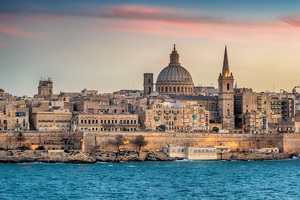
From top: Valletta, Malta at sunset; Derek Mooney

One of the downsides or having such easy access to British news, particularly the BBC, is that we assume Brussels to be as fixated on Brexit as the Brits imagine. As Brexit dominates the headlines here and the UK we suppose that everyone in Brussels and across Europe is as focussed on Brexit as us. They are not.

It is not that the other EU capitals don’t take the looming Dec 31st deadline seriously or are not straining to avoid a hard crash out. They would prefer see a no deal Brexit avoided, as much for Ireland’s sake as their own, but they have long since accepted that Brexit is happening. So, all that is left to resolve is the manner of the post Brexit relationship. Brexit will not be reversed, so there is no point in EU heads of government expending any further political capital on it.

Their attention therefore moves to more pressing matters, so where Brexit still dominates the headlines here, news broadcasts and papers in France, Germany, Spain and Italy feature stories about the deteriorating relationships between Hungary, Poland and the rest of the EU.

It is a crisis long in the making. Most EU member states are worried by the creeping anti-democratic behaviour of the Hungarian and Polish governments, that has resulted is sustained attacks on press freedom, restrictions on judicial independence and denial of minority rights. Attacks that have – up to now – prompted strongly worded statements but little hard action from Hungarian strongman Viktor Orbán’s EPP allies, including as Billy Kelleher MEP pointed out last week, Fine Gael.

While both countries have benefited economically from EU membership, their governments have been less than eager about allow their citizens fully share the EU’s human rights and rule of law benefits.

A recent attempt by EU member states to ensure that only counties upholding democratic standards could access the emergency coronavirus relief package and budget (worth about €1.8 trillion) hit the buffers at last week’s EU leaders’ summit as Hungary and Poland vetoed the package. While limiting access to the funds only requires a qualified majority vote, establishing it requires unanimity.

Not that Poland and Hungary are the EU’s only recalcitrant states. The EU’s first annual rule of law report, published at the end of September, examined rule of law issues including corruption, fair procedures and press freedom across EU member states. It found that counties such as Romania, Cyprus and Bulgaria still had some way to go in strengthening their rule of law provisions, but that they were broadly moving the right direction.

The other country whose report card was less than stellar was Malta. At first glance putting Malta in the same league as Hungary, Poland or even Bulgaria might seem a bit of a stretch for the sedate Mediterranean holiday spot.

Up to this time two years ago, the only political figure of note from the tiny Mediterranean island I had heard of was the charismatic Dom Mintoff, and he stepped down as Prime Minister and leader of the Maltese labour party back in 1984.

The EU’s negative finding on Malta is a lot less surprising however when you see the 2019 EU barometer survey finding that a staggering 89% of Maltese believe corruption in Malta is “widespread”. It is a feeling that has grown dramatically in the years following assassination of investigative journalist Daphne Caruana Galizia.

Galizia was killed by a car bomb outside Valletta city in October 2017. Her Running Commentary blog had been reporting on corruption, kickbacks and money laundering involving dodgy Russian enterprises, well-connected Maltese businessmen and senior government officials, including advisors to then Maltese Premier and Labour party leader, Joseph Muscat.

In 2018, the CBS news 60 Minutes programme ran a feature on how the “smallest nation in the European Union is earning an unsavoury reputation, with a series of scandals involving allegations of bribery, cronyism and money laundering.”

While Galizia’s murder sparked international outrage, the Maltese criminal investigation was slow and plodding. Three low-level criminals were arrested for planting the bomb, but Maltese authorities seemed less than enthusiastic about going after who ordered it.

This lethargy did not deter her sons, friends and supporters from campaigning to stop the Muscat government from brushing the scandal under the carpet.

Around this time last year mass protests began outside the Prime Minister’s office in Valletta and continued for several days. Such was the political storm inside and outside the Maltese parliament that Muscat’s chief of staff, Keith Schembri and his Energy Minister, Konrad Mizzi, eventually resigned. So too did another minister accused of taking kickbacks.

Both Mizzi and Schrembi had been implicated by Galizia in corruption accusations arising from the 2017 Panama Papers. These pointed to both men being involved with tax-dodging offshore companies, along with one of Malta’s wealthiest men, the casino and hotel tycoon Yorgen Fenech. Some days after Mizzi and Schrembi resigned, Fenech’s luxury yacht was stopped while trying to flee Maltese waters and Fenech was arrested.

On December 1st 2019 Muscat announced that he too would resign. He was replaced last January by former competitive body builder Robert Abela. Fast forward to August/September 2020 and former Prime Minister Muscat is being interviewed by Maltese police in connection with the Galizia murder on foot of Fenech’s allegations they had inappropriately discussed key details of the case while Muscat was still in office. Meanwhile Schrembri is arrested amid allegations that he unlawfully received a kickback worth €100,000 through illegal passport sales to Russians.

While the resignations and arrests are signs of some progress, as is the growing civic society movement for reform, Malta still has a long road to travel. The case is far from closed and one year on the full story has still to emerge and the only ones still convicted of the Galizia murder are the three small time thugs who planted the bomb.

A few days ago, Pantelis Varnava the husband of the whistleblower who was one of Galizia’s primary sources, was arrested (and later released) in Greece on what he says are fabricated charges by Cypriot authorities.

Varnava’s Russian wife, Maria Efimova, had helped Galizia expose a trail of dirty money from the Maltese Bank where she worked that connected the Azarbaijan President Ilham Aliyev, and Joseph Muscat’s wife, Michelle.

Last week Max Schrem’s digital privacy organisation NOYB.eu filed a complaint against the company responsible a massive Maltese voter data breach, a company that has close ties to the ruling Labour party.

Meanwhile one of the three ministers who was embroiled in a financial scandal last year over a hospital privatisation deal, is set to step down as Finance Minister this week to become the next Governor of the Maltese Central bank and an ex-officio member of the governing council of the European Central Bank. The minister, Edward Scicluna, is the same minister as appeared in the previously mentioned 2018 60 minutes programme, saying:

“It looks bad, but it’s not.”

Wrong, Prof Scicluna, it is every bit as bad as it looks and if it is getting any better it is no thanks to you or the others who have spent years looking the other way.

Derek Mooney is a communications and public affairs consultant. He previously served as a Ministerial Adviser to the Fianna Fáil-led government 2004 – 2010.  His column appears here every Monday.Follow Derek on Twitter: @dsmooney
Getty

From top: Taoiseach Michael Martin giving and address on the Shared Island initiative followed  at Dublin Castle on October 22; Derek Mooney

A few weeks ago An Taoiseach Micheál Martin delivered a major speech to an online audience. At almost any other time the speech would have been seen as important and significant, but it did not receive a great deal of attention coming as it did between Leo the leaker, the Mother and Baby Home saga, Woulfegate, not to mention the process of moving to level 5 Covid 19 restrictions.

The speech, on a Shared Island/Ireland, was delivered live to a wide and diverse audience, north and south. It was a fine speech, though – not for the first time – Martin managed to detract from his speech and trampling over his own publicity, with a far from adroit performance at the event’s question and answer session. As Sean Lemass famously observed, it’s never the little too little that hurts in politics, it’s the little too much.

So, instead of the media focusing on the news that the Irish government was establishing and funding a substantial unit to work on developing major all island projects, it came away transfixed by Martin’s inability to unambiguously state that Fianna Fáil is committed to Irish Unity.

For a man who sees himself in the leadership tradition of Sean Lemass, Martin still has an awful lot to learn from the great man’s practical application of vision to action. Three and a half years after Martin’s big March 2017 announcement that Fianna Fáil was working on a White Paper on Unity, there is still no sign of it.

Over those three plus years Martin has gone from being comfortable saying that he expects to see a United Ireland in his lifetime, to quibbling over what is meant by unity, though – to be fair to him – he did walk that part back a few days later in his McGill School interview with Olivia O’Leary.

Whatever reasons underpin Martin’s gradually changing position on Irish unity (and there is a series of articles in that issue alone), there is no denying the importance of his speech and the significance of the Shared Island initiative.

Not only did An Taoiseach put flesh on the bones of the Budget Day commitment to spend €500 million between now and 2025 on shared island projects, he moved it forward by launching “the Shared Island Dialogue series to foster constructive and inclusive engagement on all aspects of our shared future”.

The words “all aspects” are important here. We should be encouraging wide ranging discussion on all aspects of the future of this island – and that “all” includes constitutional questions. As my  friend Dr David McCann explained in a very good article on the Slugger O’Toole blog in late July: the Shared Island unit doesn’t need to shy away from constitutional questions.

An Taoiseach may be uneasy about this, but his unease is not justified. Brexit has completely changed the context. There is no useful purpose in trying to keep discussions on this part of this island narrow when they are in a state of flux in the rest of these islands. As I have been arguing here since late 2016, Brexit has changed everything, particularly relations on and between these islands.

If you don’t believe me, just replay yesterday’s BBC1 TV Marr Show to hear the former British PM Gordon Brown calling for a UK conversation about the constitutional future of the United Kingdom, saying that he sees it as an out of date constitutional framework.

Brown is still an unashamed Scottish unionist. He wants to see the union maintained, but he also sees how the form of Brexit being pursued by the Tories at Westminster amounts to an English nationalism that will eventually make the UK a cold place for Scots and Welsh.

The Scottish First Minister Nicola Sturgeon, whose SNP is poised to gain extra seats at next May’s Scottish parliamentary election is now talking about the possibility of an independence referendum in 2021 while the Labour Welsh First Minister Mark Drakeford, who is no advocate of Welsh independence, is starting to talk about the possibility of a Welsh independence referendum at some point in the future.

These discussions have huge implications for relationships here. So, let us learn the lesson of the 2016 Brexit referendum and prepare for them calmly and maturely.

If nationalism is going to make a case for unity to unionism, then it must also listen to, and engage with, unionism’s case for the union. To this end, former Northern Ireland First Minister, Peter Robinson’s, October 23 Belfast Newsletter article, telling unionists to prepare for a border poll by preparing to argue the case for the union, was fortuitous, appearing as it did on the morning after the Taoiseach’s speech.

It’s not the only propitious piece of timing. The resignation of Sinn Féin Senator Elisha McCallion in the wake of the Sinn Féin office grants saga now leaves two vacancies in the senate, the first arising from the resignation of Fine Gael senator, Michael D’Arcy in late September.

When D’Arcy resigned Sinn Féin indicated that it would back former Unionist Senator Ian Marshall to fill the vacancy. It was a smart move from a party that knew that the government had botched the opportunity to appoint two Northern Senators back in June. I have no doubt that also seeing they couldn’t win the seat for themselves as Seanad by-elections are decided by a vote of all Oireachtas members, barely registered with them.

Well, now there are two vacancies – so the Dáil parties, not to mention the Taoiseach and the Tánaiste, have the opportunity to put their combined political clout where their mouths are and facilitate the election of two Senators from Northern Ireland, representing the two main communities there.

Sinn Féin has already put Ian Marshall’s name into the ring. He proved himself a capable representative for Unionism in the last Seanad and could do so again, but so could many others. The former UUP leader, Mike Nesbitt is perhaps another credible and modern voice of unionism who has shown the willingness to put unionism’s case to audiences unaccustomed to hearing it.

The second vacancy could go to someone from the moderate nationalist tradition. Since he became SDLP leader five years ago, Colum Eastwood MP has overseen a change in the public face of that party with a slate of new younger voices and faces, any one of whom could follow in the footsteps of such formidable SDLP Senators as Seamus Mallon and Bríd Rodgers. Stepping just outside the political arena, someone like voting rights campaigner Emma de Souza could also make a huge contribution to the Seanad.

The temptation for the Fine Gael and Fianna Fáil leaders is to just carve the two vacancies up between them with one taking the vacancy on the Industry and Commerce panel and the other getting the Agriculture panel one.

This would make some party-political sense with each using the Seanad to blood a candidate they hope to get elected at the next general election. Both have several defeated TDs and potential first-time candidates who would make capable senators.

It is what parties have done in the past, though it didn’t work out for either of them last February. You see, for the Seanad appointment thing to work you need to have the reasonable chance of increasing your number of Dáil seats. As both proved last February, the strategy doesn’t work when they are decreasing.

The right and sensible thing for Martin and Varadkar to do instead is to seize the opportunity now to facilitate the election of two Senators, one unionist and one nationalist and fix the mistake they made last June by not appointing two Northern Irish Senators via the Taoiseach’s 11 nominees.

You rarely get a second chance in politics to fix your mistakes, especially a second chance that also allows you show that your Shared Island speech is a lot more than simply fine words. Don’t drop the ball on this one, Taoiseach.

Derek Mooney is a communications and public affairs consultant. He previously served as a Ministerial Adviser to the Fianna Fáil-led government 2004 – 2010.  His column appears here every Monday.Follow Derek on Twitter: @dsmooney

RollingNews

From top: Taoiseach Micheál Martin (right) is under fire from members of his own party over his handling of Tanaiste Leo Varadkar’s GP contract controversy; Derek Mooney

I’m sure many of you were shocked as I was to learn last Friday that Sinn Féin doesn’t have confidence in Leo Varadkar.

Seriously, who’d have thought it?

Who’d have imagined that the main opposition party, a party that sees the future of Irish politics as a polarised race between itself and Fine Gael, would not have confidence in current Fine Gael leader?

As I explained in my first piece here last week there is no doubt that the Tánaiste has not gone far enough in his apology or his assurances about how he conducts the business of government. Some of the explanations he offered last Tuesday were so juvenile and feeble that it was shameful to see them sent out alone without a guardian.

Many who will vote confidence in Varadkar on Tuesday night will do so with no more trust or confidence in the man now than voters had in him last February.

But, as President-Elect Biden likes to say, here’s the deal… unless substantial new evidence emerges between now and the time the division bells are sounded, the vote will be an entirely pointless exercise, designed more to embarrass Fianna Fáil and the Greens than to censure the Tánaiste.

Like it or not, this saga is not really capturing public attention. It is not that people don’t care, it’s just that they look at this and wearily conclude that (a) they are all at it, (b) when it comes to leaking Sinn Féin would be no better or worse or than Fine Gael, (c) we have much bigger things to be focused on now… or a mixture of all three.

Voters are not naïve; they know that for some politicians leaking is less an occupational hazard and more a career necessity. They see political leaks as largely, though not exclusively, falling into one of four/five categories. There are several more – but let’s stick with the principal ones here.

Category 1 covers leaks made to embarrass other parties and put your own side ahead. The second category concerns leaks made against party colleagues to help advance the leaker’s political career, though the motivation can be simple jealousy. I could give many recent examples of both, but I promised to keep this week’s piece under 1200 words.

The third group features leaks that have no direct benefit for the leaker apart from storing up brownie points with journalists. This is the chips in the bank approach where the leaker hopes to have something to cash-in with the next time they land themselves in trouble.

As Bernard Woolley, the private secretary in Yes Minister responds when his minister admit that item appearing in the newspaper was the result of a confidential press briefing, not a leak:-

Oh, that’s another of those irregular verbs, isn’t it? I give confidential press briefings; you leak; he’s been charged under Section 2a of the Official Secrets Act.

This is the difference between an authorised disclosure of information and an unauthorised one. The Taoiseach or minister of the day can authorise the release of information or documents, but that is not something they usually do by stealth without any reference to trusted confidents.

It is certainly not something they do when, as the Tánaiste said last Tuesday, they had agreed not to publish the contract as:

“The IMO wanted to do it differently and wanted to hold meetings around the country to consult and engage with its members before doing so.”

So, the Taoiseach knew the IMO believed their chances of getting the contract passed would be bolstered by not publishing it before they consulted members. Why leak it, then?

The Tánaiste says it was to show that there was “nothing in it worth opposing or agitating against”. Thus Leo Varadkar would have us believe his one and only ever leak falls into a fourth category of leaks: leaks made in the public interest.

Category 4 leaks are rare. They are often the absolute last resort where all other avenues have been explored and exhausted.

Sinn Féin says it does not buy that… but stops far short of saying this leak belongs to a fifth category of leaks: those made for corrupt personal gain. This fifth type is unacceptable under all circumstances. It should lead not just to a vote of no confidence, but a full criminal investigation.

Writing here in advance of the Tánaiste addressing the Dáil I said that it was bad politics for him and the Taoiseach to downplay his action as a mere lapse of judgement.

It was more than that. It was wrong. As Jim O’Callaghan TD commented on Twitter after the Tánaiste spoke:

Every politician knows it’s wrong for a minister to send a government document with “Confidential Not For Circulation” printed in big letters on its front page to someone not authorised to receive it. Let’s not demean ourselves by pretending otherwise.

It can be difficult, if not downright impossible, to come across as truly contrite in the Dáil chamber in the face of political game playing and point scoring. But the Tánaiste couldn’t even be bothered to feign contrition last Tuesday. It is a point which Deputy Catherine Connolly highlighted when she directly asked:

“When did the Tánaiste realise that he had made an error of judgment?”

If anyone came close last Tuesday to posing a Howard Baker-esque ‘What Did the President Know, and When Did He Know It?’ question, it was Deputy Connolly. But while this is serious, Watergate it is not.

The other reason this is not Watergate is because in Watergate the wrongdoing was on one side only. Those who came looking for answers and answerability on the break-in and cover up came with clean hands. Is that the case here?

As I said last week “The wrongs done by one [side] do not distract from those of the other”. Sinn Féin has mishandled the issues relating to its finances just as much as Varadkar has mishandled his leaking of the IMO contract.

This isn’t whataboutary, it is simply a reflection of the fact that the Sinn Féin leadership have a range of awkward and difficult questions to answer on its finances.

These go from how it embraces partition to accept a £4million donation in the North, avoiding the 26 counties’ standard in public office donation limits, to why it takes seven months to return £30k erroneously received from Northern Ireland’s emergency COVID-19 fund for small businesses – and how come that only happened a few days before the BBC Radio Ulster Nolan Live show broke the story.

If the media hadn’t pushed Sinn Féin on the three £10,000 payments would the money have remained in the bank accounts of Sinn Féin, assuming it hadn’t already been spent? How are these accounts managed and run? Who controls them?

Rather than answering the valid questions facing both, they’ve opted to poke each other in the eye. Not that the damage will run too deep. Sinn Féin and Fine Gael are the best of enemies. They are each other’s best nemesis as they set about cannibalising the parties around them and hollow out the political centre.

Derek Mooney is a communications and public affairs consultant. He previously served as a Ministerial Adviser to the Fianna Fáil-led government 2004 – 2010.  His column appears here every Monday.Follow Derek on Twitter: @dsmooney

RollingNews

From top: US Democrat Presidential candidate Joe Biden (left), US President Donald Trump; Derek Mooney

The future of Donald Trump should be answered by Friday, if not sooner. Three weeks ago I predicted Biden would win. Nothing I have heard since has convinced me otherwise.

According to Professor Michael McDonald’s excellent @ElectProject, at least 93 million Americans had already voted by Sunday November 1. In 2016 just over 136 million votes were cast.

In mid-October Prof McDonald predicted that early voting would hit 85 million and that the overall 2020 turnout would exceed 150 million. As his early voting turnout has already been surpassed, it is not unreasonable to expect his turnout prediction will be too.

Doubtless this will include many who did not vote for Trump in 2016. Republicans have been busy registering more Trump supporters in rural areas, but does anyone imagine that 20–25 million extra voters are turning out because they think President Donald Trump is doing such a great job?

The US presidential was always going to be a referendum on Trump. His handling of Covid19 has made it even more so. He is pleased this is all about him, but that is the big flaw in his campaign strategy: his ego. It is not just a risky strategy; it is a bad one when so many likely voters do not like or respect you.

Two stark sets of figures make this point.

Asked to rate the candidates, likely voters give Trump a score of 41% favourable and 57% unfavourable and Biden 55% favourable: 42% unfavourable. That is a 15% gap in favour of Biden. Biden’s unfavourable rating today is 10pts better than Hillary Clinton’s 52% rating – a rating that cost her: Wisconsin, Pennsylvania and Michigan.

Trump has bet the house, by which I mean other people’s money, on him getting the minority who like him to turn out disproportionately. Early polling figures point to that strategy failing. Trump’s future now depends on a huge polling day turn-out of Trump voters.

Bizarrely, Trump could manage to get more votes than he won in 2016. The GOP’s registration and get out the vote operation could bring out extra Trump votes, but with 20+ million additional voters they simply cannot catch up with, never mind, out poll Biden.

Biden will win the popular vote by a much bigger margin than Clinton did in 2016, the question is how his vote is distributed across the battleground states.

Trump won almost 3 million fewer votes than Clinton. His win was due to where he secured several hundred thousand of them, particularly Michigan, Wisconsin and Pennsylvania.
Trump must now win in every State he won in 2016.

That is a big ask for an unpopular President. Trump cannot afford to lose states – and right now he is likely to lose two or more.

So here are a few of the key states I’ll be watching on Tuesday night/Wednesday morning.

First is Florida. It is counting early votes now and expects to have a result on election night. If Trump loses Florida, it is over all for him. He is losing the support of seniors and suburban voters across and only held Florida by 113,000 votes last time (1.2%). I think he may just hold Florida, but the margin could be ultra slim.

Watch Georgia and North Carolina too. Both are showing early turnouts equal to 90% plus of their 2016 turnouts and both expect to count most votes on the night. Trump won these two states in 2016 and took their combined 31 electoral college votes. This time, both could swing to Biden.

Looking at Georgia first, the latest polls show Biden ahead. Trump beat Clinton here by 211,000 votes (5%). There are also two tough Senate races here with the Trump supporting Senator Perdue under big pressure from his young Democrat rival Jon Ossoff and also a special Senate election with the Democrat facing a split republican ticket.

Turning to North Carolina, polls here have Biden ahead by between 3 and 6%. This compares with Trump’s 2016 winning margin of 173,315 votes (3.7%). There is a big Senate race here too with polls favouring the Democrat challenger over the pro Trump Senator, Thom Tillis.

Trump’s 2016 winning trio of States: Pennsylvania Wisconsin and Michigan are obviously ones to watch, but none are expected to declare a result on the night, indeed Pennsylvanian electoral law says that it may not count postal ballots until the following day.

Biden is well ahead in all the polls in Wisconsin and Michigan. As I pointed out three weeks ago Trump won the suburban and rural districts in Pennsylvania in 2016 giving him a narrow 45,000 vote margin over Clinton across the State. Biden is still ahead here, but the race is tightening.

This is why Pennsylvania is now seeing so much big-name campaigning with both Trump and Biden holding several last-minute events here.

After you look out for the results in these States, as well as Texas, Arizona and perhaps Iowa and Ohio then the focus can move to an even more critical question: what happens after the election?

A UMass Amherst poll shows that 80% of likely voters are concerned about the possibility of election-related violence. On Wednesday I retweeted posts from Dutch and Spanish journalists based in Washington.

Both reported that a week before polling day stores and businesses surrounding the White House were preparing for Election Day by closing and boarding up their windows in fear of violence and looting.

The fears are well founded, especially when the President gleefully cheers the intimidation of Democrats in Texas and the Trump cavalcades blocking highways in New Jersey and New York.

This is the short-term impact. What about the long-term impact? America is divided. Deeply so. The only hope of uniting lies with the losing side accepting the legitimacy of the winner, but outside of a massive Biden landslide, that looks unlikely. Trump signalled on Sunday that he is ready to go to the Courts on Tuesday night to force an early declaration.

A Biden win that takes days to declare fuels Trump conspiracists to claim the election was stolen. The converse is also true. If Trump is to have a second term then it must be seen to be the will of the people, not the vindication of voter suppression or court interventions. There have been over 300 legal challenges in recent days.

The winner will face the challenge of leading a nation that is deeply divided by geography and demographics. That division will not just have its expression in raw political gridlock in D.C. but could, if handled badly, even see greater regional disconnection, even secession. #Calexit anyone?

Derek Mooney is a communications and public affairs consultant. He previously served as a Ministerial Adviser to the Fianna Fáil-led government 2004 – 2010.  His column appears here every Monday.Follow Derek on Twitter: @dsmooney

Earlier: Derek Mooney: Best Practice