
Tag Archives: Iona Institute

caseyAgain?

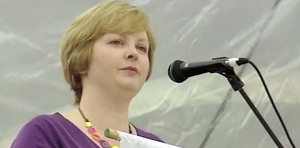
Professor of Psychiatry at UCD and the Mater Hospital, Patricia Casey, a co-founder with David Quinn of the Iona Institute, spoke with Sean O’Rourke on RTE Radio One’s News at One this afternoon about suicide and abortion.

Sean O’Rourke: “On the one hand you’re saying ‘modern psychiatry no evidence of abortion is treatment for suicidality’. The X case has been overtaken by modern thinking and ah it’s ‘medically redundant’ to use your phrase. If that is the case then you must equally be fearful that your colleagues, your colleague psychiatrists cannot be trusted.”

Professor Patricia Casey: “Well I’m, my concern is two-fold. My concern first of all is that women are going to be, some women will be having abortions if it is agreed on the grounds that it is going to help their mental health and there is no evidence for that. My second concern is that I wouldn’t use the word ‘floodgates’, I don’t like that but there will be widespread abortion within a short period of time because the prediction of suicide is extremely difficult. It’s not that people will deliberately..”

O’Rourke: “And that’s why you need psychiatrists to caution there. I mean we’re not talking about women’s health under the Irish Constitution that’s being legislated for. We’re talking about their lives. The life has to be under immediate…sorry, there has to be real and substantial threat to life as opposed to the health.”

Casey: “Well best practice in psychiatry doesn’t allow women who are suicidal to take their lives. We care for them we offer them support. We offer them any treatments that are necessary, talking treatments, medication and that should continue. But there is, there is a very genuine concern reflected that came to pass with similar laws in other countries that it it cannot be contained.”

O’Rourke: “But who if your argument is right, who is going to authorise these abortions in this country?”

Casey: “Well my bottom line is that the government needs to pause and needs to look at the evidence. They they need to step back and they need to say ‘Look the evidence to the to the em hearings and incidentally, the hearings took place after the government had decided to legislate. So they need to say now they need to admit that the evidence provided to the health committee should show that there is no need for this legislation they need to accept that they may harm women and go back to the drawing board on the suicide issue. That is why I am calling on the government to do at this point.”

O’Rourke: “The fear is to exclude abortion on suicide grounds that is unconstitutional to go that road.”

Casey: Well that would need to be discussed with lawyers. Some people suggest that dealing with the A,B,C cases doesn’t actually require legislation. That’s for the lawyers to do. But as an advocate for my patients and the women I treat, I have to say abortion may harm you and the government needs to take account of that and they need to step back and deal with this some other way.”

Listen here. Scroll to 04:53

We’ll just leave these here;

:Disabled girl sues doctor and psychiatrist for negligence (Tim Healy, 3 February 2010 Irish Independent)

High Court approves disability settlement (RTE News 10 February 2010)

Previously: Dr Peter Boylan And Breda O’Brien: The Transcript
Is The Iona Catholic?

Boylanbreda_obrien

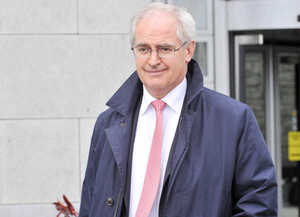
Former Master of Holles Street Hospital in Dublin, Dr Peter Boylan, top, and Breda O’Brien, above, a patron of Iona Institute and Irish Times columnist, were among the guests on RTÉ’s Marian Finucane this morning.

They spoke about the death and subsequent inquest of Savita Halappanavar.

During their discussion, Dr Boylan accused Ms O’Brien of revising history.

Here’s how it unfolded:

Marian Finucane: “Explain how you got involved in the hearings in Galway, last week.”

Dr Peter Boylan: “The coroner wrote to me and asked me would I review the notes and the statements and issue a report to him, so that’s it basically.”

Finucane: “And that was it. And were you there for the whole thing?”

Boylan: “No, I got the transcripts every night but I wasn’t present. I only went down to give my expert evidence on Thursday.”

Finucane: “Right. And your conclusions?”

Boylan: “My conclusions are that if she’d had a termination on the Monday or the Tuesday, she would now be alive. That by the time…”

Finucane: “This is Savita. Just to…”

Boylan: “Yes. By the time a termination became legally realistic prospect, she was becoming seriously ill. And even if they’d started a termination on the morning of the Wednesday that it was too late at that stage. I did identify a number of deficiencies in the care but none of them individually contributed to her death, in my opinion. And, the question of a surgical termination was brought up in some of the media, during the course of discussions since the finish of the inquest. And I don’t want to be graphic about what a surgical termination means at 17 weeks for the live foetus but there’s a very high likelihood that she would have died as a consequence of having had a surgical termination at that stage because…”

Finucane: “On the Monday or the Tuesday?”

Boylan: “No. On the Wednesday.”

Finucane: “No.”

Boylan: “You couldn’t do a termination on the Monday or the Tuesday in this country. It’s just, it was not legal.”

Finucane: “Yeah, I must have misheard, I thought I heard people, on both sides, saying that if a miscarriage was inevitable that then there would…”

Boylan: “The clinical circumstances in which she was, with ruptured membranes at 17 weeks, the chances of survival for that baby were absolutely very small, less than 10%. There are incidences however, well-recognised in this country and internationally where babies in those circumstances can survive. They get to 34 weeks maybe or even later…”

Finucane: “34? Yeah but she was 17?”

Boylan: “She was 17. Yes but a pregnancy, even with ruptured membranes, can continue. It’s highly unlikely. It’s not inevitable that she would have a miscarriage. Now what would have happened in another country is that on the ward round, when she ruptured her membranes, the dismal outlook for the baby would have been discussed with her. And her input into the management, and her husband’s input into the management, would have been taken into account. We can’t do that here. And what would have happened is she would have said one of two things. One: ‘I’d like this pregnancy to continue as long as possible as I dearly want a baby and we want to do everything possible’. That might be say in the circumstances where the mother is in her late 30s/40s, it’s an IVF pregnancy and so on. Not very much different. Or she might, she could said ‘Look no, the outlook is so dismal, I’d like just to have, get this pregnancy over with, in other words terminate it, and then move on and perhaps get pregnant again soon. Her wishes would have been taken into account in any other country. Now what would have happened then is that they would have said to her ‘Look, have a think about this because these are very big decisions.”

Finucane: “Sure are.”

Boylan: “And they would have come back to her the next day, or later the same day, or they might be absolutely certain what they wanted to do. And then, whatever it is that they wished would be undertaken. In any other country.”

Finucane: “Again, just listening to the, to the evidence, I presume every person operates to the guidelines, you know, according to the law.”

Boylan: “We have to.”

Finucane: “Yeah, yes, yeah. But the notion of percentages.”

Boylan: “Yes.”

Finucane: “Of, will you die, won’t you die…”

Boylan: “Yes.”

Finucane: “Does that happen? A lot?”

Boylan: “No. And we cannot, as doctors, be expected to do our ward rounds with a calculator in one hand and the law in another hand. We have to be given the liberty to do what we feel is best for a patient and in this…These circumstances are the only circumstances in obstetric care where a woman’s wishes are not taken into account. Where she has no input into her care. Now if you think of any other sort of situation like that you end up talking about the Taliban. Where else are women denied an input into their care? In what other clinical situation? I can’t identify any. Women are very much involved in their care in obstetrics, in decisions to induce labour, decisions about Caesarian sections, decisions about all sorts of things. And that’s how it should be. But in this circumstances, they are not allowed. And that’s the law.”

Finucane: “Breda, how did, how did we end up here?”

Breda O’Brien: “I’m really alarmed at a couple of things that Peter has said. First of all that the law would not have allowed intervention on Monday because John Bonner, who would be universally acknowledged to be deeply conservative on this, said he would have gone, he would have been in there like a light.”

Boylan: “That’s incorrect.”

O’Brien: “Em. He’s not present to..what he..this is..”

Boylan: “I was on Prime Time with him there last night I think it was…”

O’Brien: “What he said was…”

Boylan: “Friday night. And that’s not correct what he said. He said he would wait until she was ill and then he would have no hesitation in intervening.”

O’Brien: “Can I clarify, Peter?”

Boylan: “He was very clear about that because I picked him up on that.”

O’Brien: “Can I clarify, Peter? When I said he would have been in like a light I was talking about in terms of the care. The care is the crucial issue here.  I spoke to three obstetricians over the week, two in person and one by email to clarify this point.”

Finucane: “I should clarify that you yourself are a patron of Iona, just for the record.”

Continue reading →

quinnz

On April 1, David Quinn, of the Iona Institute, above, blogged about the institute’s stance on same-sex marriages, citing a paper from US-based organisation Child Trends to support its view.

He wrote:

“That paper, called ‘Marriage from a Child’s Perspective: How Does Family Structure Affect Children and What Can We Do About It, is a summary of studies which show that children tend to fare best when raised by their own biological parents in a low-conflict marriage. This same paper goes on to say: “There is thus value in promoting strong, stable marriage between biological parents. This is our position. Take this away, and it is very hard to find any reason to give marriage special status.

The Iona Institute used this paper as part of its submission against the legalisation of same-sex marriage to the Constitutional Convention.

But Dr Peter Stafford has taken a look at the Child Trends report and finds the Iona Institute may have misled the convention

He writes:

“The authors of the Child Trends report adopted best practice regarding transparency and had anticipated that their report might be used to reach such an incorrect conclusion. The following appears on the front page of their report.

“This Child Trends brief summarizes research conducted in 2002, when neither same-sex parents nor adoptive parents were identified in large national surveys. Therefore, no conclusions can be drawn from this research about the wellbeing of children raised by same-sex parents or adoptive parents.”

Does the Child Trend report conclude that marriage between a man and a woman is best for children? No. Why? The timing of the report meant that the data doesn’t support such a conclusion. Does the Child Care report conclude that the definition of marriage should be maintained? No. Why? That conclusion is beyond the scope of the data. The Iona Institute seem to have wilfully ignored the authors’ own acknowledgement of the limitations of their research and presented this study as evidence to support their assertion. By adopting very poor standards of research, the Iona Institute allowed the Constitutional Convention to believe that the Child Trend report concluded something which it very clearly did not claim to do so, and which the data would not allow it to do.”


On the uses of research in debates about marriage (David Quinn, Iona Institute)

Evidence-based research: Rarely pure and never simple (Dr Peter Stafford)

(Hadyn West/Photocall Ireland)

Screen Shot 2013-04-04 at 09.04.34Further to legal threats by David Quiinn of the Iona Institute against two Trinity College newspapers.

Rónán Burtenshaw, editor of Trinity News, responds:

On February 6th, 2013 we reported that David Quinn, head of Christian conservative think-tank the Iona Institute, had issued legal threats against The University Times over articles they had published the previous month. The news story can be read here.

On February 8th a lecturer in the Law School of Trinity College, Dublin, Dr. Eoin O’Dell, who is acting on our behalf in this case, informed us that Mr. Quinn’s solicitors had made contact in complaint at the article. This was followed by three solicitors’ letters in which Mr. Quinn’s representative made five demands in relation to the story: that it be retracted, that we issue an apology for its publication, that we offer Mr. Quinn a right-of-reply inside the next print edition, that we offer his representatives editorial oversight over a subsequent article on The University Times‘ settlement of their case, and that we make a contribution to Mr. Quinn’s legal costs in pursuing this case. We were unwilling to meet these demands.

In settlement we offered to correct a factual error contained in the article by means of clarification. Despite this offer being rejected we added this clarification in the interests of accuracy on the 11th of March: “This article initially stated that Mr. Quinn “contested” Google’s claim that the Iona Institute’s YouTube account was not closed for reasons of censorship. In fact, while he initially contested this, he later accepted that this was an “automatic procedure on their part“.”

On March 13th we also ran a news story on the University Times’ settlement with Mr. Quinn. This article can be read here. We did not give Mr. Quinn’s representatives editorial oversight over this article, but we did include reference to the clarification we added to the original news story.

We have encouraged Mr. Quinn and his representatives to pursue this matter through the Press Council but, at the time of writing, the threat of legal action remained outstanding.

Some details of this case were published by UCD student newspaper The College Tribune on April 1st.

Trinity News’ position is that we stand by our reporting and are prepared to defend it.

We Stand By Our Reporters (Editorial, Trinity News)


Moreover, [Owen] Bennett [University Times editor] said that [David] Quinn was “upset” by the portrayal of the Institute as a “discriminatory” organisation.

Bennett told Trinity News that for Mr [David] Quinn, the article amounted to “slander” and that the Iona Institute is seeking a full retraction of the story. the University Times editor further stated that the Institute expressed a preference for “non-monetary” compensation such as an apology or the “right of reply” to the article and has said that it would prefer to not have to take legal action.

Any excuse to play this.

University Times Threatened With Legal Action Over Iona Institute Articles (Trinity News)

Previously: Is The Iona Catholic?

 (Hadyn West/Photocall Ireland)

You may have missed Professor Patricia Casey (above), consultant psychiatrist at the Mater Hospital, UCD lecturer and patron of the Iona Institute on Today FM’s ‘The Last Word with Matt Cooper’ on Friday.

It was enlightening.

Matt Cooper: “As a psychiatrist, do you not have a duty to look at scientific research and results rather than depending on your own moral views and your own religious beliefs to inform you as to what’s best for people?”

Patricia Casey: “I think Matt before we broke for the interval I said we have to base all our views on science and that’s..that’s the purpose of a think-tank like the Iona Institute. The idea is to look at the evidence and base policies…base policies, base our our thinking on that. And you know in relation….”

Cooper: “Sorry. Are you not based on religious beliefs and…?”

Casey: “No. We’re not a Catholic institute.”

Cooper: “Alright. A Christian institution?”

Casey: “No. We’re not. We support the role of religion in in in society but we’re not a religiously based organisation.”

Cooper: “Can you understand why people might find that hard to believe that say perhaps you’re trying to operate under some sort of cover?”

Casey: “Well I don’t know why people would believe that. I mean there’s there’s…we talk about religion because we believe religion has a place in society. But we…”

Cooper: “And are you all practising Catholics?”

Casey: “How do you mean all? I mean I’m I’m I’m a patron. There..there…there are four patrons em…I am a practising Catholic, I would think Breda O’Brien is,

Cooper: “Yes. Very definitely.”

Casey: “(Father) Vincent Twomey…Vincent Twomey is and I can’t think who the fourth…there is a fourth patron whose name escapes me at the moment em but…”

Cooper: “How about people like David Quinn? Former editor of the Irish Catholic quite clearly. So all of the main people, the main spokespeople for the Iona Institute are clearly very strong Catholic believers.”

Casey: “Well I don’t know how strong their beliefs are. You can ask me how strong my beliefs are and I can tell you in honesty they wax and wain at times. During times in the past I have not believed in God.”

Listen here (35 minutes)

Iona Institute

Iona’s patrons

Pic Irish Medical Times

http://www.youtube.com/watch?v=c1pMeFj1IeY&feature=youtu.be

Sinead Kavanagh writes:

That Iona Institute anti-gay marriage video has got 135k views! So myself and my friend had some spare time on Friday and decided to rework (above) their “creative idea”.
So we decided to use their words, in the right way to get the RIGHT message out! We also used their artwork so it kind of looks like the same ad.

But that doesn’t make them unique.

A fairly outrageous, if studiously stock photo-free, animated defence of man/woman-only weddings from the the funky design wing of the Iona Institute.

Damn scripture-sodden hipsters.

Alan Early writes:

Once again the Iona Institute totally ignores the complexity and beauty of modern relationships in place of religious prejudice yet again. Worth noting that they do mention that not all married couples choose to have children but they don’t say what should be done with those heathens.