
Tag Archives: Iona Institute

Buttimer

RTE1

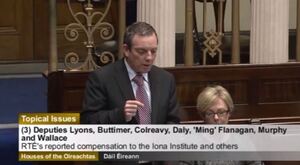
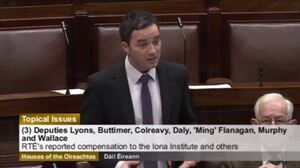
[Fine Gael TDs Jerry Buttimer and Labour’s John Lyons, above]

During Topical Issues in the Dáil yesterday, several TDs, from different parties, expressed their concerns to Communications Minister Pat Rabbitte in relation to the €85,000 RTÉ paid to John Waters and members of the Iona Institute.
Minister Rabbitte responded saying he had “no role in managing editorial matters, making decisions around programming or dealing with litigation claims. I therefore have no intention of interfering in RTÉ’s management of this specific file.”

From the debate:

[Labour TD John Lyons]

“I want to ask some questions in relation to the issue for RTÉ to pay out a reported €85,000, in the time that I’ve left, I want to ask: was there one person in charge of this issue? One point of contact, from the moment that they decided to deal with this issue, until they paid out this compensation? And, on what decision did they decide to pay out this compensation? It’s quite clear Ceann Comhairle from the information I’ve received from various sources that, and including from the managing director in his own press release, where he says that the legal position was far from clear. Well the question I have for RTÉ, here today is, if the position was far from clear and they had various pieces of legal advice given to them over a number of weeks, stating basically that they shouldn’t pay to that they should pay, on what basis did they decide to pay this money out. Finally, Ceann Comhairle, cause I know I’m over time, what I want to say is, I know that the legal advice that RTÉ used, sought to pay out this money, is a privileged position and we are not entitled to it, but I believe there has to be a political will, in the interest of the national public, to find out on what basis they paid this out. Because I certainly believe that RTÉ were wrong to pay out this money on what was, essentially, an anti-gay prejudice issue that people were challenged on. Thank you, Ceann Comhairle.”

Later

“I really just want to say at this stage, because I actually have this one minute left, you know,  there’s two people in here I think at the moment who knows what homophobia feels like, who knows what it’s like to be called a queer, to be called a fag, to be called a gay. Only recently, I think, just before Christmas, I walked from my own house, around the the Centra where a bunch of teenagers called me gay or some other name they call us, you know, I thought, you know I was living in a society where this stuff isn’t acceptable any more. But yet, when people challenge people on these issues and that’s what Rory O’Neill did on the Saturday Night Show: he called it what it is. When it walks like a duck, quacks like a duck, looks like a duck, it must be a duck. And I think RTÉ were completely wrong and bang out of order when they got numerous types of legal advice, saying in fact perhaps that they should not even pursue and give any sort of compensation out. RTÉ got it wrong and everybody in the public knows they got it wrong and RTÉ need to come out and let us know that they got it wrong. Otherwise there will not be confidence in our national broadcaster to mediate any debate with confidence, particularly around issues that affect my life and the people who love me and love all the other people who aren’t treated properly in this society”

[Fine Gael Jerry Buttimer]

“I do believe, minister, RTÉ were erroneous and were wrong in what they did. I think they folded too quickly and I would like to ask you, who advised, what was the nature of the advice? What was their intent in the advice in terms of their…why did they fold up tents so quickly and were they involved in any other organisations other than advising RTÉ? Our public service broadcaster has an obligation to provide balanced, responsible, fair transmission of social matters and social issues and it must also, as a public service broadcaster, facilitate fair and balanced debate on matters of absolute public importance. And central to this obligation, ceann comhairle, I believe must be an entitlement of those participating on programmes on RTÉ, to voice honestly-held opinions and make fair comment. RTÉ must act as a fair arbitrator and stand by the right of people on its platform, to voice honestly-held opinions, otherwise it acts to undermine its public service remit. And Ceann Comhairle, I contrast, the role of RTÉ in its duty in this case, with what happened in the Abbey Theatre a couple of weeks ago, where the whole issue of homophobia and the whole issue of LGBT rights was fully explored on the stage of the Abbey. Yet you contrast that with RTÉ, where it parked, at the first opportunity, a debate on this. What would happen if we were discussing racism? Would somebody who was accused of racism have to come on and defend themselves?”

Later

“Minister, RTÉ got it wrong, they got it completely wrong and they folder their tent in and in this house, this week Ceann Comhairle, in this Oireachtas, we were  told, as gay people, that it’s a matter of social reengineering by the Gay Ideological Movement, and I’m quoting from a member in the Seanad. And Ceann Comhairle, let me put it on the record in this house, as I’ve done before. I speak here, not just as a gay person but as a member of society who wants to be treated equally. I’ve been beaten, spat, chased, harassed and mocked like Deputy Lyons because of who I am. I was born with a gift given to me and I’ve spent most of my life struggling and finding a place in my own country, which I love, to be accepted and to see the support from my fellow colleagues here in this house, and from you Ceann Comhairle is a demonstration of how our society is gone and come forward. But I will not, Ceann Comhairle, in a tolerant, respectful debate allow people who spout hatred, intolerance to be left go unchecked.”

[Sinn Féin TD Michael Colreavy]

“I could go into debate on what these people have said and written and how it could be identified as homophobic, however I’m willing to rely on Rory O’Neill and his alter ego, Panti, as the leading figure in Ireland’s LGBT movement, to know what homophobia is. I’m a straight, middle-aged man and I won’t pretend that I know how members of the LGBT movement are made to feel everyday when they face articles in newspapers, comments on the radio, abuse on the street and even accusations within the chambers of this institution but what I will discuss is RTÉ’s censorship of Rory O’Neill and the debate surrounding homophobia. The Government has promised a referendum on marriage equality in 2015, following a recommendation by a majority of the constitution convention, to amend the constitution, to allow same-sex marriage. Now, those who publicaly advocate an inequality cannot hide behind defamation legislation when they are called out on their views to seek to gain public support for. The demand of significant sums of public money by such individuals, or group, in place of a right to reply, sets a deeply worrying precedent. Now this country has a poor history of censorship. For many years, some of our great authors suffered at the hands of this censorship board. Section 31 kept republicans such as myself off the airwaves for many years. RTÉ has this tradition of facilitating censorship and as the public service broadcaster, it’s deeply worrying to see this rear it’s head again. It should not be the case that those who call homophobia out for what it is that should suffer the censorship.”

[United Left Alliance TD Clare Daly]

“I don’t know why RTÉ handed over money in this regard because nothing inaccurate was said and that is a critical point. The people and the organisation who benefited from this payout have clearly argued that LGBT people should be treated differently and that is nothing else, other than homophobia. And to call it anything else is in my opinion an abuse of language. Now Brendan O’Connor’s apology remarkably said that it is an important part of democratic debate, that people should be entitled to hold dissenting views on controversial subjects, and that is absolutely the case. But that means that you also have to have the right to express a different opinion on that dissenting view, and call it by it’s proper name and, as Deputy Buttimer said, if someone is known to be a racist, has expressed racist views and we call them a racist are we to then turn around and apologise for calling them by their right name. Now this issue has enormous consequences for Irish society and we, as a parliament, have to send a strong signal that we will not tolerate homophobia and unless this issue is addressed, the only conclusion that people will draw is that, if you have big pockets then you can use them to stifle debate and control opinion and Irish people don’t want to live in a society like that.”

[Independent TD Luke ‘Ming’ Flanagan]

“Hopefully, something good will come out of this. One good thing that has come out of it is that we get people like Michael Colreavy, or myself, from Leitrim, or from Roscommon, who can proudly stand up here and say we want to defend gay rights. Forty years ago, you’d have been worried going home if you did what Michael did here today. And that is massive progress, it really, really is. And the idea…it would be nice if there was no homophobia but pretending there isn’t doesn’t make it all go away. And that speech that was made in the Abbey Theatre explained it so beautifully and the fact that we’re all homophobic, we are. But it’s a case of working on it and trying to learn about the whole situation and fighting against it and, in the end, everyone gets their rights. But, sadly, some people are more homophobic than others and some people don’t seem to make any effort to deal with that homophobia and I think it’s sad that you’re now being denied the right to even use the word.”

[Independent TD Catherine Murphy]

“Ceann comhairle, for the last couple of weeks, some of us have thought we’ve been living in a parallel universe. A huge debate has been taking place online through sites like The Journal, Broadsheet, the Twitter and Facebook, the mainstream media, print media, largely, absent from that debate. The head of television, in RTÉ yesterday, explained to staff why they apologised and paid €85,000, that screams to me of discontent within RTÉ, it’s obvious that many of the station’s personnel know that there are times that defending the principles behind public service broadcasting ranks higher than the fear of litigation. John Waters, Breda O’Brien and the Iona Institute can all be described as opinion formers. They’ve made themselves part of the public discourse, I stress public discourse on such issues as same-sex marriage and frequently present gay people’s relationships as less then, as a starting point. For that to go, without challenge is about setting the parameters of the debate to their advantage and that’s at a time when we’re going to have a referendum next year and I think that that is, timewise, of critical importance. So why the rush by RTÉ to apologise and pay? Was it because they were aware of that those complaining had deep pockets and the ability to mount a credible legal challenge? If so, you must ask the question: how did those pockets get so filled? The second issue is: one of the people making complaints, one of the complaints that came was from John Waters who was then a board member of RTÉ’s regulating body, the BAI. Is it not a massive conflict of interest and was RTÉ under additional duress. Why did the BAI suddenly change their code of conduct on the 22nd of January, the day, the same day RTÉ agreed the payout? Is that the reason John Waters resigned from the BAI, on the 24th? Or did you, minister, ask him to resign? Given the massive payout and the obvious conflict of interest, minister, do you believe, as I do, that he should return that money to RTÉ?

[Independent TD Mick Wallace]

“I too watched Panti Bliss’s speech at the Abbey Theatre and it is powerful, it is very powerful. One would think that RTÉ had an obligation to facilitate free and open debate. In this instance it failed miserably, some people now more offended by the word ‘homophobia’ than they are by homophobia itself. This is censorship. In a press release last week, minister, you said that homophobia is too loaded a term to be used to categorise those who hold contrary views on what is a matter of legitimate public debate. I would like to point out that it is not for heterosexuals to define what homophobia is. We do not have the right to tell gay people what does or doesn’t constitute homophobia. This was eloquently summed up by Panti Bliss in her Abbey Theatre speech last weekend when she said ‘so now Irish gay people find ourselves in a ludicrous situation where not only are we not allowed to say publicaly what we feel oppressed by, we are not even allowed to think it because our definition has been disallowed by our betters. The word homophobia is no longer available to gay people, which is a spectacular, neat Orwellian trick because now it turns out that gay people are not the victims of homophobia, homophobes are’. Does the minister think that these contrary views, as he calls them, have no impact? Does he believe there is no link between discriminatory comments about gay people and physical attacks on gay people? Where does the minister think those that commit physical acts of violence against gay people get their ideas from. To quote Breda O’Brien ‘equality must take second place to the common good’. Does the minister honestly think these words have no impact on gay people?


90236110

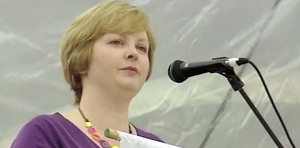
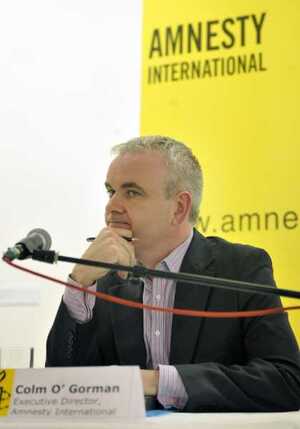
Breda O’Brien, of the Iona Institute, and Colm O’Gorman, of Amnesty Ireland, appeared on last night’s Late Debate on RTE Radio One.

The programme hosted by Audrey Carville began with a discussion about the recent Saturday Night Show/Miss Panti brouhaha…

Audrey Carville: “Before we get into the substantive discussion tonight, I want to mention the fact that, over the past number of days, RTÉ issued an apology and made a financial settlement to you, Breda, and to a number of others, including the Iona Institute and this followed allegations made on the Saturday Night Show, on television two weeks ago, during an interview with Rory O’Neill, who’s better known as drag queen, Panti Bliss. Now RTÉ have not issued a statement to us about this matter for our programme tonight. But Breda, as far as you’re concerned, has a line now been drawn under this?”

Breda O’Brien: “Yes, I think it’s really important that we have a rational and a calm debate and that people don’t reduce it to hurling insults at people to close down debate. I think RTÉ let its standards slip in that regard but they were big enough to come forward and to apologise and I’m certainly very pleased with that, very pleased to accept the apology and move forward..”

Carville: “Colm, O’Gorman, as an openly gay man, what do you make of all of this?”

Colm O’Gorman: “Well to be honest, I’m, I’m, well, to put it simply, I’m rather stunned by where all of this has gotten to and I don’t understand how we’re ever going to have a reasoned, or reasonable debate, if we can’t challenge each other’s viewpoints and even question what those viewpoints might be based upon. As it happens, I didn’t see the programme but when I saw it being reported, and some of the comments, that were being attributed to Rory, in the programme, I was lucky enough to grab before it was, on foot of legal action by Breda and others, removed and censored from the public airwaves. So I went into it and I listened to it and I have to say, I thought it was one of the most considered, inclusive, insightful explorations of how we are all capable of holding views that are discriminatory and that can cause us to make statements that are hurtful, that are damaging, that are destructive of other people. And what I heard Rory say is that we’re all capable of holding homophobic or racist, or xenophobic views and that we occasionally need to check ourselves, now I think that’s a really important discussion that we need to have. You know, to be honest, I don’t understand why anyone feels enormously insulted by being accused of being homophobic. I mean I’m a gay man and I’ve certainly been guilty of holding homophobic views – both views that I held about myself but also views I held about other sections of the LGBT community and other people who live lives in ways I perhaps didn’t understand.”

Carville: “You’re saying we’re all capable of being bias?”

O’Gorman: “We’re all capable of bias. We’re all capable of holding views that are based on discriminatory views, or internalised bigotry that we’ve taken on in other ways and I simply do not understand how challenging people, to examine the basis upon which they put forward certain arguments is defamatory and, you know, equally, quite frankly, I don’t think..People have a right, I think, to express views that other people might be offended by. Nobody has a right not to be offended. And I will defend Breda’s right and anybody else’s right to say things that I find offensive but I think I also have a right to name them as offensive and to seek to have a clear, rational, reasonable discussion about that.”

Carville: “Do you want to come back on that, Breda?”

O’Brien: “If it had been a case that it was talking about, in general, about all of us examining our consciences, I don’t think that I would have been, and other people would have been, in discussions with RTÉ. What it was about was naming a specific individual who was not there to defend herself and another individual who was not there to defend himself. It was claiming bad faith on their part, that they were, that my position, which is that a child, where possible, should be reared by their own mother and father, is now deemed homophobic commentary. RTÉ obviously felt that they had something to apologise for and the reason that they did so is because the legal definition of homophobia is that you have a fear and loathing, and suspicion of people who are gay, which is an appalling thing to throw at somebody. And I…it was then compounded later on by people in the Irish media, in their columns, saying that people who are against marriage equality, if you want to use that term, that people who are against that, are people who are responsible for gay people being beaten, murdered, fired from their jobs and that there should be a defamation watchdog set up so that people couldn’t express these views. Now this is very far from a rational and calm debate. This is actually going way into the territory of saying that we will declare your views out of order before you even begin. And I don’t think the Irish people want that. Like, during referendums regarding abortion, people were immoderate on my side of the fence and I always called them out when they were, when they used appalling expressions. I think we have a right in this debate to have the same level of respect, mutual respect and that you don’t label people and that you don’t dismiss their good faith. And, really, I think, I came here tonight to talk about Catholic education, I think it would be really good if we got onto that debate.”

O’Gorman: “Well..”

Carville: “Just briefly, Colm..”

O’Gorman: “Yeah, absolutely. I do think this has been a very, very damaging incident. and I really do think RTE needs to explain the basis upon which they felt entitled or required to pay damages from taxpayers’ funds on the basis of this. If this was indeed defamatory then indeed the rationale or the basis, upon which RTE believes this was defamatory, needs to be explained.”

Meanwhile:

Listen in full here.

Eamonn Farrell/Photocall Ireland, YouTube

5/4/2013. The Four Courts


Previously: Panti’s Back On

abortion

breda Bros writes:

Could you highlight today’s press strategy of the Irish conservative control tower?
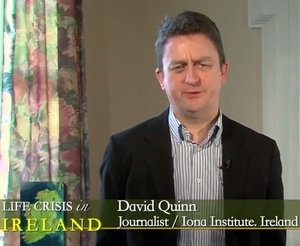
David Quinn (top),  Iona Institute, in the Irish Independent criticising the free vote of FF on the grounds of conscience. And Breda O’Brien, Iona Institute, in the  Irish Times criticising FG for their party whip system on the grounds of conscience


FF leader could learn from JFK speech on conscience (David Quinn, Irish Independent)

Party whip system prioritises loyalty at the expense of conscience (Breda O’Brien, Irish Times)

FERGUSSON DAVID 2010He just squints like that in the sun.

We’ve been asked to print the fairly strange clarification made on today’s ‘Morning Ireland’ by Cathal MacCoille at the behest of the Iona Institute.

It regarded on-air speculation about New Zealand Professor David Fergusson’s state of mind when he discovered his research was being used by the Iona Institute

As the institute are usually such sticklers for this type of thing we are happy to oblige.

‘On Tuesday, May 7th, we broadcast interviews with Professor David Fergusson of Otago University, Christchurch, New Zealand and with Professor Patricia Casey, Consultant Psychiatrist in UCD and the Mater. The subject was the reported unhappiness by Professor Fergusson at the way his research was being interpreted by pro-life parties to the abortion debate here. In the course of the interview with Professor Casey, I said that Professor Fergusson had said he was unhappy at the way the Iona Institute had been citing his research. In fact, Professor Fergusson did not say he was unhappy with how the Iona Institute quoted his research and we’re happy to clarify that.


Listen To Professor Fergusson’s interview here and YOU decide

Previously: Messy Fergusson Detractor

Pic: University of Otago

casey

Cathal Mac Coille spoke with Professor Patricia Casey on today’s ‘Morning Ireland’ in response to the Iona Institute’s use of Professor David Fergusson’s research. Professor Fergusson of Otago University in New Zealand said that until the research has been done, “it would be misleading for anyone to state emphatically that abortion does or does not help suicidal women“.

This what she had to say:

Cathal Mac Coille: “Earlier in the programmme, we heard from Professor David Fergusson, a psychologist at the University of Otago in Christchurch who is unhappy with the way he believes his views and in particularly the results of his researchs are being used by those opposed to the introduction of abortion legislation in Ireland and we specifically put it to him a number of remarks made to him, made rather, about him by the Iona Institute which of course opposes abortion legislation and he made clear his unhappiness with the way his views had been ah interpreted and he specifically said that he has not carried out any research at all into women who say they are suicidal and who are looking for an abortion. We’re joined by Professor Patricia Casey of the Iona Institute, clinical psychologist thank you very much..”

Patricia Casey: “Clinical Psychiatrist, Cathal.”

Mac Coille: “Excuse me.”

Casey: “Consultant Clinical Psychiatrist in UCD and the Mater.”

Mac Coille: “Consultant Clinical Psychiatrist at UCD and the Mater. Now the professor is ah saying that things are being said and interpretations are being placed on his work which are not..not accurate. Do you accept that?”

Casey: “Oh no. He didn’t say that at all. He, in fact what he is saying is what I have being saying as a psychiatrist since this debate began. There is absolutely no evidence that abortion is a treatment for women who are suicidal. The evidence just isn’t there because it hasn’t been investigated and in fact I em, I emailed Professor Fergusson over the weekend when this ah news story hit..when this story came to public attention in the Sunday Business Post and here’s what he said “In response to your comments I think that it is drawing a long bow to claim that abortion may be an effective response to suicidal thoughts in pregnancy. As far as I know there is no evidence to support this view and claims of direct evidence seem far fetched”. That’s what he said to you. Em then in relation to the possible effects of abortion on mental health and again you quoted two clips from the Iona and he he em said…”

Mac Coille: “Specifically one was the statement made on the website on the 15th of April, “abortion is of no health benefit”. He says clearly there is no research about that and…”

Casey: “No he no he sorry he has done research about that and he’s said that his latest research found that there was no mental health benefit. It was published on the 4th of April…”

Mac Coille: “And that statement went on. The Iona statement went on “poses more risks for unwanted pregnancies”.

Casey: “Yes because he has found some evidence of mental ill health. What he says here and again he says to me, he said to me in the email “I think that the facts of the matter are relatively simple. There is curently no evidence to suggest that abortion reduces mental health risks. There is suggested but contested evidence that abortion may be associated with modest increases into mental health problems when compared with the outcome of women coming to terms with unintended pregnancies. These considerations suggest that the use of mental health grounds for abortion is highly questionable and that broader criteria that reflect the women that seek abortion are required”. So there is absolutely no disagreement whatsoever.”

Mac Coille: “So when he says as he did that it would be misleading for anyone to state emphatically that abortion does not help women. You accept that?”

Casey: “No. He says there is suggestive evidence and that’s what I’ve…”

Mac Coille: “He says that specifically that it would be misleading for anyone to state emphatically that abortion does not help women which I understand you ah and others who take a similar view, have said repeatedly that abortion does not help women. He’s saying it’s misleading for anyone to say state that emphatically.”

Casey: “Well look he has said there is no evidence that abortion helps women’s mental health. He has said it in the most recent systematic review that he published and indeed I sent a copy of a letter from em from em Peadar O’Grady of Doctors For Choice to him and he said it presents a more or less standard pro-choice reaction by seeking to denigrate the findings of his study while arguing for the validity of other reviews. Now look we..”

Mac Coille: “He is a man who has never studied women who are seeking abortions because they’re suicidal. Therefore, is there…”

Casey: “That’s right. We have never…We we have never”

Mac Coille: “What’s the point…what’s the point in quoting him at all except to say there’s no research?”

Casey: “No nn-no you you are getting things confused. There are there are several aspects here. The first is women who are suicidal. He has said there is no evidence about them and in…”

Mac Coille: “He has said there…he he has carried out no research on this area. If he’s carried out no research..?”

Casey: “Exactly. There is no…there is no…evidence. You cannot say that something is beneficial if there no evidence to support it and there is..”

Mac Coille: “Exactly but…isn’t the opposite side of the coin that you cannot state that it is the opposite because there isn’t evidence or research to show that there to show that it is?”

Casey: “Well the government is proceeding as if there was evidence that it was beneficial and there is no evidence. The second point that he makes in his studies is that when you study women who have had abortions for unwanted pregnancies and compare them with women who give birth there is no evidence of benefit.”

Mac Coille: “When he says that there is…”

Casey: “And thirdly…”

Mac Coille: “….it would be misleading for anyone to state emphatically and I’m quoting directly what he said “it would be misleading for anyone to state emphatically that abortion does not help women”. Do you accept what he says?”

Casey: “If he’s saying..if he’s saying that in relation to suicidal women the answer is yes but only because there is no evidence. No studies have been done. That is the problem and that’s what we have said all along. There is no evidence to back up what the government is doing even though the government is proceeding as if there was evidence. There isn’t any evidence.”

Mac Coille: Professor Patricia Casey, thank you very much for talking to us. A minute to nine.”

Listen here.

Listen to Professor Fergusson’s interview here.

Earlier: Rumbled

Previously: A Little Light Reading

(YouTube)

breda

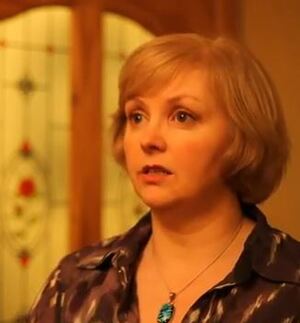
Iona Institute’s Breda O’Brien (above).

She’s no fundamentalist.

“Christians and other believers are often derided for believing in a God or gods on faith alone.
However, thoughtful believers say they make a leap of faith based on a reasonable, though not definitive, level of proof. They don’t endorse blind faith or dogma that flies in the face of evidence, a stance they consider to be fideism, not faith. Those who operate on faith alone are what most of us call fundamentalists.
Scientists and rationalists pride themselves on avoiding faith-based dogma by strenuously adhering only to empirical evidence.
Yet we have the extraordinary situation where people who believe that abortion should be available in Ireland are ignoring the best available scientific evidence, in favour of a faith-based dogma that abortion is somehow good for women when they are in crisis.”


Evidence showing ‘no mental health benefit to abortion’ cannot be ignored (Breda O’Brien, Irish Times)

Previously: Dr Peter Boylan and Breda O’Brien: The Transcript

A Little Light Reading

Iona Lot Of Airtime

Pic: (ABCandX / YouTube)