
This just spin.
RTÉ Radio One’s Morning Ireland Opened this morning’s show with breaking developments concerning the controversial water meters.
Finally.
Some coverage about that very strange Siteserv deal on RTÉ?
Not so fast.
Head of Irish Water asset management Jerry Grant, told presenter Cathal MacCoille how they detected 30,000 suspected leaks in the last quarter of 2014, based on “a sweep” of 413,000 meter readings.
Oh.
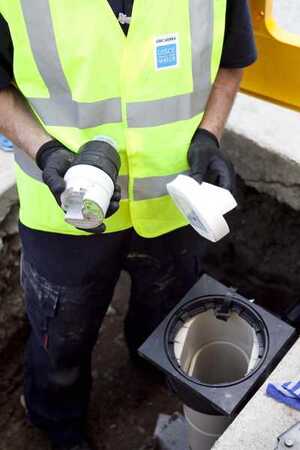
He explained there are “leak alarm indicators” on the meters, and he said Irish Water expects to find 60,000 to 70,000 leaks “when” all the meters are installed.
Jerry Grant: “We have a leak alarm indicator on the meters. The meter is electronic and it store a lot of data, not just a meter reading. And one of the things it picks up is a continuous nightflow. And if the continuous nightflow drops, doesn’t drop below a threshold figure, that’s very indicative of a leak, because clearly, during the night, you’d expect the meter to drop.”
Cathail MacCoille: “OK, you’re launching this scheme, what’s the deal?”
Grant: “The deal at the moment is that the Regulator has agreed that we should go ahead with an interim arrangement for €3.4million and begin to tackle these leaks. We have a proposal with the Regulator now to spend up to €51million which we think would cater for at least 25,000…”
MacCoille: “And you’ll spend that money over what period?”
Grant: “2015, 2016, it may run into 2017, depending on the speed with which people will come back to us. Because obviously this scheme is about entering people’s property, it’s about providing a service on your own property. And to do that we have to have an engagement and agreement from the householders.”
MacCoille: “And €51million, it’s provided for this year and next year, would enable you to fix how many leaks? How many properties do you think?”
Grant: “We think about 25,000 leaks. I think what’s interesting is that if we end up with about 60,000 leaks, in total, it’s quite clear from the pilot work that we’ve done, that at least 60% of those are within the building. Now we’re not addressing free-of-charge leaks within the building.”
MacCoille: “That’s up to the customer.”
Grant: “That’s up to the customer. We will help people locate you know the types of leak and give them advise on how…”
MacCoille: “So what will you do and pay for?”
Grant: “Where a leak occurs between the building, between the external wall of the building and our stop cock, we will address those leaks, so generally under driveways, in front gardens and so on.”
MacCoille: “Now, obviously, you’ll be fixing leaks forever but, in terms of the leaks that you’ve, that this 30,000-plus, how long will it take you to get, how many do you reckon, on that basis that you have, when you’ve looked at everybody…”
Grant: “These 30,000 leaks have shown up about 46million litres of water per day. We produce that amount of water to supply Limerick city and the environs of Limerick – that’s an amazing amount of water. So if we can fix 40 to 50% of those leaks, we should recover, given that the bigger leaks are probably external to the property, we should recover 20- 25million litres per day, from that source. This is a very quick win for us.”
MacCoille: “How long will it take you to do that? Enough to supply Limerick?”
Grant: “Yes that’s right.”
MacCoille: “So how long will it take to do that?”
Grant: “Between 2015 and 2016, subject to the approval of the Regulator, which I’ve no doubt will come.”
MacCoille: “That’s very quick.”
Grant: “Yeah absolutely, this is the easiest and quickest…”
MacCoille: “Makes you wonder why it didn’t happen before now?”
Grant: “Well I suppose there were a number of reasons, first of all, the meter tells you that the leak is there, we didn’t have the meters, this is the benefit of meters. Meters help the customer and they help Irish Water. And quite frankly there’s been a lot of talk about the meters but this is the first real dividend from the meters because they’re identifying leakage that can be easily recovered because we can identify precisely where it is.”
Listen back here
Older readers may recall Jerry was the managing director at RPS Consulting Engineers from 2002 until 2012. RPS advised Dublin City Council on the Poolbeg incinerator project while John Tierney was Dublin City Manager. Mr Tierney is currently the managing director of Irish Water while the former head of project communications at RPS, Elizabeth Arnett, is now head of communications and corporate services at Irish Water.
Good times.
Irish Water suspects enough water to fill 18 Olympic pools lost daily (RTÉ)
Meanwhile:
“Over 12,500 meters were installed across the city by the end of last month, with the council called in to repair nearly 250 leaks…contractors working for Irish Water have damaged pipes outside one in every 50 homes.”
Water meter installation damages 1 in 50 pipes (breakingNews)