
Tag Archives: Mental Health

Screen Shot 2016-02-23 at 10.40.36

Marie Duffy

For the week that’s in it.

Marie Duffy, who lived with Bulimia for seven years, writes:

I was 17 the first time I made myself sick. It was Christmas time and I was on a diet. I was planning on going Debs dress shopping in the January sales and I was dreading it. I’ve never been a skinny girl and the idea of going shopping filled me with dread.

I was convinced that the only way to ensure I got a dress to fit was to starve myself in the few months beforehand. It was going well and I had dropped over a stone through a combination of eating more healthily and exercise.

However, I found the temptation of food at Christmas to be difficult. I ate some Roses. Even when I was eating them I knew that I shouldn’t be. I had made a list of foods that were ok to eat and stuff that I couldn’t have and chocolate was definitely on the ‘not eat’ list.

I felt so guilty. I immediately ran to the bathroom, locked the door and forced my fingers down my throat. I had to be rid of the evil calories that were in my body. Very naively, I felt like I had found the secret to losing weight fast. I couldn’t have been more wrong.

Little was I to know that making myself sick was to become a huge part of my life and would become an addiction that I would struggle with for seven years of my life. Seven years that I couldn’t get back, and seven years of absolute torture.

Often when we hear or think about eating disorders we see the more extreme cases of anorexia were people are literally dying at 3 or 4 stone weight.

But, the fact is, that people all around you are coping with eating disorders and are a much more normal weight, and you might never even know that they are struggling.

That was the case for me, I was a normal weight but my behaviours around food became far from normal. I was obsessed with everything that I ate. I would be so strict with myself during the day allowing myself to live on very little.

Sometimes, if I was feeling generous, I would allow myself an apple and that would do me for breakfast and lunch until I went home from school. I would be filled with absolute dread at the thought of going home to eat a dinner and would start obsessing about it each day, from the minute I woke up.

My parents and siblings had no idea that I was struggling with bulimia, they had noticed that I had become very picky about what I was eating but that was as much as they knew.

I only ate vegetables or small amounts of chicken and avoided carbohydrates if I could. If I did eat carbohydrates, I felt so guilty that I would rush to the toilet immediately and make myself sick. It was my secret and no-one else knew. But it began to become a secret that I just couldn’t keep to myself.

I began to lose a lot of weight and people began to comment telling me how well I looked. People at school would make comments and I would shrug them off saying that I was exercising more and that the weight was coming off healthily.

But, before long, my friends started to become suspicious they knew I wasn’t eating lunch and was suspicious that I wasn’t eating dinner either. They also knew that I was tired all the time, and was becoming more obsessive about calories and what I ate.

Teachers at school also began to notice that I wasn’t doing aswell as I had been and I started to not hand in my homework and fall asleep in class.

In reality I had a full-blown eating disorder and it was taking over my life. But it wasn’t until one of the teachers at school made an appointment for me to visit my GP that I realised what was going on.

My GP asked me lots of questions about what I was eating and asked about my attitude to food and weight. I told him that I had been making myself sick and had started to use laxatives to help me lose weight.

He mentioned the word Bulimia and I was taken aback. I knew that I had become a little obsessed with food and how I felt about my body but I felt that an eating disorder was something very skinny people got, and I wasn’t very skinny.

However, the doctor explained to me that people off all weights and sizes developed eating disorders and that he felt that my behaviours indicated that I had bulimia.

My teacher at the time was concerned about me and invited my parents in for a meeting to discuss what was going on. I was absolutely terrified because my parents had no idea as to the extent of my dieting behaviour. As far as they were concerned I was on a diet but what teenager wasn’t.

My mum was really upset when she found out what had been going on and life at home became difficult for me as my family monitored everything I ate and when I used the bathroom. I became more secretive about what I ate and when and my family became more confused as to how to help me.

Fast forward a year and I did well in my Leaving Certificate and got into college. When I went to college my eating disorder got much worse as I had no one monitoring what I was eating or when I used the bathroom.

My weight fluctuated. While I was still at school I was referred to a psychologist but it wasn’t until almost two years later that my appointment came up. I often wonder if my life would have been different if I had received the appointment two years earlier when I really needed it. Instead my eating disorder became a huge part of my life and stayed with me all throughout college.

Fast forward to today and I still struggle with my weight. I wouldn’t say I have an eating disorder anymore but when I’m stressed I still revert back to old habits which can be difficult to deal with. Bulimia was a huge part of my life for 7 years.

If I could say one thing to anyone who is going through a similar thing I would say – take a risk and reach out for help. You may not get it straight away but you deserve to be happy and you cannot be truly happy when you struggle with an eating disorder.

I would really recommend Bodywhys as a support service and they have email, telephone and online support which can really help when you are struggling.

If I could say one thing to that 17-year-old who first made themselves sick I would say – you are more than your weight and don’t let anyone tell you otherwise.

Also, I would remind myself that you don’t have to be skinny to have an eating disorder as it can affect anyone of any age.

Bodywhys

You don’t have to be skinny to have an eating disorder (Marie Duffy, Fake Tan And Foundation)
9135429_1455914466.6483

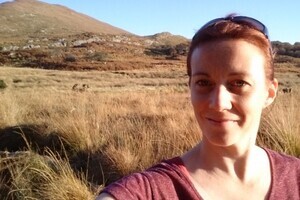
Fiona Kennedy

You may recall how Fiona Kennedy, who has clinical depression and borderline personality disorder, wrote a piece last Wednesday.

It detailed how, after waiting eight months to begin dialectical behaviour therapy (DBT) at the Adult Mental Health Services at Galway University Hospital, the mother-of-two was told the treatment would not be provided because of a lack of resources at the hospital.

On Friday, Fiona, from Connemara, Co. Galway, launched a crowd funding campaign to allow her access DBT.

Well.

Within 24 hours, she received enough money to fund almost a year of private therapy.

Further to this, Fiona has written the following open letter to all general election candidates.

Dear Candidates,

I did something yesterday that I never, in a million years, would have considered I’d have to do. I went looking for money from complete strangers. Why? Because of the phenomenal shambles that is our public mental health service.

I have borderline personality disorder (BPD) and depression, and have been blogging about both for years now. I have a good following on Facebook, and have received an unbelievable level of support from both platforms over the years, particularly during the last few months which have been incredibly tough.

Last week, I was told that a treatment that has been promised for months by the HSE (dialectical behaviour therapy/DBT) will not be going ahead. I can’t begin to describe the impact that this had on me, and on my family.

We had pinned all our hopes on this, as I have tried every other avenue I could to get to grips with BPD. We’re out of options, the only alternative left is to access private therapy.

The cost of attending a private clinical psychologist is immense, and it’s money that I simply do not have – I’ve been attending public services for years for a reason.

We found a psychologist who is able to offer exactly what I’m looking for, and has the capacity to take me on now, but there’s the not-so-insignificant factor of fees to be considered. After a lot of soul searching, we decided to try crowdfunding.

The response to this has been phenomenal.

In less than 24 hours, I’ve been given enough to fund almost a year of private therapy. The generosity of those who have donated has left me absolutely speechless.

This will quite literally change my life, and that of my family, it’s just incredible. For the first time in as long as I can remember, I genuinely feel like I’m going to be able to get a handle on all this.

My husband looks brighter than I’ve seen him in years. This money will give us so much more than just therapy, it will give us back our future.

However, while I’m beyond grateful, I’m also really angry. I should never have been put in the position of having to ask for money.

Treatment was promised, time and again, by the HSE. It’s such an indictment of our health services that this is how it has turned out, and at a time when we’re constantly hearing about keeping the recovery going. Mere days from the election, promises are still being broken.

I also realise how lucky I am to have been able to raise this money – between the blog and Facebook, I have people who are very familiar with my situation ready to help in any way they can.

What about the others who were promised DBT? What are they going to do? And this is just one programme, in one area. How many other programmes won’t be going ahead? How many other people are waking up today feeling like they have no hope left, no future?

If you’ve never felt that, you can’t begin to understand how terrifying it is, and I’m glad for those of you who just can’t identify with it. But for those who can – what will be done? Mental health is way down the priority list of so many of you, but this is not something that can be ignored any longer.

People are dying. When you’re already hanging on by your fingernails and hope is taken away, it’s far too easy to let go. This has got to stop.

Services have got to be more than just improved, they have to be completely overhauled. The way forward is clear, Mental Health Reform have done huge work in highlighting the changes that are needed. Why has it proven so impossibly hard to make those changes happen? What else will it take?

You have the opportunity now to make a real, lasting difference. There is so much kindness and energy in the country, people not only want to see change, they want to be part of making it happen.

So please, please, for all our sakes, and even more so for those who’ve been left struggling alone, do what needs doing.

Yours sincerely, and on behalf of everyone who needs help,

Fiona

Those who wish can donate to Fiona’s fund here or read her blog here

Previously: ‘I Have A Headache From Crying’

Facebook Update

Screen Shot 2016-01-27 at 00.36.57

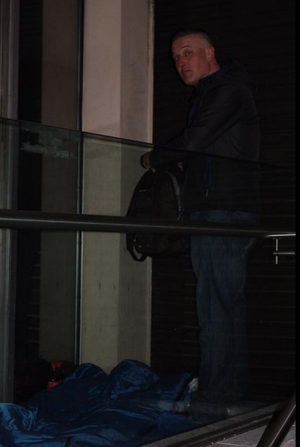
 Patrick outside Gandon House

The new anti-homeless bars  erected outside of the Department of Social Protection’s offices in Gandon House, Amien Street, Dublin ensure those who used to sleep there can no longer do so.

Gráinne O’Sullivan writes:

This is my brother Patrick settling down to sleep  on Saturday] outside Gandon House. He is a rough sleeper, he is not addicted to drugs or alcohol but has mental health issues. He was evicted from the HSE last March after 22 years as a long-stay patient with severe and enduring mental illness.

As they were planning to evict him, his 22-year long diagnosis of schizophrenia was changed to personality disorder. If this is the case then was he was held unlawfully for all those years, against his will?

When he was evicted, he was given a piece of paper to contact emergency accommodation but he wasn’t even registered as homeless and could not access a bed. He lived with my family but it didn’t last due to his complex mental health needs. He is barred from many emergency hostels and, as a result, is sleeping on the streets.

Since his eviction he is a different person, he is in utter distress. He is institutionalised and extremely vulnerable and has attempted suicide. There has been a massive deterioration in him as he stopped taking his medication and is extremely paranoid and aggressive. His mental health has never been as bad.

He has a mild intellectual disability and has limited basic life skills. He went from 24/7 nursing care to the streets. A DCC social worker assessment carried out since his eviction reported he is unsuitable for supported community accommodation let alone independent living.

As a family we are heartbroken and sick with worry. He’s at massive risk and our fear is he will end up dead soon. We worry constantly about him and his whereabouts.

We have tried everything we can think of to help him and are getting nowhere. I made a complaint to the HSE and their response was that he is receiving the highest level of care in the community – so the picture above is the highest level of mental healthcare in the community, according to them.

We have tried many times, and recently again, to get him admitted to have his mental health stabilised and back on medication. His GP said he was psychotic and wanted to admit him but his psychiatrist changed the GP’s mind when he rushed down with my brother’s file and said my brother was having withdrawals from alcohol.

He was then turned away from Beaumont A&E and refused admission as when they contacted his psychiatrist, he told them he has no mental illness, but the psychiatrist in Beaumont would not see him without three security guards present. He had a drug and alcohol test done in Beaumont which came back negative.

The Government closed the large institutions and did not open anything in the community to cater for the needs of people like my brother.

How many others are in a similar situation – where they say they have no mental illness in order to discharge them and put them onto the streets?

Many people and agencies in the community have told me there are many identical cases to that of my brother. An investigation needs to be carried out.

He is suffering everyday and is unable to cope due to this neglect. If anything happens to him, the HSE will be responsible. He has a right to treatment for his mental health and shouldn’t be punished for it.

Please share and raise awareness.

Gráinne O’Sullivan (Facebook)

Previously: Turned Away

An Avoidable Death

Fighting Demons

Thanks Anne

Screen Shot 2016-01-26 at 14.36.07

Aidan O’Connell

Aidan O’Connell writes:

I have been diagnosed with GAD (generalised anxiety disorder), depression, OCD, borderline personality disorder, somatic illness, social anxiety disorder and panic attack disorder – all separately over the course of the 15 years.

I have doctor shopped and seen over a dozen-plus GPs, at my worst seeing multiple doctors on the same day. I have also seen multiple psychiatrists, again possibly over a dozen. That’s why there is a cluster of diagnoses above, “Doctors differ, and patients suffer”.

I am under the care of one professional now and have GAD, some elements of OCD and possibly some personality traits.

Yesterday Fiona Kennedy wrote about DBT and the lengthy period of time that people have to wait before they get help in Ireland’s public mental healthcare system.

I have experienced nothing but frustration.

I initially saw a consultant psychiatrist, to whom I was explaining my situation, when he said, “Time’s up, we will carry on next week”, before he wrote a prescription for an anti-depressant without even giving me a diagnosis.

Surely, he should have managed his time, so that, on first consultation he could at least have given me a diagnosis or a plan. In addition, throughout the session, he kept calling me “squire” and when I spoke of an incident in work, he said, “why didn’t you use a load of expletives and tell them ‘where to go?'” I didn’t return. This was a private appointment.

Next up was an appointment on the public side. I saw a registrar and not a consultant. During the course of the appointment, he chewed gum and took a mobile phone call. He then left me alone for an age and said, “The consultant would normally see you, but he is run off his feet”.

What he didn’t know was I had Googled who I was supposed to see and I saw him chatting at the reception counter a few feet from where I was sitting. The registrar then came back with a script for another anti-depressant, albeit a different one to the one referred to above.

Another stand-out appointment (this time on the private side) was with a consultant who, upon entering his room, showed me his qualifications on the wall, the Lancet magazine on his desk and made sure I knew he didn’t take credit cards.

A short while after the appointment began, he said, “I have the answer, Largactil. We need to get your sleep right in the first place and this will solve that.”

He didn’t tell me that this medication is over 50 years old and has been long left behind because of the dreadful side-effects.

I saw a consultant psychiatrist privately who smelled of cigarettes and spoke in a very, very soothing voice unless there was a disagreement and he lost his temper. The same man threatened to sue a girl I know for a comment on Twitter where she recalled a bad experience and mentioned his name.

Within minutes of meeting me, he told me I had Borderline Personality Disorder and we would have to engage in long-term DBT sessions. The problem for me, apart from the cost, was that, unbeknownst to me, he put me on an anti-psychotic drug and increased the dosage 14-fold until I tapered down and got away. I have never lost the five stone I gained on those drugs. I still need to lose this weight and I am desperate to lose it.

I am under the care of a great guy now. He’s a fantastic human being and a fantastic doctor. I admire him, his intelligence, his calmness, and his view that “less is more” in terms of medication.

He also regularly congratulates me on my defeat of alcohol and gambling. Regretfully, I still have some demons to beat. He will assist me though and I have no want nor urge to do either.

I am seeing this consultant psychiatrist privately but it’s not necessary to pay on the day of an appointment and he will see people at times of crises.

The experiences I have had are so mixed. But I firmly believe less is more in regards to medication and I do firmly believe that DBT is the answer to personality disorders (I hate the word disorder and I hate the word disability!)

I now write in reference to Dual Diagnosis – something I have had experience with in the past – following on from the death of Caoilte O Broin.

It’s astonishing that a lot of mental health services and addiction treatment centres in Ireland don’t treat people suffering with depression, anxiety or psychosis if they are also drinking and I believe the tragic case of Caoilte O Broin needs to change things in Ireland in 2016.

It’s totally inconceivable that there wasn’t more done for Caoilte. Why, when he was in such distress, did he have to fight his battle against his demons on his own?

Bearing in mind Caoilte’s experiences were related to the public system, we are all left wondering how and why wasn’t more done?

Aidan blogs at The Truth Wins. His Twitter handle is @AidanTruthWins

Previously: An Avoidable Death

Caoilte’s Story Is Not Uncommon

Turned Away

Access To Mental Health Services

Screen Shot 2016-01-25 at 11.21.32

Fiona Kennedy

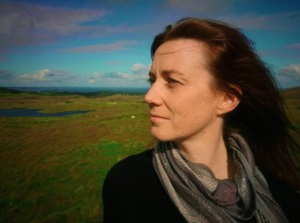
Fiona Kennedy lives in Connemara, Co. Galway. She has clinical depression and borderline personality disorder.

She writes:

I am so angry right now I am literally shaking. I probably shouldn’t write when I’m this wound-up, but I have to do something because I cannot carry this anger around for the day, not on top of all the other emotion that’s currently going on.

I have been banging my head off a brick wall, metaphorically and at times literally, for months now. The last week has been horrendous. I went to my doctor yesterday because I had to talk to someone and I had literally nowhere else to go. There was nothing he could say, nothing he could do, other than give me space to vent and try and chase the hospital to get a definite answer on dbt for me.

My husband is scared, and worn out. There’s only so many times he’s going to be able to talk me down off a ledge before he cracks too. My parents have been on the receiving end of more than one distress call. My friends don’t believe me when I tell them I’m going home. I have told my psychiatrist I want to be dead. I’ve told my doctor. For fuck sake, I’ve called my husband at work and told him. How is this fair? How have we been left in this situation? I drafted a piece the other day which I had hoped to get published but no one is biting, so here it is. I would be grateful if you could share this as far as you can, because enough is enough.

I do not deserve to be treated like this. My family do not deserve to be treated like this. My friends should not have to pick up the pieces, over and over and over again. I need my life back. But I cannot do it alone. We cannot do it alone. None of you should have to do it alone either.

We are making huge progress as a society when it comes to talking about mental health, huge. Slowly but surely, the stigma that surrounds it is being chipped away.

There are several well-established national campaigns encouraging people to talk, and these are getting a bigger response year on year. It’s fantastic to see. So where’s the caveat? I write from my own experience. I’m not a mental health professional, but I’ve spent years in the public mental healthcare system in Ireland, and that is where the caveat comes in. No more than any other illness, there are varying degrees of severity when it comes to mental illness, and I think that’s where the problems arise.

Yes, it’s ok to ask for help. Seeking support is the first step towards addressing any mental health difficulty. But what about when that help is not forthcoming? What about when a call to a helpline, or a trip to the GP, is not enough? What about when professional support is needed?

The barriers are immense. First, there’s the cost. Let’s suppose I don’t need psychiatric support, but I very much need to speak to a therapist. However, I’m on a low income. Barrier number 1. I need therapy, but unless I can access a low cost service (which may still be too expensive depending on the scale they use) it’s not an option that’s open to me, so I’ve to find a way to manage on my own.

The impact that this can potentially have is far reaching. I may find myself unable to work, further compounding the financial situation and increasing the stress, which in itself has a knock-on effect on whatever the original issue was… you can see how quickly this can spiral out of control.

Let’s take it a step further. I’ve been to my GP, I’ve been fortunate enough to access therapy, but the situation still isn’t improving. I need psychiatric assessment. Barrier number 2. I have two choices – take my chances with the public system, or pay to see someone privately.

Going privately was never an option for me, so I can tell you about the public system. In the first instance, unless there’s an emergency trip to A&E, it will most likely involve a lengthy wait, and once I get in, I will be seen by a consultant.

Thereafter, I will be seen by a member of the team working under said consultant. The lack of continuity that goes hand-in-hand with this approach – new doctors at almost every appointment, trying to explain the same issues over and over again, varying opinions – is heartbreakingly frustrating.

I’m lucky that in recent months I’ve seen my consultant at every appointment for which I’m ridiculously grateful but, prior to this, there were years of rotating doctors asking me to rate my mood over the previous number of months on a scale of 1 to 10.

Given that my mood can shift dramatically a number of times in any single day, that’s a question that’s both impossible to answer and profoundly unhelpful. Again, I must emphasise that I’m writing from my own experience, and I’m at the more severe end of the scale in terms of mental illness. But, I’m far from being the only one.

Barrier number 3. Private therapy isn’t an option. I’ve made it through psychiatric assessment and a very specific form of therapy is recommended. But, there’s a waiting list. A lengthy one, with no guarantee of when a place will be available.

So what do I do in the meantime? I dig in. I hang on. I have no one left to tell that I’m not ok, because I’ve followed every avenue that I can. My bad days are horrendous. My bad days I quite literally fight for my life.

Yet I’m aware that I’m still one of the lucky ones. I have good friends, and a loving, supportive family who do the very best they can for me, but it’s not enough. More than that, it’s not fair to expect that to be enough. I don’t want to detract from the incredible work that is being done to get people talking about mental health. It’s absolutely vital, and I’m confident countless lives will change for the better because of it. It’s ok not to be ok?

Of course! It’s OK to ask for help? Undoubtedly, and it is 110% the right thing to do. It does somewhat work on the assumption that help is both available and accessible though. That’s the caveat right there. From my perspective at least, it’s quite a big one.

Fiona is an Ambassador for See Change, a national movement that tries to improve attitudes towards people with mental health issues.

It’s OK not to be OK? Sure. With a huge caveat (Sunny spells and scattered showers, Fiona Kennedy)

Saturday: Turned Away

09-Caoilte-inset-pic-1

Caoilte O Broin, who was found in the River Liffey on January 2, after going missing on December 29, 2015

You may recall an anonymous article published on Joe.ie, entitled ‘My brother says he wants to kill my family and no one can help us‘ in early December.

The piece was written by Catriona O Broin about her brother Caoilte, who suffered from mental health problems and extreme psychosis for several years.

He was found dead in the River Liffey on January 2.

In yesterday’s Sunday Business Post, the paper’s health editor Susan Mitchell reported:

Catriona said the family made numerous efforts to engage with Caoilte’s psychiatrist, but were unsuccessful. They repeatedly tried to have him committed. They were unsuccessful in that too. Caoilte refused in-patient care and they were left powerless.

Catriona said a key problem they encountered was the difficulty in getting care for someone with a dual diagnosis like Caoilte.

Dual diagnosis is the terms used when a person suffers from both a substance abuse problem and another mental health issue such as depression or an anxiety disorder. Catriona said that because Caoilte drank heavily, the doctor insisted that nothing could be done to help him. But he drank “because he was in pain”, she said.

Dual Diagnosis Ireland said most mental health services in Ireland will not treat both conditions. For example, if you have difficulties abstaining from alcohol due to  depression, you cannot enter most rehabilitation services. Yet you cannot get your depression treated until your addition to alcohol has been addressed.

“It’s a postcode lottery depending on where you live or whether you have private health insurance,” said Carol Moore, co-founder of the charity Dual Diagnosis Ireland.

Eighty-five per cent of people with an alcohol addiction also had a mental health problem; yet the vast majority cannot access the mental health service.”

The O Broin family are angry at a mental health service they believe failed them – and their brother.

“His death marks the end of a mental health battle lasting many years and punctuated by repeated failure of the HSE to provide adequate help, as well as outright refusal to listen to or cooperate with our family’s appeals for support. I fully believe their brazen negligence played a role on several levels in his ultimately avoidable death,” wrote Caoilte’s brother Daniel on his Facebook page.

The HSE is aware of this story. In a statement, it said, “We take the death of anyone known to our services very seriously. For reasons of privacy, we don’t comment on individual cases.”

The Samaritans 116 123 (free)
Console 1800 247 247

A family’s tragedy: We told HSE our brother would kill himself (Sunday Business Post)

My brother says he wants to kill my family and no one can help us (Joe.ie)

Thanks Shane Gillen

Screen Shot 2015-08-27 at 13.03.35

John Buckley, running in the Wicklow Mountains

John writes:

The apparent thinning of air whilst exerting. A mist is surrounding my eyes as water begins to fall. Gasping for breath as my mind tries to figure out that final piece…no, it’s not me attempting to summit some revered peak above the clouds, but the tears of realisation as I shower after my final preparatory training session.

A night not dissimilar to tonight, twelve years ago, Irish, damp and blustery, I lay in bed, looking up at the plastic glow in the dark ceiling stars, wondering when my Dad was going to be home. My Dad (Dave) had been to, what 6-year-old John felt at the time, was the most coolest meeting of all time. Dave was meeting Dawson Stelfox, the first Irish person to climb Mount Everest. I strained to stay awake past 8.30pm, with steely child-like determination that ultimately gives way to sleepy snoozy time. But Dad woke me after 10pm, when he arrived home with something rolled tightly in a cylindrical tube. Yawns and rubbed eyes brought me to the land of the living to find the most treasured possession of my childhood; a map of Everest, but not only that, Dawson’s autograph ON IT!

The house I grew up in was a house that supported our connection with nature. Dad was a member of Glen of Imaal Mountain Rescue, myself and Sarah (my sister) were in Beavers, Cubs and Scouts and Mum always taught us of the gentle beauty of nature and how it should be respected.

That poster, proudly blue tacked to (and silently destroying) the wallpaper, was a focal point of many childhood days for me. That mountain from my wall cast a shadow on me at dawn and drifted away into the night. It was the stuff of childhood dreams. Dreams of summiting, of exploring, of pushing boundaries, of escaping danger, of living free, without care on the slopes of such a gentle but hardened part of nature. That Everest poster opened my eyes to Mont Blanc, to the Andes, the Rockies, to ridges and traverses that dreams could never do justice and waking would leave me wanting.

As with many childhood dreams, they faded away in the complex valleys of adulthood and the reality of life, until about four years ago. For a number of years (and at present, sometimes) I struggled, as many of us do. Struggled with identity, self worth, complex emotions and feelings of darkness. Struggled with wanting to be alive. Times in which those childhood dreams were far from consciousness, until I found running (or running found me). Four years ago I started to tread on trails again, with a renewed reason, to feel and be alive, literally. And those trails, worn out of struggle and depression, led me back to my childhood dreams. They led me to trail running. To Croagh Patrick, the Wicklow Way, Djouce, Carrantuohill, my first trail running leagues, my first trail running ultra races. These trails saved my life and continue to instil life in my existence.

Whilst running I have also started to dream again. That Everest poster is back hung and etched on the wallpaper of my mind. When I was six, I didn’t have YouTube, but at 29 I sure do. Dreams are now the 2.0 version when you spend hours watching the awe-inspiring movements of Kilian Jornet, Anton Krupicka, Anna Frost and Emelie Forsberg moving through the Alps or the Sierra Nevada. While it sounds trivial, I very much place the movements and stories of Kilian, Anton, Anna and Emelie as a telling part in my recovery journey. Helping me to dream again of mountains that we don’t quite get in Ireland. The mountains permanently dressed up in snow, with ridges like fangs and forests clinging desperately to their sides.

On Friday I’m heading to Chamonix, the town nestled below Mont Blanc. I can’t believe that I’ve just been able to type that. Six-year-old John, waking up, sandy-eyed to Dad coming home in that life-affirming moment is about to realise one of his first and only reoccurring dreams. Twenty nine-year-old John is getting to complete a journey of recovery on new trails, by practicing that beautiful natural art of mountain running, that has saved his life. I’m not going to race, I’m not going to compete, I’m going to be part of that dream, I’m going to live a childhood dream. I’m also getting to visit this dream because of a wonderful empathic and loving partner, Claire. Without her impulse flight ticket purchase, I wouldn’t be writing this.

Those tears of realisation are back with me again as I prepare to tread the trails below the revered Mont Blanc. It’s the first time in my life a childhood dream has come true and I’m truly humble.

Je vais courir (I will run).

Dreaming above 2000m (John’s Brain Waves)

John Buckley is the deputy director of SpunOut.

Thanks Claire