
Tag Archives: Mercille on Monday

coloradojulienm-226x300

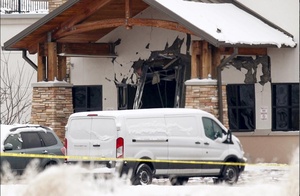
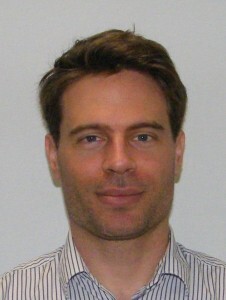
From top: A view of the damage to the entrance of the Planned Parenthood clinic in Colorado Springs, Denver yesterday; Dr Julien Mercille

White, right-wing terrorists are killing more Americans in America than jihadists.

Dr Julien Mercille writes:

We have heard a lot about Islamic terrorists recently in the wake of the Paris attacks conducted by ISIS. In general, the implicit or explicit association between “terrorism” and “Islam” can be seen everywhere in popular culture and political commentary.

But last week, we witnessed another act of terrorism, this time committed by a white man in the United States at an abortion clinic in Colorado. Three people died in the shooting and the suspected gunman, Robert Lewis Dear, was taken into custody.

This is yet another event of terrorism conducted by white people, that have killed more individuals in the United States than jihadists since 9-11, as this New America Foundation study found. The study shows that right-wing white terrorists have killed 48 people whereas jihadists have killed 26 since 9-11.

The sad thing is that the shooting at the Colorado abortion clinic is not an isolated event—abortion clinics have long been subjected to terrorist acts and harassment. The perpetrators are often linked to Christian fundamentalist groups, as noted by Juan Cole, the professor of history writing on Islam and religion, in an excellent post on the subject.

Anti-abortion extremists can be seen outside abortion clinics or the houses of those who work there with signs such as “Prepare to Meet Thy God” and “Fear Him Who Has the Power to Cast You Into Hell”.

Anti-abortion extremists have killed eight abortion providers in the US over the years. One well-known case is the assassination of George Tiller in 2009, an abortion doctor who operated in Wichita, Kansas. He was killed point-blank on a Sunday in his Church. After he was murdered, his clinic closed.

Tiller had a history of being targeted by Christian Right terrorists. His clinic was firebombed in 1986. In 1993, he was shot five times by a Christian Right woman called Shelley Shannon (who is now serving time in prison), an attack which he survived.

Targeted intimidation against doctors and staff of abortion clinics is common and on the rise (see this graph). In 2010, 27% of US clinics suffered from those types of threats, whereas in 2014, it was 52%.

This Oxford University Press book tells the stories of abortion providers who have been “physically assaulted, picketed at home, threatened over the phone, and stalked around town”.

As a result, they have been forced to “take different routes to work on a regular basis, they change their schedules frequently, they plan their living arrangements as a precaution, they buy guns, and they wear bulletproof vests.”

Yes, bulletproof vests. As one of them explained

If anybody told me when I was in medical school that I would go to work armed and with a bulletproof vest, I would have thought they were nuts. But I do have a bulletproof vest, and I do go to clinics armed these days.

There have been parallel political moves to restrict abortion in the United States. So far in 2015, states have enacted 51 new abortion restrictions, for a total of 282 since 2010.

It is the anti-abortion climate that occupies a large part of public discourse that gives rise to attacks against clinics. With so much of the public discourse demonising abortion, it is no wonder that some people come to believe that clinics are against God’s will or evil in general and decide to take violent means to eliminate them. It is irrational (what exactly does God have to do with abortion again?) but it happens.

And when terrorist acts are committed by white people or Christians, they rarely produce the same sensationalist media coverage. For example, white terrorists are described as “troubled loners” whereas Muslim terrorists are often suspected of being part of a global conspiracy.

Family and relatives of white terrorists are interviewed as they wonder what went wrong, telling us they cannot understand why their son or husband did what he did, whereas relatives of other terrorists are never interviewed.

Also, there’s apparently nothing that can be done to stop white terrorists because they’re bad apples that don’t represent any broader trend, whereas Muslim terrorists can be bombed and police forces boosted to deal with them.

Double standards are thus the rule in public discourse about terrorism.

Julien Mercille is a lecturer at University College Dublin. Twitter: @JulienMercille

Pic: Reuters

heraldJulien-Mercille-hi-res-233x300

From top: Saturday’s The Herald; Dr Julien Mercille

The demonisation of Muslims often leads to the thesis that we are now facing a ‘clash of civilisations’ between the west and Islam. But the only thing that matters is who the West consider its allies and enemies

Dr Julien Mercille writes:

The Paris attacks have led many in the media to demonise Muslims and allege that we are facing a “clash of civilisations” between the West and Islam. Those assertions are dangerous and factually incorrect.

There are many examples, but I think I found the best one of all this weekend in the Herald. Its front page reads: “WELFARE ISLAMIC STATE: Wanted Terror Chief is Living Off Benefits in Dublin; Islamic State Terror Leader in Ireland is Living on Welfare” (see picture). The article tells the story of an alleged ISIS leader who lives on welfare in Dublin.

In addition to being an attack on Muslims, it’s also a not-so-subtle swipe at welfare recipients. The reader is supposed to equate “welfare” and “ISIS” and to think they’re both evil. Readers could thus become more favourable to cutting welfare lest hard-working Irish people subsidise Islamists.

There is also an element of instilling fear among the population—people are more likely to give the government a blank cheque when they believe the nation is under threat. The terrorist described by the Herald is allegedly a “major terror suspect” and is “under constant surveillance by gardai”.

He is “of Middle Eastern origin” and “spends a lot of time in his apartment, leaving very occasionally”. He has “a long association with extremist Muslim terror groups including Al Qaeda”.

The Herald thus joins a long list of commentators who have used the Paris attacks to cast a negative light on Muslims.

Donald Trump said, “I want surveillance of certain mosques” and that he would send Syrian refugees back to Syria if he was elected President. He also called for a database of all Muslims in the United States to be set up, in order to track their movements. Another presidential candidate, Ben Carson, equated Syrian refugees to “rabid dogs”.

Such statements have real effects. A recent study found that hate crimes against Muslims spike after jihadi attacks (the study looked at Britain). For example, anti-Muslim attacks quadrupled in the UK after the Charlie Hebdo massacre in Paris.

The study’s author said the media was in part responsible for this, as “Findings also suggest that where the media stress the Muslim background of attackers, and devote significant coverage to it, the violent response is likely to be greater”.

The demonisation of Muslims often leads to the thesis that we are now facing a “clash of civilisation”, an idea popularised by the American conservative political scientist Samuel Huntington. The Sunday Independent loves that idea and many of its writers have repeated it in the last few days.

For example, Jody Corcoran writes that we are witnessing “conflict along the fault line between the Western and Islamic civilisations” and that “Islam has bloody borders”. There has been a lot of “warfare between Arabs and the West”, for example, on 9-11 and in the recent Paris attacks.

But this, of course, is nonsense because it is factually incorrect. There is no antagonism between “the West” and “Islam”.

For decades, the West has strongly supported Saudi Arabia, which is a cultural center of Islam and the most fundamentalist state in the world; the West is also strongly allied with the Gulf monarchies such as Qatar and the United Arab Emirates.

So religion is not important, what matters is “who does the West consider its allies and enemies”. Allies’ sins will be glossed over while those of enemies will find their way to front pages.

Western governments are now claiming to be offended by ISIS due to its barbaric practices. But there are no such feelings regarding Saudi Arabia (or regarding the US invasion of Iraq, to name one US intervention among many others).

For instance, talking about ISIS, former justice minister Alan Shatter said to the Herald that there was “no moral principle which says you can be neutral when it comes to a group of individuals who believe in beheading people, who glory in death, who enslave women, who inflict terrible tortures on individuals and who basically are responsible for dreadful, appalling atrocities both within Iraq and Syria and quite happy to export their fanaticism to other parts of the world”.

Concerned about beheadings? Women? Exporting fanaticism? Then focus on Saudi Arabia as much as ISIS.

Saudi Arabia reserves the death penalty by beheading for about 80 to 90 people per year ], for crimes including “nonlethal offenses, such as drug-related ones”, reports Amnesty International.

The Saudis are also well-known to export their intolerant fundamentalist version of Islam, Wahhabism, which has inspired many groups in the Middle East, like ISIS. Saudi Arabia has just sentenced to death a poet for “renouncing Islam”.

But nothing is done about Saudi Arabia. In short, there is no clash of civilisations, only power interests.

Finally, here are two resources to follow ISIS-related news:

1) Patrick Cockburn is a journalist who writes for the London Independent, and he’s actually Irish. He is described by many as the best Western journalist on Iraq. His articles can be found here.

2) Robert Fisk also writes for the London Independent and is acknowledged by many as one of the best journalists on the Middle East; he is based in Beirut. His articles can be found here.

Julien Mercille is the author of Cruel Harvest: US Intervention in the Afghan Drug Trade. Follow Julien on Twitter: @JulienMercille

90400117
julienm-226x300

From top: Members of the French community in Ireland on O’Connell Street, Dublin on Saturday; Dr Julien Mercille

The causes of terrorist attacks have nothing to do with the left or the right.

Dr Julien Mercille writes:

The terrorist attacks in Paris killed more than 120 innocent civilians. They were the latest in a series “Islamic State” (Isis) attacks that killed 43 people at a market in Beirut, 26 at a funeral in Baghdad, and 224 aboard a Russian plane.

The events are understandably tragic and deeply saddening. However, they are not isolated, even if they have received disproportionate media coverage. For example, thousands of Iraqis have died because of Isis terrorist bombings. The number of civilian fatalities in Iraq has increased from 4,623 in 2012 to 9,473 in 2013 and 17,045 in 2014, according to Iraq Body Count , an independent website. A large proportion of those are attributed to Isis.

Two questions have dominated the airwaves: why did this happen, and what should be done about it?

The conventional view is that this happened because of Islam, which is spreading violence, and we need to retaliate militarily.

For example, in his front-page Sunday Independent article, Brendan O’Connor blames Islam, which “literally means submitting” — but he declares that Westerners “will not submit”. He asserts that Islamic networks and attacks, after all, “cannot operate totally in secret and totally without some support from communities”. The implicit message is that we should thus be suspicious of Muslim communities. He also argues that Muslims themselves should do more to stop religious violence.

O’Connor also believes that “the Left” gets it all wrong, claiming that “the Left in the West goes into an orgy of blaming ourselves” for the attacks.

He is not alone in thinking this. Also writing in the Sunday Independent, Eilis O’Hanlon said the same about “the Left”, stating ]: “We in the West are, ultimately, blamed [by “the Left”] for every evil act committed against us by Islamic fanatics”. In short, “excuses will always be made for terrorists when they spill our blood”.

But those statements are so factually incorrect that one wonders if their authors have ever read anything on the subject of terrorism or Islam. I don’t have space here to address every aspect of the issue, but let’s get the basics out of the way.

First, outlining causes of terrorist attacks has nothing to do with “the Left” or “the Right”. It’s just about the facts.

The fact that the formation of Isis goes back to George W. Bush’s invasion of Iraq is not even controversial. So is the fact that Western military intervention under the “Global War on Terror” has increased terrorism worldwide. This shouldn’t be too surprising for anybody who understands international affairs. If a country bombs another, it is likely that some groups and individuals from the destroyed and occupied country will seek to retaliate.

For instance, an important New York University study  found that the US invasion of Iraq led to a sevenfold increase in terrorism worldwide. The authors looked at the annual number of fatal jihadi attacks globally in 2001-2003 and compared that to the number of attacks in 2003-2006. They found that during the first period (before the invasion) there had been 28 attacks per year, while after the invasion, there had been 200 attacks per year.

There are many experts and analysts who have stated the same.

For instance, the CIA consultant and academic Chalmers Johnson explained the process through the concept of “blowback”, which denotes the unintended consequences of foreign policy interventions.

In the Irish Times, Lara Marlowe wrote yesterday that “there is a straight line between Bush’s invasion of Iraq and France’s torment”.

Barack Obama stated in an interview, saying that Isis is “a direct outgrowth of Al Qaeda in Iraq that grew out of our invasion, which is an example of unintended consequences”.

Tony Blair also admits that Isis would not have emerged without the invasion of Iraq. When asked if the Iraq invasion had been the “principal cause” of the rise of ISIS, he answered: “I think there are elements of truth in that”.

The process by which groups like Isis emerged out of the invasion of Iraq, evolving from al-Qaeda’s activities there, has been well described by the journalist Patrick Cockburn in his book The Jihadis Return.

Many Isis leaders are former Iraqi officers in Saddam’s military. When the US invaded, they disbanded the army and this resulted in thousands of disgruntled soldiers, now unemployed and armed, left to fend for themselves.

This Washington Post article is excellent at explaining how they joined Isis and how they came to play prominent roles in its military strategy.

Also, some Iraqi insurgents who would become Isis leaders were incarcerated in an American prison in Iraq called Camp Bucca for a few years during the occupation.

As the Washington Post reported, “Camp Bucca provided a unique setting for both prisoner radicalization and inmate collaboration—and was formative in the development of today’s most potent jihadist force”, Isis. The radicals’ time in prison “deepened their extremism and gave them opportunities to broaden their following” so that “the prisons became virtual terrorist universities”.

The above strongly suggests that more bombing will not reduce the likelihood of further attacks in the West. In fact, more bombing will likely lead to more savage acts of retaliation in Europe. Therefore, to stop the bombing should be a first step towards a solution.

There are then other steps that should be taken, including to stop supporting Western allies such as Saudi Arabia and the Gulf monarchies, which spread extremist interpretations of Islam and provide support for a range of violent groups in the region. Then, other hot issues in the Middle East that feed resentment should be dealt with through diplomacy, including Israel’s occupation of Palestinian lands, the war in Syria, the wreckage in Iraq and Afghanistan, etc.

Sure, those steps won’t solve every problem. But at least they will go a long way towards reducing the violence, contrary to more military action, which will have the opposite effect.

To conclude, here are two competent analysts who I think are good sources to follow current affairs in the Middle East:

1. Juan Cole is a professor of Middle East history and expert on Islam and religion. He writes an excellent daily blog called Informed Comment ].

2. Glenn Greenwald is the journalist who received the national security documents leaked by Edward Snowden. He writes at The Intercept here.

Julien Mercille is a lecturer at UCD. His book Deepening Neoliberalism, Austerity, and Crisis: Europe’s Treasure Ireland is out now. Follow Julien on Twitter: @JulienMercille

000b57af-642Julien-Mercille-hi-res-233x300

From top: Miriam O’Callaghan interviewing former Greek Finance Minister Yanis Varoufakis; Dr Julien Mercille

The former Greek Finance Minister’s interview on RTÉ’s Prime Time sought to portray him as an arrogant failure next to the likes of Michael Noonan.

Dr Julien Mercille writes:

The former Greek finance minister, Yanis Varoufakis, was in town last week for an appearance at Kilkenomics. David McWilliams invited him and had a discussion session about topics ranging from Greece, Ireland, religion and politics. Varoufakis seemed impressed with the event as he wrote that it had been a “happy day” for him and that although it was his first visit to Kilkenomics, it would certainly not be the last.

However, Varoufakis also had an interview with RTÉ’s Miriam O’Callaghan for Prime Time, which can be watched here.

I’m not sure Varoufakis was very impressed by our state broadcaster.

Indeed, the interview shows O’Callaghan repeating the Irish government’s line uncritically. Her questions could have been taken straight from Enda Kenny’s and Michael Noonan’s notebook.

The gist of her queries was that Varoufakis had accomplished nothing in his negotiations with the troika because he was too arrogant.

If you want to get a quick flavour of the interview, someone made a three-minute video of O’Callaghan’s questions here. It’s good at showing that her 20 questions or so are all trying implicitly or explicitly to picture Varoufakis as a failure, and conversely, to show that the Irish government, and Michael Noonan in particular, was so much better at negotiating with the troika.

For example, she asked:

– “Let me quote the Financial Times, they said that you were regarded in Eurozone capitals as the most unbearably garrulous and irritating man they’d ever dealt with.”

– “Did it make sense, whatever your arguments were, for you not to get on with your EU colleagues, because those personality divisions made it even less likely that you would succeed in getting the billions that you needed for your country?”

But O’Callaghan misunderstands how the Eurozone works, how political power operates, and what determines the outcome of negotiations between the troika and countries that received a bailout.

This is not about “personalities” and “who you get along with”. Are we really to believe that the troika gets the finance ministers from Ireland, Greece, Spain and Portugal in a room, they chat and joke together for a few days, and then a troika official says “oh, Michael Noonan seems like a really nice guy, actually we both love soccer and fishing, and we drive the same car, so I’m totally willing to give him a good deal”.

Whereas another troika official says “you know, that Varoufakis, I really don’t like the way he flips up his jacket collar all the time, let alone that he plays the piano, which I never liked as an instrument, so he’s not getting the money”.

It’s incredible that our state broadcaster would convey such a simplistic interpretation of the one issue that has been at the centre of economic policy for the last six years.

Eurozone negotiations between the troika and debtor countries are about power—and that’s it. A negotiator will be described positively by the media and the troika if he does what he’s told, but if he challenges European authorities, he will be pictured as an arrogant or deranged character.

That’s is exactly what Varoufakis tried to explain to O’Callaghan. He asked her, seeking to make the point that it wasn’t about personalities, “but do you think the troika liked Michael Noonan?” To which O’Callaghan was proud to answer: “I think they probably did”.

Oh I’m sure they loved Noonan too, because he did everything he was told to do. But it has nothing to do with personalities.

It is true that Syriza failed to persuade the troika to present Greece with a better deal. Syriza was able to make some small improvements for the Greek people, but overall, they did not succeed in improving the policy package to which the troika is subjecting Greece. They really failed. But the reasons for that have to do with the fact that the troika has overwhelming economic and political power over the Greek government, so it was able to force Greece to accept its terms.

Another key aspect of power relations is that the quality of argumentation has little to do with outcomes in international relations. O’Callaghan asked Varoufakis:

“If your argument was so self-evident and powerful, why did none of them buy those arguments?”

Well, for about the same reason that when women didn’t have the right to vote, even though they had a pretty good argument to get it, those in power didn’t care. Or when George W. Bush wanted to invade Iraq on zero argument at all, he was able to do it no matter what.

Similarly, fiscal consolidation does not work to revive economies in a downturn, but that doesn’t prevent the troika from doing it anyway.

The last point that was confusing in the interview is the reason why the troika would be so mean as to want to crush Greece. O’Callaghan asked: “But why would the troika want to crush Greece?

Varoufakis explained, correctly, that it is Syriza that the troika wanted to crush, because Syriza was providing an example of defiance toward the troika to all Europeans. The troika was scared that this influence could embolden other forces elsewhere, like Podemos in Spain.

Julien Mercille is a lecturer at UCD. His book Deepening Neoliberalism, Austerity, and Crisis: Europe’s Treasure Ireland is out now. Follow Julien on Twitter: @JulienMercille

abortionchoice
Julien-Mercille-hi-res-233x300

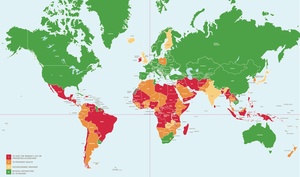
From top: Categories by The Center for Reproductive Rights of global abortion laws from most liberal to most conservative; Julien Mercille

Ireland’s abortion laws are the most restrictive among western countries and often more conservative than the developing world.

Dr Julien Mercille writes:

The abortion debate and whether or not to repeal the Constitution’s Eighth amendment has grown louder recently. It will no doubt intensify as the next general election approaches. It is a hot subject in Ireland.

One way to contextualise and clarify sensitive issues is to put them in perspective. We need to examine where Ireland stands relative to other countries. Sometimes this suggests easy answers and solutions.

The Center for Reproductive Rights (based in the US and with offices in other countries) publishes an annual world map showing the state of abortion laws globally.

As can be seen from the map (top), it divides countries into four categories, from most liberal (in green) to most conservative (in red).

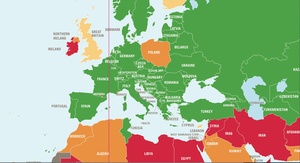
Ireland is quite an exception. Among Western countries, it’s a red conservative island in a green liberal ocean.

On abortion, Ireland is thus like Africa, Latin America, and other developing countries, and actually more conservative than many. (The map shows abortion legislation but actual implementation may vary; it still provides a largely accurate picture of how countries deal with abortion).

Let’s look at the map more closely.

The most conservative countries (red) either prohibit abortion entirely, or only allow it to save a woman’s life. Ireland is in red.

Indeed, in an excellent recent report, Amnesty International stated that we have one of the world’s most restrictive abortion legislation, which “continues to criminalize abortion in cases of rape, incest and fatal or severe foetal impairment”. The law is “deeply rooted in religious doctrine”.

Human rights bodies worldwide have repeatedly maintained that “restrictive laws on abortion, including those that exist in Ireland, violate women’s and girls’ rights to life, health, privacy, non-discrimination and freedom from torture and other ill-treatment”. The recent reform of the Protection of Life During Pregnancy Act 2013 has brought no significant change.

The orange countries allow abortion to protect a woman’s life and health. Health can be interpreted as physical or mental health or both.

Next, the yellow countries permit abortion for socioeconomic reasons (when a pregnancy could lead to risks or negative consequences for a woman, broadly interpreted). In practice, many of those countries apply their laws in a liberal manner. For example, in Great Britain, the law allows abortion on socioeconomic grounds but in practice it is freely available (so it should be considered a green country).

Last, the green countries permit abortion without restriction as to the reason. Women simply decide whether to terminate a pregnancy. But most green countries still establish gestational limits on abortion, usually between 12 to 20 weeks of pregnancy. For example, in Denmark, abortion is available without restriction as to the reason up to 12 weeks of gestation. Beyond this limit, it is possible on specific socioeconomic grounds, in cases of foetal impairment, or if the pregnancy results from a criminal act like rape or incest.

In the Western world, green countries form the overwhelming majority.

What they say is something like this.

Women have a right to choose not to continue with a pregnancy, at least as long as the foetus remains unviable outside their bodies. This recognises that there are many valid grounds for women to make that choice.

Maybe a woman is a victim of rape, a criminal act. She should thus be allowed to minimize the consequences of this, including to terminate the pregnancy. To force her to carry on with this pregnancy is not justifiable.

Or maybe a woman is a victim of incest. Why should she be forced to continue with the pregnancy, and fined or jailed for not doing so?

Or maybe a woman had protected sex and the condom split or slipped. Bad luck happens to everybody and has nothing to do with being irresponsible. The green countries agree that this is no reason to force a woman to continue with her pregnancy.

Or maybe a woman finds out that she is pregnant but that for one reason or another, believes that her situation is not conducive to having a baby. In the first few weeks of pregnancy she should thus be able to end it.

Those who oppose abortion may laugh at the above, be outraged, or dismiss it entirely.

But there’s one thing to remember.

Imagine a discussion about abortion held around a table with one representative from each Western country. There would be roughly 40 people around the table. The fact is that all of them would be green, except 2-3 with a slightly more restrictive legislation. And then, there would be Ireland, off the charts in the red.

So it’s basically 1 (or 2 or 3) against 40. It’s harder to laugh now, isn’t it?

Julien Mercille is a lecturer at UCD. His book Deepening Neoliberalism, Austerity, and Crisis: Europe’s Treasure Ireland is out. Twitter: @JulienMercille

0,,18759907_403,00portugals-socialist-leader-antonio-costa-1Julien-Mercille-hi-res-233x300

From top: Passos Coelho of the right-wing PSD; António Costa, leader of the opposition Socialist party and supporters; Dr Julien Mercille


What is the truth behind the alleged coup in post-election Portugal?

Dr Julien Mercille writes:

This weekend, there was a lot of talk on social media about an alleged coup in Portugal. For example, on twitter, #PortugalCoup was very popular.

However, the truth is that there has been no coup in Portugal, not even a constitutional crisis. But this could change, of course.

How did the whole controversy arise? (Interesting discussions may be found here , here and here.

On October 4th, legislative elections were held for the Portuguese parliament, which has a total of 230 seats.

There are two main electoral groups: left wing and right wing. The two main right-wing parties won 107 seats together, while the three main left-wing parties won 122 seats.

However, the one party that won the most seats on its own is the right-wing party PSD, which got 89. It is led by a man called Passos Coelho.

What was unexpected in the election is that the centre-left Socialist Party (PS), which can be compared to Ireland’s Labour Party, did not do as well as expected. On the other hand, the “radical left” parties Bloco de Esquerda (“Bloco”) and Communist Party did very well.

Bloco is interesting to watch because it is the Portuguese equivalent of Syriza in Greece and Podemos in Spain. It is one of those new left-wing parties that got electoral traction in Europe during the economic crisis of which we are slowly emerging.

The last player in the thriller is the President of Portugal, Mr. Cavaco Silva. He was elected in 2006 (there are separate presidential elections in Portugal) and he happens to be a member of the right-wing PSD party that got the most votes in the legislative elections. He’s a big political figure in Portugal who has been around for a long time. You can compare him to Margaret Thatcher in his politics and significance, so pretty right wing.

The normal procedure is that following a legislative election, the President offers the leader of the party that got the most seats the opportunity to form a government. So the President gave that chance to the leader of the PSD, Passos Coelho.

And there’s the rub. Passos Coelho cannot muster a majority in parliament. Indeed, the right-wing parties (PSD and CDS) only have, together, 107 seats. That falls short of the majority needed of 116 seats.

However, together, the left parties (Socialist Party, Bloco, and the Communists) have 122 seats and thus have a majority. Therefore, they could vote down any piece of legislation introduced by a right-wing government.

And here one can see where the accusation that the President conducted a coup comes from. He asked the leaders of the right-wing parties to form a government even though it is the left-wing parties that have the most seats.

However, the fact is that this accusation is wrong. The President just followed tradition: it is always the leader of the party that has the most seats in parliament that gets asked first to form a government. The President, therefore, did nothing wrong or illegitimate in this respect.

But this is not all what fuelled the “coup” story. In his speech, the President made some revealing remarks that were truly extraordinary and deemed very inappropriate, even by some members of the right-wing parties.

What he said is basically that he would not allow in government leftist parties, like Bloco and the Communists, that oppose Europe’s regime of austerity and NATO.

The President effectively conveyed that he cared more about what financial institutions and the European establishment think of the Portuguese elections than what Portuguese people want. Indeed, he declared:

“After having completed a demanding programme of financial aid, which implied heavy sacrifices for the Portuguese, it is my duty, within the scope of my constitutional remit, to do everything possible to avoid that wrong signals are transmitted to the financial institutions, investors and markets, placing in question the Country’s external trust and credibility which, with great effort, we have been gaining”

In short, he doesn’t want parties that challenge the Eurozone and NATO to be in government:

“The observance of the commitments assumed within the framework of the Euro Zone is decisive, is totally crucial for the financing of our economy and, consequently, for economic growth and job creation”.

The parties that the President does not want in government are Bloco and the Communists because they have called for:

“the repeal of the Lisbon Treaty, of the Budgetary Treaty, of the Banking Union and of the Pact of Stability and Growth, as well as the dismantlement of the Economic and Monetary Union and Portugal’s exit from the Euro, and, still further, the dismemberment of NATO, of which Portugal is a founder member”

This is very explicit, and it infuriated many throughout Europe. It has been suggested that it meant that the European Union, or the troika, had concocted a coup towards Portugal, by forcing out parties that oppose European austerity.

But as stated above, so far, there hasn’t been any coup because everything has proceeded normally (except for the President’s incendiary words). Even the left parties agree with this. For example, a leader of Bloco, Catarina Martins, said that the President’s speech was unacceptable not for the decision to give the right-wingers the first shot at forming a government, but for the comments he made against left parties.

But the soap opera is not over, far from it.

What will most likely happen next is this.

Within a few days, the right-wing government will lose the parliament’s confidence, because it doesn’t have a majority.

Then the question will be: what will the President do? Normally, he should give the opportunity to the left parties to form a government, which ostensibly, they would be able to do, because they have a majority of the seats.

But what happens if the President remains stubborn and simply does not want to let the left parties Bloco and the Communists enter government? Then, we’ll have a real constitutional crisis, and depending on how things go, something that one could characterise as a coup by the President.

Sparing you the legal details, an additional problem is that, according to Portuguese law, there cannot be new elections before nine months from now, so governance in the country until then would be unstable and uncertain, to say the least.

If, on the other hand, the President yielded and allowed all left parties to form a government, then, we would have a majority government of the left.

But even then, problems could arise between the Socialist Party, which is centre-left, and Bloco/Communists, which are “radical left”. Would those two groups be able to agree on enough common policies to maintain a government, or would they fail to reach consensus to the point that their government would fall?

To follow the developments, watch this space.

Julien Mercille is a lecturer at UCD. His book Deepening Neoliberalism, Austerity, and Crisis: Europe’s Treasure Ireland is out now. Follow Julien on Twitter: @JulienMercille

mcw29775769_640Julien-Mercille-hi-res-233x300

From top: David McWilliams; Fintan O’Toole; Julien Mercille

Budget 2016 either betrayed the coalition’s ignorance or its cunning.

Only you can decide.

Dr Julien Mercille writes:

Fintan O’Toole is associated with the left and David McWilliams likes the market. Both have made important contributions to our understanding of Irish politics and economics. They each have their cohort of fans, while driving some of their opponents nuts.

They both wrote on Budget 2016 and I want to highlight one important issue in this respect on which I think O’Toole is incorrect, whereas McWilliams is more on target.

Fintan O’Toole seems to think that the government is rather incompetent, irrational, and has no clue what it’s doing.

For example, last week, he wrote a piece entitled “The Minister for Finance and his know-nothing Budget”. He argued that “one of the things the system chooses not to know is how the budget really works”. Michael Noonan, the Minister for Finance, “is like a plumber turning on a stop cock without knowing where the pipes are”, because he will not produce an analysis showing if the Budget is progressive or regressive. In other words, “this is government by willful ignorance”.

This interpretation sometimes reappears in O’Toole’s writings, for instance, in his book “Ship of Fools”, whose title reiterates the idea.

This type of commentary is also often heard in the media and in conversations. In fact, it’s the mainstream criticism of government: politicians are ignorant, incapable and ridiculous.

However, it’s time to stop taking politicians for irrational idiots. Politicians are rational and usually quite competent. The thing to understand is that they govern following the interests of elites, and the policies they enact reflect those interests (we can debate whether such policies are good or bad, but that’s a separate issue).

Indeed, Social Justice Ireland produced an excellent report on Budget 2016  (there is also an analysis of the cumulative impact of Budgets 2009 to 2015 here).

The report shows the following about Budget 2016:

It is the fifth regressive budget in a row, meaning that they have favoured the better off more than the poor.

– It widens the rich-poor gap by €506 a year.

While single unemployed people gain €95 a year, single people earning €75,000 gain almost ten times as much, or €902.

It is “extremely generous” toward multinational companies. The “Knowledge Development Box” plan means that such companies will now be able to avail of an even lower tax rate of 6.25% (as opposed to the regular 12.5% tax rate) for part of their operations.

In general, the Budget’s tax changes favour those who earn more.

It fails to deliver any significant increase in social welfare payments.

The question to ask is: does this reveal a government that doesn’t know what it’s doing, throwing darts in the dark? If policy was so foolish and the government so irrational, one would expect a relatively even distribution of the tax and spending benefits, but this isn’t what we see.

And for those on the right who think that’s just another left-wing conspiracy, no, you don’t need to be on the left to say something like that—you just need to understand how the system works.

For example, David McWilliams writes that this is a budget “aimed at convincing the middle classes that this is the government you can trust”. In particular, the Capital Gains Tax is reduced from 33% to 20% and this means that “the State is siding with those people who own capital. These are mainly the already rich”. To reiterate, “it’s clear that the big winners are the already rich”.

And the important point is this: “This is not the unintended consequence of policy. It is policy”.

This strikes me as a more accurate description of how the system works.

Picturing politicians as clownish and irrational leads to the following natural solution: if we could only find better ones, things would be fine.

However, in fact, to make things better, it is the system as a whole that needs to be modified so as to make it more egalitarian.

Julien Mercille is a lecturer at UCD. His book Deepening Neoliberalism, Austerity, and Crisis: Europe’s Treasure Ireland is out. Twitter: @JulienMercille

90384132
Julien-Mercille-hi-res-233x300

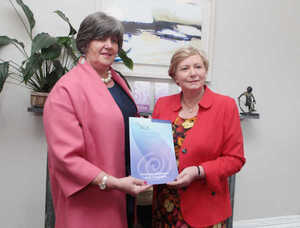
Ellen O’Malley Dunlop, of the Dublin Rape Crisis Centre and  and Justice minister Frances Fitzgerald; and Dr Julien Mercille

Rape Crisis centres across the country suffered funding cuts worth just over a €1million between 2008 and 2014.

But why the silence?

Dr Julien Mercille writes:

This post presents systematic data on funding cuts to all Rape Crisis Centres in the country since 2008, during the austerity programmes.

I obtained the data [see below] over several months by contacting every centre in the country and Government offices (HSE and Tusla). As I understand it, I’m the only person who has this national data. Even the Rape Crisis Centres themselves don’t seem to have anything beyond their individual budget.

This doesn’t indicate that I’m a good researcher, it indicates that nobody seems to care. I’m still surprised that this basic data on cutbacks wasn’t readily available until I asked for it.

This summer, I wrote a piece in the Irish Times based on the data, but I didn’t receive any request from media outlets, journalists or politicians to get the full set of numbers to take it further (actually, one radio station in Dundalk asked me to go on their show but they quickly cancelled the request and I never heard back).

In Ireland, 87% of victims of rape or sexual violence are women or girls, and conversely, 98% of perpetrators of all incidents are men.

The centres provide important services. About 2,500 people take up counseling annually.

The effects are undoubtedly positive. For example, among many testimonies from victims, one said: “This support group helped me realise that I was not alone and I was able to open up without fear or retribution. It will have an everlasting positive effect on me to carry in the future”.

But cutbacks have worsened the situation. One centre’s manager stated that the Government “has cut front-line services so much that it’s become impossible to operate” adequately.

Crucial work has been downgraded or eliminated, such as prevention and education programmes with young people in schools about the notion of consent in sexual matters.

Outreach work has been curtailed. Rural areas have been especially affected because such reductions in service provision often mean longer travel time to reach services, with the result that many victims are simply no longer able to avail of the counseling they need. This applies, for example, to Mayo, Enda Kenny’s constituency.

Screen Shot 2015-10-12 at 07.14.09

So what does the data (above) tell us? The chart outlines the cuts between 2008 and 2014 to every Rape Crisis Centre in the country, plus to the Rape Crisis Network (their umbrella organisation, whose funding has now been abolished completely).

It can be seen that overall cuts of 21% have been inflicted on the Centres. The cuts are uneven and vary from -8% in Galway to -34% in Athlone.

The overall reductions amount to a little more than €1 million, a number so small when compared to the general Government budget that no one would have noticed if it had not been axed.

It is estimated that funding should be at least €20 million, or five times current levels, in order to provide adequate services. This golden plan would still be insignificant in size compared to the State’s overall budget.

There is another important, and sensitive, aspect to all this. A few centres seem to have opted to lobby the Government and cosy up to it to obtain more funding for themselves, rather than form a common front with the other centres against the cuts.

These dynamics have been confirmed to me in discussions with Rape Crisis Centres managers and workers.

For example, the Dublin Rape Crisis Centre, headed by Ellen O’Malley-Dunlop, seems to have taken the Government side.

When I first wrote about cuts to the centres a few months ago, Ms O’Malley-Dunlop immediately called me. In a rather agitated tone, she told me that I should not write articles denouncing cuts.

She even described the Government as relatively generous because it had announced that no further cuts would be applied for 2015.

I was puzzled. How could the Government be described in such positive terms after presiding over funding cuts larger than 20%?

I asked her to explain to me her position, since I thought that exposing the cuts in the media was a good way to push back against these cuts. She said she couldn’t explain, that I wouldn’t understand, etc.

We thus have a surreal situation where some centres are against criticism of cuts to services for victims of rape.

In any case, the full systematic data is now public. Hopefully, this time, someone, somewhere, will do something about it.

Julien Mercille is a lecturer at UCD. His book Deepening Neoliberalism, Austerity, and Crisis: Europe’s Treasure Ireland is out. Twitter: @JulienMercille

(Leah Farrell/Rollingnews.ie)

stephencollinsJulien Mercille hi res

From top: Stephen Collins; Julien Mercille

For the establishment the choice is simple.

Stability or ANARCHY.

Dr Julien Mercille writes:

Stephen Collins is the Irish Times political editor. I see him in effect as a de facto government spokesperson [so closely do his views mirror those of the coalition].

His latest article on the upcoming elections conveys the government’s message. It is entitled “Stability or Chaos is the Choice Facing the Irish Electorate

The alleged choice between “Stability or Chaos?” is one you will hear repeated often in the coming weeks. The claim is that voting for mainstream parties will preserve stability, while voting for independents and anti-austerity parties will bring chaos.

But this is a propaganda trick. Of course, we think of “stability” as a good thing and “chaos” as a bad thing. Therefore it’s supposed to make you want to vote for Enda Kenny again.

But the reality is this: the “stability” that Collins longs for is in fact the “stability of the Irish establishment”, which he thinks must be protected. “Chaos”, on the other hand, is anything that disrupts the establishment and takes away its prerogatives.

A few illustrations may be found on the website of the Nevin Research Institute, which produces two documents every three months that are must-reads for anybody who wants to understand the economy: the Quarterly Economic Observer and the Quarterly Economic Facts.

They give a picture of the economy and present key indicators about the state of the economy in a language that is easy to understand. It just released the documents for the Autumn quarter.

What kind of “stability” have the mainstream parties given us, and would logically continue giving us if re-elected?

As David McWilliams’ excellent documentary The Great Wealth Divide showed, wealth is still very concentrated in Ireland. The top-20% of households own 73% of the country’s wealth. The top 10% own 54% and the top 1% own 15%. Stability means this won’t change.

The budget is still focused on cutting taxes, which are regressive and unnecessary as Ireland is a low-tax, low-spend economy, which prevents investment in public services. This gives us the stability of poor public services.

We have a 21% rate of unemployment and under-employment combined (under-employed people are those who would like to work full-time but are stuck in part-time jobs). For the last 5 years, that number has remained very stable indeed, oscillating between 330,000 and 475,000 people.

The unemployment rate is still at nearly 10%, rather stable as well, as it is not falling very rapidly.

The youth unemployment rate (for those under the age of 25) is still at 21%. Stability again.

The deprivation rate is still very high, at 31%. Stability here too.

Sure, you could counter that whatever the poor state of the economy, we are now in recovery mode, so things are getting better. This is true, things are getting better and the recovery is becoming more real. But unless we adopt the low standards of Fine Gael-Labour, we should quickly point out that things could be much better if the government made better decisions.

What are those better decisions? They are policies that Stephen Collins would call “chaotic”. But in fact, they would actually improve our quality of life and the economy.

For example, there are a series of projects that could be accomplished:

More investment to upgrade our poor-quality infrastructure. This will raise economic productivity, among other things. IBEC, the employers association, agrees and calls for €1 billion extra investment in the upcoming budget. The population also agrees and wants more spending, not tax cuts, as revealed by an important Irish Times opinion poll just released.

Wealth tax on the rich. Even a small tax could raise about €300 million according to the Nevin Institute. You don’t need to be a member of the hard left to call for this. David McWilliams did in The Great Wealth Divide, just like economist Stephen Kinsella in the Sunday Business Post, along with many others.

Invest in better public services so we can catch up with other countries. This will lower our cost of living (for example, thanks to cheaper public transportation and health care costs) and would increase employment take up and retention (for example, if the state provided better childcare services, parents would find it easier to work).

Don’t cut taxes: Ireland is already a low-tax economy, and in any case, the tax cuts proposed by the government in the upcoming budget are regressive, meaning that they will mostly benefit the better off.

There are many more possibilities explained in the Nevin Institute’s documents, and in Unite the Union’s Budget 2016 submission, which can be found here.

In short, the choice is not between “stability” and “chaos”. It’s between supporting the establishment, or supporting everybody else.

Julien Mercille is a lecturer at UCD. His book Deepening Neoliberalism, Austerity, and Crisis: Europe’s Treasure Ireland is out. Follow Julien on Twitter: @JulienMercille

9032827290393724

Julien Mercille hi res

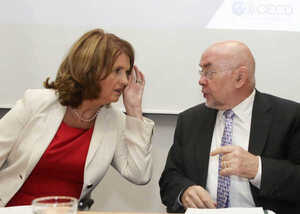
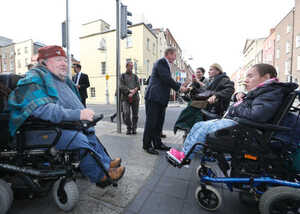
From top: Taoiseach Enda Kenny with disability campaigners last week; Tanaiste Joan Burton and former Labour minister Ruairi Quinn; Dr Julien Mercille

Cold coffee for disability activists and foodbanks for all.

When delusion becomes policy.

Dr Julien Mercille writes:

School has only just started, so let’s begin this column with three exam questions:

Question 1: How many hours has Joan Burton been held up in her car in Jobstown last November?

Answer: By now, the whole nation knows that it’s two hours, thanks to endless media repetition.

In contrast, I would expect few people to know the answers to the next two questions, given the lack of coverage of the issues.

Question 2: How many people suffer from food poverty in the country?

Answer: 10% in 2010, or 450,000—it is virtually certain that it has increased significantly since then (I haven’t seen a more recent figure).

Question 3: By what amount have services to people with disabilities been cut under austerity?

Answer: 10%, or €160 million.

Last week, two events made me wonder if Labour and Fine Gael leaders know the answers to Questions 2 and 3. There seems to be a good amount of delusion within government ranks, as officials close their eyes on the mess they have created.

First, Joan Burton opened a central food bank to meet “growing demand for food assistance” because the years of recession and austerity are still affecting the country.

The food bank is operated by Crosscare, which is the social support agency of the Catholic Church in Dublin. It expects to provide 750 tonnes of food within the next three months to 70 charities and community food banks in and around the city.

Joan Burton said she was “very pleased” to support this strategy, which she thinks is a “great form of community effort”. In other words, she thinks it’s great that so many people in the country are now compelled to get their food from the Church because they can’t afford it.

The trade unions Unite and Mandate recently produced a report on food poverty in Ireland. (Food poverty is defined as missing a meal in the last two weeks due to lack of money; or being unable to afford a meal with meat or vegetarian equivalent every other day; or being unable to afford a roast or vegetarian equivalent once a week).

The 10% facing food poverty don’t even include the homeless, asylum seekers and Travellers, groups that tend to be more vulnerable to it. The report says that food poverty today is not a result of crop failure or weather-related problems—it’s a result of a policy of austerity.

Second, disability activists stood outside Government Buildings for 72 hours, including cold nights. They wanted to highlight the cuts to disability services. There are 600,000 people with disabilities in Ireland.

They talked to Enda Kenny and said they were disappointed that nothing came out of the meeting. Actually, the main outcome was a session of photos that Kenny might use to show he is listening to the country. He also gave a coffee to one of the protesters, as if this was supposed to show compassion.

The Irish media reported briefly on this. But imagine if the situation had happened in an “enemy state”. Say disability activists were camping outside government buildings in Russia and Vladimir Putin gave one of them a coffee to attempt to look good in front of the cameras. I bet the Western media would be there denouncing the “heartless tyrant” who “lets his own people rot in the streets” while refusing to tax a little bit more Russian oligarchs to provide adequate services for the disabled.

The level of delusion seems to be particularly high within the Labour Party. In the Sunday Business Post, Pat Leahy conducted an insightful interview with Joan Burton.

She stated that when they go to the polls, Irish people will give credit to Labour for—wait for it—“protecting welfare, mitigating austerity, promoting job creation, effecting social change”. Wow.

This reminds me of the “Big Lie” technique in propaganda, in which a politician tells a lie so big that people believe it because no one would think that someone would be impudent enough to distort the truth to such an extent.

Meanwhile, it was reported that an “emotional” Ruairí Quinn, speaking at Labour’s think-in last week, boasted that because Labour didn’t “believe in capitalism, we know how to fucking manage it”.

This appears to be another Big Lie, of the emotional variety perhaps. Hasn’t Labour gone out of its way to demonstrate to the troika and the world how much it believes in savage capitalism and how good it is at implementing it?

In any case, opinion polls indicate that the party will be close to wiped out in the forthcoming elections. Hopefully, that will wake up a few.

Julien Mercille is a lecturer at UCD. His book Deepening Neoliberalism, Austerity, and Crisis: Europe’s Treasure Ireland is out now. Twitter: @JulienMercille