Tag Archives: Morning Ireland

Screen Shot 2016-04-27 at 08.55.07

Fine Gael Minister for Jobs Richard Bruton

RTÉ reports:

Speaking on RTÉ’s Morning Ireland, Mr Bruton said in the event that charges continue in the future then those who were in default will have their bill pursued.

If water charges are to be scrapped in the future, then people who have already paid their bills will have to get their money back, he said.

It is proposed that Irish Water will be retained while the funding model for water will be examined by an independent commission and then an Oireachtas committee before a Dáil vote takes place on its recommendations.

Proposal to suspend water charges for at least nine months (RTE)

Screen Shot 2016-04-26 at 10.44.40

Social Democrats TD Stephen Donnelly

Social Democrats TD Stephen Donnelly spoke to Rachael English on RTÉ One’s Morning Ireland this morning about the matter of Irish Water amid the Government formation talks.

Mr Donnelly said the future of Irish Water should not be solely discussed by Fine Gael and Fianna Fáil negotiators behind closed doors but that it should be discussed among all elected TDs in the Dáil.

At the end of the interview, Mr Donnelly explained that he hasn’t paid his water charges, saying:

“Anyone who’s paying out €160 is essentially being asked to go out into their front garden and set fire to the money”.

Grab a tay.

Rachael English: “It’s 60 days without a Government and the talks are stuck over water charges. The Social Democrats have said that the water issue must be discussed in the Dáil and not confined to a closed room among Fine Gael and Fianna Fáil negotiators. One of its three TDs, Stephen Donnelly, joins us now, good morning.”

Stephen Donnelly: “Good morning.”

English: “You would have had a say had you remained in the process of talking to find a Government.”

Donnelly: “Well we do have a say, we’re a political party elected to the Dáil and that’s where this should be debated. The Greens entered talks in good faith and had to leave, a lot of Independents entered talks in good faith and had to leave, the Social Democrats met both Fine Gael and Fianna Fáil at the start, we had very constructive talks with both parties. And then we said the numbers are such that you two need to go and come to some sort of agreement and that we would then engage. And we were right: those who did engage before that spent a lot of time in there in good faith and they had to leave. We have now reached out to Fianna Fáil, to Fine Gael, to Sinn Féin, to the Greens, in the last week, because the talks are back on and therefore we are very much in the process – we’re not going to go and prop up a Fine Gael minority government, we said during the campaign we wouldn’t do that…”

English: “But you’ve left Fianna Fáil and Fine Gael to it, in terms of making the arrangements for whatever Government needs to be formulated so they have to do an agreement on Irish Water.”

Donnelly: “No they don’t, the Dáil has to have an agreement on Irish Water so, people are really fed up. We’re on day 60…”

English: “But the Dáil did agree on Irish Water, I mean the thing was discussed, it was debated, it was voted on, it was established…”

Donnelly: “It was and then it was a general election and then the majority of TDS elected ran partly on the basis of changing that decision. Let’s not forget: Irish Water was only one of, I think, only two times in the last Dáil term of five years where the Opposition walked out. If you remember Phil Hogan, the minister, then rammed it through, the whole thing through in three hours. And it has been a disaster right from its beginning and continues to be a disaster. And we now have, what it really is, a totally unacceptable situation where we have Fianna Fáil and Fine Gael locked away in a room, potentially about to collapse the 32nd Dáil on the issue of water. What the Social Democrats are saying is, ‘Look, water was one of the key issues of the election. Obviously there are arguably more pressing issues, like homelessness, like people having to wait 25 times longer on public waiting lists than private waiting lists…'”

English: “Murder on the streets…”

Donnelly: “Like murder, right, like the guards are being 20% under resourced and so forth. There are very, very serious issues. We have one in eight children in the country now in daily poverty. The Dáil needs to get about doing its business.”

English: “So is it ridiculous that the 32nd Dáil is being threatened with collapse over an issue which, you can break it down, to €3 a week per household?”

Donnelly: “Well we think it’s outrageous that it is potentially going to be collapsed and so what we are saying to Fianna Fáil and Fine Gael is: there is clearly an impasse. Both parties ran on quite different positions. We actually don’t believe that either position is a tenable position, either Fianna Fáil or Fine Gael’s position but that’s fine. That’s up to them to decide. We’re saying look: clearly this has reached an impasse. The rest of us want to get on with the job we’ve been elected and paid to do – as I’m sure more Fianna Fáil and Fine Gael TDs. Take the issue of Irish Water out of the talks, bring it back to where it belongs – which is in the Dáil – like let’s not forget, about 90 TDs were elected with a very clear mandate: To end domestic water charges. There are about 90 TDs who would vote accordingly. So let’s not collapse the 32nd Dáil on the issue of water, let’s bring it back..”

English: “So how do you change it? Would you change the system of having a national utility called Irish Water, managing the Irish Water project, and having water charges? What would you change?”

Donnelly: “Yes, there’s three things we would do. First of all, we would call for a referendum on public ownership, probably to change Article 10 of the constitution. There is a very real fear of privatisation – probably not in the next few years but in the future. So we would look for a referendum to make sure that could never happen. We would reconstitute Irish Water, you could say end Irish Water, abolish Irish Water but not do what Fianna Fáil is looking to do which, quite frankly, is bonkers – which is send it back to the local authorities – but have a national water board. Because whilst the Government made and unholy mess of Irish Water in the last Dáil, actually the engineers are doing a very good job like they are doing the business that needs to be done on the water system which is great. And the third thing we would do is we would end domestic charges and, partly, and it’s a message people really need to understand, partly because the money that is being raised from domestic charges does nothing other than cover the cost of raising the money. So none of the money that anyone is paying out or not paying out is being used to maintain the system or upgrade the system…”

English: “So all the money to fund water and the repairing of the system should come from the Exchequer, is that what you’re saying?”

Donnelly: “Should continue to come from the Exchequer. Let’s not forget, it costs twice as much in Ireland to provide water as it does in the UK, including northern Ireland where the population density is more or less the same. So what should be done is the engineers should be allowed get on with the job of identifying the leaks, of upgrading the system, that creates very, very significant cost savings. You reinvest those cost savings into upgrading the system. So both from an engineering perspective, from an economic perspective and from a political and democratic perspective, there is a very clear argument that says: end domestic charges, use the savings which are being generated to reinvest and upgrading the system which obviously has to be done…”

Listen back in full here

Sasko Lazarov/Rollingnews

Screen Shot 2016-04-18 at 09.36.08 Screen Shot 2016-04-18 at 09.36.39

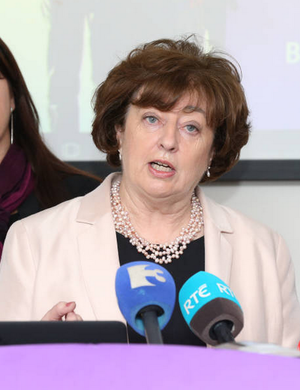
Screen Shot 2016-04-18 at 10.06.26From top: Yesterday’s Sunday Independent and Social Democrat TD Catherine Murphy

Yesterday the Sunday Independent reported that there have been discussions between Labour, the Greens, and the Social Democrats about “forming an alliance of the Left which would enter a rainbow coalition arrangement with Fine Gael”.

Further to this, Social Democrat TD Catherine Murphy spoke to Gavin Jennings on RTÉ One’s Morning Ireland this morning.

Grab a tay…

Gavin Jennings:The Sunday Independent was reporting yesterday that secret talks have been held within the confines of Leinster House and elsewhere in Dublin between Labour, the Green Party and the Social Democrats – is that true?

Catherine Murphy:No it’s not. We’ve had no formal or informal talks with the Labour Party about joining any coalition.”

Jennings: “And Roisin Shortall or Stephen Donnelly haven’t been involved in any such talks either, no?”

Murphy: “No.”

Jennings: “The paper was also reporting that Green Party leader Eamon Ryan has been in constant contact with Fine Gael’s chief negotiator’s Simon Coveney. He strongly believes that the next government – this is Eamon Ryan – needs to be more balanced in terms of political ideologies and has been urging Labour and the Social Democrats to join him in providing this balance. Has he been urging you?”

Murphy: “He has, yes. We wouldn’t share his view that, we campaigned saying we wouldn’t support more of the same and we pretty much reaffirmed that commitment but we believe we’re in an entirely different situation and, indeed, the Dáil Reform Committee has been busy rewriting the Dáil rules to reflect the new reality and we would be, for example, quite, we would encourage and would be involved for example in setting out a framework for the Dáil with all the other strands of the Dáil in setting out a programme for the Dáil as opposed to a programme for Government because there has been a shift in power and that’s the message that the voters gave, there’s been a shift in power from Government to the Dáil and the rules have been rewritten, or are being rewritten, to reflect that so I think we’re in a very different scenario where, for example, if there was a broad strategic approach taken on major issues like health, like housing, we feel that there is a programme there that, there’s lots of possibilities of support for.”

Jennings: “But in terms of making up the numbers to make up this Government, are you ruling the Social Democrats out?

Murphy:We did some weeks ago…”

Jennings: “And that’s still the case?”

Murphy: “It is still the case.”

Later

Jennings: “When you mention an election, there is a possibility that we may have another election quite soon. Why do you think that voters would be more favourable to you for sitting aside and allowing a Government to be formed rather than getting in there and trying to do something about it?”

Murphy: “You see I actually don’t believe that’s the case. I think that the shift in power in the Dáil, the rewriting of rules actually opens up a really exciting prospect of sharing that power in a way that we haven’t seen before. And, as I said, it’s a question of drawing up a programme for the Dáil so as that the 158 TDs in the Dáil can participate, that it’s not confined to 15 members of Cabinet and everyone else is, you know, kind of has influence but there the only ones with power. It’s an entirely different prospect and it’s one that we would be very constructive and enthusiastic about participating in. So, essentially, this is a changed environment and, as I say, the Dáil rules have been changed to reflect that or are being changed to reflect that.”

Listen back in full here

Sasko Lazarov/Rollingnews

IFA-protest-6-1024x683


From left: Pat O’Flaherty, Eddie Downey, IFA president and deputy IFA president Tim O’Leary

Tim O’Leary, acting President of the Irish Farmers’ Association, spoke with Dr Gavin Jennings on RTÉ Radio One’s Morning Ireland earlier today.

It follows reports that the IFA’s president Eddie Downey is to “step back from his role” as the organisation’s chief economist Con Lucey reviews the governance structures within the IFA.

Last week, the IFA’s former general secretary Pat Smith resigned after it emerged he received a salary worth €445,000 in 2014 and €535,000 in 2013.

From the interview this morning…

Tim O’Leary: “The best way to deal with this is through the process we put in place with the chief economist to look at it, to put a proper perspective on all these things. And to give him that space, this is, I’m reiterating, to give him that space, Eddie felt it was best to step back and not be involved in the process. We have a renumeration committee of which it is a part so that would be the body, dealing with the salary and that needs space to do this properly.”

Dr Gavin Jennings: “Why did Pat Smith resign?”

O’Leary: “Same issue, the salary.”

Jennings: “He resigned over his own salary?”

O’Leary: “The size of it. The scale of it, the difficulties…pardon?”

Jennings: “Or the revelation of it?”

O’Leary: “He resigned before it was revealed. So that was the issue that was bothering farmers. It was becoming a huge issue and it was getting in the way of us doing our business.”

Jennings: “But he wasn’t resigning over the size of his salary, he was resigning because people found out about the size of his salary.”

O’Leary: “He was..no. The salary was not revealed before he resigned. It was the size of it and it was the concern over the size of it, or the potential size of it. Remember what was happening. There were leaks and there was speculation and there was talk about what was the size of the salary and we had to, or he had to move to deal with this. And it is distracting us from the work of the organisation. I accept completely that this is important stuff now, to be dealt with. And we’re going to deal with this and we’re going to work through it.”

Jennings: “Who signed off? Who agreed to pay the IFA general secretary over half a million euro in 2013? And just below that last year?”

O’Leary: “The general secretary of the Irish Farmers’ Association was hired by the organisation and a package was agreed with him. The package at that time would have been agreed by the president and the treasurer and I think that was in 2009. And in subsequent years, that salary would have been reviewed on an annual basis and signed off by the president, the treasurer…”

Jennings: “And was it signed off in…”

O’Leary: “That was signed off in 2013 by the then president, the then treasurer. Now in 2014, we received a letter from Con Lucey expressing concerns about the procedures and the structures in place which we took on board and that salary was not signed off in 2014.”

Jennings: “Why not?”

O’Leary: “Because we wanted to strengthen the oversight of the bonuses and the salary going forward. So until that was done, we were not prepared to do that. This is accountability if you want to call it that or this is the way we felt we had to work here.”

Jennings: “Will Pat Smith get a payoff? A severance package?”

O’Leary: “There is very strong law here to govern and protect employees and we’re bound by that law. It’s in the process at the moment and we’re having some difficulties with that. But I think this is a confidential process…”

Jennings: “What difficulties?”

O’Leary: “No this is a confidential process that has to be worked through now and we have to, in fairness, to everybody, we have to work through this and when we have arrived at a settlement it will be made known.”

Jennings: “Will you tell members what his payoff will be?”

O’Leary: “It will be made known to everybody, yes. It will be published. It will be published in the general council.”

Jennings: “When did you first learn, as an IFA member, what your general secretary was earning?”

O’Leary: “When we heard, when we decided that we were going to reveal this or we were going to explain this to the executive council, we got very clear figures at that stage from our Chief Financial Officer so…”

Jennings: “When was that?”

O’Leary: “Last week, last week..”

Jennings: “So you… only last week you found out that your general secretary was earning half a million euro?

O’Leary: “The role of the deputy president did not encompass the salary of the general secretary. It never has. The role of the president and treasurer did, so I did not know.”

Jennings:What did you think he was earning?

O’Leary: “The common expectation or the common understanding was that he would be benchmarked off the secretary general of the Department of Agriculture…”

Jennings: “That’s about €185,000…”

O’Leary: “Now, it is €185,000. It would have been substantially higher when his contract would have been signed.”

Jennings: “So were you shocked?”

O’Leary: “Yes, I was.”

Jennings: “There were members, also last night, who are expressing a little surprise over what Eddie Downey was being paid. Did you know what he was being paid?”

O’Leary: “At the same time, when he told us, last week.”

Jennings: “So you only knew that last week?”

O’Leary: “Yes.”

Jennings: “What did you think he was earning?”

O’Leary: “I would have expected he’d have been on a pretty good salary, I didn’t speculate on that. I’m on €35,000 a year, I didn’t negotiate that, that was the package offered to me when I came in. I’m a dairy farmer, that is sufficient for me, to pay a replacement labour on my farm. So, ok, that allows me then to do the job that I do for the Irish Farmers’ Association. It’s practically a full-time job, I tell you, it’s a job and a half these days. But it’s practically a full-time job to do this. So I left my farm to do this and that allows me to do so.”

Jennings: “You don’t need me to tell you there are farmers up and down the country who are, I think it’s fair to say, livid that the general secretary was earning over half a million euro in the year before the crisis was earning less than half a million euro last year. Some of them will be pretty annoyed that a president was earning nearly €150,000 this year and last year. What would you say to them this morning? Many of whom are threatening to withdraw their membership. And are also questioning whether they should continue to pay fees for every transaction they undertake.”

O’Leary: “Yes, well, what I’d say to them first of all, on behalf of the organisation, I apologise for the mistakes we’ve made in that area, I think we are now going to review everything again. We’re going to look at these payments, through the renumeration committee, that’s what this strengthened committee is set up to do, to look at the payment of the general secretary and the stipend of the president and make recommendations on that and we will do that and we will do that in the light of current circumstances, I think is the best way to describe it. And I cannot take responsibility for the decisions of others in the past but what I can do is give a commitment on behalf of myself and the executive board and the executive council at the Irish Farmers’ Association that we will have transparency and accountability going forward, into the future now. We do everything by the book, as everything that needs to be done, we will do it. And we will be guided on that, Gavin, by Con Lucey.”

Jennings: “Will you go into it with the same level of eyes closed as you did before? When you weren’t questioning how much your boss or your president was earning?”

O’Leary: “I’m in this position two years. Before that, I was not an honorary, a national honorary officer…”

Talk over each other

Jennings:Weren’t you curious about what your boss was earning? No?”

O’Leary: “I think the honest answer here is that the vast majority of people, members of the Irish Farmers’ Association, their concerns are about making a living, their concerns are about having enough income to educate their children, to put food on the table, to pay all the bills and to get on with it. And that is what they have this organisation for.

And I’ll be very honest with you here Gavin, the bulk of the time I’ve spent in this organisation, the vast majority of it up to this, all of it has been taken up with dealing with this issues and I want to get back to dealing with those issues and I think that we won’t let our members down. We will keep doing this, we will serve our members and we will represent our members on every facet of agriculture that needs to be done so we will deal with this issue. This is another problem we have to deal with. We are good at solving problems in the Irish Farmers’ Association. We solve this one and we will get on with the business and we will get our organisation back on track. That is the clear decision of the executive board yesterday and I’m going to carry that out.”

Listen back in full here

Coveney welcomes IFA President’s decision to step back from role (RTE)

Earlier: A Limerick A Day

90398822000b5347-614
https://soundcloud.com/morning-ireland/cograve-hits-out-at-government

From top: Paddy Cosgrave; with Dr Gavin Jennings (centre) and unidentified ‘suit’

This morning.

Further to tensions between the Web Summit and the government summit founder Paddy Cosgrave appeared on RTÉ Radio One’s Morning Ireland earlier to explain why Lisbon will host next year’s event.

Features: lies, hush money and traffic restrictions.

Dr Gavin Jennings: ‘Welcome back to the RDS Simmonscourt where we often bring you election campaigns but this morning is full of Technology trade stands, the smell of coffee, al ot of very young people, very tight jeans and very strange beards. It’s the Web Summit where people who want to make it in the Tech Industry get to meet people who already have. Founders of big companies like Instagram, Pixar and Tinder are here, Henry Ford’s grandson is here, in the huge seated area with a big stage just outside our studio, and Facebook stand where you can try out their oculus VR, take yourself to another world we’re told. Speakers will include author Dan Browne and Tour de France winner Chris Froome. Paddy Cosgrave is the organiser of the event which started in 2010 with 400 people and this year expects over 40,000 visitors. Paddy, thank you very much for coming to our pop up studio.I just see in the welcoming note that you’ve sent to people who are coming here ‘It rains alot in Ireland but rarely heavily. We strongly advise you bring a strong compact umbrella just in case.’Your visitors must be stunned at what they’re seeing here today.”

Paddy Cosgrave: “Oh the weather is absolutely incredible. What a November day.”

Jennings: “You’re also warning about problems with public transport.”

Cosgrave: “Yeah, I think when you bring a huge amount of people from around the world to what is a small city that’s already under strain on a daily basis it’s only going to accentuate the problem so we advise people to walk to and from the venue.”

Jennings: “Why are you not coming back next year?”

Cosgrave: “I think the Web Summit just got too big for the city. I think that over the last two years the strain that the city itself has been under is pretty obvious – you pick it up on twitter and certainly from the feedback from attendees – we just needed to find a bigger home. And we found one.”

Jennings: “The problems that you experienced, that you highlighted, that you wanted worked on, are they any better this year?”

Cosgrave: “Em, I think time will tell. I’m optimistic that there is some traffic calming measures around the RDS. I think that will alleviate traffic both for residents and for people that have flown in to Dublin.”

Jennings: “For those who haven’t followed the story, you released on social media a lot of exchanges between yourself and the department of the Taoiseach. I’m not going to go through it all again now, but you highlighted things that you wanted done and that weren’t done or at least not to your satisfaction and that’s why you say you’re moving to Lisbon next year. Do you regret how that all panned out now?”

Cosgrave: “Well, I actually think it’s a very interesting situation. There are serious issues in this country like homelessness, we’ve a health crisis. I do think this is a very opportunistic tack by the government. Ultimately the Web Summit is not that important at the end of the day to ordinary people’s lives. The way it’s has played out, the way it has been spun out and the lies that have been told the government, I think, are just a useful and practical distraction from the day to day beating that they take from the Irish Media.

Jennings: ‘What sort of lies?’

Cosgrave: “So if you look actually at the context of the email. Over a great many years we were flagging that we were receiving, as they rightly point out, taxpayers money. They gave us over €750,000 and consistently, year after year, we said that we were ultimately embarrassed that we were given this money to pay for exhibition stands and that the state agencies responsible were doing so little to realise any return on investment. So if you look at the emails you’ll see that ministers from all over Europe have been and are coming to this event without ever being invited. They just know the event is on and they make it their business to be here.
What do they do when they come here? They look to meet with high level attendees, they hold bilateral meetings with them and they try to develop relationships. Why do they do that? Because they’re interested in helping the businesses in their countries ultimately.
What has happened over the last four years in the case of the Web Summit is that I have no recollection of an Irish Minister ever meeting with a high level delegate.
Last year the British sent a Minister here for two days. He didn’t look for photos beside Enterprise Ireland or the IDA stand. He said he spent two days doing non stop bilateral meetings. What did No. 10 Downing St. do? They opened the doors of their offices to delegations that flew out of Dublin into London to meet with high level civil servants and politicians. It was all about trade. That has been repeated again here this week. There are Ministers from countries large and small; they were never invited by us, they just show up. They’re here to help their countries. What we received over a four year period in my eyes amounts to nothing more than hush money. We were supposed to accept this and then lavish the government in praise, which we did publicly for four years. What we did behind the scenes was try and push them time and time and again and try to get them to realise that this was an opportunity for Irish Businesses and they did not take that opportunity. I’d be happy to read out further emails that I have not released that go back further than 2015, into 2014 and 2013.”

Jennings: ‘You sound very angry about the way this has all turned out. Is there any way back for the web summit to Dublin?’

Cosgrave:” I’m absolutely of the belief that Dublin is an absolutely fantastic venue for any conference. The fact that we do not have a conference industry makes it very difficult for conferences at scale or conferences of any type to operate in this city. Nevertheless, I think it’s a fantastic city and we’d always welcome any opportunity to come back in to Ireland.”

Jennings:: “I don’t want to go into all the details as a lot of them have been trawled over before but some people will have problems with, I mean you’re a big business man now, and you’re asking for fees to be waived for garda escorts and traffic management, did you really ask for garda escort for VIP millionaires?”

Cosgrave:
“No, first of all those escorts were provided and offered to us in the past. So if you look at that email, what happened, and I would call it a very clever move by civil servants, they asked us to give them a wishlist, absolutely everything we thought they could possibly do for us that was reasonable., that was the starting point, that was 2014. If you look at all of the correspondence in 2015 that relates to 2016 at no point, at no point did we ask for any money. Instead we offered the State €1,000,000 euro worth of exhibition space, costs that are paid by other governments all over the world from Mexico to Brazil to Israel. So just to ultimately stress, I believe that this is just a distraction from the real issues that really impact people on a day to day basis. It’s a piece that really is of no consequence come an election, and it’s helpful to distract people, from the government’s point of view. And the idea that a Minister needs a formal invitation to show up here…”

Jennings: ‘You issued an invitation to the Taoiseach on Friday night?’

Cosgrave: ‘Well, first of all he was invited in May and those discussions began in May and everyone is perfectly aware they came to nothing. On Friday every TD, Senator, Minister was issued with an invite.’

Cosgrave: ‘It’s clear from what you describe and from your emails and you said it to me there at the beginning that you felt you have outgrown Dublin, that Dublin wasn’t capable of putting on this event any more. Had you your mind already made up …. ‘

[talk over each other]

Cosgrave: ‘Let me read you an email from 2013 based on my experience dealing with the State Agency Enterprise Ireland, in this country. I can honestly say that I am uncomfortable working with any organisation, in particular one funded using taxpayer money, that seems to have achieved so little yet invested so much time, money and resources in Web Summit. Logos and photos might impress in annual reports but spin can not completely obscure the reality and that reality is in this case somewhat concerning.
That was 2013. Publicly, we always lavished the government in praise, privately we were constantly trying to work to get politicians to do what other governments around Europe were doing at Web Summit and that was quite simply focusing not on photo opportunities but focusing on opportunities to do business and today there are ministers from countries as large as France and as small as Kosovo outside doing the work that they have been elected to do.

Jennings: ‘Do you think that the other governments, like the Portuguese, might be nervous that you put correspondence with the Irish government so readily into Social Media that you might do the same to them if you don’t get what you want from them?’

Cosgrave: ‘So that correspondence was due to be released in any case, the following day, under Freedom of Information requests and FOI applies all across Europe, it’s no different in Ireland.

Jennings: “I’ll come back to what I asked you a little earlier on: Do you see a way back for the event coming to Dublin? It doesn’t sound like it.”

Cosgrave: “So we now have events in Hong Kong, in the United States in New Orleans, and in India all growing faster than the Web Summit, so what we do is build conferences that bring people together all over the world and we started in Dublin five years ago. We’ve got a lot better, we’re now launching conferences in other cities around Europe. I would see absolutely no reason why we would not launch conferences in Dublin. It’s a fantastic city.”

Jennings: “So you think you could come back here?”

Cosgrave:
‘Absolutely, why not?”

Jennings: ‘Paddy Cosgrave, organiser of the Web Summit, thank you very much for speaking with us this morning.’

Previously: How The Web Summit Was Lost

(RTÉ)

000b3d54-64214234406262_c183e8a413

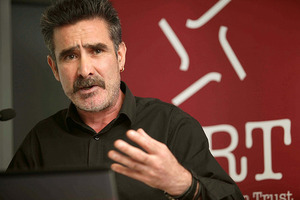
Cars block a JCB from working on a site earmarked for the Travellers left homeless by a fire at a halting site in Carrickmines at the weekend; and Martin Collins

Further to the blockade at Rockville Drive in Carrickmines, Dr Gavin Jennings spoke to Martin Collins, co-director of Pavee Point, this morning on RTÉ’s Morning Ireland.

Dr Gavin Jennings: “Those who were left homeless, by Saturday’s halting site fire, where are they now?”

Martin Collins: “Well, first of all Gavin, over the years, I’ve had my disagreements with Dun Laoghaire Rathdown County Council but on this occasion I really have to commend their leadership, their courage and their sense of urgency in finding alternative accommodation for these homeless Traveller families. So I think they must continue that courage and that leadership even in the face of such adversity and hostility from those local residents. I also want to commend the support of the wider community in Carrickmines and indeed in Sandymount at the surrounding areas. This small number of people involved in the blockade are certainly not representative of the wider community who have shown great support and solidarity to these Traveller families in their time of stress and need. I have to say, Gavin, I mean, I’m 30 years involved in the Traveller struggle, I’m 48 years of age, I’m on the the planet, for 48 years, as a Traveller man, I have never witnessed such depth of hostility and hate towards my community as I have on this occasion. I think this small number of individuals in this estate are completely and utterly void of any humanity and any compassion. And I think their actions are only compounding the stress and the trauma that these Travellers families are already enduring. And I think any right, decent, sensible, fair person looking at this situation, would see it that way.”

Jennings: “So those who have been left homeless, where are they now Martin? Because some, most of these, are relatives of those who were killed. Isn’t that right?”

Collins: “That is correct. I suspect Gavin that maybe they’re staying with family members, you know, in a kind of make-shift arrangement, a temporary arrangement. By no means satisfactory.”

Jennings: “Has that been since Saturday, Martin? They haven’t been staying on the site since the fire, have they?”

Collins: “No, I, I honestly don’t know where they’re staying but I suspect they would be staying with extended family members. Others might be staying in temporary accommodation, offered by Dun Laoghaire Rathdown, maybe some hotel rooms. But this site that Dun Laoghaire Rathdown has earmarked will take care of their medium-term needs until a longer-term solution is found. I would urge the residents to reflect on their actions and the stress and the trauma that they’re adding to these families’ lives. It’s just, it’s unbelievable and it’s unacceptable.”

Jennings:Martin we couldn’t get any of the residents to speak to us on tape or on the programme. They had told our reporter who was there yesterday that one of their primary concerns was that while the council were telling them this was going to be a temporary solution, they feared how long termporary would be. Now, given that the site where the fire happened, was itself only supposed to be a temporary location, that, and correct me if I’m wrong, turned into a, it was there for seven years. Can you understand their concerns?”

Collins: “I think that’s an absolutely fair point. I can understand where the residents are coming at, from that perspective. But I think, you know, it’s not beyond solicitors or the legal systems’ ingenuity to develop a contract that is water tight that this site would exist for a particular period of time. There’s ways and means around this Gavin. But I do appreciate the point that’s being made in that regard because I know myself from working with different county councils across the country, when you do develop sites, it’s meant to be temporary, two or three years, and the next thing we know it’s there 25 years. So I do accept that point. And I’m not suggesting that this site would be there for any long period of time. This is an immediate emergency. We need an immediate solution so Dun Laoighaire Rathdown have time then to locate a site that would be a long-term solution to meet the needs of these families. So that’s how Pavee Point sees it and we would encourage Dun Laoghaire Rathdown County Council to continue to find a site and we really commend their courage and their sense of urgency. And I would urge the residents, at even this late day, to search deep inside their conscience and ask themselves, you know, is this right? What they’re doing? And I’ll think they’ll find it is not right and I’d say they’re only adding to the pain and suffering that these families are already enduring.”

Listen back here.

Previously: ‘A Peaceful Stand-Off’

Pic: RTE and Derek Speirs (Flickr)

90395977

Michael McNicholas, CEO of Ervia this morning

The CEO of Irish Water’s parent company, Ervia, Michael McNicholas, spoke to Gavin Jennings on RTÉ Radio One’s Morning Ireland earlier.

The interview followed Irish Water’s announcement that it intends to cut 1,200 jobs over the next six years.

During the interview, Mr Jennings asked Mr McNicholas if he accepted the recent BAI ruling in which the BAI compliance committee rejected a complaint by Ervia about an RTÉ report in February in which RTE’s This Week called bonuses at Irish Water bonuses.

Mr McNicholas repeatedly said there are no bonuses at either Irish Water or Ervia.

Gavin Jennings: Irish Water plans to cut 1,200 people from its workforce over the next seven, six years rather. In a seven-year plan, released this morning, it says they’re going to raise €5billion, cut leaks by 10 per cent and establish an effective, commercial semi State company. Michael McNicholas is CEO of Ervia, the parent company of Irish Water. I asked him earlier how he plans to cut 1,200 more jobs.”

Michael McNicholas: “Well maybe first of all I should say that we are publishing a plan to bring Ireland’s water services to an acceptable standard to meet the needs of a modern economy by 2021. And we all know that our services today are not fit for purpose. We’ve got 50 per cent of our water lost through leakage, we’re pumping raw sewage into our rivers and into our bathing areas. We’ve got lead in the system and we don’t have enough capacity to meet the needs of a growing economy. So, with this plan, we’re going to invest, we’re doing two things in parallel, if I could say. First of all, we’re going to invest €5.5billion in our water and waste water infrastructure and, with that over the term of the plan, we will eliminate all boil water notices, we’ll address the contamination risks that there to the supply to over one million people today. We will eliminate completely the discharge of raw sewage into our rivers and bathing areas. We will reduce the level of leakage by 10 per cent and we will significantly improve the drinking water and wastewater capacity across the country to support economic growth and job creation. Now in parallel to your question, we are going to restructure the delivery model and we are going to take €1.1billion in costs out of the business through operating efficiencies.”

Jennings: “How are you going to cut 1,500 jobs?”

McNicholas: “The service level agreement we have with local authorities has, as part of it, an agreement, to transformation of our service delivery model. So by implementing modern utility systems, first of all, what we’re doing is rationalising from 31 service delivery models with 31 local authorities to a national utility – that immediately creates huge ability for us to create economies of scale which allows us to reduce overheads.”

Jennings: “That’s over 12 years. Over the seven years of this plan, how are you going to cut 1, 500 jobs?”

McNicholas: “The transformation plan called for that to be done within the term of the seven years. So we’re going to do that, first of all, by moving from 31 local authorities down to a single, national utility which creates economies of scale. That allows us centralised functions, it allows us to regionalise things and that allows us to take some of those jobs out. We’re also going to invest in the technology that allows us to run our treatment plants differently, it allows us to retrain and re-skill people and it allows us to actually move to the level that a modern utility would have in terms of staffing.”

Jennings: “Is it all going to be through natural wastage or is there going to be a voluntary redundancy scheme?”

McNicholas: “I think there’ll be a combination of natural wastage. I think there will be redeployment within the local authorities and yes, I would say there will be some form of voluntary redundancy.”

Jennings: “Has a redundancy scheme been approved?”

McNicholas: “What we’ve done at this point, is that we’ve looked at the service delivery model that’s there today, we’ve looked at international benchmarks, we’ve looked at our expenses and utility and we’ve set out what we believe we need to do.”

Later

Jennings: “What about your wage bill? I mean if some of the public servants are going to get a pay increase or a pay restoration in this Budget, or in the next few, because of the long term service deal with the plans that you have in place, a 12-year deal, isn’t that going to increase your overall wage bill?”

McNicholas: “At the end of the day, what we have is got a balance here where we’re going to be able to drive efficiencies into it. If there are wage increases that are part of that, and that’s a normal part of any business that you’re going to have wage increases…”

Jennings: “Yeah, but you don’t have any control over those wage increases. They’re going to be set by Government.”

McNicholas: “But we have a service level agreement where we will carry the costs of the staff that are there and if there are wage increases, we’ll have to take that into account. But we have to deliver the efficiencies of €1.1billion. That’s the reality for any business.”

Jennings:Where’s the money going to come from? This €5billion investment that you talked about? Where’s it going to come from?”

McNicholas: “The €5billion, it’ll come from a number of sources. First of all, we have a new source of revenue with domestic billing which will bring in €2billion of revenue over the term of this plan. As we drive efficiencies into the business that creates cash that’s generated for the business and it all creates the capacity for us to borrow money in the marketplace and we’ve already funded the business, over a billion in borrowings, to date.”

Jennings: “Borrow money from the marketplace? I’m just looking at your investment plan, you talk about the establishment of an effective, commercial semi-State company. This is all at odds with what Eurostat describes Irish Water as being, a non-market entity controlled by the Government and therefore should be classified within the Government sector. Or, to quote them again, the commercial basis of Irish Water is that of a heavily-subsidised public monopoly.”

McNicholas: “And that’s a reality at the starting point so we do not need to pass the NCT to deliver this business plan. The Government prudently set out in its capital spending for Irish Water, to be on its balance sheet for the term of the plan so we don’t need to pass the NCT. Over time, and one of the things Eurostat did say that, it was far too early, because it was a start-up utility to make a judgement on it. So over the period of this plan, we deliver and we’ve already delivered significantly in the last two years, in terms of transforming our water services. As we deliver over the next number of years, we will start to move on that journey from a public sector, public service delivery model to a commercial semi-State model.”

Jennings: “Yes, but when you talk about raising capital of €5billion for the course of this seven-year plan, that’s Government borrowing isn’t it?

McNicholas: “Not necessarily so. We’ve already borrowed a billion in Irish Water, €800million of that in short-term facilities have come from our own relationship banks and international banks. As a utility, as a company in its own right, we have the capacity and as we drive the efficiencies into the business, we have greater capacity..”

Jennings: “But you’re not a separate company, you’ve said, you’re not a separate company, you’re effectively part of Government.”

McNicholas: “We are legally a separate company. Yes, we are funded or subsidised by Government, as we start, from the beginning of the journey and we’re only at the start of the creation of a new national utility which will be here for the next 40 years, of course that transition takes time…”

Later

Jennings: “You said €2billion of that €5billion will come from people paying their water bills. How many have paid so far this year?

McNicholas: “We’re reaching close to the end of the second cycle and the team would indicate to me that we’re gonna get about 54 per cent of people paying the second bill, a 10 per cent increase on the first bill. I’ve said it many times that we’re only at the start of this utility. It’s two billing cycles. It’ll be at least 12 months before…”

Jennings: “So 54 per cent of people have paid so far?”

McNicholas: “By the end of the cycle which is in the next week or so, the estimate the team tells me…”

Jennings:Do you know how many people have paid so far?

McNicholas: “We’re almost at 54 per cent as we said today, just under 53.78, I believe.”

Jennings: “Do you know how many people have paid their first bill but not paid their second bill?”

McNicholas:I don’t have that specific information but the trends we saw coming through on a week by week basis is that people who paid their first bill are paying the second bill…”

Later

Jennings:Do you now accept that the BAI ruling last month that it was appropriate for RTE to call bonuses bonuses at Ervia, despite fighting tooth and nail on every radio programme over the last 12 months, do you accept that ruling now?”

McNicholas: “I’ve always been on the record as saying that we do not have a bonus culture in Irish Water and I’m very pleased to see that the independent report that reviewed the pay model in Ervia clearly says that there is not a bonus culture in Irish Water. I stand over everything I said.”

Jennings: “So what BAI said, that it was of the view that the word was accurate and reasonable given the common understood meaning of the word, do you accept that?”

McNicholas: “I, as I’ve said from the beginning, I take the view that Irish Water’s pay model and Ervia’s pay model is a performance-based pay model, that has been vindicated by the independent report which looked independently at the pay model and it says clearly, absolutely, unequivocally that there is not a bonus culture in Irish Water.”

Jennings: “Do you accept the committee’s judgement that it was fair for RTE to use the word bonuses…”

McNicholas: “We’re running around in circles here, so let’s be very clear. You yourself is in a company which has just…”

Talk over each other

Jennings: “Do you accept it?”

McNicholas: “I have always maintained that we do not have a bonus culture in Irish Water…”

Jennings: “That’s not what I asked you, I asked whether you accepted the committee’s ruling that it was fair for RTE to use the phrase, ‘bonus’?”

McNicholas: “The committee is entitled to make whatever judgement it makes, I stand over everything I’ve said about the pay model in Ervia and Irish Water.”

Meanwhile…

On RTÉ’s Today With Seán O’Rourke, Mr O’Rourke reported that 703,850 households – out of the 1.3million which have registered with Irish Water – have applied for the water conservation grant.

He also reported that Irish Water has no plans to extend tomorrow’s deadline.

Listen back in full here.

Irish Water to cut 1,200 jobs by 2021 (RTE)

fgeverylittlehelps

burton:jennings

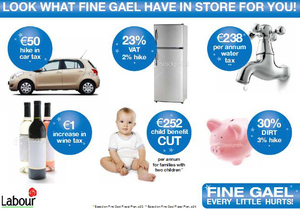
From top: Labour party ad ahead of the 2011 General Election; Joan Burton and Gavin Jennings this morning

Tánaiste and Labour party leader Joan Burton spoke with Gavin Jennings on Morning Ireland earlier  about the future of her party ahead of the next general election.

Mr Jennings asked Ms Burton about Labour ads released prior to the last general election in 2011 – warning people what would happen should Fine Gael be elected – and what benefit cuts Ms Burton intended to reverse, if any.

The interview took place at Labour’s think-in in Wicklow.

Gavin Jennings: “Your party has agreed at this gathering to a vote transfer pact with Fine Gael. Is it a vote for Labour or a vote for Fine Gael?”

Joan Burton: “No it’s a vote for Labour because, above all else, we’ll be going to the doorsteps asking people to vote number one for the Labour candidate and number one and two in the constituencies where we’re running two candidates. After that, because we need to focus on who’s going to form a Government after the next election and what I’m concerned and the reason I made the intervention, Gavin, is that we have a very dissonant, discordant opposition who seem to detest each other as much as they dislike the Government. So the question: we are on the cusp of an opportunity to really build the Irish economy, get people back to work and spread the benefits throughout everybody in the country but we can’t do that without a Government. And electors now have to begin thinking about what kind of Government they would like to see after the election. This Government has worked well, we’ve taken on a difficult job, we’ve done our best and we’ve now got the country into a recovery place so I think there’s a lot of sense in saying, after you’ve voted number one for Labour or number two for Labour, then vote for our partners in Government.”

Jennings: “You want voters to reelect a Fine Gael-Labour government. In the last week, before the last election, warning voters not to let Fine Gael govern on their own and asking them to vote you in, your party issued a poster: Every Little Hurts. Just a reminder, warning of a €50 hike in car tax, an increase in VAT to 23%, a 1% increase in duty on wine, a €250 cut to annual child benefit for a family with two children, a 3% hike in DIRT to 30% and a water tax of €238 a year. Which of those did you prevent?

Burton: “Well, what we did was, and we said this in our manifesto and I said it particularly, as the Labour party’s finance spokesperson, that I wanted to get the country back into recovery mode, get people and businesses back to work and that is what we’ve done…”

Jennings: “Which of those cuts did you prevent?”

Burton: “…That was our primary promise. Well, can I just say in relation to social protection, for instance, we’ve protected all of the weekly rates. In relation to work, we’ve created 110,000 extra jobs; we now have a situation where there’s 9.5% unemployment – down from over 15%. We prioritised, when we went in to work, rescuing the country, and it was a very, very…”

Jennings: “And you’ve made that point. Of those six threats which of them did you prevent?

Burton: “Well what we’ve done now is we’ve put the country in recovery mode and looking to this Budget, we will actually be addressing the Budget and the fiscal space that is there for families with children, for older people, particularly people in retirement. And for people who are vulnerable and who need support.”

Jennings: “The only one of those threats that didn’t come to pass was the €238-a-year water tax but only because of the offer of a €100 grant which hasn’t yet been paid. Are you still going to pay €100 to people who don’t pay for their water?”

Burton: “The forms in relation, and the letters in relation to the water conservation grant are going out, as I speak. And, I have to say, going around the country and talking to people, particularly people who are retired, it means that if somebody is living in a house on their own, their net charge for water will be a fairly modest €60 a year and for a family of two adults or more, it’ll be €160 a year.”

Jennings:Are you still going to pay €100 to people who don’t pay for their water?

Burton: “Well I’m very confident that the vast majority of Irish people are very honest and they deal very honestly with Government and my understanding and my anticipation is, just again, based on conversations with people, that people who have registered with Irish Water, the vast bulk of them, as we’ve seen already intend to pay the charge.”

Jennings: “51% have paid so far.”

Burton: “And for a new utility, which has just been established on a countrywide basis, that actually is exactly where…”

Jennings: “Can I ask you again: are you still going to pay €100 to people who don’t pay for their water?

Burton: “Let me be clear about that one: we’re going to pay the €100, Gavin, to people who have registered for Irish Water…”

Jennings:Even though they haven’t paid for their water?”

Burton: “I anticipate, because people are very, very honest, I anticipate that those people who take the conservation grant will address their responsibilities. Remember as recently as last week, we had the Boylan, we had the Boylan Report in the EU from the leading Sinn Féin person…”

Jennings: “I’m just trying to get an answer to the question, Tánaiste, you are going to continue paying €100 to people who don’t pay for their water?

Burton: “The condition on which the grant is paid is based on whether or not the person has registered…”

Jennings: “Not whether they’ve paid.”

Burton: “I anticipate that people who’ve registered and who actually look for the grant, will pay. But remember Sinn Féin, in the European Parliament report, by their leading MEP, spoke as recently as last week about a progressive water charge linked to usage. So can we just have a little bit of honesty from some of the parties who are pirouetting at a crazy rate in relation to policies.”

Jennings: “If you could just stick with the questions we’re putting to you, if that’s OK for the moment…Lots of talk by you and others in the Government over the past few days about relief and payback in the upcoming Budget and indeed in the upcoming term of Government that you hope to be reelected to. What benefit cuts, during you term as minister or in the nine austerity Budgets we’ve endured, are you going to reverse?

Burton: “Well, first of all, the greatest boost to anybody’s prosperity in this country is for someone who’s unemployed to get work and, as I’ve said to you, and I don’t know if RTE finds this difficult  but we now have 110,000 extra jobs and we’ve got unemployment down from 15% to 9.5%. Just to clear that that boost of employment is the greatest boost to people’s prosperity.”

Jennings:What benefit cuts are you going to reverse?

Burton: “What I’m looking forward to in this Budget, what I’m looking forward to in this Budget is focussing, as I did last year, on a number of particular areas: families with children. So I anticipate, subject to the finalisation of the figures, I anticipate we’ll be in a position to improve child benefit and also to have a better childcare package because that’s a very big issue for families with young children.”

Jennings: “It’s not a full reversal of the child’s benefit cut is it?”

Burton: “Secondly…”

Jennings: “Is it?”

Burton: “There’s no figures which have been decided yet, Gavin..”

Jennings: “What about the back-to-school allowance?”

Burton: “We..”

Jennings:Will you reverse the cut to the back-to-school allowance?”

Burton:No because we, what I want to do there is to support all families with children through child benefit and to look at targeted measures – none of which of yet have been signed off on..”

Jennings: “With respect, a child benefit increase to every child, to every family in the country is not a targeted increase. What benefit cuts, I’ll ask you again, are you going to reverse?”

Burton: “I think, Gavin,  can I just say to you, I think that’s quite an extraordinary statement by RTE, that child benefit doesn’t benefit families with children. I don’t know what, I don’t know what world RTE inhabits, perhaps in Dublin 4 but I can tell you, right across this country, in town and country, in village and city,  families with children look forward to more support. People who are retiring look forward to more support. One of the things I did last year was to reintroduce at a 25% was the Christmas bonus. I hope to be in a position to at least double that this year, we also provided additional money for people living alone who are older or who have a disability. That was the first increase in that since 1993.”

Jennings: “The respite care grant, disability payments for young people, one-parent family payments, rent supplement, funeral allowance, are you going to reverse any of those?”

Burton: “Well I told you that, last year, Gavin, anybody who’s living alone, either retired or on a disability payment, we increased for the first time in decades – the Living Alone Allowance which was worth a small but important amount to people who are on a disability payment and living alone and similarly for older people living alone. I speak every year and during the year to organisations who represent people who rely on a social welfare income and I’ve based what I’m doing in the Budget on the amount of money that we can afford sensibly and prudently spend and secondly on the recommendations of those organisations.”

Jennings: “And last year when I put that question to you about reversal of social welfare cuts that have been made during the nine austerity budgets, you said, ‘we’re not in a position to do that yet’. This year there is more money, this isn’t an austerity Budget.”

Burton: “And the targets will be families with children and people who have retired and people, for instance, who have a disability and people who are caring and a very significant package of investment into getting people back to work, into apprenticeships, into training, into third-level places and to building primary and secondary schools and getting more teachers into a school. It’s a whole-of-life package – that’s what the Budget will be – about improving the living standards as far as possible of everybody in the country. That’s what the approach to the Budget is. And if you’re suggesting to me that we would simply look back to the period of the greatest difficulty in the country’s history and not look forward to how we can grow this country, how we can get more investment into this country, how we can get more people back to work, well I think the focus for this country needs to be on the future and how we make things better for everybody and I have to say, that is what I did last year, that’s what I said when I spoke with you. What I was going to focus on and that’s what I’m going to focus on this year again.”

Jennings: “You, of the main party leaders that we’ve spoken to in the last number of days, this will be your first general election as leader. The others had all faced it last time around. How’s the party better off under your leadership than Eamon Gilmore?”

Burton: “Well first of all we’ve had a number of very successful changes in Budgetary policy. We focussed last year, for instance, on removing and lowering the USC, removing and extra 40,000 people out of the USC net and, this year in the Budget, we will be reducing the USC further, that will be a very big boost, particularly to people on low incomes, in work, and to families and others on middle incomes, people in the range of €25,000 to €70,000 a year – that will be a very big boost to them.”

Jennings: “Do you think that your party will fare better under your leadership in this General Election?”

Burton: “I feel very confident in terms of the response that I’m getting from people that Labour’s plan which is to grow this country and to grow and have a renewal, to have a recovery and to have that on a social basis, a cultural basis and to have it spread right throughout the country, I think that’s what people are interested in. This country has a great future and, actually, I think, in all fairness to you, you should be talking the country up, not actually trying to talk the country down. People have sacrificed a lot, they faced difficult days and now we actually stand on the…we stand to actually improve life for everybody in this country, it’s an opportunity we should take with both hands as we look to the future.”

Listen back in full here

90388092

Fine Gael’s junior environment minister Paudie Coffey

This morning, Fianna Fáil’s Barry Cowen claimed that, according to local authority figures obtained under the Freedom of Information Act, the number of people on the social housing waiting list is 130,000 – 45 per cent higher than that of the Government’s official figure of 90,000.

Junior environment minister Paudie Coffey attempted to rebut those figures with Cathal MacCoille on RTÉ’s Morning Ireland.

Cathal MacCoille: “We knew there were about 90,000 families and individuals on the social housing list, according to the Government’s own figures but Fianna Fáil say the figures they’ve obtained from the local authorities, under the Freedom of Information Act, show the true up-to-date figures for the number on that list is 130,000. We heard from Barry Cowen, of Fianna Fáil, earlier about this. On the line now is Paudie Coffey, the minister of state with responsibility for housing. Minister, good morning.”

Paudie Coffey: “Good morning to you Cathal.”

MacCoille: “Do you agree, first of all, with Fianna Fáil’s figures. Are they correct?”

Coffey: “I don’t agree with Fianna Fáil’s figures because really, essentially, what they are is just a snapshot in time, taken from the local authorities around the country. But, as we have discovered, and really, the reason we utilise the Housing Agency – which is an independent agency – that has research capabilities to capture reliable information. We utilise those figures and they’re the figures that the CSO and every other agency in the country utilises. The last time that they did an in-depth analysis and a robust assessment of the housing need in this country was in 2013. And they’re the figures that we have arrived at – the 90,000 that you’ve mentioned and we utilise that in our response to the social housing strategies that the Government announced last year.”

MacCoille: “Right. The only problem with that is obviously that’s a two-year-old figure. What’s wrong with those figures that Fianna Fáil are using to say, it’s not 90,000, it’s 130,000.”

Coffey: “Well the housing lists are changing all the time, Cathal. If Fianna Fáil were to ask the same question today as it did possibly a month or a few weeks ago, they would get a very different answer.”

MacCoille: “Yeah but ok. But what’s wrong with them asking, as a measure, as an accurate measure – if they are accurate – of what the situation was a month or two ago, when they put in these requests. Why is that figure not accurate?”

Coffey: “Various factors come into play and as I’ve said, the Housing Agency do a  robust analysis, they engage with every local authority who, in turn, do a critical assessment of every applicant on the housing list. And that means a contact with every person who’s circumstances may have changed in the first instance. Some people may have found employment as we see the employment figures rising and they would no longer have the need for social housing. So that’s just one example.”

MacCoille: “Yeah but we’re talking about… what I’m asking is… because you appear to be saying that the local authorities are keeping inaccurate figures, is that what you’re saying?

Coffey: “No that’s not what I’m saying…”

MacCoille: “So what are you saying?”

Coffey:The figures are changing all the time and I think that’s acknowledged by all parties…”

Talk over each other

MacCoille: “Yeah, ok, but can we just concentrate on the figures that Fianna Fáil got a month or two ago when they put in this request. Now, you’re not accepting those figures and what I’m asking you is: why don’t you accept those figures as a representation of what the situation was then?

Coffey: “Yeah, a lot of those figures would have duplicity in them. A lot of those people will have left the housing list even since, there are changes in people’s circumstances all the time. Sometimes people’s housing needs would increase, and sometimes it would be removed altogether, where people come off the list.”

MacCoille: “Right.”

Coffey: “Now it is reasonable to assume that it has risen since 2013, I will acknowledge that and that is why every year, from now on we will have reliable information captured by the Housing Agency which are the independent agency in this regard and that information will be used to inform Government policy, not only in terms of the social housing strategy but in other strategies and policies in terms of planning and the provision of housing…”

MacCoille:And when will we get those figures?”

Coffey: “Sorry? Excuse me, Cathal, sorry, repeat that.”

MacCoille:Sorry and when will we get those figures?

Coffey: “We already have the 2013 figures…”

MacCoille:Yeah, but up-to-date figures?

Coffey: “The social housing strategy has now been adopted and it’s being implemented to meet the needs of 110,000 houses in this country, not the 90,000, 110,000. Every year, from  2016, we will have reliable information, we will evaluate that and monitor progress in terms of how we’re meeting…”

MacCoille:So we’ll get an up-to-date figure next year?

Coffey: “An up-to-date that is reliable and accurate and provided by the Housing Agency.”

MacCoille:Any chance we’ll get it before the election?

Coffey: “Excuse me?”

MacCoille:Any chance we’ll get that up-to-date figure before the next general election?

Coffey: “The Housing Agency only this year published the national housing survey and now they are already engaging with local authority housing which measure the needs over the coming years.”

MacCoille:But what I’m asking you is: Is there any chance of getting an up-to-date figure for the number of people on the social housing list before the general election...”

Talk over each other

Coffey: “Neither I nor you know the date of the next general election so I can’t answer that.”

MacCoille: “We do…excuse me Minister, please, can we just concentrate on the basics, we know there will have to be a general election by April of next year and I’m asking you a simple question: is there any chance of getting an up-to-date figure for the number of people on the social housing list before April next year?

Coffey: “The Housing Agency will provide accurate data in 2016. I cannot give you that answer now, you know, over the airwaves. 2016 is set for a date for the general election. The Housing Agency are constantly reviewing and evaluating the housing need. The Government are focused on providing solutions to meet that need and that’s why we’ve committed €4billion over the next number of years to meet that need in social housing…”

Listen back in full here

Leah Farrell/Rollingnews.ie

Meanwhile…

Macker

90387164

https://soundcloud.com/morning-ireland/mcverry-calls-for-rent-freeze?utm_source=soundcloud&utm_campaign=share&utm_medium=twitter


Homeless campaigner Fr Peter McVerry spoke with Cathal MacCoille on RTÉ Radio One’s Morning Ireland earlier suggesting a rent freeze in the private rental sector to help curb the homeless crisis.

Finally.

Fr McVerry also informed listeners that he has never spoken with Environment Minister Alan Kelly.

Cathal MacCoille: “You’ve been working with homeless people for over 30 years now – how do you characterise the current state of homelessness?”

Fr Peter McVerry: “It’s been in crisis for at least the last two years and now it’s beyond crisis. The numbers are just going up and up. For example, in January this year there were 410 families in emergency accommodation. In July, there were 659 families in emergency accommodation. The numbers are just going up and up and up. And I would describe the situation, it’s like a boat that’s drifting, it’s drifting towards the rocks and there doesn’t seem to be any engine that’s trying to drift it away from the rocks and there doesn’t seem to be anybody in charge. The problem is just getting worse and I see no measures being taken to try and address that problem in the short term.”

MacCoille: “I’ll talk about the measures you’re suggesting in a moment but, in your view, why is it so bad now?”

McVerry: “It’s so bad now. The primary cause now of homelessness, of 90% of the new people becoming homeless is the private, rental sector. Their rents have gone through the roof. People can no longer afford them. We deal with, we’re dealing with one young man, he’s been renting for the last two years. His rent was €950. The landlord came along and said next month it’s €1,300. He went to the Department of Social Protection, asked for an increase in rent allowance and was refused. He will now, this month, become homeless. And the second cause of it is homes being repossessed by the banks – particularly buy-to-lets. When a bank takes over a buy-to-let, a tenant who rents that house gets turfed out. So I think that’s the primary cause and that has to be addressed. There are two problems in this, there is first of all the problem and it’s an enormous problem, of helping those who are currently homeless finding accommodation but the second problem, I think even more urgent is trying to prevent more and more people and more and more families floating into homelessness. We’ve got to take measures to prevent that.”

MacCoille: “And this is why you’re calling on the department of the environment to freeze rents, to stop the number… rather than help those who are homeless but to stop more people from becoming homeless, yeah?”

McVerry: “It’s one particular measure, it’s already too late for so many families to freeze rents and anyway it’ll have to pass through legislation and that’s going to take time. It’s one measure. I think there are other measures. We have to increase the rent supplement, there’s no question about it. The rents, nationwide, in the last three and a half years, have gone up by an average of €50 per week. In Dublin they’ve gone up by over €90 per week on average and the rent supplement has been reduced by 28% – there is just no correlation now between the rent supplement and the rents that are being demanded by the landlord.”

MacCoille: “How likely do you think it will be that rents will be freezed or rent supplement will be increased?”

McVerry: “Well there’s a number of TDs who are landlords and I don’t think they’re going to vote for it.

MacCoille: “Have you asked the department?”

McVerry: “We have an emergency…”

MacCoille: “Have you asked the department, Peter?”

McVerry: “We’ve been calling for it, and so has Threshold, and so has Focus Ireland, and so has the Simon Community. We have been calling for rent freezes for ages. In November of last year the minister [Alan Kelly] said he was considering an emergency rent freeze. In February, he said he was going to do it – he actually said he was going to introduce emergency rent freeze. We’ve heard nothing since. That does not suggest to me like any sense of urgency in addressing what is a critical problem. You know the way the number of families are going, by the time the election comes around, in maybe six or seven months time, you’re gonna have 1,000 families who are actually homeless – there are not 1,000 hotel bedrooms available for 1,000 families, many of them are going to find themselves unable to access accommodation, it’s going to be in mid-winter and there’s an election coming up.”

MacCoille: “Have you spoken to Alan Kelly recently?”

McVerry: “I have never spoken to Alan Kelly.”

MacCoille: “Have you looked to speak to him?”

McVerry: “No, he hasn’t looked to speak to me.”

MacCoille: “No but would you not look to speak to him, you’re coming forward with what many group would agree are good ideas, would you not speak to him about them?”

McVerry: “Well Alan Kelly is well aware of my views, I have written about it extensively, I’ve written about it in the Irish Times, I’ve written about it in our own working notes. I think Alan Kelly is well aware of our position on the issue of homelessness.”

MacCoille: “Would you be willing to speak to him?”

McVerry: “Absolutely, I’ll speak to anyone.”

Morning Ireland