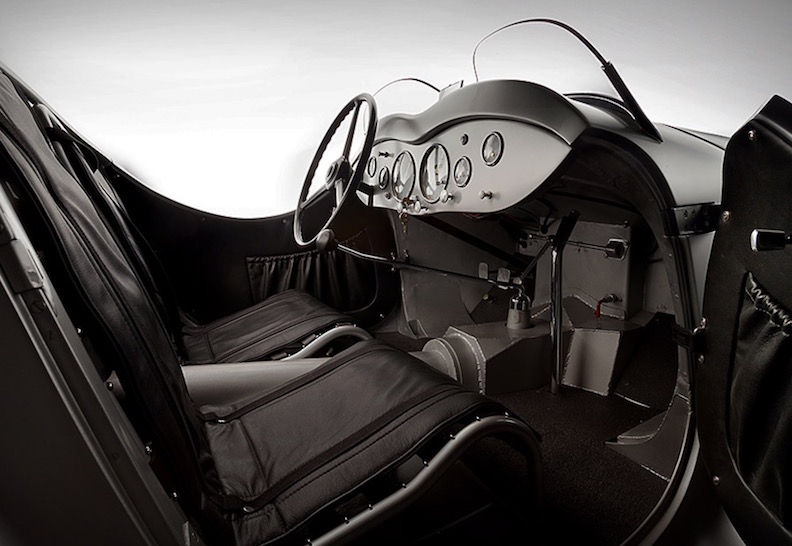

Behold: the 1940 BMW 328 Roadster – the best sports car of its day and the first example of the superleggera lightweight aluminium body pioneered by Touring of Milan.
Yours, fully restored, for just €1.7 million.



Behold: the 1940 BMW 328 Roadster – the best sports car of its day and the first example of the superleggera lightweight aluminium body pioneered by Touring of Milan.
Yours, fully restored, for just €1.7 million.

Derek Mooney
A few weeks back I offered you my suggested Summer political reading list, today I propose an accompanying political movie viewing list. The movies below all have the benefit of being available on the Irish Netflix service, but they can also be viewed elsewhere.
By the way, one of the authors featured in my political books list, Chris Patton, will be talking with John Bowman as part of Dublin City Council’s Dublin Festival of History on September 30th.
And now for the movies…

Best of Enemies: Buckley Vs Vidal
This is an absorbing account of the rivalry, if not visceral hatred, between US writers and commentators Gore Vidal and William F Buckley. Their stores are told through their participation in a series of televised appearance during the 1968 Democrat and Republican conventions.
Rather than just show the conventions live, the US TV network CBS had elected, mainly due to costs, to invite both men, Vidal the darling of the liberal set and Buckley the arch conservative, on to debate each other and comment on that night’s convention proceedings.
We see the personal tension slowly mount between the two erudite, cultured and witty men. The movie features lots of archival material, along with selections of both men’s political prose read by Kelsey Grammer as Buckley and John Lithgow as Vidal. Even if you have no interest in politics, let alone US politics of the 60s and 70s, the story of the two men will enthral.

Sticking with the turmoil of 60s/70s America, if Saul Alinsky’s Rules for Radicals was the political handbook of the radical left in the 60s/70s then William Powell’s Anarchist’s Cookbook was the instruction manual for militant anarchists with its recipes and directions on how to make homemade munitions and ordinance.
The documentary interviews Powell today and explores his motivations in producing the book aged 19 and how he has spent most of life since regretting it. Powell reveals how he found the information in a series of US Department of Defence manuals openly available in the New York public library.
The documentary explores the febrile atmosphere in America in the 60s (timely given the events of the past few days in Virginia) and how the Vietnam war and political scandal alienated many in that generation.

From Powell on the left we now turn to another product of 60s American, but time from the right: Roger Stone. A bit like Rumsfeld’s Rules or the earlier Fog of War, the makers attempt to tell the story of Stone’s career via a series of cynical rules that Stone claims has guided his career as a political operator and lobbyist.
His “rules” are far from original, but it is a handy device to narrate his story and career trajectory from a minor walk-on role in Watergate, to a bi-sex scandal while advising Bob Dole’s presidential bid, to becoming a regular on the conspiracy lunacy that is Infowars.com, to serving as an adviser to Donald J Trump.
Stone comes across as a major league narcissist who was around when a lot of things happened, but was never really a mover and shaker in any of them. He is more than just a dirty tricks merchant, but not a lot more.
All that said, he does offer a worthwhile perspective on the American Alt-Right and the blurring of the lines between media and politics and the documentary is entertaining and colourful.
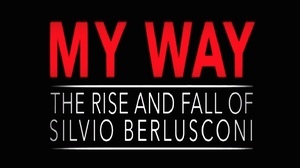
My Way: The Rise and Fall of Berlusconi
From narcissists in America we now turn to one of Europe’s great political narcissists: Silvio Berlusconi.
In this movie, the Italian Tycoon and politician tells his own story in a series of interviews with his biographer, former FT correspondent Alan Friedman. This is very much the film of the book, but offers an interesting insight into the man.

Emmanuel Macron – Behind the Rise.
From an Italian looking backwards we move to a French man looking forwards. Behind the Rise is, as it claims, an objective look at the 200 days leading up to the final round of voting in this year’s French presidential election.
The French film makers had virtually open access to the candidate and his campaign team, offering some fascinating insider footage of the campaign. The more fascinating thing is that the makers started making this movie before Macron emerged as a front runner.
The pace throughout is brisk. The production values are high. Macron emerges as a decent and driven guy who knows his own mind. We see him when he is relaxed and when he is stressed, even angry, but at all times he seems about eerily in control of himself.
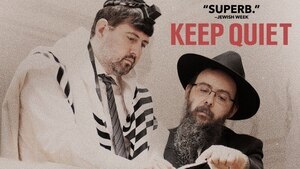
With the recent Nazi protest in Charlottesville in mind, ever wonder how an anti-Semite would feel if they discovered that they are in fact, Jewish? Wonder no more. This absorbing and intriguing movie tells the story of a young ultra-far-right Hungarian politician, Csanad Szeged, who discovers via an even more anti-Semitic rival that he is, in fact, Jewish.
At first his Jobbik colleagues advise him to keep quiet, but that proves impossible. The movie chronicles his journey from that point onwards and invites you to wonder if he is sincere or just an ambitious man looking for a cause, any cause.

Finally, moving away from US and European politics, this remarkable film about Zimbabwean politics tells the stories of the two lead negotiators from Mugabe’s ruling Zanu-PF and the opposition MDC-T as they struggle to work together to write a new constitution for the divided country.
While it focusses on these co-chairs of the constitutional committee CoPac, the real main character is President Mugabe, who has only agreed to a new constitution under duress and now fights to cling to office threatening and intimidating opposition leaders. Watch Mugabe’s practised disdain as he launches the consultative process for a new constitution.
——
As an antidote to the politics overload suggested above I suggest the following series on Netflix for some binge viewing: First is the hilarious Its Always Sunny in Philadelphia. It follows the increasingly manic adventures of the “gang” who own and ostensibly run a dive bar in South Philly, which never seems to have any customers.
The other is Rake, the story of a self-destructive Aussie barrister with w criminal practice – he likes cocaine – and the price of his habit is outstripping his earnings. There is an American remake, which is a bit sanitised, but enjoyable nonetheless.
Derek Mooney is a communications and public affairs consultant. He previously served as a Ministerial Adviser to the Fianna Fáil-led government 2004 – 2010. Follow Derek on Twitter: @dsmooney

The sumptuous Mendl’s pastry featured in Wes Anderson’s The Grand Budapest Hotel – brought to mouthwatering life by Binging With Babish and in a short feature from the film’s DVD extras.

They’re bringing ballet to the masses.
Howard Jones writes:
Nearly 2 years ago now, you guys were kind enough to feature the crowdfunding campaign for my film, Ballet Átha Cliath, as we neared our goal.
Well, I directed and produced the film, we shot it last year and we will be screening it tonight in the Sugar Club, Leeson Street, Dublin 2 (details at link below)…
In case you don’t remember it was a ballet performance choreographed by Zoe Ashe-Browne, shot over the course of one day on Sandymount Strand, Grangegorman (RIP) and the quays by my talentedl DoP Philip Blake, featuring some of Europe and Ireland’s premier ballet dancers.
A kind of visual love letter to the city of Dublin.
Tonight. the film will screen for friends, funders and anyone interested. Cloud Castle Lake will be performing their original score for the film live at the screening.

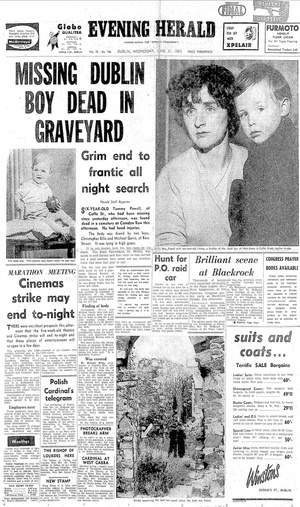
From top: The church ruins at St Kevin’s, Camden Row. Evening Herald coverage of Tommy Powell’s murder;
In July 2016, Broadsheet looked at the disappearance of schoolboy Philip Cairns and In the course identified other cases involving children who had either disappeared or had died violently without a perpetrator being immediately identifiable.
A significant number of these cases remain unsolved.
Over the next couple of weeks, Broadsheet will focus on a selection of cases from the past 60 years involving the disappearance or violent death of Irish children.
In each case, it will look at the children involved, their disappearance, family background and the conduct and coverage of the investigation into their deaths.
Today, we examine the 1961 murder of Tommy Powell.


From top: aerial map including Cuffe Street (top right) and St Kevin’s (bottom left); Tommy Powell
Tommy Powell, aged 5, disappeared while playing in the South Dublin inner city on the afternoon of Tuesday, June 20, 1961. His body was found the next day in a disused graveyard.
A post-mortem found that he had died as a result of severe head injuries. Despite an intensive Garda investigation, no one was ever charged with his murder.
Tommy lived in a tenement house at No 44 Cuffe Street, Dublin 2 with his father James, his mother Mary and his two year old brother Jimmy.
James worked for the Brittain Motor Group which assembled Morris Minor cars at Portobello and Ringsend, and he and his wife both had family nearby.
The closest shopping street, Camden Street, had featured in the news some years previously after the theft of Pauline Ashmore (1) from her pram outside a furniture shop. Pauline was recovered some months later.
Behind Tommy’s house was an area of ground known as Montague Court, in which he often played. There was another informal play area, St Kevin’s, located on the other side of Camden Street.
A disused graveyard surrounded by a high wall and filled with grass several feet high, it contained a ruined ivy-clad church, reputedly home to the remains of the martyred Catholic archbishop of Cashel, Dermot O’Hurley.
In 1955 a mysterious structure had appeared in the trees surrounding it, then just as mysteriously disappeared. Gardai were obliged to deny that they had put in a look-out post. More recently, there had been newspaper reports of vandalism and destruction of tombstones.
Although many local children climbed over the wall to St Kevin’s, Tommy was not among them. His father, concerned about traffic crossing Camden Street, had forbidden him to play there.
When Tommy wanted to go beyond Montague Court, he crossed over Cuffe Street to the courtyard of Mercer House Flats, in which some of his relatives lived.
June 20, 1961 was a beautiful sunny day. Dublin was hosting a big event – the 1961 Patrician Congress. The Papal Legate, his Eminence Cardinal Agagianian was due to arrive from Cork that afternoon. A procession through the city to the National Stadium was scheduled.
At 2.30 p.m. Mary Powell collected Tommy from Whitefriar Street National School. She took him home for a snack and then left him at Mercer House while she went shopping in Camden Street with her mother.
At Mercer House, Tommy played with a slightly older schoolmate, Gerard Farrell, for about three quarters of an hour, before telling him he was going home.
Ann Flynn, of Mercer House claimed to have subsequently seen Tommy walking alone along Wexford Street in the direction of Camden Street. If correct, this would indicate that he crossed over to the south side of Cuffe Street, but continued on past his home and turned left at the junction of Cuffe Street and Wexford Street.
Mary Powell returned home at about 4.30 p.m. There was no sign of Tommy in the house or in Montague Court. She assumed he was out visiting relatives or friends. The Powells first became concerned about Tommy’s absence after his father’s return from work at 5.45 p.m.
Later that evening (accounts of the time vary between 7.30 and 9 p.m.) James Powell went to Harcourt Terrace Garda Station and reported his son missing.
It was the longest or next longest day of the year and it was still light. Searches commenced along Francis St, The Coombe, Bride Street, Clanbrassil St, New St and the Grand Canal and continued late into the night. A Garda tracker dog, Shane, was given the scent. No trace of Tommy was found.
The following morning, Wednesday, June 21, the summer solstice, was one of the warmest on record. Patrician Congress celebrations continued, with Archbishop McQuaid hosting a garden party for Cardinal Agagianian at Blackrock College.
Meanwhile, in Camden Row, two local youths, Michael Gavin (17) and Christopher ‘The Gringer’ Ellis (19), headed to St Kevin’s Graveyard in search of some brass to sell to a dealer in Camden Street.
Having procured a piece from an old shed behind the graveyard, they took it into the ruins of the old church to break it up before transporting it. This proved more difficult than expected. When throwing stones and rocks at the brass failed to work, they tried flinging it against the wall of the church.
It fell on a small grass mound which appeared to have been recently laid, and from which, on closer inspection, a small hand protruded. Without disturbing the body, and after depositing their brass in Montague Place, Gavin and Ellis went to Kevin Street Garda Station to report their discovery.
James Powell, called to the graveyard, identified the body as Tommy’s. Almost completely covered by plucked grass and weeds, the boy lay head down knees up in a hollow under the old window, his face covered with blood.
Close to the body there were two stones, one two and a half pounds and heavily bloodstained, the other partly bloodstained. A post-mortem carried out by State Pathologist Maurice Hickey identified severe head injuries, most probably caused by a stone and indicative of deliberate killing. According to Hickey, death could have occurred at any time between 4 p.m. on Tuesday 20th June and 2 a.m. on Wednesday 21st June.
Two days later, on Friday June 23, hundreds of people lined the street for Tommy’s funeral in Whitefriar Street Church. For more than an hour before the cortege left, thousands of people mostly women, had filed past the little coffin.
Detectives mingled with the mourners outside the church. The cortege moved off York Street along Stephen’s Green and into Cuffe St where it came to a brief halt outside Tommy’s home before proceeding to burial.
The subsequent investigation into Tommy’s death, described in contemporaneous newspaper reports as the most intensive investigation ever conducted in Dublin was chaired by Assistant Commissioner William Quinn with the help of Chief Superintendent Bernard McShane and Superintendent T Culhane.
All residents within half a mile radius of Cuffe Street were asked to fill in forms stating their name, address, age and details of their movements from 4pm Tuesday until 9am Wed.
Appeals for information were read out in churches. In cinemas, Tommy’s image was flashed across the screen in an attempt to obtain all relevant information regarding his death. Laundries and cleaning firms were checked for bloodstained clothing. Known child molesters and criminals were interviewed.
One of the tasks of the inquiry was to identify and interview various children who had been playing in St Kevin’s Graveyard on the night Tommy disappeared. Difficulties arose, however, when it turned out that some of the children who claimed to have been present in St Kevin’s had mistaken the place where Tommy’s body had been discovered; they had in fact been playing in another disused graveyard in the area, called ‘the Cabbage Patch’.
The Gardai did manage to identify a number of children who had been in St Kevin’s that evening. A number of these children were taken to the graveyard to re-enact their memories of that evening. None, however, remembered seeing Tommy there. Nor did they have any knowledge of anything untoward happening.
A 9 year old altar boy, from Walkinstown, claimed that, while coming home from Synge Street School on a bicycle the previous Tuesday, he had seen a man, wearing a hat, strike a boy in St Kevin’s Cemetery.
Having interviewed the boy, Gardai reported that the man appeared to be “of the Teddy-boy type”. Some days later, however, they had taken the view that the boy had been “possibly using his imagination”.
A man, who had been seen leaving Springhill Park, Kill o’ the Grange, with a five-year-old boy, was tracked down by Gardai on D’olier St. He was subsequently released after being questioned for five hours, with Gardai satisfied that he knew nothing about the murder.
An anonymous letter, initialled ‘D.C.’ was delivered to Kevin Street District Detective Unit saying the writer could help in the investigation into Tommy’s death. The writer intimated to the gardai that if they wanted to make further contact they should insert a notice in the newspapers, saying “O.K. D.C”.
In response, the Gardai published the story in the newspapers, saying:
‘We would like to make contact with this person. We hope that when he sees this story in with the letters ‘OK, DC’ as he stipulated, he will get in touch with us immediately.”
No response was ever received.
Steps were taken to trace a man from the area who had left for Britain the previous week and also to locate youths who had been playing in the graveyard but had gone on holiday shortly after Tommy’s death. There were also reports that a local shopkeeper had seen two young men in the vicinity of the graveyard on the day of the murder.
The Irish Independent, on the 23rd June 1961, suggested that Tommy might have been struck by a hit and run driver who panicked and hastily tried to dispose of the body.
On the 29th June 1961, the Gardai published a statement thanking all those who had come forward but saying that they believed that there were others who could assist but were hesitant to do so.
The same day, the Evening Herald raised the question as to how Tommy could have been murdered in a graveyard in which children were playing, without them seeing anything.
It raised the question of whether or not the killer could have frightened the children in the graveyard into not speaking up or whether or not Tommy could have been murdered elsewhere and brought there later.
On July 1, 1961, the Gardai released a photograph of the clothes Tommy had been wearing on the day of his death fitted to a model dummy. The same month, the Britain Motor Group offered the sum of £200 for any information which could lead to the arrest of Tommy’s killer. Later that month, the reward money was increased to £250.
By this stage, newspapers had started to refer to a ‘wall of silence’ surrounding the killing of Tommy Powell.
On July 14, 1961, the Evening Herald had run out of ideas as to what could have happened:
“Only one theory stands up in this apparently motiveless crime: that the boy surprised thieves, either in the act of hiding or selling stolen goods in the graveyard, who panicked and killed him.”
Subsequently, it was reported that a middle aged man, who had been admitted to St Brendan’s Hospital in Grangegorman, the day after the murder, was again being questioned by Gardai regarding Tommy’s death. The questioning did not result in any charge.
It was also reported that
“[a] young boy who had been playing in the graveyard at St Kevin’s on the evening of the murder told detectives that he saw an elderly man beating a child fitting the description of young Tommy in the cemetery. However, on further questioning the nine-year-old boy in question said there was no truth in his earlier statements and that he had made up the story. The investigating team later found that the particular child could not be believed in anything he said.”
The inquest into Tommy’s death did not take place until November 24, 1962. The verdict was one of death due to gross brain damage resulting from crush injuries to the head with the jury satisfied that Tommy was murdered.
According to Dr Hickey, who gave evidence at the inquest, there was a scraped area on the right of Tommy’s forehead, suggesting that this side of his head had been pressed against a stony, rough surface.
There were no bruises in the soft tissues of the neck and there were no other bone injuries in the body. Blows from a heavy stone could have caused the injuries. There was no evidence of any sexual attack.
The following year, Mr JJ Doran, Principal Officer of the Housing Department of Dublin Corporation, announced that St Kevin’s Cemetery had been taken over by the Corporation under the powers contained in the Open Spaces Act 1908. This had come at the request of its owner, the Representative Church Body.
In 1970, Superintendent Barney McShane gave an interview about the case in which he stated that he had worked for a long time on the theory that the murderer might have been a traveller. He said:
“[w]ith so littler concrete evidence about the crime, he felt that it was worth following this line of investigation if only for the fact that stones are known to be a favourite weapon in tinker fights. Nothing was ever proved, however.”
McShane’s ultimate conclusion, as expressed in the interview, was that Tommy was killed ‘quite accidentally’ by a child.
McShane retired as Chief Superintendent the following year. On January 23, 1971, the Evening Herald published an article about the Tommy Powell case noting Mc Shane’s involvement.
The article refers to the recent death of an old man, who had become a suspect in Tommy’s death after paint stains on a mattress belonging to him had been mistaken for blood. As a result, he had had a nervous breakdown:
“[e]ven after the most cursory investigation he had been eliminated from the inquiries but he was so sensitive that he went out of business and lived afterwards alone and as a recluse.”
In July 1971, almost exactly ten years after Tommy Powell’s death, the former St Kevin’s Cemetery was re-opened as St Kevin’s Park. In an article of the 6th July, the Evening Herald reports on the landscaping of the graveyard into “a cosy little alcove.
The landscapers, Dublin Corporation, had done a splendid job of preserving the ivy clad ruin of the old Church, carefully resetting the headstones around the wall, where trees and shrubs gently screen and protect them for generations to come.”
The Sunday Independent featured articles on the Tommy Powell murder on December 3, 1972 and October 3, 1976. While generally favouring Superintendent McShane’s theory of accidental killing by children, the latter article also suggests that a jealous woman with no living children of her own might have been responsible for the crime – although perhaps not with such violence.
The covering of Tommy’s body with weeds was suggested as a possible childish act.
Accounts of the number of children who claimed to have been playing in St Kevin’s Graveyard on the evening of June 20, 1961 vary, with some putting this number at 25, and others at 34.
Because of an initial failure on the part of questioners to identify that there were not one, but two, graveyards in the Cuffe Street area, some of these children were not in St Kevin’s at all, but in the Cabbage Patch graveyard close by.
However, given that there are reports of a number of children being taken to St Kevin’s to re-enact their play that evening, it would appear that – as one would expect given the sunny weather and lack of amenities in the area – there were at least some children playing there on the afternoon and evening of Tommy’s death.
The wall around St Kevin’s Graveyard was high, but not so high as to make it inaccessible to adults or larger children. A small child, like Tommy, would need to be helped over that wall by a larger child or an adult.
A relevant question would be whether or not there were gaps in the wall at a lower level through which a small child could have scrambled through unassisted. We are not told if such gaps were present.
The post-mortem carried out on Tommy is consistent with him having been killed by the stones found beside him in the church. Blood tests on the stones would of course have put the matter beyond doubt, but we are not told if these tests were carried out and indeed it may not have been possible at that point in time to have obtained a conclusive result.
We are not told whether or not the stones came from the graveyard, or elsewhere, and this is relevant in ascertaining where the murder was carried out. Also relevant is the question of whether or not blood was found elsewhere in the graveyard.
At the inquest, evidence was given that there was blood on the lintel above the window where Tommy’s body was found. If correct, this indicates that the killing took place at this spot.
The next question relates to the time of the killing. Tommy would have been expected to return home for dinner by 7 pm. at the latest, and quite possibly earlier. The fact that he did not do so indicates that he had either been killed by that time or was being held against his will.
Although the act of killing itself would have been brief, the process of covering over the corpse would have taken some time. Although the walls of the church would have provided some privacy, and there may possibly have been periods during the afternoon and evening when the graveyard was entirely empty, an adult – or indeed a child – would have had to have been very lucky to get in and out of St Kevin’s entirely unobserved before 9.45 pm.
Yet none of the children who admitted to being in the graveyard that evening admitted to having seen either Tommy, or anything suspicious.
Against this context, comments about a ‘wall of silence’ become understandable. But if children were covering up, who were they covering up for?
Would a child really be able to maintain silence about a crime committed by them or one of their contemporaries in the face of persistent questioning? Surely even child witnesses too scared to tell the truth at the time would change their mind on reaching adulthood?
Although the most likely possibility is that Tommy was murdered in the graveyard in the late afternoon of June 20, there are two other possibilities.
The first is that he was murdered elsewhere, in a flat, shop or room in the Cuffe Street/Camden Street area, with his corpse having been deposited in the graveyard after his death. This theory does not however fit with the evidence pointing towards a killing within the church.
The second possibility is that Tommy was not killed until later in the evening of June 20th – something which was not ruled out by the post-mortem. For this to work, however, he would have to have been detained somewhere else – presumably in the vicinity – for the earlier part of the evening.
The shed behind the graveyard in which the brass taken by Gavin and Ellis was stored was adjacent to and permitted easy and private access to the graveyard. Could Tommy have been kept in this shed? And if so what was the motivation behind his detention and execution?
In many ways, the Tommy Powell murder reads almost as the prototype for a Hollywood film – a blond-haired boy-child, killed on the night of the summer solstice in a ruined church.
When you add into the plot the fact that the killing took place in the vicinity of the missing grave of a murdered archbishop, in a city hosting a major religious congress, the story becomes so unlikely as to appear almost a parody of such a movie; yet all of these facts were present.
Previously: Philip Cairns And A Trail Of Disinformation

‘sup?
This morning.
Dublin, exact location unspecified.
Luke Brennan writes:
Bird selfie…

Auralnauts present
…the winning formula that turns any trailer into the blockbuster smash hit of the season.
Seems about right.
@GardaTraffic issuing fines to cars parked in cycle lane on Cork St outside @lidl_ireland @IBIKEDublin pic.twitter.com/nNwVSPJOMH
— Responsible Tourism (@ICRT_Ireland) August 16, 2017
Free the lanes!
Fight!