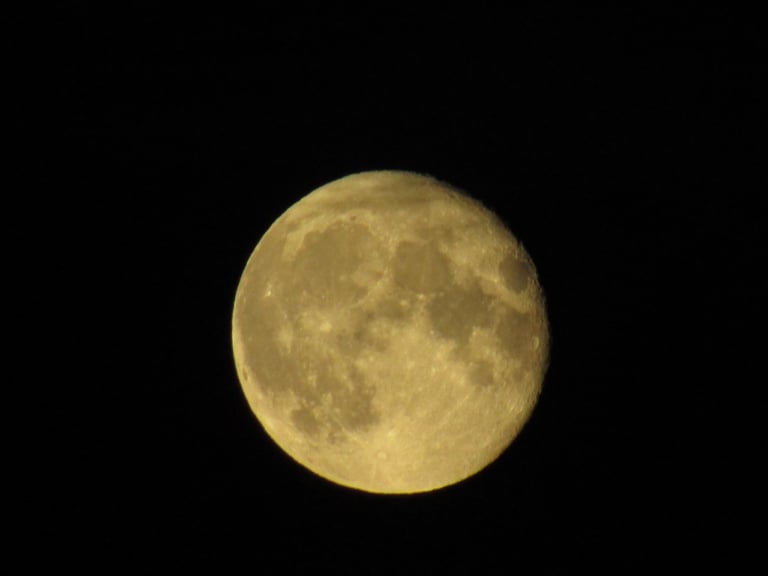
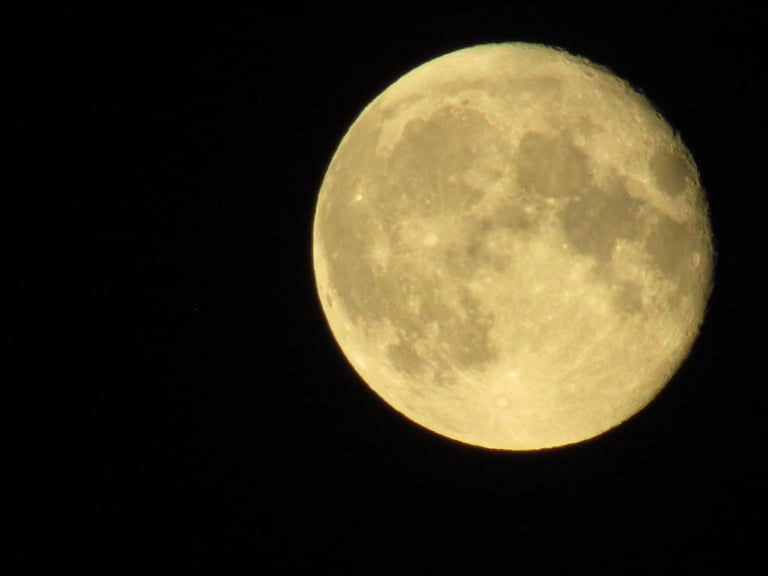
Above Kildare (and parts adjacent), Monday night.
Related: Lunar Poles
(Thanks PieceOfPi552)



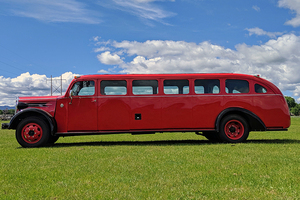
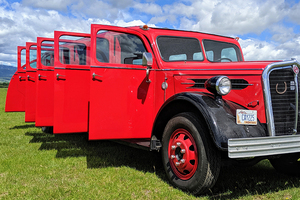
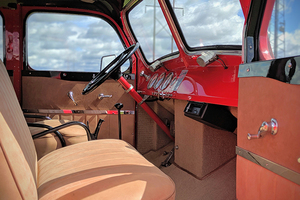

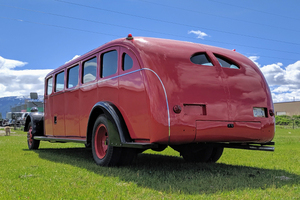
Behold the 1937 Kenworth Mount Ranier 18-seater tour bus – a rare survivor sourced by restoration outfit Legacy Classic Trucks and returned to its former glory with period correct paint, retro instrumentation, patinated wooden floor panels and roll-back canvas top.
Yous for about €513,000 (+ shipping)
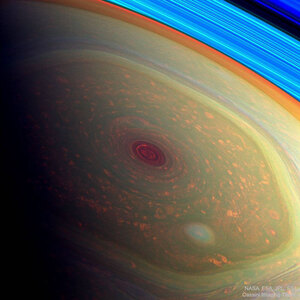
Behold: a vast hexagonal cloud formation over Saturn’s northern hemisphere. First discovered by Voyager in the 1980s and subsequently observed by Cassini, nothing like it has been found elsewhere in the solar system. To wit:
Acquiring its first sunlit views of far northern Saturn in late 2012, the Cassini spacecraft’s wide-angle camera recorded this stunning, false-colour image of the ringed planet’s north pole. The composite of near-infrared image data results in red hues for low clouds and green for high ones, giving the Saturnian cloudscape a vivid appearance. This and similar images show the stability of the hexagon even 20+ years after Voyager. Movies of Saturn’s North Pole show the cloud structure maintaining its hexagonal structure while rotating. Unlike individual clouds appearing like a hexagon on Earth, the Saturn cloud pattern appears to have six well defined sides of nearly equal length. Four Earths could fit inside the hexagon. Beyond the cloud tops at the upper right, arcs of the planet’s eye-catching rings appear bright blue.
(Image: NASA, ESA, JPL, SSI, Cassini Imaging Team)
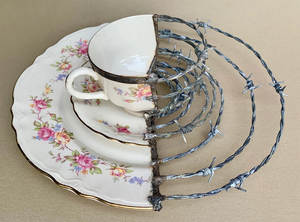
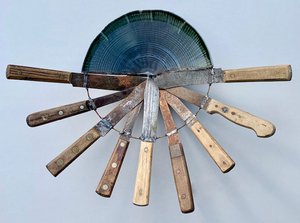

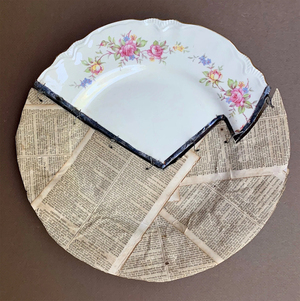


The brutalist kintsugi of artist Glen Taylor – broken porcelain ‘repaired’ with tarnished silverware, barbed wire, chains and paper mâché, contrasting the delicacy of the original piece with unwieldy mends in a celebration of imperfection.
Which is more worthy of celebration than perfection.
Discuss.
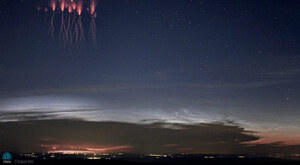

An extraordinary image captured by a very sensitive camera late last month on a summit of the Vosges mountains in France.
Fireworks? Of a sort, yes. To wit:
Generated over intense thunderstorms, this one about 260 kilometers away, the brief and mysterious flashes have come to be known as red sprites. The transient luminous events are caused by electrical breakdown at altitudes of 50 to 100 kilometers. That puts them in the mesophere, the coldest layer of planet Earth’s atmosphere. The glow beneath the sprites is from more familiar lighting though, below the storm clouds. But on the right, the video frames have captured another summertime apparition from the mesophere. The silvery veins of light are polar mesospheric clouds. Also known as noctilucent or night shining clouds, the icy clouds still reflect the sunlight when the Sun is below the horizon.
(Image: Stephane Vetter (TWAN, Nuits sacrees))

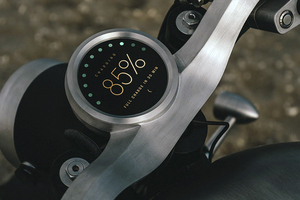


Behold: the Tarform Luna – arguably the most sustainable all electric motorbike ever built.
The bodywork – composed of recycled aluminium and a flax seed weave-reinforced composite – is partly biodegradable and designed in modular format to upgrade as EV technology evolves.
Capable of 0-100km/h in under 4 seconds, a top speed of 150km/h and a 200km range with a 41kW lithium-ion battery charging to 80% in just 50 minutes, the bike has keyless proximity ignition, blindspot detection with haptic feedback, 180° rearview cameras and integrated ‘faux sound’ generators.
Yours next year for around €21,300 (+ shipping).


A suitably trippy video by our favourite UK animator Cyriak Harris for this apocalyptic track by veteran US art rockers Sparks (from their new album ‘A Steady Drip, Drip, Drip’).