
Author Archives: Chompsky

Competing to inspire your awe – land and sky. Who ya got? To wit:

The Volcano of Fire (Volcán de Fuego) is seen erupting topped by red-hot, wind-blown ash and with streams of glowing lava running down its side. Lights from neighboring towns are seen through a thin haze below. In the sky, though, the central plane of our Milky Way Galaxy runs diagonally from the upper left, with a fleeting meteor just below, and the trail of a satellite to the upper right. The planet Jupiter also appears toward the upper left, with the bright star Antares just to its right. Much of the land and the sky were captured together in a single, well-timed, 25-second exposure taken in mid-April from the side of Fuego‘s sister volcano Acatenango in Guatemala. The image of the meteor, though, was captured in a similar frame taken about 30 minutes earlier — when the volanic eruption was not as photogenic — and added later digitally.

(ImageDiego Rizzo).

apod

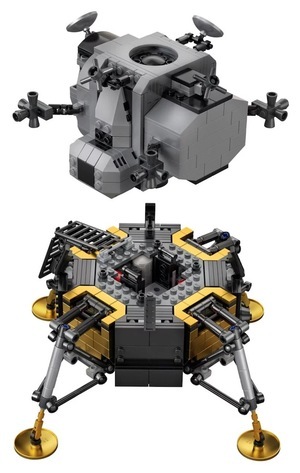
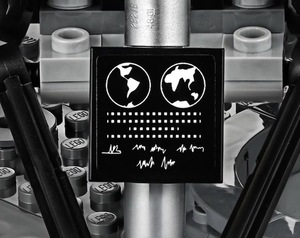
A Lego Creator Expert set featuring the Apollo 11 lunar lander designed in collaboration with NASA: 1,087 pieces complete with separate ascent and descent stages, and a lunar surface with footprints.

Stanley Kubrick minifig not included (but that would have been hilarious, in fairness)

Available next month (the 50th anniversary of the actual moon landing) for €94.99.

awesomer

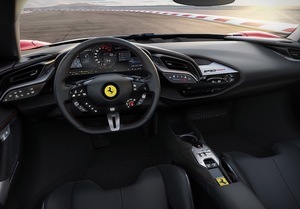
Behold: the Ferrari SF90 Stradale – the first four wheel drive racing Ferrari, the first plug-in hybrid Ferrari and the first time Ferrari has had a V8 as its flagship. But wait, there’s more. Three electric motors paired with a 769 hp, 4.0L twin-turbo also make this the quickest Ferrari of all time.

The SF90 accelerates to 100km/h in 2.5 seconds. 4.2 seconds later, it reaches 200km/h before topping out at 340km/h. Named in celebration of the 90th anniversary of the Scuderia Ferrari racing team, it will shortly be joined by the lighter, carbon fibre enhanced  Assetto Fiorano – an even quicker, more track-hugging variant.

Price tba but likely to be €1,000,000+.

uncrate

Star formation is a colourful business – as evidenced by this chromatic cosmic portrait of glowing gas and dark dust near some recently formed stars of NGC 3572 – a cluster near the Carina Nebula. To wit:

Stars from NGC 3572 are visible near the bottom of the image, while the expansive gas cloud above is likely what remains of their formation nebula. The image‘s striking hues were created by featuring specific colors emitted by hydrogen, oxygen, and sulfur, and blending themwith images recorded through broadband filters in red, green, and blue. This nebula near NGC 3572 spans about 100 light years and lies about 9,000 light years away toward the southern constellation of the Ship’s Keel (Carina). Within a few million years the pictured gas will likely disperse, while gravitational encounters will likely disperse the cluster stars over about a billion years.

(Image: Andrew Campbell)

apod