
Author Archives: Chompsky

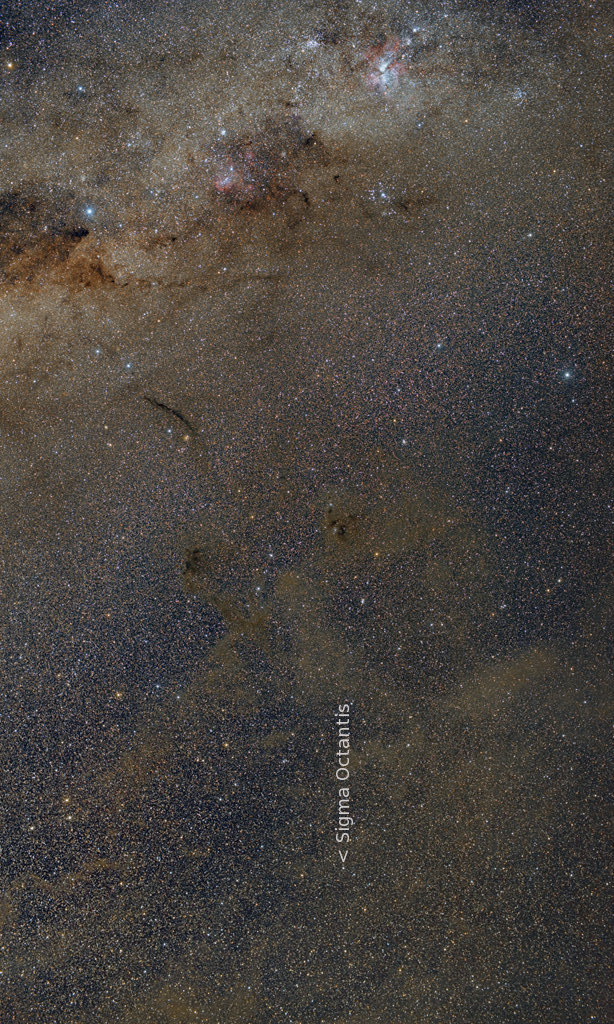
Behold: the South Celestial Pole – the centre of all southern star trail arcs – one of two imaginary points in the sky where the Earth’s axis of rotation indefinitely extended, intersects the celestial sphere. To wit: 

In this starry panorama stretching about 60 degrees across deep southern skies the South Celestial Pole is somewhere near the middle though, flanked by bright galaxies and southern celestial gems. Across the top of the frame are the stars and nebulae along the plane of our own Milky Way Galaxy. Gamma Crucis, a yellowish giant star heads the Southern Cross near top center, with the dark expanse of the Coalsack nebula tucked under the cross arm on the left. Eta Carinae and the reddish glow of the Great Carina Nebula shine along the galactic plane near the right edge. At the bottom are the Large and Small Magellanic clouds, external galaxies in their own right and satellites of the mighty Milky Way. A line from Gamma Crucis through the blue star at the bottom of the southern cross, Alpha Crucis, points toward the South Celestial Pole, but where exactly is it? Just look for south pole star Sigma Octantis. Analog to Polaris the north pole star, Sigma Octantis is little over one degree fom the the South Celestial pole.

(Image: Petr Horalek, Josef Kujal)

apod

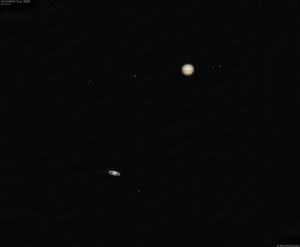
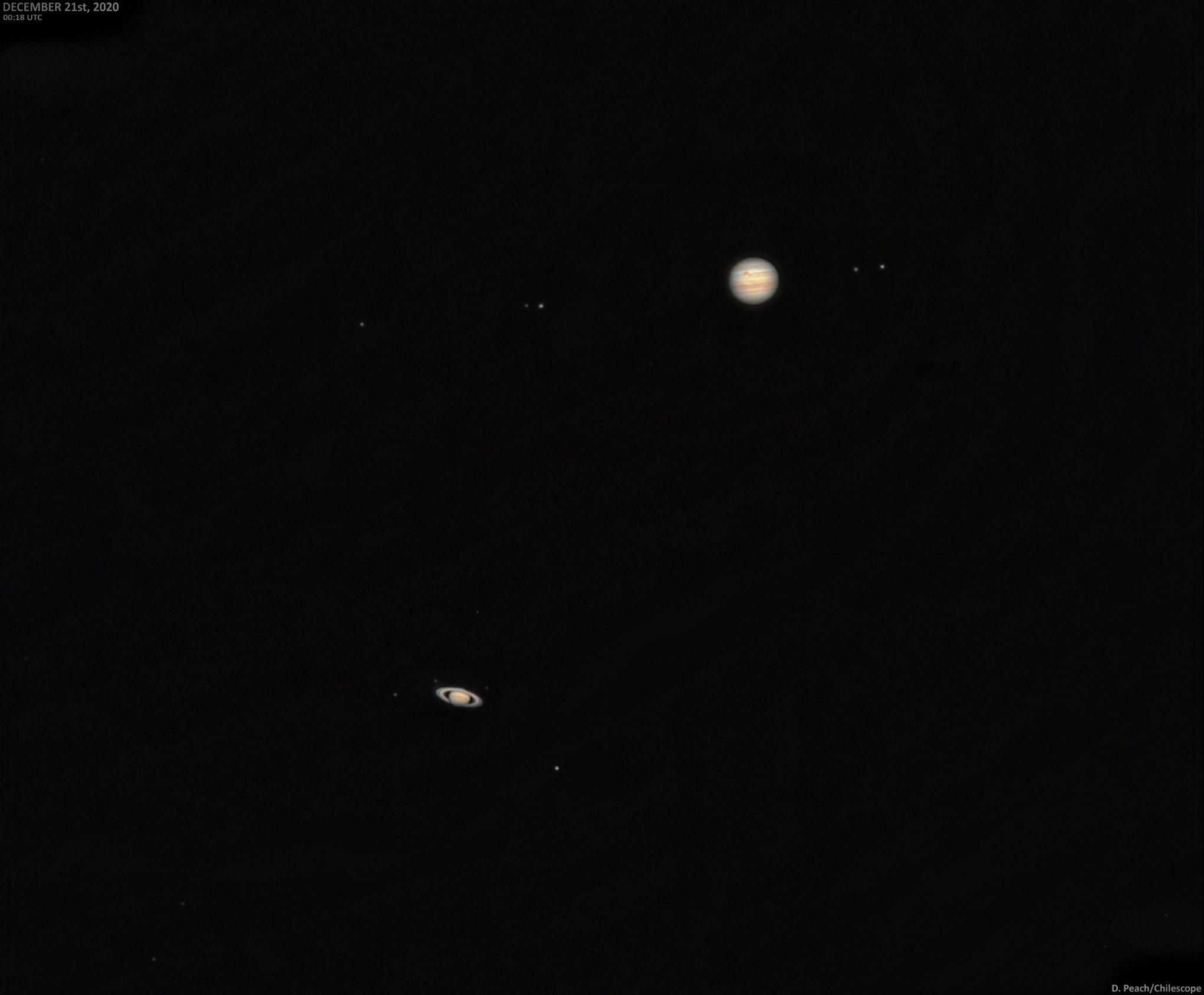
Behold: two gas giants passing in the night. What do you mean you missed it? To wit:

Two days ago Jupiter and Saturn passed a tenth of a degree from each other in what is known a Great Conjunction. Although the two planets pass each other on the sky every 20 years, this was the closest pass in nearly four centuries. Taken early in day of the Great Conjunction, the featured multiple-exposure combination captures not only both giant planets in a single frame, but also Jupiter’s four largest moons (left to right) Callisto, Ganymede, Io, and Europa — and Saturn’s largest moon Titan. If you look very closely, the clear Chilescope image even captures Jupiter’s Great Red Spot. The now-separating planets can still be seen remarkably close — within about a degree — as they set just after the Sun, toward the west, each night for the remainder of the year.

(Image: Damian Peach)

apod

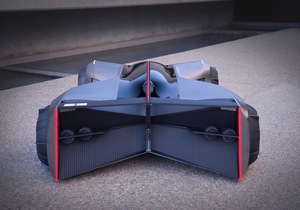
Behold: the Nissan GT-R(X) 2050 – a radical conceptual vision of the existing GT-R and how it might appear 30 years from now.

Starting life as a design thesis by Jaebum “JB” Choi, the 3m long, 61cm high GT-R(X) is a car to be worn rather than driven.

The ‘X’ refers to the driving position: the driver lies prone with arms and legs extended in an ‘X’, wearing a close-fitting suit and helmet relaying commands to the car via a ‘direct neural link’.

The ‘purest’, presumably most terrifying driving experience imaginable.

uncrate

Behold: Monty the space slug one of several dense, constantly eroding cosmic dust pillars in the Trifid Nebula (M20). To wit:

Visible in the featured picture is the end of a huge gas and dust pillar […] punctuated by a smaller pillar pointing up and an unusual jet pointing to the left. Many of the dots are newly formed low-mass stars. A star near the small pillar’s end is slowly being stripped of its accreting gas by radiation from a tremendously brighter star situated off the top of the image. The jet extends nearly a light-year and would not be visible without external illumination. As gas and dust evaporate from the pillars, the hidden stellar source of this jet will likely be uncovered, possibly over the next 20,000 years.

(Image: NASA, ESA, Hubble Space Telescope, HLA; Processing: Advait Mehla)

apod