
Category Archives: History

screensnap2_24c

The original NeXT browser

20 years ago TODAY, CERN released the technology needed to run the WorldWideWeb freely available.

With this simple altruistic act, the information-based revolution began spawning entire industries that were not even conceived of even a few years previously.

By late 1993 there were 500 websites.

Today there’s somewhere in the region of 630 million.

Without this project spinning out of CERN, we would probably still prefer dogs and maybe look at things a little bit differently.

If you’re of a technical bent, you could even try and get the first web browser up and running (aside: it’s written in Objective-C which is used to write the vast majority of iOS apps).

H/T to Steven Troughton-Smith for the browser link

The first website

haugheyathome1 haugheyathome2 haugheyathome3The people at Irish Election Literature bring this vintage spread to our attention.

A Hello-style interview with a pre-taoiseach, pre-Arms Trial Charles J. Haughey from the April 1970 edition of ‘This Week’ magazine.

The horses, the family, the lifestyle.

Like a young Mussolini, he was.

Mmf.

irishelectionliteratureblog

Galway1 Galway can parade Big Jim.

A Jim Larkin float, organised by Equal Ireland, in Galway’s parade on Sunday.

See?

Not so ‘controversial’.

Previously: What Need You Being Come To Sense

(Pics: Projext Photography)

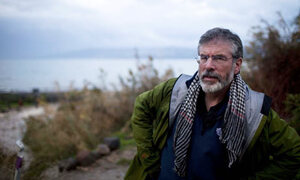
The process which saw Sinn Fein’s election success started with the hunger strikes, asserts Gerry Adams on his Leargas blog:

“The success of Bobby [Sands]’s election in Fermanagh South Tyrone in the Westminster election of April 81, and of Ciaran Doherty in Cavan Monaghan and Paddy Agnew in Louth in the June 81 general election in the south, were watershed moments.

None of us knew that at the time. Some of us felt it instinctively but it has needed the intervening decades to understand the extent to which the courage and sacrifice of the ten men who died on hunger strike changed modern Irish history.

For Sinn Féin it was the acceleration of a process of internal debate which saw the party embrace electoralism. And it was the commencement of a conversation which ultimately led to the party’s peace strategy and the peace process.

In the south it was the end of majority government by a single party. From 1981 coalition government was the order of the day with a succession of parties, including Labour, the PDs and the Greens stepping forward to put Fianna Fáil or Fine Gael into government. And all paid an electoral price.

It was also the beginning of the slow decline of Fianna Fáil as the dominant political force in that part of the island.”

(Uriel Sinai/Getty)

Recently discovered artefact from the 19th century.

Two bullets, one French and one Russian, collided in the middle of a firefight.
It’s like a David Blaine trick, only real.

As the man says: How dense does a fire-fight have to get before this can happen?

PlPhoto

When ‘WTF’ doesn’t cut it.

Remember Apogee? They created a lot of Irish websites back in the day.

They’ve since gone very quiet but their old website remains.

Its feeble bullshit still clogging up cyberspace. A wheezing testament to all our current unpleasantness.

Have a look around the site. Every time you click you will hear the sound of dolphins.

Which is nice.

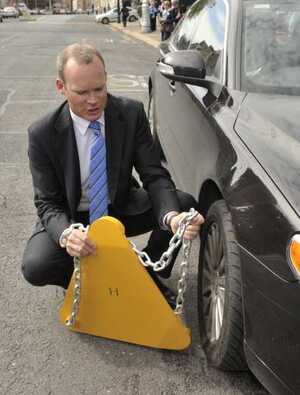
Fine Gael transport whatever Simon Coveney removes a pretendy clamp to highlight the blight of illegal clampers.

Under a Fine Gael-led government you won’t get clamped as often.

Fuck yeah.

It’s like Paris in ’68.

(Photocall Ireland)