Category Archives: Misc

9042548490425480

Neigh ‘sup?

This afternoon.

Britain’s Princess Anne attending the Nations Cup at the Dublin Horse Show, RDS, Ballsbridge, Dublin 4.

Great craic apparently.

More as we get it.

Rollingnews

90425521

90425527

This afternoon.

Jessica ‘daughter of Bruuuuce’ Springsteen (top) and Georgina ‘daughter of former New York Mayor Miiiike’ Bloomberg taking part in the Nations Cup for America.

Rollingnews

90425471

‘sup?

This afternoon.

Dublin Horse Show, RDS, Ballsbridge, Dublin 4

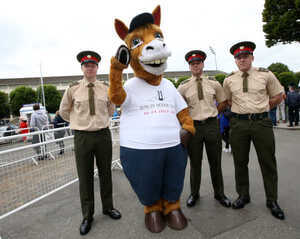
Controversial Dublin Horse Show mascot and Bojack-a-like Conor the Capall with, from left Irish Army soldiers Col Carl Broughal, Cpl Stuart Quinn and Cpl David Smyth from Cathal Brugha Barracks.

He eats neckwear.

Rollingnews

Yesterday: Why The Long Face

Previously: Animals

Screen Shot 2016-07-22 at 12.47.49

Fine Gael Minister for Social Affairs, Leo Varadkar talking to the media outside Dublin Castle this morning

Daniel McConnell, on Breakingnews.ie, reports:

Social Protection Minister Leo Varadkar has expressed his frustration at being constantly linked with the leadership of Fine Gael….

Speaking this morning at an event at Dublin Castle, Mr Varadkar denied his plan to radically overhaul the social welfare system is part of his bid to succeed Taoiseach Enda Kenny, who will not lead the party into the next General Election.

“No matter what I say or do for the past six months, some people are linking [me] to the leadership of Fine Gael…I am just waiting on the day when I sit on the toilet and some commentator somewhere decides that is part of some strategy.”

Varadkar ‘waiting on the day I sit on toilet and someone says it’s part of a leadership strategy’ (Daniel McConnell, Breakingnews)

Sam Boal/Rollingnews

erdogan1043401570

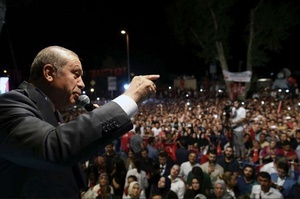
From top: President Recep Tayyip Erdoğan; Ankara’s main square after a coup d’etat, September 12, 1980.

To wash our hands of the Turkish crisis would be a mistake.

Eamon Delaney writes:

Three years ago, I wrote about Turkish leader Erdogan and how his authoritarian tendencies were threatening not only Turkey but also the near east and the country’s application for EU membership.

‘Imperious Leader has gone too far with his strange edicts’ was the prescient headline.

Well, now we will find out just how far Erdogan will go.

The Turkish President has reacted furiously to the failed coup against him by dismissing and jailing tens of thousands of military personnel and officials. He is now moving on to the courts and the schools.

Of course, the strange edicts of Erdogan have led to this. But his proposals of three years ago (a partial ban on alcohol, and on the wearing of bright lipsticks by Turkish Air stewardesses!) are trifling compared to his attempts since then to consolidate powers in a revised Presidency.

Protests have come from secular activists, but also from followers of Fethullah Gulen, the mystic cleric, who has fallen out with Erdogan and alleges corruption by the Turkish regime. Turkey blames the elderly Gulen, who lives in Pennsylvania, of fomenting the coup from afar and want the US to extradite him.

Basically, Erdogan cannot believe that anyone can disagree with him and wants to return the country to the strong man leadership of the country’s founder Ataturk or even the sultans of the Ottoman Empire. In fairness, he has won continuous elections and has presided over an amazing economic revival in Turkey.

On a recent visit, it took me two hours to get to the airport from central Istanbul such was the congestion of shiny new cars circling the Bosphorus.

But my jubilant taxi driver wouldn’t hear of any complaints and pointed to his AKP election stickers (Erdogan’s ruling party). This prosperity has provoked a new pride – but also new demands and challenges.

So, for the rest us, this crisis couldn’t be happening at a worse time. We rely on Turkey, a major NATO member, in the fight against ISIS and in dealing with war-torn Syria, as well as on coping with the refugee crisis, as shown by the financial deal it did with the EU.

Can the West control the situation and control Erdogan, and restrain his vengeance? It has to be done. Otherwise, we are in real trouble.

And it would endanger what has been created in Turkey itself, which is an amazing, vibrant culture and the ideal crossover between East and West, and between the Islamic world and a mainly Christian Europe.

Huge advances have been made in trade, art, fashion and culture and even in human rights, as well as in recognising the rights of the country’s Kurdish minority, although a guerrilla war continues with the Kurdish PKK terror group. Young Turks often ask me whether the Northern Ireland peace process offers an example of a way out.

Some would say that the crisis shows the damage that can be done by just one ruler, in the shape of Erdogan, or indeed Putin in Russia. But, like Putin, Erdogan remains very popular and has had to tend with a scheming and dangerous political landscape, and with dangerous neighbours.

For the West, and the EU in particular, the reaction should be to stay close to the situation and exert what influence it has as a restraint on a Turkey that still craves a European association. To wash our hands of the Turkish crisis, or to impose sanctions or isolation, would be a mistake.

The irony is that the recent coup in Turkey was done ostensibly to ‘protect democracy’.

In Turkey, the army has traditionally been a bulwark for secularisation. This was the legacy of the country’s founder Ataturk, who much to the delight of the West, kept Turkey in the Western camp. But he was a dictator too.

Indeed in 1980, after a period of political chaos, the army staged a coup and imposed order. And, on New Year’s Eve 1981, when martial law was lifted for the first time since, I was among the many young backpackers in Istanbul who joined in the celebrations! It was quite a party. The soldiers were cheered as heroes, who had rescued Turkey from instability and ‘backward’ Islam.

Turkey has come a long way since then. It has advanced economically but is has also become more Islamic in a moderate way which is probably a more accurate manifestation of society than Ataturk’s repressive secularism.

Erdogan’s wife is veiled, for example. But his Islam is a long way from the radicalised Islam of the ISIS or the Gulf States. Turkey is, as Irish travellers well testify, almost entirely Westernised.

However, the Turkish President is volatile. He has reacted furiously to social media, stormed off the stage at a Davos discussion on Israel and gave the go-ahead for the downing of a Russian jet.

The hope would be that his shrewdness and common sense would prevail and he would see that any further overreaction would endanger him, as well as Turkey and the region. However, on current evidence, that realisation clearly hasn’t come yet.

Now that the UK has left EU (what timing!) it is really left to the Germans to fashion a response. Germany has a huge Turkish community and should be familiar with the culture there, including the political landscape. Being sympathetic but firm should be the approach – and not letting Turkey slip way.

Otherwise, we are facing turmoil in the near East and an end to meaningful cooperation on refugees and jihadis – the last chance that a shaken Europe needs right now.

Eamon Delaney is an author, former diplomat and founder member of think tank Hibernia Forum.

Washing our hands of Turkey’s crisis would mean chaos in the Near East (Eamon Delaney)

mosney2

Mosney

garygannon

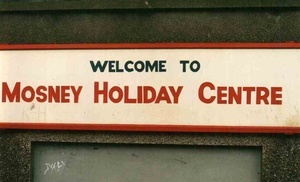
From top: Mosney Direct Provision centre; Gary Gannon

it is time to open up Direct Provision institutions, give people facilities to cook their own meals and let the adults work.

We won’t be sorry.

In the first of a new Friday column, Gary Gannon writes:

February 19th 2013 was a unique day in my political lifetime. On this particular evening, Taoiseach Enda Kenny rose to his feet in Dail Eireann and spoke not only on my behalf, but on behalf of the entire nation.

His words were perfect and his passion in the delivery of each single syllable was matched only by the dignified courage that was emanating from the public gallery where twenty survivors of state sanctioned abuse sat gazing over that evenings proceedings.

It was two weeks on from the release of the McAleese report into the State’s involvement in the Magdelene Laundries and our Taoiseach was at long last, in the process of recognising the State’s role in that horror.

I felt personally that he was apologising for not only the State’s role in the institutionalising of women throughout our short history, but that he was apologising for us all through our societal complicity in what he rightfully described as ‘our nation’s shame.’

We will never truly understand the barbarity of these religious work-houses where women who had ‘fallen’ in the eyes of an ever moralising society where sent so that moral Ireland could maintain the veneer of purity.

The dark shadow of these laundries, mother & baby homes or the variety of other institutions where we banished the poor and the different should hang around our necks like an albatross but yet, does the existence of Ireland’s system of Direct Provision for asylum seekers show that old habits are indeed hard to kill?

The Taoiseach, in making that apology which I felt spoke for me and the society I wished to be part of said rightfully;

‘In a society guided by the principles of compassion and social justice there never would have been any need for institutions such as the Magdalene Laundries.’

I completely agree but I have to ask why then, in a society which claims now to be guided by those same values is there a need for 679 people* to kept in what are effectively privately run detention centres?

Why are adults who live in this country prohibited from cooking their own meals?

Why is Ireland, with our emphasis on compassion and social justice, one of only two European Union countries who restrict asylum applicants from the labour market for the entirety of their process?

A more important question, with our history of inhumane cruelty in regards the forced institutionalising of those we consider to be different to the mainstream, what arrogance is it that makes us think that this time it will be any different?

Many, giving the extreme depravity of the laundries or the mother and baby homes, will argue that there is no comparison between these institutions and the current Direct Provision centres.

Of course, there is no expectation on people in direct provision to clean laundry as a physical (profitable) embodiment of their sins being washed away, but rather, we expect children and adults to sit without opportunity for life progression for periods exceeding eight years in some cases while an unidentified official of the State makes a decision on their fate.

That is a cruel practice.

It is not to our credit either that we no longer charge religious institutions with the responsibility of caring (said very loosely) with the needs of those we consider unfit for inclusion in the agora of Irish society; instead we hand over that responsibility to our new gods, the private sector.

The post-apocalyptic Disneyland that is Mosney Irish Holidays plc, earned almost 9 million euros in 2009 after converting into a Direct Provision centre.

While we continue to prohibit many of our asylum seekers the facilities by which they can cook and prepare their food in accordance with their cultural preferences, East Coast Catering has received some 90 million euros from the State for services rendered in regards Direct Provision.

We have always been good at turning poverty into profit but at the same we ask adult asylum seekers to live off E19.10 a week!

This is not only State sanctioned poverty it is also a prime example of the State making millionaires out of those they consider worthy of catching the tears of the suffering.

Make no mistake about it, in these Direct Provision Centres there is an abundance of suffering that has been well documented and poorly acted upon.

The Irish TimesLives in Limbo’ series captured the voices and stories of those in Direct Provision in a manner that hadn’t emerged previously.

It was from that project that I first learned that an asylum seeker in Ireland was up to five times more likely to suffer from depression or mental health related illness than in the wider community.

It was here again that I got a snapshot into the conditions present inside where overcrowding, sub-standards of hygiene and families living in single-room accommodation that was infantilising adults while restricting the development of children were all described.

It was in this series too where I first read of the damning prediction that was made by Former Supreme Court Judge Catherine McGuinness who predicted that a future government will be publicly apologising for the damage done by the direct provision system.

That is terrifying and with our past transgressions in this regard so closely wrapped around us still, we, as in all of us must be quicker to respond.

The issue is of asylum is undoubtedly complex but our values, humanity and past experiences should always be to the fore-front of our considerations.

In that regard, open-up these institutions, give people the facilities and the means by which they can provide meals to their own families. Allow adults to work and the dignity that comes with this primal need.

Allow asylum seeks who have gone through the first two stages of our education system to compete for places in 3rd level universities on the same terms as their classmates.

As the children of Direct Provision become adults and more stories start to emerge, we may still have to apologise for this degrading system, but we can act now to prevent having to apologise for tomorrow.

Gary Gannon is a Social Democrats Councillor on Dublin City Counicil for Dublin’s North Inner City. Gar’s column will appear here every Friday before lunch. Follow Gary on Twitter: @1garygannon

* Number of people still in Direct Provision centres who have received citizenship here.


audreycarville

cummins

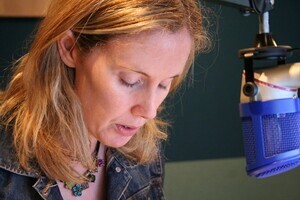
From top: Audrey Carville; Eugene Cummins, chairman of the national sub-committee on housing of the Local Government Management Association and chief executive of Roscommon County Council

Further to the publication of Minister for Housing Simon Coveney’s Action Plan for Housing and Homelessness earlier this week, which included plans to provide 47,000 new social housing units between now and 2021, RTÉ’s Audrey Carville spoke to Eugene Cummins about the plans on Morning Ireland earlier.

Mr Cummins is the chairman of the national sub-committee on housing of the Local Government Management Association and chief executive of Roscommon County Council.

Ms Carville introduced her interview by posing the question: how many of these social housing units will be built by local authorities.

Audrey Carville:How many houses will local authorities build, under this plan?”

Eugene Cummins: “Well, over the life of the plan, the local authority social housing stock will increase by 47,000 units and we are confident that that figure will be achieved, if not exceeded.”

Carville:But how many houses will you build?”

Cummins: “Well, over the life of the plan – and in the first years of that – we will be focusing on the Housing Assistance Payment (HAP), acquisitions and the returning of units, void units into use. It will of course, the size of the scale of the investment, it will require the planning for estates, it will involve the private sector getting back into building so it’s going to take a few years, a few years, until we start actually building. But, over the next two years in particular, we will continue to acquire properties and to bring social housing by way of the Housing Assistance Payment.”

Carville: “So out of those 47,000 houses, how many will you build?

Cummins: “In terms of the 47,000 units,  some of those units, a considerable number of those units will actually be acquired from the private sector…”

Carville: “But how many will local authorities build over the next five years?

Cummins: “We will, we have to have regard to the market. We will be building where it is cheap to buy units, we will buy units from the private sector, but we will be building a considerable number over the next few years to make sure that, at the end of the plan, that whether we acquire them or build them, there will be an additional 47,000 units added to the social housing stock in this country.”

Carville: “But you don’t have a figure for how many you will build between now and 2021?

Cummins: “As I said, Audrey, we will be acquiring properties, we’ll be leasing properties and we will also be building considerable numbers of properties to increase…”

Carville: “But you’re not giving me actual figures. How many? That’s what has been absent. Simon Coveney, this week, said he believed that local authorities would build 26,000 houses in five years. Is that a realistic figure?

Cummins: “Yes, that is a realistic figure.”

Carville: “But you hadn’t mentioned it, so…”

Cummins: “What I have said..”

Carville: “Where does that fit in with local authority plans?”

Cummins: “What I’ve said is we will be increasing the social housing stock in this country by 47,000 units and we will be doing that by acquisitions and by building.”

Carville: “But I’m asking you, how many will you build? And you haven’t given me a number.”

Cummins:We will be increasing the social housing stock by 47,000 and that is all that matters.”

Carville: “No. The 47,000 is between, there’s no breakdown, we don’t know how much will be local authority housing, we don’t know how much will be private housing.”

Cummins: “But as long as the social housing stock is increased by 47,000 units, that’s all that matters and that’s what we will be doing. And we will be working with the private sector. Remember this is not just about the local authorities. There are many stakeholders, including the private sector, that are involved in providing solutions to this problem.”

Carville: “But people say it does matter how many local authorities are building because, when the private sector gets involved, it becomes a for-profit venture. And the targets and the figures rarely materialise.”

Cummins: “No, what I’m saying is that local authorities will build social houses but we will also buy social housing from the private sector. We will not be expecting the private sector to provide social housing per se; we will be acquiring them from…”

Carville: “How many?”

Cummins:47,000 units, in total, we will be increasing the social housing stock by. It doesn’t matter how it’s done, Audrey. We will be having a significant build programme and we will be acquiring properties and we will increase the social housing stock for people who are on our housing list by at least 47,000 units over the life of the plan.”

Carville: “Why aren’t you able to start sooner than two to three years? Alan Kelly’s plan was laid before the councils nearly two years ago – why aren’t you in a position to begin building sooner?”

Cummins: “Because, first of all, the solution to his problem requires a collaborative approach from all of the stakeholders, that will mean a huge increase in building output. And that can’t start overnight because there’s a plan in process, there’s a tendering process, there’s a procurement process…”

Carville: “But you have all those powers at the moment. You can give yourself those powers to give yourself planning permission to build. Why isn’t the process going to happen sooner?”

Cummins: “No, it’s important for your listeners to understand that there’s a process involved when a scheme of houses is planned. It has to go through the planning process, it has to go through a tendering process and all of that takes time.”

Carville: “But what have you been doing in the last nearly two years, since the previous plan by Alan Kelly? Which this one [plan] has built on?”

Cummins:Last year alone local authorities brought 13,000 units back into social housing stock.”

Carville: “But you only built around 70.”

Cummins: “That is correct because that’s all the money we had and the reason we got out of building houses in the past was because, in recent years, is because money hasn’t been provided and the minister – and indeed the Taoiseach – at their announcement on Tuesday, they’ve clearly allocated €5.35billion… We didn’t…we stopped building houses because the funding stream stopped. Now that the funding stream has been committed, we will start building again but that takes time.”

Carville:So are there any sites, so? There must be sites at this stage? That are shovel-ready? That are ready to begin building on?”

Cummins: “There are sites and, as we speak, houses are being built.”

Carville: “Where?”

Cummins: “In Dún Laoghaire Rathdown and in other areas around the country..”

Carville: “How many are being built there?”

Cummins:There are hundreds of houses being built but it’s not near enough. But, again, can I say we’re not just relying on building. When we exited the boom, there were tens of thousands of units vacant, there still are 200,000 units vacant in this country..”

Carville: “And you have the power to make compulsory purchase orders so how many of those homes, vacant homes, derelict homes, how many have you bought in the past year?”

Cummins: “Last year, we bought 1,000 units. We’ve bought over 2,100 units from Nama over the last couple of years; there are another 500 units in the process of being delivered through Nama and we’re also, as I said, we required 100 units.”

Carville: “How many more do you plan to buy through compulsory purchase orders?”

Cummins: “We don’t need to exercise our compulsory purchase powers to buy on the market. We are successfully buying properties every day…”

Carville: “But how many? Because there are 100,000 families on the social housing waiting list.”

Cummins: “There are actually more and that’s why this action plan is so important and that is why we and the Government, and indeed the minister, are committed to increasing the housing stock by 47,000 units and we will do that. But it requires all of the stakeholders to get together in a collaborative way and we are up to the challenge.”

Carville: “But how many…”

Cummins: “We did it before…”

Carville: “Yes, you did, absolutely. But we’re trying to establish how many properties you are going to buy through compulsory purchase orders or other measures over the next five years.”

Cummins: “As I’ve said, at the very start of the interview, by the end of the plan we will have increased the social housing stock by at least 47,000 units and we will do that by building, leasing, by bringing voids back into use and we are committed to doing that and we will do that.”

Carville: “But is that exclusively through your management, through the management of local authorities?”

Cummins: “As I said, it requires a collaborative approach from all of the stakeholders, not least of all the private sector…”

Listen back in full here

XXX 3

https://www.youtube.com/watch?v=YnZ2LyHcAR8

What you may need to know:

1. Xander Cage (Vin Diesel) comes out of a self-imposed exile to help recover an unstoppable weapon known as Pandora’s Box.

2. Guns, girls, gits… and Groot..

3. Yes, he was killed off in the sequel.

4.  Ice Cube stepped in back in 2005 when Diesel couldn’t be bothered.

5. But now he’s back. Because The Last Witch Hunter (2015) wasn’t the sequel-spewing franchise bonanza that Diesel had hoped for.

6. Broadsheet prognosis: Jason Bourne for the Top Gear crowd.

Release Date:
January 20, 2017.

(Mark writes about film and TV at ScreenTime.ie)

00147126

Paul Kelly, former CEO of Console, at The National Mental Health Conference in Newbridge, Co Kildare in 2013

Irish charities.

Stay away from them, all of them and don’t give them cash.

Frilly Keane writes

The biggest issue with Charities registered for Tax purposes (CHY) and or with the Regulator, is not that there are too many of them, or that there are too many of them competing for your attention, or for the next Ladies Who Lunch photo op with the big cheque, or for the cute hoor tax benefits, or that there are too many of them filling in for basic Health services.

It’s the cash.

The cash that goes into the bucket at the traffic lights, the cash that gets collected in exchange for a raffle ticket, or the cash from the cake sale, the cardboard money boxes, the bingo nights, the sponsorship cards, the cash the cash the cash.

There is no possible way of accurately recording a single cent of it that can be capable of providing assurance; to the giver, the receiver, or the public-at-large.

I’ve already told ye ta’ stay away from them, all of them. Volunteer your time instead, provide direct assistance yourself, just don’t give them cash.

So this week, I’m going to lob sum’ting else out there.

Get rid of this Charitable Status lark altogether – be a licensed Not-For-Profit (NFP) organisation instead.We already have the set-up to vet, license, regulate and monitor these type of Not-For-Profit enterprises; let me introduce you to the Central Bank of Ireland.

Incorporate or don’t incorporate, be a partnership or a co-op or a single person entity; just don’t call it a charity.

Once an applicant, any applicant, passes through a Central Bank process, then let them apply for zero rated VAT, Income Tax/ Corporation Tax etc.

Anyone reading this that has any experience of Central Bank registration and regulation will know that these are the people to manage this NFP Licensing.

These newly licensed NFPs must be required to treat all receipts as Sales Income, and provide the ‘customer’ a Sales Receipt. That customer now has an allowable expense for tax purposes from a Licensed NFP vendor.

If the Not-For-Profit is a payee of a State Agency, like the HSE, then, (I’m sure there already is but…) there must be an Engagement Letter or a Service Agreement, or a Grant Application suite of criteras and conditions; so it must naturally apply that as per the terms of the Engagement/ Agreement, bill them as an Invoice/ Payment becomes due.

Raise a numbered itemised Invoice, and there’s your documented claim for services rendered. If the services are billed for fraudulently, those Central Bank officials will have that NFP shut down before another credit card gets charged.

Something else I’d like to see more attention paid to and that is how they report their income.

Reporting Gross Income in the Financial Statements is not enough, even if there are line entries presenting the other sources of Income, i.e. Bequests, Fundraising Activities, Healthcare Insurers,

Research Grants and on ‘n on. Financial Statements already come with notes, so why shouldn’t every Income transaction be available in a .pdf for a full drill-down by any member of the public?

Likewise with a particularly High Profile event, especially those that go into schools, like the lollipops and the Lenten campaigns.

Most if not all of the management accounting packages export into excel anyway so making it a requirement for NFPs is hardly a burden on their resources.

NPFs should only be allowed carry Ring-fenced Reserves on their Balance Sheets, ring-fenced meaning for a specific project or activity that is long term or strategic like say a Training Centre or a new Club House.

The same goes for Assets, these must be tested and site inspected by Auditors to ensure they are still in use by the NPF, and their ownership is in the best interests of the NPF. Disposals of any Assets must be referred to third parties and approved by the Central Bank.

Charities and other voluntary and community organisations, large, small, National, Parochial or Multi National have been getting away with eff’all oversight and accountability when it comes to the receiving and distribution of its cash for too long.

STOP indulging them with your disposable cash and STOP giving them the comfort of your apathy.

If the NFP is not up to it, the Central Bank of Ireland are the crew to suss them out. If they evolve into ‘insert any one of the CHY blackguards here’ then CAB, again we already have them at our disposal, are the protective services the Irish Citizen must defer to.

And we must. Acquiring monies under false pretenses it fraud. And so is everything else after that.

I appreciate this is all a bit too high-end and corporate for the smaller and more local community based organisations, but this is how ye’ll get to know yere local Garda Superintendent and Peace Commissioner.

Fundraising for Summer Schemes, Parents Associations, Politicians, and Clubs for all shapes, colours, and postcodes must apply for permission for their non-membership income seeking events.

On their permission application they must nominate an independent non-connected individual to verify the cash collected, and that must only be counted in groups of 3 or more, and that it is only spent for the purpose for which it was earned.

Non-Connected is very important. Canvassing anyone to support a fundraising event that provides cash to pay for your own kids’ summer jobs or to subsidize their tennis lessons can easily be qualified as filling your own pockets, so avoid that risk.

Because guess what? That’s where it all started.

Night night folks; hay ta’be saved n’all that.

BTW, there are some interesting Frill Fillers for ye in the next few weeks, so behave.

Frilly keane’s column appears here every Friday. Follow Frilly on Twitter: @frillykeane

Rollingnews