Category Archives: Misc

Stags Head Poster


Pearse Halpin- new album launch

Barry H writes:

The name Pearse Halpin may be new to many but this musician is a seasoned professional with three albums to his name and many thousands of hours of playing live.

Pearse’s third album, Punch of Joy, is being launched on Thursday night with a gig in The Stags Head, Dame Court, Dublin. Above is Gather Me from the new album. Pearse performs alongside bandmates Esa Taponen (Picture House), Tommy Moore (Cathy Davy, Kevin Nolan) and Binser Brennan (The Frames, Bell X1 and Mundy)…

Pearse Halpin

Harcourt St

https://www.youtube.com/watch?v=SUERYtZAAM0

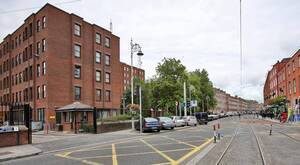
Harcourt Street Garda HQ in Dublin and Independents 4 Change TD Mick Wallace speaking in the Dáil this afternoon

This afternoon.

During Leaders’ Questions, Independents 4 Change TD Mick Wallace raised questions about Nama selling the Harcourt Street Garda Station, Dublin 2.

Mick Wallace: “What does the Taoiseach think of the National Asset Management Agency, NAMA, complaining to the Standards in Public Office Commission, SIPO, in March 2016 about Frank Cushnahan, given that it knew in March 2014 that this gentleman was in line for a backhander of £5 million?”

Ceann Comhairle Seán Ó Fearghaíl: “Deputy, please, do not make allegations against somebody outside the House. It is not in order.”

Wallace: “Given that Ronnie Hanna was arrested in May 2016, can we expect NAMA to complain about him in May 2018? Aside from Frank Cushnahan, the arrest of Ronnie Hanna has brought Project Eagle back home to Dublin, yet the Government wants to bury its head in the sand.”

It is more than a year since I first gave the Garda the name of an individual who paid €15,000 in a bag in order to get favourable treatment from NAMA as well as the name of the NAMA employee who was taking the money. There was denial all around as usual. However, the man receiving the money has since been arrested on a different charge. Meanwhile, the guy who paid the bribe is doing well for himself; there is not a bother on him. Such is business in Ireland.”

The investment fund, Hibernia REIT, is taking a court action to have An Garda Síochána removed from Harcourt Street station. These buildings were in NAMA and they are probably the most important buildings in the country for the Garda. The command and control centre for the whole of Ireland is based there. Moving and scattering this technical centre to the four winds will undermine the workings of the Garda.”

Will the Taoiseach explain why NAMA was allowed to sell this site to a vulture fund rather than keep it in State ownership? Hibernia REIT, which now owns the site, was set up by a guy who was a big player in NAMA where he was a portfolio manager for three years.”

When he joined the agency, he moved his 30% shareholding in his father’s company to an offshore trust. Did he declare that to NAMA? The same company then benefitted from some lucrative work from the agency. He left NAMA in December 2012 and used his insider knowledge regarding the agency’s assets to line up investment funds that would provide the finance for the new company, Hibernia REIT, which he manages.”

“It would not require forensic examination to discover that Hibernia REIT did remarkably well in purchasing former NAMA assets, many of which this gentleman was involved with, but then that is how we do business in Ireland.”

“Does the Taoiseach not think that the public interest would be best served if we examined the complete workings of NAMA? At this stage the majority of people in Ireland believe NAMA is rotten to the core.”

Enda Kenny: “It is not the first time Deputy Wallace has raised a matter in respect of NAMA, which is a matter of public interest. As I said before on quite a number of occasions, the advice given to me by the authorities is that this loan portfolio was sold following an open process to the highest bidder.”

“On the questions of allegations against certain individuals in Northern Ireland, NAMA paid no moneys to any party on this loan sale against whom allegations of wrongdoing are now being made and, as I said before, if somebody has evidence, they should bring that to the authorities.”

“I am also aware that two individuals that the Deputy mentioned were held for questioning in respect of the UK National Crime Agency, NCA, investigation into the Northern Ireland assets owned by NAMA and I am advised that the NCA has confirmed to NAMA that no aspect of the agency’s activities are under investigation.”

“I welcomed this previously, as did the Minister for Finance. These allegations are serious and, clearly, they have to be, and are being, investigated in that jurisdiction. Taking into account the investigations that are under way, the Minister for Finance has a view that no specific line of inquiry here can stand up and be usefully pursued by a commission of investigation. Many allegations have been made.”

The appropriate investigations are already taking place in the appropriate jurisdictions and it would be unwise to launch a very costly commission of investigation on claims that are currently under investigation by the authorities.”

“The Deputy mentioned before the issue that he raised. These are specific allegations of wrongdoing. If there are ones that are not being investigated, obviously they should be brought to the attention of the Garda and the authorities. If this is an issue that is appropriate to a commission of investigation, we need more details on what the Deputy has there and in the absence of such specific allegations, it is right and proper that the appropriate authorities should have the time and space required to compete their investigations.”

The Deputy has raised the issue of the Garda station in Harcourt Street. I am aware of the situation there in so far as their being asked to move out is concerned. I think there is an objection lodged to that. Obviously, investigations, as I said, are going on in the Northern Ireland jurisdiction as well.”

“The Comptroller and Auditor General is required, under section 226 of the NAMA Act, to produce a report every three years – that office is a completely independent body – assessing the extent to which NAMA has made progress towards achieving its overall objective.”

“NAMA and the Comptroller and Auditor General appeared before the Committee of Public Accounts on 9 July last year. At that appearance the Comptroller and Auditor General indicated that his next section 226 report would look in detail at a sample of NAMA disposals and a sample of properties held by it for investment and, furthermore, that a specific review of Project Eagle, under section 9 of the Comptroller and Auditor General Act, would be undertaken. That is under way. I do not know when it will be published but I understand quite a good deal of work has been done on it.”

Ceann Comhairle Seán Ó Fearghaíl : “Thank you, Taoiseach.”

Kenny: “The Comptroller and Auditor General has indicated that he intends to issue a report, under section 11 of the Comptroller and Auditor General Act, following this review of Project Eagle, and that is consistent with his powers to investigate, scrutinise and report independently on any aspect of NAMA’s work which may arise through its annual audits or special reports about any aspect of NAMA’s work.”

I assume if Deputy Wallace is raising a new issue on the basis of a new allegation, I am sure he will transmit that to the Garda or the authorities as well.”

Ó Fearghaíl: “Before I bring in Deputy Wallace, I wish to say that he has raised, as the Taoiseach acknowledged, a matter of major public importance, but having regard to the Standing Orders of the House, I ask him please, notwithstanding the fact he has named individuals today and in the past, not to name individuals so as to be in compliance with Standing Orders, and not to refer to an individual in such a way as to make him or her identifiable“.

Wallace:That is probably the worst answer the Taoiseach has ever given me in the House in relation to NAMA. He did not answer any of the questions I asked him. I never mentioned the words “Project Eagle”. I am tired talking about that in here.

“On that, the Taoiseach has made the point that there is no investigation into the workings of NAMA, even around that or anything else. It is blatantly obvious that the one jurisdiction where some investigation of a serious nature should be going on is the one that does not have one, and that is us. We do not want to know, or the Taoiseach does not want to know. I can understand why he does not want to know. As a matter of interest, how come no one can ever answer the question as to why NAMA never reported the fact this individual was in line for a €5 million backhander? Why, under section 19 of the Criminal Justice Act, did it not report it? Why did the Minister for Finance not report it?

Ó Fearghaíl: “Thank you, Deputy.”

Wallace: “Will the Taoiseach answer my question? Why did NAMA sell Harcourt Street station to a vulture fund rather than keep it in State ownership? Has it anything to do with the fact that people, who were insiders, were going to benefit from it?

Ó Fearghaíl: “Thank you, Deputy.”

Wallace: “It is just ridiculous. It is outrageous to say that no allegations have been made against NAMA in Dublin. There are bucketfuls of them. Somebody is eventually going to have to deal with it. Why will the Taoiseach not deal with it before he is gone? Otherwise it will be on his legacy that he did not want…”

Ó Fearghaíl: “Thank you, Deputy. Your time is up.”

Wallace: “…accountability or transparency around this State body.”

Kenny: “I do not accept Deputy Wallace’s assertion at all that there are people in government who do not want to know. He made a allegation. He asked me why Harcourt Street station was sold to a vulture fund. I will find out the answer for him. He made other allegations that are of a serious nature. I am quite sure he will bring them to the authorities.”

Wallace: “The Garda knows about them.”

Kenny: “I am sure that the Deputy also accepts that the Comptroller and Auditor General’s office is completely independent and it is looking at Project Eagle…”

Talk over each other

Kenny: “…and if there is any issue in respect of an allegation being made about an individual or an entity, the Comptroller and Auditor General is perfectly entitled to…”

Wallace: “No.”

Kenny: “Yes, he is. He is perfectly entitled to investigate that completely independently. There are a lot of rumours going around and a lot of speculation and allegations. If the Deputy has evidence, I would be the first to say to him that this will be treated seriously, as it has been in a number of other areas where commissions have been involved.”

Transcript via Oireachtas.ie

Update:

“Claims made by Deputy Wallace about Hibernia REIT are ill-informed, inaccurate and without foundation.

Hibernia REIT did not purchase Harcourt Square from NAMA, as asserted by Deputy Wallace. Harcourt Square was sold by NAMA to Starwood Capital in 2013, as part of a large portfolio of assets called Project Aspen. Hibernia acquired the property from Starwood Capital in February 2015.

Hibernia REIT is an Irish listed and regulated public company that is investing in Ireland for the long term.

It is disappointing that Deputy Wallace has used the protection of Dail privilege to make a range of untrue allegations.”

Statement from Hibernie REIT tonight.

starCnP-ayFW8AAmoWK

From top: Tuesday’s Irish Daily Star; official statement

This afternoon.

A statement released by solicitor Darragh Mackin, of KRW LAW, who is representing Ann Doherty, the twin sister of missing Mary Boyle – in light of a story in yesterday’s Irish Daily Star.

Meanwhile…

Previously: For Your Consideration: Mary Boyle – The Untold Story

Via Darragh Mackin

Screen-Shot-2016-05-05-at-13.25.36

Taoiseach Enda Kenny

Further to yesterday’s eye-popping CSO figures

Taoiseach and Fine Gael leader Enda Kenny fielded questions from Fianna Fáil leader Micheal Martin about the reported 26.3% growth in the economy.

From the debate…

Taoiseach Enda Kenny: “First, the figures produced yesterday are unprecedented. They do not reflect accurately what is happening in the economy. Obviously, the figure of 26% is unprecedented and significantly stronger than the previous estimate of 7.8%, but it is important to note that is due to exceptional factors. It highlights the complexity and difficulty in interpreting the macroeconomic data in Ireland. The figures reflect a number of factors, including the impact of relocation of entire plcs to Ireland. This would have significantly boosted investment and net exports. Net exports contributed 18% to the 2015 growth figure. Contract manufacturing played a role in the figures. This occurs where an Irish-based company with another manufacturing unit abroad manufactures and sells products to other countries from that unit but is still based in Ireland.”

“While the headline figures can be exaggerated in an Irish context and will obviously be the subject of intense scrutiny, other indicators such as the level of consumer spending, the rise in the level of employment and the continuous drop in unemployment trends, as well as taxation receipts, confirm that there is a strong recovery rooted in the domestic economy in Ireland.”

“That domestic demand – spending by Irish businesses and Irish people – is also growing strongly. It is an opportunity arising from the many sacrifices made during the years.”

“The figures predate the decision in Britain in the referendum. Obviously, there has been a sharp depreciation of sterling since that decision and a deterioration in the outlook for the UK economy. While it is an unprecedented figure, the fact is, based on growth projections in real terms, the growth levels seen in 2015 were both a one-off and exceptional in nature. We cannot make policy on that basis, but the CSO takes into account in compiling its figures issues such as aircraft leasing and manufacturing here by companies that have units abroad.”

“As noted in the summer economic statement which was debated in the Dáil some time ago, the Department of Finance will prepare a full macroeconomic projection in advance of the budget in October. It will include updated estimates of economic growth, the public finances and whatever fiscal space is available to the Minister for Public Expenditure and Reform, Deputy Paschal Donohoe, taking account of developments up to that time, including the latest CSO numbers and the decision in the United Kingdom.”

Ceann Comhairle Seán Ó Fearghaíl: “The Taoiseach’s time is up.”

Micheál Martin: The Taoiseach did not answer the question, which was whether he would commission the CSO to design a proper, accurate way of calculating the real size of the economy.”

“Professor John FitzGerald, formally of the ESRI, has attempted to do this as an individual. It is shocking that the Department of Finance and the Taoiseach’s Department did not work years ago to create a proper model to calculate the size of the economy.”

The figures are not unprecedented. They are false in terms of what is happening on the ground and the reality in the economy. The CSO says it is including – not taking account of – the impact of aircraft leasing, corporate inversions and contract manufacturing, but none of this impacts on real jobs and investment in the economy, as the thousands of people who are struggling realise. It is not good enough that no one in official Ireland has attempted to address this by coming up with an accurate home-grown model that takes all of this into account, strips it out and gives us a proper figure.”

Ó Fearghaíl: “Thank you, Deputy Martin.”

Martin: “It is essential that this be done, in terms of how we plan our budgets and economy but also in terms of our international reputation. Unfortunately, the international world looks at this with some degree of ridicule and disbelief. There was a time when we would haughtily go around the place questioning the Chinese or the Russians for their economic statistics. Can we really go abroad and hold our heads up high…”

Ó Fearghaíl: “You have made your point, thank you.”

Martin: “…about Irish official statistics? No one in their right mind believes Irish official statistics. This cuts to the heart of our credibility in terms of presenting economic data. This is a serious issue which needs urgent addressing by the Taoiseach’s Department, the CSO and other related State entities.”

Kenny: “It is true to say the CSO is quite independent in how it does its analysis, but it does take these factors into account. Changes have occurred, such as the transition of entire public limited companies to Ireland and the transfer of a significant amount of intellectual property, contract manufacturing and the scale of aircraft leasing.”

The Deputy is right in terms of these figures boosting GDP. There is no proportionate increase in employment. These are figures which are compiled accurately by the CSO and they take into account those changes that have taken place in the international economy.”

“The Deputy is aware of the changes made by the Government in terms of complying with base erosion and profit shifting, BEPS, and the OECD in terms of having got rid of the double Irish concept. The issues of aircraft leasing, contract manufacturing, intellectual property moving onshore here and the transition of entire public limited companies has boosted these figures.”

Ó Fearghaíl: “Thank you, Taoiseach.”

Kenny:The Department of Finance will set out its projections later in the year, but it will also base its policy on a more normal growth rate, such as has been predicted by the Department, of in the region of 3.5% to 4%. I agree that an extraordinary elevation of 26% based on some of these factors and others, such as the depreciation of sterling, do not impact in reality on big numbers in terms of employment…”

Ó Fearghaíl: “Thank you, Taoiseach. The time is up.”

Kenny: “…but it is important that on the underlying issues the growth in jobs and consumer spend and the drop in unemployment is where the real value of the economy is and the projections will be based on 3.5% to 4%.”

There you go now.

Previously: Meanwhile, In Davos

Meanwhile…

CnPwFA5XYAAaqkc

Jason Kelleher, of Irish Political Maps, tweetz:

Part of something larger I’m working on, but here’s the combined Fine Gael-Fianna Fáil vote in 2016…

Transcript via Oireachtas.ie

Irish Political Maps

gavin

PodcastCover Tunein

From top: Gavan Reilly and William Campbell

William Campbell, host of Irish current affairs podcast Here’s How, meets nimble-thumbed Today FM political correspondent Gavan Reilly, of cherubic looks and prodigious tweetage.

William sez:

British politicians – even on the Leave side – were clearly unprepared for what would happen after the success of the Brexit vote, but what about Irish politicians?

TodayFM’s political correspondent Gavan Reilly considers are we 1) Caught on the hop? 2) Scheming to take advantage of England’s Difficulty? Or 3) secretly enjoy the schadenfreude?

FIGHT!

Listen here

0,,19395535_303,00 204751393-9854d7e1-3ac2-4d65-8cc9-77a75d28a047

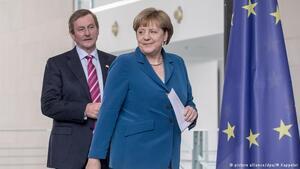
From top: Enda Kenny and Angela Merkel in Berlin yesterday; Economist David McWilliams and his tweet this morning

This morning, economist David McWilliams spoke to Seán O’Rourke on RTÉ Radio One.

They discussed Taoiseach Enda Kenny’s visit to Berlin, to meet German Chancellor Angela Merkel and their talks on the implications of Brexit on the Common Travel Area (CTA) between Ireland and the UK.

Mr Williams explained that while other EU countries should have an interest in Ireland and Britain’s CTA arrangements, they should not have a ‘commanding or a deterministic position on it’ and that Ireland should confidently assert this position.

To make his point he recalled the Dublin Regulation, which was signed in Dublin Castle in 1990, and essentially meant any asylum seeker who arrived from outside the EU had to apply for asylum in the first EU country they reached – placing the biggest burden on Italy and Greece.

Mr Williams suggested that this regulation, in a way, allowed the EU to avoid collective responsibility when it comes to responding to asylum seekers.

The interview opened with Mr O’Rourke asking Mr McWilliams about the tweet he posted this morning (above) concerning Mr Kenny’s meeting with German chancellor Angela Merkel.

Seán O’Rourke: “What prompted you to ask that question?”

David McWilliams: “Well because it struck me, it has struck me over the last six or seven years, Seán that, you know, the whole deal with the European Union that there will be a more European Germany, that’s the essence of the EU, going back to 1957. That Germany would be disciplined and would become a more European country. And, since the crisis of six or seven years ago, what we’re seeing really is what could be described as a German Europe, rather than a European Germany.

And it strikes me as kind of unusual, and a little bit undemocratic that a border between Ireland and Britain, we would have to go over to Germany to seek permission really, in a way as to which way we are going to negotiate. Now I know, the facts on the ground Seán, and we have signed Treaties and this is the implication of that. But it does seem to me a little bit odd that our leader has to go to Germany to seek permission, it seems, or to be given the green light, to have a discussion with Britain on a border between Ireland and Britain in a free labour movement area that has been free, not since 1920 Seán, since about 1420.”

Talk over each other

McWilliams: “I remember, even as a kid in the 1980s, at the height of the Troubles, going to the UK and yes, we had to show passports at Hollyhead but there was always a sense that Irish people could vote in Britain, if we lived there for a while, and this sense that somebody else is going to come in and, in a way, set the terms or conditions, particularly somebody who’s voted by a different electorate seems to me a little bit…”

Sean O’Rourke: “Yeah but here’s the point, David. I mean maybe you’re not being entirely fair to the Taoiseach. Because it’s not about looking for permission, it’s looking to build alliances. I mean he has President Hollande coming here next week and, you know perfectly well that under EU rules, we’re not in a position to now to do separate trade deals with the UK, it has to be done by the European Union, of which we are a part. And surely it makes sense, as you would in any political situation, to try to get people on your side?”

McWilliams: “Of course it makes sense to get people on your side but it would seem to me rather illogical and rather apolitical with a capital P, to have a situation where the border between two parts of Ireland needs to be mediated by people in France? I really don’t think this is actually a particularly logical way to go. And nor is it good for the people either on the south side of the border, or the north side of the border.”

“So, again, I suppose what this is exposing are these deep fissures in, these kind of chasms within the EU, where the pooling of sovereignty Seán, which is probably a good idea, OK, leads to complications and incompatibilities when specific issues come up which absolutely pertain to certain countries, over and above.”

“And I’ve always said that it would be illogical for the negotiations between Ireland and Britain, which they will be, to be dictated by the concerns of Poland or Lithuania or Latvia or other countries. And I suppose that goes to the essence of the problems of the EU now. Because, as you get bigger, Seán, you cannot mask over the cracks in a way in which you hope to do so. So, as you get bigger you’re always going to have these regional differences so therefore, for example, the relationship between Russia and Lithuania, which is existential to Lithuanians, is probably of no real consequence to us.”

O’Rourke: “Yeah but, again coming back to our border issue. Yes, it is the border between the Republic of Ireland and Northern Ireland but it’s also the border between the EU, or will be, and a non-EU country. Now that’s why the Lithuanians and the Poles and the French have an interest in the…”

McWilliams: They have an interest, no doubt, but they should not have a commanding or a deterministic position on it. And you and I must agree on that, Seán?”

O’Rourke: “Yes, but I suppose it’s part of a wider, it’s part of a wider EU context in which trade arrangements are made and also regulations about the movement of people. And nobody has yet, maybe you’ve come across it, or maybe you’ve got your own idea, come up with post-Brexit, the solution to the problems?”

McWilliams: “If you look at the Dublin Treaty. The Dublin Treaty was manufactured in Dublin Castle which is a way of stopping…”

O’Rourke: “This is immigrants now?”

McWilliams: “Precisely. But what it was a way of saying was, geographical certainties and geographical facts are as they are and, therefore, one of the ways in which you deal with immigrants is you’ll actually deal with the place where immigrants first arrive. Ok?”

“So that is a great way of the EU fudging collective responsibility for immigrants, putting it on the shoulders of those who have borders. So there’s a very clear precedent, Seán, you and I know this, for arrangements, consensual arrangements, and ideas that actually take into consideration the facts on the ground which are geographically, we have a border with Northern Ireland which happens, very soon, to be a non-EU country.” 

“So, this notion that we are in some way handless going into negotiations and there is no precedents or flexibility and you might call them fudges, I might call them flexibilities are what I would say, logical arrangements, seem to me to be a little bit a) ideological for Eurocratic fanatics and b) illogical for people who deal in the real world of politics. ”

O’Rourke: “So is the answer then to, if you like, dilute the influence and the role of the European Union. I mean like..”

McWilliams: “Well absolutely, absolutely, absolutely. The influence and the role of the European Union is going to be so ludicrous as to demand border posts with the UK when both Ireland and the UK suggest not to do so. Well then clearly it must be diluted.”

Listen back in full here