

SPLUTTER!
Con Kennedy fumes:
Spotted in Tarragona, Catalunya, Spain.. Sean is now British name!




Eamonn Moran
You may recall how, in April, Glenn Fitzpatrick launched a new blog, The Young Celts, as a means to allow Ireland’s younger generation discuss and debate matters affecting them.
Eamonn Moran, a 37-year-old IT worker and economics blogger, is a new contributor on the blog.
He writes:
The concept of age inequality is not a new one but the deliberate calculated ways powerful elites have instigated deliberate policies and have allowed multi-fronted, highly coordinated financial attacks as part of a more general push for inequality is relatively new in many parts of Europe, Ireland included.
These policies were copy and pasted from US policies in operation since the 70’s and which have been extremely successful in their goals of economic inequality, of which age inequality is an important factor. The economic downturn in 2007 set these policies into overdrive in Ireland.
Some of these methods include the increase in precarious work, zero hour contracts, increased use of unpaid internships, increased use of government internship schemes, coercing trade unions to abandon the principle of solidarity for younger members, reduced social welfare provision rights based on age, higher rent payments, higher barriers to home ownership and lower standards of social provision.
When added to the traditional pre-existing symptoms Ireland exhibits during economic downturns, such as focusing societal protections only to certain powerful sections of society and justifying this by saying young people have the option of emigration, we get a dangerous concoction that has driven increased age inequality at a speed that might surprise even more liberal economists.
What are the consequences of this? If there is an increased level of inequality upon people in their twenties and early thirties what will be the consequences for them and for society as a whole?
Some of the consequences for young people are fairly obvious, between 250,000 and 300,000 of them have left (most who were forced out of economic necessity) the country since 2007.
How will that effect demand in our housing market if 300,000 potential first time buyers are no longer in our economy? We are supposed to be in growth again at the moment but yet in the most recent figures the numbers of mortgages taken out was actually lower for April 2016 than for April 2015.
There is a dramatic demand in this country for economists and politicians to learn from the 2007 crash to stand up and be counted next time around. If they do, they can serve two important functions.
Act as a counterweight to insiders from their own short-term desire for self-interest which actually prolongs the downturn and also help Ireland, dramatically reduce the scourge of forced emigration.
That is a prize worth far more than our shameful adding of the half pence to the pence cowardice of the previous downturns.
It’s impossible to understand the reasons and methods of Irish age inequality without first looking at why and how it is happening internationally.
Modern neoliberalism which seems, in retrospect, to have been little more than a vehicle for increased inequality in advanced economies was developed in the Chicago Schools and first implemented in the United States, but has been copied to a greater or lesser extent in almost all post industrial countries more recently.
The main consequences of the economic crisis of 2008 on many countries in Europe has been an acceleration of the resetting of the ground rules by neoliberal elites to increase this economic inequality.
There are many fronts/forces on which this objective is being fought. The reducing of social welfare protections in general, the reduction of the percentage of people who are represented by trade unions.
The erosion in public services paid by central taxation which are then replaced by customer payment models which insist on individualised payment regardless of means.
This reduces the need for wealthier citizens to pay as much tax for the current level of services. The burden is spread more among the lower paid. When will broadening the tax base mean something more than taking more from those who have least in order to reduce tax burdens on those of wealth and those who earn more?
Even more importantly increasing inequality damages the social fabric of society. Reducing the idea of society and national interest and replacing it with a more individualised, consumer-driven vision (remember Irish Water’s pamphlet where they outlined one of their core branding objectives was to turn citizens into consumers) from where each individual is measured almost entirely on their ability to earn as much as possible. Those who are poor are losers who deserve their fate.
There is an attack on the concept of solidarity so younger people no longer expect same pay for same work and the massive increase of non/low paid internships. The increase of zero hour/ precarious work practices.
A deliberate move is being made all over the advanced economies to make work more precarious.
Alan Greenspan (the former Chairman of the US Federal Reserve) said that worker productivity increased in the US economy as job security reduced. There had been a systematic attempt to reduce job security across the American economy that he believed was helping him grow the GDP of the country faster.
This was before the crash of 2007. He was advocating the increasingly widespread policy of deliberately using fear of people losing their jobs to make lower-paid precarious workers do more for less.
It’s a policy that has been copied more recently all over Europe. Yet no one ever speaks openly about it. Young people are baring the immediate brunt of this policy as people who are already employed have better contractual rights with stronger protections.
Age inequality is an important ingredient of a more general drive neoliberal elites are using in achieving their objectives of increasing the power and wealth of the 0.1%.
Stoic older countries of central and northern Europe seemed to genuinely base more of their economic policies on basic fundamentals of economic principles in their whole national interests and have been slower to embrace the neoliberal methods. However they too are facing pressures from undemocratic European institutions such as the ECB and the European treaties themselves.
Those Northern European Countries still seem to have a genuine sense of social democracy as opposed countries of the southern Europe, such as Italy, Spain and Greece. Ireland seems to share many of the characteristics of the southern countries, large pre-tax income inequalities and an instinct to protect certain citizens rather than spread the pain more evenly during recessions.
This short-term instinctive desire to circle the wagons is counterproductive and economies which do spread the burden more evenly among their citizens actually have shorter, less deep downturns.
Some decisions taken by the upper echelons of the trade union movement since 2008 have also been damaging to younger people. The unions agreed with government to reduce working conditions for new entrants in exchange for not reducing pay and conditions of existing members. What fools they were.
How did they expect to abandon the core union principle of solidarity and expect to be able to represent their members into the future when increasing numbers of their members would be seen as second-class workers doing exactly the same jobs.
Their current cries that the pay restrictions were imposed are baseless. As if the unions had suddenly lost the capacity to ballot the members. These agreements were made to protect the pay of older union members.
One of the key issues for young people in Ireland at the moment is mental health yet very few people are talking about the connection between the increase in the mental health problem and the decrease in the economic realities of young people in a world that promises so more than ever before.
I would encourage youth mental health organisations to deal with the physical and economic, as well as psychological reasons, that can lead to poor mental health. This is not to take away from the very real psychological problems some people with mental health problems are dealing with.
One of the main reasons I believe that vested interests have been able to get away with being protected is that the small number of youth representative bodies are timid in their criticisms of government.
The reason for this is obvious, they are dependent on those same governments for funding – funding that is in shorter supply during the time their voices were needed most, between 2008 and 2012.
I don’t believe that the vast majority of people over 35 are deliberately actively trying to discriminate against younger people but there is a small minority of policy makers who are making it in older people’s interest to discriminate in their own short-term interests.
It’s a clever move but I would encourage people over 35 and trade unions to resist the short term gain and look at the longer term imperative of maintaining solidarity.
This was one area where both SIPTU and the Luas drivers let themselves down badly recently in their eventual agreement with Transdev.
In the eventual agreement, new drivers’ starting salaries will be lower than those of existing drivers, despite the drivers having blocked a deal on these grounds earlier.
Similarly all new entrants to the public sector were and are similarly disadvantaged. I would encourage younger trade unionists to create more noise to stand up to the actions of union leaders that will damage the long term prospects of the very unions themselves.
Those union leaders will have retired when the fruits of all of this land on your desks.
Manufactured consent of age inequality in modern Ireland (The Young Celts)
Previously: Second Generation
Thanks Glenn

The White Hag Brewery, Sligo open day, December 2015
Sligo’s Controversial craft brewer The White Hag is TWO.
Hic
Paul Mullin, of the ‘Hag, writes:
The White Hag Brewery in Ballymote, Sligo are inviting beer fans from around Ireland to celebrate their second birthday on July 23..
Following a hugely successful open day at Christmas where over 160 people availed of the opportunity to see inside of Sligo’s first brewery in over 100 years, we are throwing the doors open once again. But this time they are bringing their brewing buddies….
We’re hosting Kinnegar from Donegal, Beavertown and Redchurch Brewery from London, Black Donkey from Roscommon, Otter Bank and Yellow Belly from Wexford.
Tickets cost only €20 and include all of the above + more, and for those who don’t have a designated driver, Irish Rail are doing a special €30 return fare from Dublin, or €9 from Sligo. With Bands, DJs, Brewer Panel discussions, shouting and roaring, etc – sure you couldn’t miss it!
The party is running from 3pm – 9.30pm, with the late after party in The Swagman from 10pm.
We’re giving away a pair of tickets to a BS reader who can successfully complete this sentence:
‘I alone deserve the damn White Hag tickets because_____________________’ .
Lines MUST close at MIDNIGHT
Theresa May
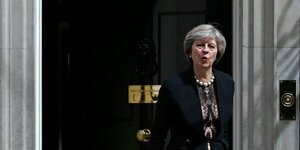
I was disappointed to see The Irish Times describe Theresa May as a “vicar’s daughter” in the headline “Tough and diligent vicar’s daughter with moral bent”. I have often seen Margaret Thatcher described as a “grocer’s daughter”. It seems female political leaders are always someone’s daughter. Never, however, have I seen David Cameron described as a “stockbroker’s son” or Tony Blair as a “barrister’s son”.
Grace Cuddihy,
Moscow.
Theresa May – ‘vicar’s daughter’ (Irish Times letters page)
Pic: The Boston Globe





Yesterday.
The Police Service of Northern Ireland (PSNI) block members of the Orange Order from returning up Woodvale Road towards the Nationalist Ardoyne after the July 12 parades in Belfast.
Sam Boal/Rollingnews
What you may need to know:
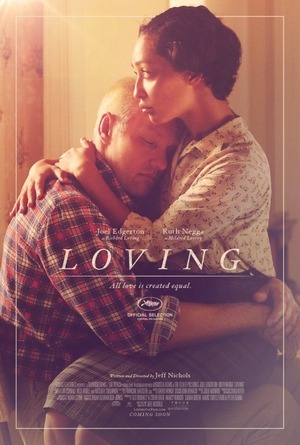
1. In 1960s Virginia, Mildred and Richard Loving (Ruth Negga and Joel Edgerton) are sentenced to a year in prison for interracial cohabitation. True story, yo.
2. The Lovings won their case in the Supreme Court, and the result led to the abolition of US anti-miscegenation laws. Everything’s cool now.
3. It wouldn’t be a Jeff Nichols picture without Michael Shannon..
4. Loving went down well at Cannes, and it’s getting a stateside release in November – right at the start of Oscar season.
5. This is the one that should send Negga into the big league.
6. Broadsheet prognosis: I’m lovin’ it.
Release Date: February 17, 2017.
(Mark writes about film and TV at ScreenTime.ie)

He’s back
Are Ya Having That writes:
‘LeatherJacketGuy’ Beerlieves he has found the ‘Funniest Olympic Moments Ever’ and the ‘Craziest Facts About Brazilian People!’


From top; Soc Dem leaders, from left: Stephen Donnelly, Catherine Murphy and Roisin Shorthall launching the party’s charity regulation motion yesterday; Anne Marie McNally
it’s time we asked ourselves if vital services should be provided by the State rather than outsourced to charities.
Anne Marie McNally writes:
Last night in the Dáil the Social Democrats tabled a Private Members Motion calling for more robust scrutiny and regulation of the charity sector.
The motion comes on the back of the recent Console revelations which, despite the experience of Irish people regarding a charity ector scandal, still managed to shock us!
But it shouldn’t have shocked us given that we never put in place the framework to ensure there would be no repeat following the previous scandal or the ones before that.
Remember the Rehab scandal? Recall the Central Remedial Clinic scandal?
Yep, they continue to happen and we continue to be outraged for the requisite time then the headlines forget and we all go back to our daily lives.
But how many of us cancel the Direct Debits to various charities as we do? The many great people working and volunteering in the sector suffer and most importantly, the service users suffer.
In the wake of the Rehab scandal, charitable donations to Rehab fell by two million euro. Console has been all but wound up.
Given the negative impact on charitable donations caused by these recurring scandals it is incumbent on us to ensure we, in so far as is possible, rogue-proof the charitable sector so that public faith is restored and maintained.
In 2009 the Charities Act came into law. This act provided for the establishment of the Charities Regulation Authority and within that, the Charities Regulator. Part 4 of the Act provided the Regulator with investigative powers.
All sounds good right?
Well the problem arises when you think back to the 2009 Act and realise that actually the Regulator was appointed until 2013, four years after the Act was passed into law.
Even more astonishingly Part 4 of the Act, conferring investigative powers on the Regulator, was only commenced by the Minister just last week and will come into effect in September. Hardly a model of good governance and regulation in the sector now is it?
There are over 20,000 registered charities and you’d be surprised at some of the organisations that can classify as charities.
Schools and sports clubs, community organisations and myriad other endeavours will often be classified as charities. I previously worked in an organisation that had charitable status.
The organisation I worked within was funded almost entirely by public funds. There were reporting requirements to each funder and there was the necessity for annual audit. Yet within that setting, just as I joined, there was an instance of misappropriation of funds.
The funders moved in, the auditors scratched their heads and everyone was shocked. There was a criminal investigation that has yet to be completed seven years later.
Anecdotally I hear these types of stories regularly. The reaction that I witnessed from the funders and the authorities did not give me confidence of the infallibility of the sector to rogue operators.
And there will always be rogue operators no matter what protocols you out in place but the trick is to have an appropriate framework so as to ensure only the really determined will try to flout the rules and when they do the system is designed to both catch and hold accountable the culprit – in a timely and appropriate fashion.
Separately it’s time for us to start asking ourselves if some of these vital services should be provided by the State rather than outsourced to voluntary and charitable endeavour.
When concerns began to be raised about Paul Kelly in Console as far back as 2006 then again in 2009 and most recently in 2013, he was still in a position to go shopping on the Console credit card in 2016 because the HSE felt hamstrung. If they acted on him they risked closing down the vital helpline provided by Console and they couldn’t take that risk.
We paid dearly for the outsourcing of the responsibility of such a vital service. The entire sector will now pay dearly by way if reduced donations.
It is a progressive step that the Government accepted our Motion last night and with the political will to carry through on the premise of the Motion we can hopefully avoid a future outrage and a restoration of the public trust in a sector which should continue to play a pivotal role in civic society even if we take back responsibility for some vital services.
Anne Marie McNally is a founding member of the Social Democrats. Follow Anne Marie on Twitter: @amomcnally
Rollingnews

Economist Paul Krugman With his late cat, Doris Lessing
Paul Krugman has stood up to say
That we should put the Champagne away
Can we really construe
Our economy grew
So much and so quickly? No way.
John Moynes

Last night.
The bar of the Grand Social, Liffey St, Dublin 1.
(Thanks Harry Warren)