

We’ve lived through the long painful night
Of a bitter industrial fight
There’s a deal on the table
So now are we able
To say that the dawn is in sight?
John Moynes
Rollingnews



We’ve lived through the long painful night
Of a bitter industrial fight
There’s a deal on the table
So now are we able
To say that the dawn is in sight?
John Moynes
Rollingnews

From top: Irish Water bill; Brendan Ogle
But will the 32nd Dáil subvert its democratic mandate to keep Irish Water running?
Brendan Ogle writes:
When Right2Water exploded onto our streets on 11 October, 2014 as the umbrella campaign for the anti-water charges movement a promise was made.
Unusually in Irish public life this promise was kept.
The promise was that Right2Water would be around AT LEAST until the next election seeking the abolition of the regressive double water tax. We also promised that this would be the number one issue in the next election.
For a year and a half commentators and establishment politicians sneered at these claims and repeatedly told us that the campaign had dissipated.
After election 2016 nobody is sneering.
What seemed unlikely, or even impossible, has happened. Labour have been humiliated by their traditional voters and Alan Kelly has been humiliated by what remains of Labour.
Fine Gael have lost one third of their seats and the two large right wing ‘Irish Tory’ parties, Fine Gael and Fianna Fail, can’t even claim that they command the support of a majority in this divided state combined. Seismic change.
Irish Water has been rejected in the polls and, politically and financially, is a beaten docket with charges now suspended. Irish Water, and the privatisation agenda that it represents, has been beaten up, but it is not yet beaten.
Last week Fianna Fail failed to deliver on its electoral commitment to abolish the super quango when given the opportunity in a Dail vote.
Fianna Fail joined a long list of 59 TDs who either abstained on this vote or were unavailable. Even worse, however, is that the vote was carried by 60 TDs vs. 39 TDs and the 60 even included John Halligan and Finian McGrath as Independents.
So, for now, Irish Water continues to function on life support. It’s time to pull the plug.
The day before this vote I attended a very positive meeting of the three Right2Water pillars. This involves trade unions, political parties and independents, and also community activists, working together to seek abolition of Irish Water.
These three strands worked together since 2014 and delivered the largest (per capita) and most peaceful protest movement anywhere in the world today.
Our objectives are simple. We want Irish Water abolished and replaced with a single national water and sanitation board funded through progressive general taxation.
We also want public ownership of the public water supply protected in a new Article 28 Section 4:2:1 of our Constitution to read:
‘The Government shall be collectively responsible for the protection, management and maintenance of the public water system. The Government shall ensure in the public interest that this resource remains in public ownership and management.’
This will require a referendum and in the coming weeks a Bill sponsored by Joan Collins TD and signed by Sinn Féin, PBP, AAA and other Independents goes before the Dail proposing exactly that.
Since the beginning public debate of the Irish Water issue has been conducted as if a fiction were true. That fiction is that Irish Water, the meters and the billing system is not about privatisation.
All across the globe vulture funds and corporates are taking ownership of public water supplies and turning our human Right2Water into a right to profit for the 1%. They are turning that which we need to live into a commodity that they can turn off and deny to citizens at will.
Apart from ‘financial services’ nothing delivers bigger profit margins for these vultures than our life sustaining water.
From Bolivia to Berlin, and from Portugal to Portroe corporate interests have ensnared politicians to do their bidding and hand the people’s water over to them.
But the people have fought back and prevented this happening or even won water back through re-municipalisation as has happened in Bolivia, Berlin and Paris for example.
Water in Paris and Belin were both re-municipalised in 2014 following rising bills, lack of investment in new infrastructure and public pressure.
The Cochabamba water war took place in Bolivia’s third largest city in 1999 and 2000. A community coalition ‘Coordinadora in Defence of Water and Life’ won after public protests which saw one protestor killed. The privatisation was reversed.
Of course, on the rare occasion that the media have put this to them, politicians in Fine Gael, Labour and the Greens have rejected the argument that they are engaging in a privatisation quest.
And they have been allowed to issue bland denials of what is blindingly obvious without being held accountable.
That is now about to end. If privatisation is not the agenda behind Irish Water then this ‘Government’ can save itself no end of trouble by simply supporting Joan Collins’ bill when it goes before the Dail.
I personally believe that the expected failure of Fine Gael to support this bill, or further obfuscation by Fianna Fail or Shane Ross’s ‘Independents’ that prevents this vital bill from being passed, will be a subversion of the democratic mandate of the 32nd Dail that will require a response.
This Government is barely a Government at all and it is already hanging by a thread before it has even begun.
People power led to a massive change in the electoral shape of Ireland in the February election. I don’t believe for one minute that the necessary change is complete.
In fact I believe it has only just begun.
Brendan Ogle is Unite Trade Union and Right2Water Co-ordinator

Yesterday.
Dundrum Road, Dublin.
(Thanks Laura Gaynor)
Meanwhile…

Alan tweetz:
Credit Unions falling over themselves to give out loans u say Broadsheet? Property one-upmanship? #babywereback

Yesterday.
John Mollohan writes:
From News and Chews, Ballyragget [Co. Kilkenny] – now that’s a daycent 99!!!













MORE to folly.
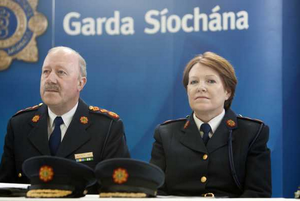
Former Garda Commissioner Martin Callinan and Garda Commissioner Nóirín O’Sullivan
Commissioner O’Sullivan was not aware of any private meeting between former Commissioner Callinan and Deputy McGuinness as outlined by Deputy McGuinness in the Dáil.
In relation to whistleblowers, Commissioner O’Sullivan has consistently stated that dissent is not disloyalty and as a service we are determined to learn from our experiences. An Garda Síochána agrees that whistleblowers are part of the solution to the problems facing the service.
The Commissioner has recently appointed a Protected Disclosures Manager and an appropriately trained dedicated team will be established to oversee all matters related to whistleblowers.
Transparency Ireland has agreed to work with An Garda Síochána to help ensure protected disclosures and people making them are welcomed and protected in An Garda Síochána.
Garda Commissioner Nóirín O’Sullivan in a statement released this evening.
Meanwhile…

Lorcan Roche Kelly
You may recall the murder of Sylvia Roche Kelly.
The mother of two, from Sixmilebridge, Co Clare, was murdered by Gerry McGrath, from Knockavilla, Co. Tipperary, at The Clarion Hotel in Limerick on December 8, 2007.
McGrath was out on bail – for attempting to abduct a child, on October 9, 2007 – when he killed Sylvia.
He was also out on bail for assaulting taxi driver Mary Lynch in Virginia, Cavan on April 30, 2007.
Further to this…
Sylvia’s husband and journalist Lorcan Roche Kelly spoke to Seán O’Rourke this morning about An Garda Síochána and his trust in the same.
Lorcan Roche Kelly: “I think the problem with Noirin O’Sullivan – this is nothing personal against Noirin at all, I’m sure she’s a perfectly good Garda – is that she is a commissioner that was appointed internally. She came up through the system that exists within the gardaí for the last however many years and it’s that system that has been the problem. So, to get that system reformed, I don’t think Noirin O’Sullivan should have the public’s confidence in being able to reform it because she is of that system. Like I think if you look over the border, what we saw in 2001 with the Royal Ulster Constabulary being completely transformed into the Police Service of Northern Ireland, it’s, I’m not saying we need to change the name of the Gardaí but it’s that level of reform that the Gardaí now need because they have resisted reform for so long that the reform, I suppose, the actions needed have built up to such an extent that we’re nearly at a root and branch level of reform.”
Seán O’Rourke: “Yeah but again that is very central to her whole approach and that’s what’s being seen now by the new Policing Authority. Was it not a good starting point in itself? I suppose it’s precious little consolation to people like yourself and the [Shane] O’Farrell family, for instance. The Commissioner did say, ‘we are sorry the victims did not get the service they were entitled to’.”
Roche Kelly: “Isn’t that the most mealy-mouthed apology. It’s like: I’m sorry your coffee wasn’t as hot as you wanted it to be. Like this is much more serious..”
O’Rourke: “Ah is it not a bit, and I accept now that nobody knows apart from you and your family the grief that you’ve had to endure but would you not give her a bit more credit it than that?”
Roche Kelly: “To be honest, after nine years and after the, I suppose, the stonewalling we’ve received over the years, it’s very hard for me to look at a guard and say, ‘ok, I trust your bona fides in this’. Like this apology came after the O’Higgins Commission, the apology, when the writing was so clearly on the wall that then, ok, now, an apology was necessary. So rather than making a fulsome apology, the apology was made as a press release, that I didn’t receive, I’d to go on Twitter and ask, ‘does any journalist have this press release so at least I can see it’.”
O’Rourke: “Have you had any direct personal apology yourself, from the gardaí?”
Roche Kelly: “Last week I had a meeting with some gardaí in Dublin with the idea of them outlining the reforms they’re bringing in. So it was, the idea of the meeting was to show what reforms they’re bringing in to show this won’t happen again, I think is where we are.”
O’Rourke:“And they clearly would have been senior. How senior gardaí were they? Was there an assistant commissioner or deputy commissioner among them?”
Roche Kelly: “No.”
O’Rourke: “And were you persuaded by what you heard?”
Roche Kelly: “Again, I’m probably the least persuadable person when it comes to Gardaií reform but no it was..no, I think it’s as simple as that, to be fair.”
O’Rourke: “And what would persuade you, Lorcan?”
Roche Kelly: “I think, in order for a reformed process to have credibility, the first thing you need to say is, ‘ok, the people that need to be reformed shouldn’t be the people that do the reforming’. Like, again, nothing personal against Noirin O’Sullivan, I’m sure she’s a fantastic person and she’s a very good guard, but in order to reform an organisation, you need to bring in an outsider. Like, say, in the corporate world, if you want to change a company, you appoint a new CEO from outside because you can’t appoint an internal appointment because, you’ll say, well that’s just going to be more of the same in the Gardaí. So the Gardaí, as an organisation, have to be beyond reproach and we have spent, I have spent nine years, the Irish media have spent the last month and a half reproaching the Gardaí, saying, ‘look this is where the problems are, what are you going to do to address these problems?’, ‘how are you going to address these problems?’. It’s a constant drumbeat of a question that is landing at the Gardaí’s desk and, in order to address those problems, they need to have an outsider come in. And again, to look at what we saw what was done over the border 15 years ago, so it is not an impossible task but there has to be willingness to do it.”
O’Rourke: “To what extant, Lorcan, are your views informed by that experience, that nine years as you say, in the course of which you took a legal action which, I think, you knew would fail, seeking to get fuller information. And then you had the dealings with GSOC and you’re still not satisfied that there is sufficient accountability there clearly.”
Roche Kelly: “When I was doing the research, one of the interesting statistics from GSOC that I found out and you mentioned this yourself with the exoneration of the gardaí in Cavan-Monaghan at a previous report in 2011 was that the way GSOC works is that they can make recommendations for disciplinary action against a guard but they have no power themselves to implement disciplinary commission, that goes to a senior guard. And in 2012, the year my complaint came up, there was 5,600 complaints against gardaí. Over 1,000, I think it was 1,017 of them were put forward for disciplinary action. Of those 1,017, 69 resulted in some disciplinary action. So, if you’re a garda and a complaint is made against you there is a less than 1% chance of you facing any disciplinary action at all. Which, some people could say a lot of the complaints against gardaí may be spurious but I doubt 99% of them are. It’s the culture, and that needs to be highlighted, because it’s a cultural problem, rather than admit there are problems, let’s ignore the problem and move on as an organisation and to move on within the gardaí seems to me to mean, ‘let’s pretend none of this happened’.”
Later
Roche Kelly: “When my wife was murdered, our daughter was in junior infants in primary school, she’s now in first year in secondary school. So her entire primary school life has been based on: where is the answer to these questions? And I haven’t found them. And the only reason that I haven’t found the answers to these questions is because I have been stonewalled by the gardaí. This entire, my entire thing could have been sorted out with two phone calls and a letter eight years ago.”
O’Rourke: “Did you get the answers in the O’Higgins report?”
Roche Kelly: “I got the answers, the factual play that I had known all along. It was, why had the gardaí not admitted that they had made a mistake here; why have they not come out and said, ‘ok, if we had done our job right, Sylvia would still be alive’ and here’s what we’ve done to address it. And like the O’Higgins report, again, ended with a kind of a thing that happens a lot in Ireland where there are systematic problems where many things failed, therefore no one should be individually held responsible. And if that’s the response of the O’Higgins commission, then the book for that has to go to the top of the organisation. And again, I’m not saying Noirin O’Sullivan is anyway incompetent or had any hand, act or part in this but if the organisation is fundamentally rotten or, I won’t say corrupt, but is damaged then it needs to be changed from the top down.”
O’Rourke: “And what about the fact that there was an open, international competition for the Commissioner appointment, after Martin Callinan resigned or was retired, whatever way you want to phrase it, and she came through that competition?”
Roche Kelly: “Again, I don’t think it’s the fact that the competition existed, I would understand that wanted a challenging position would look at the garda, the job of the head of the garda, and say that might be a bridge too far for me, to reform an organisation like that. But if there is an open competition then have an external candidate so internal candidates cannot apply for it because it is a situation where you need an external candidate.”
Listen back in full here
Commissioner ‘not aware’ of Callinan’s car park meeting (Today FM)
Previously: Better Late Than Never



The ‘smartbike’ by Amsterdam-based bike maker Vanmoof comes with unique features, lets owners never have to worry about theft again.
Eequipped with GSM and bluetooth tracking, the ‘smartbike’ will always stay connected throughout a city.
but even if a thief gets past those features, vanmoof is introducing a ‘peace of mind’ guarantee: if the bike is stolen, a recovery team will use the bike’s anti-theft tracking technology to locate and return it its rightful owner.
if they can’t recover it within two weeks, vanmoof will replace it….
Amsterdam-based bicycle maker vanmoof guarantees the smartbike outwits any robber (DesignBoom)
Specific Gravity writes:
Bold claims, but is it Dublin-proof?

Ronan Cannon writes:
The Gods have spoken! Doubt them at your peril! Spotted on Hainan Island, southern China. I think it means we’re going to ‘clean up’ at the Euros!


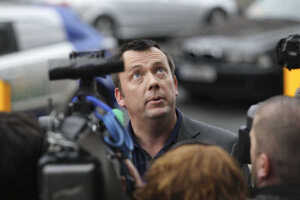
From top: Former Garda Commissioner Martin Callinan; Fianna Fáil TD John McGuinness; Sean O’Rourke
You may recall Fianna Fáil TD John McGuinness’ speech in the Dáil last week in which he stated:
Every effort was made by those within the Garda Síochána at senior level to discredit Garda Maurice McCabe.
The Garda Commissioner confided in me in a car park on the Naas Road that Garda McCabe was not to be trusted and there were serious issues about him.
The meeting between Mr McGuinness and former Garda Commissioner Martin Callinan took place in the car park of the Bewley’s Hotel on the Naas Road in Dublin on January 24, 2014.
This was six days before Sgt McCabe finally appeared in private before the Public Accounts Committee, of which Mr McGuinness was chairman.
The Irish Examiner has reported that it was Mr Callinan who sought the meeting with Mr McGuinness.
Further to this, Mr McGuinness spoke to an indignant Seán O’Rourke on RTÉ Radio One this morning.
Grab a tay…
Sean O’Rourke: “The question is being asked again. I know you spoke on This Week with Richard Crowley about this yesterday. Just to quote to you, the heading on the Irish Independent’s editorial this morning: ‘It’s a bit late telling us this now, Mr McGuinness’.”
John McGuinness: “But it isn’t, Sean. The fact of the matter is and I explained this before. That the reason why this is being put it into the public domain now by way of the Dáil debate last week is because Maurice McCabe continues to be questioned. His integrity was questioned by the Garda Commissioner, the context of O’Higgins, and arising from the O’Higgins report, I felt that it was absolutely necessary to make clear that there was and is an ongoing effort being made to undermine individuals like Maurice McCabe and they are fearful of coming forward to give their story. I had to make a decision back then when I met the Garda Commissioner and in my opinion, to put it simply, it was a decision, the lesser evil, for the greater good, because Maurice McCabe then did come forward in full uniform and gave us the evidence that was required to deal with the penalty points issue.”
O’Rourke: “Yes and some…”
McGuinness: “And everybody in the political system, and elsewhere, were against him coming forward.”
O’Rourke: “There was subsequently then a Commission of Inquiry, presided over by Mr Justice O’Higgins, into not just the penalty point issue but other matters. There were 97 witnesses at that commission, were you one of them?”
McGuinness: “No I wasn’t one of them, no.”
O’Rourke: “Did you not think though that you had this vital insight into the thinking, at senior level of Garda management, assuming that your story is accurate, that this should have been brought forward to the Commission.”
McGuinness: “Well that vital insight, as you describe it, Sean, was known across the system within Leinster House…”
O’Rourke: “Oh, what you talked about last week was a very, very specific intervention by the then Garda Commissioner..”
McGuinness: “Oh yes, the intervention was…”
O’Rourke: “And why didn’t you go to Judge O’HIggins and tell him?”
McGuinness: “Because, at that time, the decision had to be made, whether or not we could get Maurice McCabe before the [Public] accounts committee. Efforts were made to stop Maurice McCabe from coming forward and when he did, he did great service and…”
O’Rourke: “But…”
McGuinness: “The evidence was brought before us and we made our conclusions..”
O’Rourke: “But what about the sequence here though. Did, was the Commission not sitting after that appearance at the PAC, by Maurice McCabe?”
McGuinness: “Yes but the point I’m making is that efforts were made prior to him appearing before the Public Accounts Committee to stop that appearance. In fact, when we had the evidence it was demanded of us that we would return the evidence to the Garda Commissioner at that time and we decided not to and we then went through a legal process whereby we would examine the evidence and then listen to Garda McCabe in private session. That session was the only session in the five years where evidence of that kind was taken from an individual and the rest came from there. Now at that point…”
O’Rourke: “That’s all, that’s all perfectly logical and people will not have any difficulty in understanding that, John McGuinness, but what they will perhaps have difficulty understanding is why you sat on your hands with this information about a secret meeting in a hotel car park with the then Garda Commissioner which, you say, was set out, was designed on the Commissioner’s part to undermine the credibility of Maurice McCabe. And you say you didn’t go to the, to the O’Higgins Commission with that?”
McGuinness: “It’s necessary, Seán to say this now because of the fact…”
O’Rourke: “But there was a judge of the High Court sitting on all this?”
McGuinness: “The O’Higgins…”
O’Rourke: “You didn’t go there?”
McGuinness: “Yes. otheThe O’Higgins commission has made their report and I allowed that process to go through, believing that Maurice McCabe would be exonerated. Now, what has transpired after that, in leaked documents and so on, is the fact that the Garda Commissioner set out to, it is reported, set out to destroy the credibility of Maurice McCabe and his integrity. And because that happened, I felt that it had to be put on record that this meeting happened and that, during all of this time, there was an effort made, at senior level, within the force, to undermine not only Maurice McCabe but many others who have brought forward vital information into how the whole, sorry, as to how their work is being done. And I point to the Lucia O’Farrell case. You have another case there this morning. But there is the Lucia O’Farrell which, if it was examined, would tell us everything that is wrong with the Garda investigation and that resulted in the death of Shane O’Farrell.”
O’Rourke: “But are you, are you saying in all of this, you don’t accept, for instance, there have been not just one but two statements by Garda Commissioner Noirin O’Sullivan, the most recent of which was issued on the 25th of May in which she states very clearly that they must radically and permanently change the pattern of their dealings with whistleblowers and they realise that there are shortcomings and she’s adamant that she did not set out to attack the integrity of Maurice McCabe.”
McGuinness: “Well, Seán, let me take you back to 2011, following the results of a report, sorry, an investigation into that district where a chief superintendent exonerated everybody. Everybody. And that particular report now stands in stark contrast with the findings of O’Higgins. And because of that we need to understand O’Higgins through that particular investigation in 2011. And serious questions remain unanswered and the questions are: is there a continuous culture to cover up, within the Garda force, the whistleblowers that are under siege in that…”
O’Rourke: “Yeah but you covered up your own meeting, your own secret meeting with the Garda Commissioner?”
McGuinness: “No I didn’t. Had I brought that forward, at that time, Seán, it might very well have scuppered the whole Public Accounts Committee…”
O’Rourke: “No but long after, long after the successful appearance by Garda McCabe, which clearly, you know, had the desired result on your part, you go to hear him, and members had a chance to make their own minds up, but long after that, the O’Higgins Commission was still in session. You could have gone there with information about this meeting which would have helped Judge O’Higgins in his deliberations. Do you accept that?”
McGuinness: “I accept that that may be the case…I made…”
O’Rourke: “May be the case. Do you regret not going to him?”
McGuinness: “I made the call, Seán that, having heard the O’Higgins report and having listened to the debate that it was time to put on record a piece of proof that showed that the culture within the force continued in a vein that militated against Sgt Maurice McCabe…”
O’Rourke: “Was it, was it remiss of you not to go to the O’Higgins Commission?”
McGuinness: “It was my judgement, it was my judgement that I would do it in this way and I believe that having the O’Higgins report come out and been accepted and Maurice McCabe be exonerated, that was fine. But now we have another controversy and it is because of that controversy, and in the intervention of a Dáil debate last week, that I raised this matter and I believe I was correct to do it in that way…”
O’Rourke: “You see nothing wrong…”
McGuinness: “For the better or the greater good, we have got the evidence out, we’ve had a public hearing in relation to Maurice McCabe, none of that would have been able to happen if a different course of action was taken prior to that. And I believe that my actions have been vindicated by virtue of the fact [inaudible] full disclosure.”
O’Rourke: “Is it possible that you felt, in hindsight, at the time that it really wasn’t good form on your part, as chair of the PAC, to hold a meeting with the Garda Commissioner, not to tell your fellow committee members that you had done so and then you sat on that information because you didn’t want to be embarrassed by it becoming publicly and then very, very late in the day, you decided to come clean about it?”
McGuinness: “None of that is correct, Seán. The fact of the matter is…”
O’Rourke: “But it is correct to say that you didn’t go to the O’Higgins…”
Talk over each other
McGuinness: “The vile stories that were being circulated in relation to Maurice McCabe were known to most people that were interested in the plight of that individual, we knew about those stories and I believed in Maurice McCabe and I’m glad that I’ve now been vindicated in that position. Because Maurice McCabe’s character and his integrity has come out intact, although it’s still being questioned within the force, during the course of the O’Higgins inquiry and that is the fact.”
O’Rourke: “And what about the last line in that aforementioned editorial in the [Irish] Independent: ‘Mr McGuinness let down the whistleblowers, the Dáil and the public by keeping his secret to himself for so long.”
McGuinness: “No I actually think it was possible for the whistleblowers to come forward in the full, with the full protection of the Public Accounts Committee.”
O’Rourke: “Yes you did.”
McGuinness: “And indeed, the Public Accounts Committee itself, because it’s not about me, dealt with it in a very honourable and straight forward way and resisted the attempt by the authorities to take back the evidence and to not have it dealt with and had I done anything else, other than what I did, then we would not have heard from Maurice McCabe..”
Talk over each other
O’Rourke: “Yeah, there’s no disputing any of that but…you’re not answering the question we’re asking. That’s fine, nobody is criticising you for that but people are criticising you for is what you did after, or didn’t do after, Maurice McCabe had been to and from the PAC.”
McGuinness: “No you asked me about the last line in an editorial..”
O’Rourke: “Yeah and it’s about what you did or didn’t do when the Commission was sitting…”
McGuinness: “No, the last line in the editorial…”
O’Rourke: “…give O’Higgins vital information..”
McGuinness: “That last line in the editorial, which you speak about, suggests that I let down the whistleblowers, I would ask the whistleblowers…”
O’Rourke: “By keeping the secret to yourself for so long?”
McGuinness: “No, they would speak for themselves and, in fact, by dealing with the matter in the way that I did, I have supported the whistleblowers and I have up until now…”
O’Rourke: “Up to a point, up until the Commission was sitting…”
McGuinness: “When Maurice McCabe’s character and credibility is now even being questioned, is now even being questioned, you have to ask yourself, forget all the noise about who did what and when, what’s happening now in relation to the whistleblowers, it’s the same thing, over and over again, they’re having to defend themselves for a second and third time. What about the death of Shane O’Farrell and what happened in all of that, that was reported. How did the Chief Superintendent exonerate everyone in 2011? When in fact the O’Higgins report says that it’s quite the opposite. This whole debate is a nonsense and the use of unnamed sources is just another attempt to undermine not just me but others that are involved in this. And it would be far better for them if they put their names to their statements and they stood over what they are saying, similar to what I did. And I believe in Maurice McCabe and I still do. And people who are within the force, who have an issue with Maurice McCabe, who have an issue with dealing with the truth, should come forward and deal with the culture that is allowing this to happen. Many people may resign but that culture needs to be broken and people within the force need to be supported…”
O’Rourke: “Are you saying in that, though, are you not overlooking not just the new Commissioner, the present Commissioner Noirin O’Sullivan’s statement and her assurances but also the very hard-hitting approach taken by the new Policing Authority. They have clearly called sernior Garda management from the commissioner down to account for the changes that are needed.”
McGuinness: “But isn’t that a wonderful fresh voice that’s in there in the Policing Authority in terms of Josephine Feehily. Isn’t it wonderful that she was able to come out and stand up and question what was happening and doesn’t that vindicate all of the actions that were taken by the Public Accounts Committee, by me, and by many other people who were highlighting this to their detriment and yet they came forward and they battled to the very end. And now they have someone in the Policing Authority that is willing to take on the force, is willing to take on the establishment and bring about the cultural change that is absolutely necessary in this so that cases, such as Shane O’Farrell, and others, can be investigated and the truth be told at last.”
Listen back in full here
Saturday: Disgusting
Previously: ‘We Are Part Of A Cover-Up’
Rollingnews
