

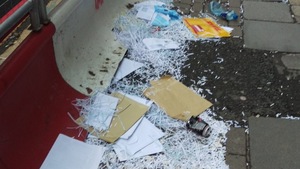
This morning.
Dawson Street (Dublin 2).
Tim Kinsella tweetz:
Could this be your confidential information all over the top of Dawson Street? Legal, company and personal documents…..
Anyone?



This morning.
Dawson Street (Dublin 2).
Tim Kinsella tweetz:
Could this be your confidential information all over the top of Dawson Street? Legal, company and personal documents…..
Anyone?





MORE to folly


This afternoon.
Enda Kenny and Michael Noonan absorb news of a 80- 51 vote against Mr Kenny remaining as Taoiseach as the Dáil reconvenes. All Labour TDs abstained.
Watch proceedings live here
Meanwhile…

Ceann Comhairle Seán Ó Fearghaíl announces the result of the vote for Fianna Fáil leader Micheál Martin as Taoiseach.
Spring hail and rain in Dublin ! Lovely weather pic.twitter.com/ERR7FgWyTj
— Niall Carson (@niallcarsonpa) April 6, 2016
This afternoon.
Redmond’s Hill, Dublin 2.
Rastafari.

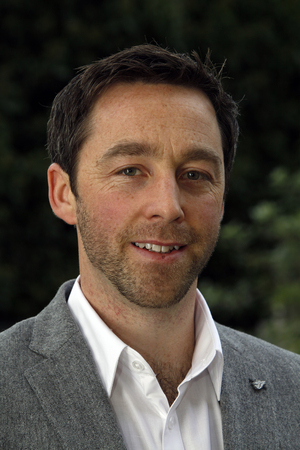
From top: Dolphin Barn, Dublin; Dr Rory Hearne
An important question needs to be answered by the civil service and political decision makers: why community services and regeneration projects were disproportionately cut during austerity?
And why they are still not restored?
Dr Rory Hearne writes:
Communities are the heart of this country. And community based services – from care for the elderly, child and family supports, housing and homeless services, community work, youth and sports projects, community gardens, tidy towns – have been the heart of many communities in Ireland for decades.
Unfortunately austerity cuts have had a devastating impact on these services and community work.
Our most disadvantaged communities (in rural areas, small towns and the large estates in our cities) and vulnerable groups (such as lone parents, those with a disability, the elderly, children, Travellers, migrants) are most reliant on these services and therefore they have been hit hardest from the cuts.
They have also been devastated from the collapse of social housing regeneration projects (in Limerick and parts of Dublin).
And they need these services more than ever with the doubling of child poverty rates (there are now 138,000 children in poverty in this country), 60% of lone parents suffering material deprivation, unemployment rates of over 30% in some rural and disadvantaged areas, and dealing with the cuts to the other public services.
A very disturbing and shocking aspect of the austerity budgets has been that the cuts to community and regeneration projects have been disproportionally bigger than to other parts of the public service. The extent and range of the cuts is shown in the table below.
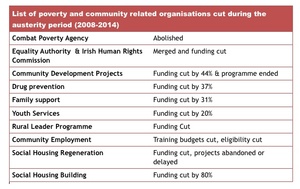
The cuts have resulted in local community projects being either closed or trying to survive by laying off workers, reducing their pay or putting them on short time.
The community and voluntary sector has suffered a 31% reduction in numbers employed (a loss of 17,000 jobs) — three times the rate of reduction in general public service numbers.
If we look at the Local Community Development Programme (LCDP) for example, it experienced a dramatic reduction in funding from €84.7m in 2008 to €48m in 2014, is now closed with local projects put under the control of local authorities and is being subject to a commercial tendering process.
Regeneration plans for new social housing and community employment opportunities were developed in the late 1990s and through the 2000s for disadvantaged estates that had suffered decades of state neglect and high rates of unemployment and deprivation.
Areas included Moyross in Limerick, Ballymun, Dolphin House, St Michaels, and O Devaney Gardens in Dublin, and other estates in Cork, Sligo and Waterford.
While some were partially regenerated like Ballymun and Fatima, the collapse in the Public Private Partnerships (as developers withdrew) in 2008 and the austerity budget cuts to regeneration funding meant that many estates saw their hopes and dreams of a new future destroyed.
I worked for six years as a community regeneration worker for the children’s charity Barnardos in Dolphin House in Dublin’s inner city where I saw the devastating impact of the cuts to regeneration.
We developed a ground breaking human rights campaign that pressured Dublin City Council and the government to act on the terrible housing conditions affecting tenants there. These communities need to be given hope again.
An important question which remains to be answered by the civil service and political decision makers is why these community services and regeneration projects were disproportionately cut during austerity and why they are still not restored?
Is it because the vulnerable, disadvantaged communities and the poor simply do not matter to the Irish state and political establishment?They clearly were not sufficiently prioritised and protected in these difficult years.
Is it because they traditionally have not voted?
Is it because they are not wealthy and thus are not potential donors for political parties?
Or is it because of a wider societal discrimination that blames all these groups and areas for their problems rather than accepting that their disadvantage results from the deep ingrained inequalities in the Irish economy and society and, therefore, we all have a responsibility?
Perhaps it is because the values that drive these organisations and communities such as caring for others, solidarity, not-for-profit, co-operation, and empowerment challenges the laissez faire, free-market, private wealth accumulation ‘greed is good’ that official Ireland supports in profit chasing entrepreneurs and tax avoiding corporations?
There is no doubt that part of the reason is that austerity provided the state with an opportunity to remove community advocacy which had become a political irritant for elected politicians and the civil servants in various departments and local authorities.
The work of community development had become too effective in highlighting the need for the State to listen to, and provide greater support for, communities left out during the Celtic Tiger and then suffering under austerity and so they were cut.
It is also part of a wider trend where the Irish state has been supressing community advocacy for a number of years. For example, HSE grants to community and voluntary organisations often come with the conditionality that:
“You must not use the grant to change law or government policies, or persuade people to adopt a view on law or public policy”
What a dangerous thing to do! Try to change a law or ‘persuade’ people to ‘adopt a view’. It is a sign of our shallow democracy that such advocacy is not viewed as central to the role of community and voluntary groups. It is a hangover from a paranoid, insecure and oppressive state that required the silence of society in order to abuse and oppress.
Rather than seeing NGOs and the community and voluntary organisations as having a really strong contributing role to raising awareness of issues affecting our most vulnerable, enhancing our democracy through empowering the marginalised, and bringing about a more equal society through the creation of a locally sustainable and vibrant economy – the Irish state instead has viewed them as a threat and an annoyance, showed in the fact, that they were cut first and cut deepest, in austerity.
As a community worker I saw how good quality social housing, homework and youth clubs, community employment and enterprise, child and family support, drugs programmes, community gardai and strong community development working together with the local communities can really change people’s lives by reducing poverty, improving social inclusion and inequality.
We should learn from these positive examples.
The problem at the heart of the state’s narrow vision and analysis of community work, regeneration and the community and voluntary sector is that it fails to appreciate the huge economic and social benefits that they provide. Public spending on youth and community work, child poverty and family services, and regeneration is not a ‘cost’ i.e. lost funding.
These services provide multiples of a return on any public investment put in as they reduce other social and health costs including costs associated with school leaving, crime, hospitals, and unemployment. They also provide for a more socially cohesive and inclusive society that makes the best use of all its human resources. They can tackle the root of so many of our social issues that we currently waste so much resources on in responding from crisis to crisis and emergency firefighting.
There is an urgent need for a properly funded national regeneration programme including community and child services, new housing and local facilities to be set up to deliver regeneration for the disadvantaged.
The funding should also be restored to community development and youth projects. While the decision to commercialise and privatise the community development programme through competitive tendering should be reversed.
A new reinvigorated National Combat Poverty Agency should also be set up to support local independent community development projects. A mature, democratic, and equality orientated state and government would do no less.
You can listen and watch here to video I have made highlighting the impact on disadvantaged communities of austerity and the collapse of regeneration as part of my Seanad campaign.
Dr Rory Hearne is a policy analyst, academic & social justice campaigner. His column appears here every Wednesday. Rory is an independent candidate for the Seanad NUI Colleges Panel. He writes here in a personal capacity. Follow Rory on Twitter: @roryhearne
Rollingnews

‘sup?
You may recall yesterday’s appeal for the owners of a Husky found in Citywest. Saggart, Co Dublin.
Well…
Aisling writes:
Some great news! The husky – real name Zeus – is now home (above) with his owner! Thanks again for all your help, and a special mention to husky rescue Dublin who had said they would take him if an owner couldn’t be located. His owner located him via Lost And Found Pets so a massive thank you to them too….
Previously: Missing Your Husky?


Spluttáir.
A Jazz magazine in the native tongue.
Daithí Ó Cinnéide writes:
Don’t need to be fluent to get what’s going on here: Ireland’s first porno as Gaeilge! Ní hé lá na báistí lá na páistí indeed!!!
Salach anyone?
Read Fliuch here
‘An Chéad iris phornaghrafaíochta i nGaeilge’ foilsithe ar líne (Maitiú Ó Coimín, Tuairisc.ie)


This afternoon.
Multi-party TDs, including a brolly-carrying Gerry Adams (centre) and Senators join the daily vigil by Amnesty International calling for a repeal of the Eighth Amendment, the constitutional ban on abortion.
Yesterday : Carol Hunt: It Takes A Vigil
Sam Boal/Rollingnews
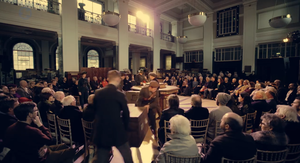
Inside The GPO.
The acclaimed play about the Easter Rising by Colin Murphy. running in the main hall of the GPO on Dublin’s O’Connell Street.
MUST finish THIS Saturday [details below].
Meanwhile…

Outside the GPO
Homeless food stand last Wednesday.
Thanks Colin
