This morning.
East Wall, Dublin 3
German supermarket one-upmanship
Buzz writes:
It’s all kicking off…
Earlier: A Lidl Too Close



This morning.
East Wall, Dublin 3
German supermarket one-upmanship
Buzz writes:
It’s all kicking off…
Earlier: A Lidl Too Close
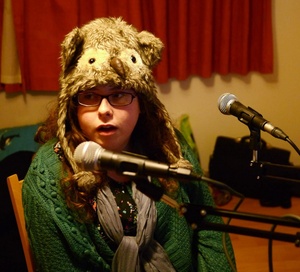
Alison Spittle
Finally.
Alan Bennett writes:
[very funny person] Alison Spittle has launched her own chat show podcast. It is now live on The HeadStuff Podcast Network on HeadStuff.org.
It’s called (drumroll… ) The Alison Spittle Show.
The first audio podcast episode has Kevin McGahern (host of Republic of Telly). We talk about being children, terrorism and Daniel O’Donnell removing a bun from Kevin’s jeans.
If you want to see it live, you’re in luck because TOMORROW Friday there’s a live recording on the Workman’s Club [Wellington Quay, Dublin 2,

https://www.youtube.com/watch?v=uYIpuf7_pZg&feature=youtu.be
The Un-Republic.
By Mike Casey, who writes:
We’re told that the events of Easter 1916 led to the formation of the Irish Republic. A Republic is defined as Rule By Law, but in Ireland – as we all know – protection under law, and access to justice, is not automatic and is instead dependent on status, power, influence, connection and wealth. This is the opposite of a Republic; it’s an Un-Republic….
Fight!
.


This morning.
University of Limerick.
Investigative journalist Gemma O’Doherty (top) and Bryan Dobson (above) address the Journalism In Crisis conference.
More as we get it.
Some contributions:
“The water charges have been mentioned on a regular basis – everyone thinks the media is out to get them. Everyone thinks that particularly in a campaign that the media are not on their side, they’re on the other side. And what I would say is, I don’t accept the characterisation of RTÉ as RTÊ bias, number one, and secondly, if you’re acting as a lobbyist for a cause that I believe in on the left, that’s no more valid, as a journalist, than acting for a cause on the right. Journalists’ challenge is, yes, to comfort the afflicted, but to do that as a journalist.”
Seamus Dooley, National Union of Journalists
“It’s a very dangerous time to be a whistleblower, you do take serious risks… I had to laugh recently at these claims that were made by certain journalists that their lives were at risk. I mean that story, after the shootings at the Airpot hotel in Santry. You know the spin put on that was just so ridiculous, it was laughable. Journalists who work for the guards, their lives are not at danger, journalists who are exposing corruption within the gardaí are putting their lives in danger, and that might sound truly shocking and neurotic to most people here but, believe me, walk in my shoes – that is the truth and we have no support.”
Gemma O’Doherty
More as we get it.
Pics: Olga

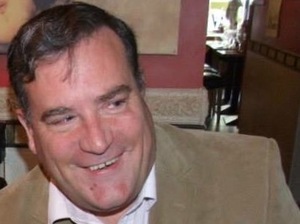
From top: Haulbowline island, Cork Harbour; Dan Boyle
What do Cork Harbour’s industrial policy and a South Wales steelworks have in common?
Slow death.
Dan Boyle writes:
The big political issue of the moment in Wales, indeed in the UK, is the imminent closure of its steel industry. The largest plant at Port Talbot employs four thousand people. There is an obvious social cost to these employees if the plant were to close suddenly.
There is also a horrible irony in seeing the country that invented the Industrial Age soon being without one of its core components.
As a Green I have some ambivalence about this situation. Steel manufacturing is far from the cleanest of industries. However every economy needs a strong manufacturing base. Green technology depends on high quality steel for everything from wind turbines to electric cars.
Port Talbot itself bears all the marks of being the industrial sacrifice area of Wales. It is as if the valleys have been kept clear so as to squeeze the country’s quota of pipes and plumes into this small piece of the Welsh coast.
Industrial policy in Ireland once saw Cork Harbour being promoted in a similar way.
Up until the 1990s the main employers were the NET/IFI fertiliser plant at Marino Point, and the Irish Steel plant on Haulbowline island.
A number of pharmaceutical plants opened during the 1970s attracted by a blind eye approach to environmental standards. Those standards did improve but the biggest pollution was still being done by the state owned and managed facilities.
It was simple brutal economics that did it for IFI and Irish Steel in the end. Sourcing materials and expanding markets proved impossible to secure.
IFI was wound down. Irish Steel endured an agonisingly slow death, being sold to an Indian asset stripper who scampered away when the five year subsidy period finished.
The legacy has been two horribly contaminated sites, Haulbowline being by far the worst. In the last two general elections both Michéal Martin and Simon Coveney produced greenprints showing what could be done with Haulbowline.
Neither has progressed any of the plans contained in those documents.
The person who has done most for Haulbowline has been John Gormley, who as the Green Minister for the Environment oversaw more hazardous materials being removed from the island, and more monitoring information being made public, than any time before or since.
I fear something similar may happen to Port Talbot. Buying time whilst kicking to touch is a certain recipe for a slew of unresolved social, economic but particularly environmental problems lingering in the region.
The filling the space responses of traditional political parties here come across as implied silent prayers – please Lord gets us over the election so we can spend the next five years not having to address this.
I’m only waiting for some politician/political party to provide a colourful brochure depicting a future Port Talbot with luxury hotel in place of the blast furnace, and a marina capable of berthing hundreds of yachts.
That’ll work. Ireland and Wales are more alike than I had realised.
Dan Boyle is a former Green Party TD (and senator) and currently working with the Wales Green Party. Follow Dan on Twitter: @sendboyle
Top pic: Denis Hogan

Launched today.
NeedaAbortionIreland writes:
We now know it is not sufficient that women die in order for the state to repeal its abortion law. We now know that the State North and South will isolate, prosecute and torture vulnerable people irrelevant of public opinion.
When confronted with such an attack on our health and on our lives, endless political debates are not enough, action is needed.
Faced with a State that refuses to provide for the healthcare of women, we must facilitate access to this healthcare ourselves and provide the conditions for people to practice this care.
Medical abortion is a unique example of this, as it is healthcare which can be practiced easily and safely at home, with a 2 day course of medication.
Needabortionireland.org will support women in accessing abortion pills in Ireland through Women Help Women.
We provide practical help in accessing pro choice healthcare, a live text support service between 6pm to 9pm everyday, and care packages to make people’s experience of abortion as comfortable as possible….

Here’s what you may need to know…
1. Limerick producer Graeme S. and vocalist Senita Appiakorang (also of neo-soul outfit Shookrah) are electronic/afrobeat duo Lakerama.
2. Coming together last year as a collaborative musical project, the band has stepped into the live sphere, including appearances at Dublin’s Bernard Shaw and Cork’s Quarter Block Party.
3. Debut EP One is streaming in its entirety in the widget above, including much-fancied lead off tune Take.
4. Catch them this Friday evening, supporting the mighty Rusangano Family, with whom Graeme has previously collaborated, at the Kino in Cork.
Verdict: A potent combination of ambient, house and Afrobeat influences, Lakerama’s standout quality is their command of dynamic, with Senita’s massive voice adding presence to Graeme S’ diversely informed electronica.

This morning.
Church Road, East Wall Road, Dublin 3
DGMF writes:
Lidl (opening today) and Aldi… closer than ever. Mmf.

New Yorker writer Calvin Trillin
In New York they say that the sight,
Of a poem should cause simple delight,
But try to play nice,
When writing of rice,
Or you’ll kick off a nasty food fight.
John Moynes
The New Yorker