Category Archives: Misc

Screen Shot 2016-02-16 at 15.35.07Screen Shot 2016-02-16 at 15.20.49

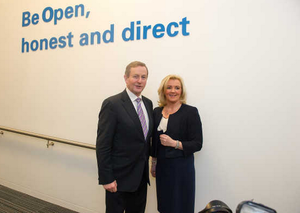
From top: Sunday Business Post at the weekend; Taoiseach Enda Kenny with Paypal Ireland boss Louise Phelan at the Paypal HQ in Dundalk, Co. Louth earlier today

In the Sunday Business Post at the weekend, in an article by journalists Pat Leahy and Michael Brennan, a “key government strategist” was quoted as saying: “We’ll scare the shit out of them [the electorate] for the last ten days.”

Further to this…

Fiach Kelly, in the Irish Times, reports:

Taoiseach Enda Kenny has claimed there could be a “flight” of jobs and capital from Ireland if some alternatives to the Fine Gael-Labour coalition are elected to government…

“There are alternatives, but there are consequences to the alternatives,” he said.

“I do not want to see the flight from this country of either capital or jobs or lack of investment coming in here. And what you see is difficulties in other countries. Greece is back in recession, Spain hasn’t been able to form a government and there are rising interest rates in Portugal. We’re in a very much stronger position than we were. We still have some distance to travel and there are still many challenges out there.”

“That’s a choice for the people and I think they will reflect on that very carefully in the next seven to ten days. They decide what direction our country goes: forwards or backwards.”

Kenny: There could be ‘flight of capital’ if alternatives elected (Irish Times)

Previously: Beware Of Pundits Crying Chaos

Rollingnews

90408451Michael-Taft

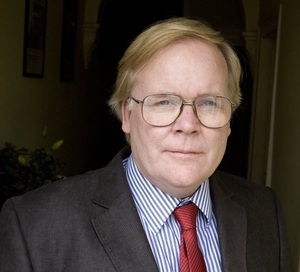
From top: Construction on the new Central Bank on the north Quays, Dublin; Michael Taft

A blueprint to make life a lot better for a lot of people.

And one that won’t take up too much fiscal space.

Michael Taft writes:

In a previous post I suggested that the debate was getting out of hand. In actual fact, we have almost no fiscal space (not after inflation, demographic pressures and the sleight-of-hand regarding Irish Water investment).

Then there are those external events: low-growth, volatility in the equity markets, asset bubbles which rarely end up other than a bust (and still no one talking about Brexit).

Yet we have a promise-land political debate: tax cuts, more public spending, more investment – honey and manna and wine flowing; a detached from domestic and global reality. Eerily enough, the debate is even detached from the economy (as if throwing about small bits of money at this or that will change the fundamentals).

But one should be slow to criticise unless there is some alternative at hand. So here’s my go. However, mine has a different starting point than tax cuts or divvying up a tiny fiscal space.

I will address three issues– and none of them cost money (that is, impacts on our new friend, the fiscal space). But if pursued, they would make life a lot better for a lot of people.

1. Quality Workplaces

In a recent report the OECD claimed that earnings quality, labour market security and a quality work environment go hand-in-hand with higher employment. Of course; you can’t build a modern sustainable economy on low-pay, job insecurity and poor working conditions.

Therefore, let’s have a Decent Work Act which can help build quality jobs, based on ICTU’s Charter for Fair Conditions at Work:

Start the process to a Living Wage

End precariousness – through certainty of hours at work

Give part-time workers the right to extra hours in the workplace when they become available (this is actually a EU Directive that has yet to be transposed into Irish law)

A progressive public procurement programme – so that we don’t get images like these from Government Ministers, parading the vests and names of race-to-the-bottom employers
Statutory Sunday premium and over-time pay

The right to collective bargaining and a significant extension of Joint Labour Committees to all low-paid sectors and occupations.

This will start to give certainty in the workplace, promote quality jobs, increase domestic demand and investment – and the great thing is that it would actually be a revenue raiser for the government, not a cost.

Lesson: change the power relationship between labour and capital to start favouring the former.

2. Develop New Enterprise models

The debate assumes that we can build a modern market economy through tax cuts and eliminating red tape. If that was the key to success, we should have the largest indigenous enterprise sector in Europe. Instead, we have one of the smallest. So let’s get real.

In my last column I highlighted Davy Stockbrokers’ assessment of investment in productive activity prior to the crash – that the overwhelming majority of it came from public investment and public enterprise companies. So let’s learn and apply this lesson.

First, create new – and expand current – public enterprises; in such areas as advanced broadband, green technologies and alternative energy (e.g. ocean, etc.), public transport, etc. This can be through stand-alone activity, partnerships with private companies, whatever works.
From this we should enable local government (or create new regional institutions) to establish municipal enterprises – a standard feature in continental Europe and North America.

These are essentially local public enterprises but they can be formed in partnership with local and private capital. This would facilitate areas where there are low-levels of enterprise activity (whether urban ghettoes, cities/towns outside Dublin, or depressed rural areas).

But we can go further, supporting alternative business models: community and neighbourhood enterprises, labour managed enterprises, new company models based on commercial non-profit activities. And this could be funded – through equity – by the Ireland Strategic Investment Fund, with little impact on the Exchequer.

Lesson: once we get over the idea that jobs can only be created through private capital (and private capital alone) a number of alternatives can arise.

3. Housing, Houses and Homes

We have promises to sell-off council houses (great, we have too few social houses and what few we have we’re going to sell-off at a huge discount), provide cash transfers to people wanting to buy homes (great, pump demand, drive prices upwards and get more people into more debt); and rely on the private rental sector to house most people on the waiting list – at a time when private rental accommodation is falling. Laugh so that you don’t cry.

Two issues here:
First, the Government is expecting to get back up to €4 billion in repaid bank bailout money. They intend to use that to pay down debt. There’s a better way to use that money (which will pay down debt as well): Untie proposed launching a short-term emergency social housing programme – one that will finally eliminate homelessness and start to make inroads in the huge housing list.

This would have to be negotiated with the EU Commission – but this expenditure, being a once-off, wouldn’t impact on the structural deficit and, therefore, wouldn’t require derogation from the fiscal rules. It could be strengthened by the Dail declaring a Housing Emergency.

However, if you are proposing to sell of social housing, increase subsidies the home ownership sector, abolish the property tax – well, the idea of a housing emergency won’t be very credible. The over-riding issue is to build houses.

In the medium term we have to radically restructure social housing investment. Ireland is a European outlier when it comes to financing social housing. I have addressed this issue here. We need to move to a pluralist investment model; namely, like many other European countries we need to establish public housing associations which, while remaining in the broad public sector, would build houses on a commercial basis to keep the investment off-the-books.

This can facilitate, along with continued traditional state financing, a significant increase in social housing investment. Further, it can provide rental housing on a cost-rental basis (that is, rents that reflect building costs only) for low and average income earners; thus eroding the distinction between the public and private sector (you can read more about this here).

Lesson: maximise the public space from which we can both provide and invest in housing for all low-income people – not just ‘the poor’.

So that’s the start – workers’ rights, public-led enterprise and greater reliance on the public space for housing options. And all this with little impact on the fiscal space or Exchequer finances.

Indeed, to the extent that these promote business investment they can grow the fiscal space (through increased potential GDP). But more importantly, we can start talking about the economy – the economy of work and enterprise activity, and the resolution of one of our leading social crisis.

With that under our belt – now we can talk about fiscal space: resources for public services, for social protection (so that nearly half don’t have to live in deprivation conditions) and for investment. Because now we have sustainable economic growth, providing us more resources to meet these needs.

And all because we started with work, enterprise and homes.

Michael Taft is Research Officer with Unite the Union. His column will appear here every Tuesday. He is author of the political economy blog, Unite’s Notes on the Front. Follow Michael on Twitter: @notesonthefront

RollingNews

90276210

Supporters at the March for Choice in Dublin in September 2012

It wasn’t discussed last night.

But.

Tonight at 7pm.

At the Michael O’Donnell theatre in the Dublin Institute of Technology Bolton Street.

DIT’s Law Society will host a debate on repealing the 8th amendment

Those speaking in favour will include Dr Peadar O’Grady, of Doctors for Choice; Vanessa O’Sullivan, of Abortion Rights Campaign; Gerry Edwards, of Terminations for Medical Reasons; and Ailbhe Smyth, of the Coalition to Repeal the Eighth Amendment.

Those speaking against will include Cora Sherlock, Deputy Chair of the Pro Life Campaign; Áine O’Connell, of Youth Defence; Helena O’Callaghan, of One Day More; and Sinead Slattery, of the Pro Life Campaign.

*There’ll be free pizza afterwards*

FOOD FIGHT!

Abortion debate (Facebook)

sadaka

Patrick Costello writes:

Election coverage so far has only dealt with domestic issues, but Ireland has a place in the wider world. Sadaka – The Ireland Palestine Alliance are trying to remind candidates and parties that Palestine Matters and trying to raise Palestine as an election issue.

Sadaka have developed an interactive website for contacting your local candidates with just three clicks of a mouse to express support for our campaign and to remind candidates that Palestine Matters.

Sadaka

Previously: His Mates Go To Krystle

Meanwhile…

093016-Garrett-O-Halloran

Screen Shot 2016-02-16 at 14.01.13

From top: Barrister Garry O’Halloran and Finance Minister Michael Noonan

You may recall the foster home abuse case involving a woman referred to as Grace, in the media, and a recent interview Finance Minister Michael Noonan did with Richard Crowley about the case on RTÉ’s News At One.

During the interview, Mr Crowley asked Mr Noonan about his knowledge of the concerns raised in relation to abuse, and a letter the foster father had sent to Mr Noonan in 1996  – when he was Minister for Health.

Further to this…

Journalists Daniel McConnell and Fiachra Ó Cionnaith, in this morning’s Irish Examiner, report that a former Fine Gael councillor, barrister Garry O’Halloran – who was a former chair of the South Eastern Health Board – claims Mr Noonan literally ran away from a meeting to discuss concerns about sex abuse involving children.

They further reported that Mr O’Halloran quit Fine Gael because of Mr Noonan’s actions.

They reported:

In a statement to the Irish Examiner, Mr O’Halloran said at the 1997 Fine Gael Ard Fheis, Mr Noonan had arranged to meet him and some abuse victims.

“We arrived, he kept us waiting for hours, eventually I spotted him leaving the stage and heading for a door about 40m away, I was about 60m away and started to follow him in the direction of the door,” Mr O’Halloran has said. “He spotted me and ran, I then ran but he got to the door and when I arrived I was met with a cloud of black smoke as his garda driver sped away,” he added.

Mr O’Halloran and his delegation then met junior minister Austin Currie who concluded there was no substance to the claims of abuse.

“I went to the taoiseach, John Bruton, who said it was a matter for the minister for health. When I got no place, I then submitted by resignation from FG,” he added.

In addition…

Yesterday, the Irish Examiner first attempted to put queries about this matter to the Fine Gael press office, but we were directed to the Department of Finance.

The Department of Finance said as this was a health matter, they could not comment.

A Department of Health spokesman said he could not speak for Mr Noonan and referred us back to the Department of Finance, but also suggested we speak to the Department of Children.

At the time of going to print, no comment was forthcoming from Mr Noonan.

There you go now.

Michael Noonan ‘didn’t want to know about sex abuse claims’ (Irish Examiner)

Pics: Leah Farrell/Rollingnews and Law Library

kClNOffP 340

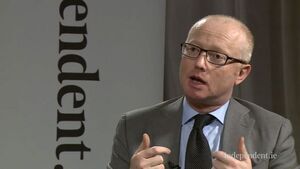
From top: Economists Liam Halligan and Dan O’Brien

This morning.

On RTÉ’s Today with Seán O’Rourke Show.

Economist and Telegraph columnist Liam Halligan joined controversial fellow economist and Irish Independent columnist Dan O’Brien to discuss the prospect of a Brexit [Britain leaving the EU}

Their discussion followed Mr Halligan – ex-political correspondent with the Financial Times and former economics editor at Channel 4 News – recently writing a column headlined, ‘Why Ireland has nothing to fear over fallout from Brexit’ in The Telegraph.

Things got a little… tense.

Liam Halligan: “We’ve done trade across the Irish Sea for millennia, the idea that Britain and Ireland couldn’t strike an overarching bi-lateral trade deal, if there was a British exit, is simply nonsense. We traded through thick and thin, through hatred, jealousy, enmity, nothing has ever stopped the constant ebb and flow of commerce between people across the Irish Sea because it makes sense for both sides, to the existence of people like me who are citizens of both countries, somebody with a lot of Irish blood, who knows Ireland well, is testament to that. The UK has a huge trade surplus with Ireland so Britain has every single incentive to strike a trade deal if there was a Brexit.”

Sean O’Rourke: “Despite the fact that a recent report prepared, and you allude to this yourself in your column on Sunday, for the Irish government,  it indicates we could see a serious drop in trade?”

Halligan: “I just don’t buy that at all. Do you honestly think that Irish and British people need the permission of the European Commission to do trade and we’ve done trade together over hundreds and even thousands of years. Of course the Irish government is massively against the Brexit. Brussels is massively against a Brexit. The whole European political establishment is massively against a Brexit. But if there was a Brexit, it’s in everyone’s interest to do a trade deal between Britain and Ireland, not least the British themselves. And it’s in Germany’s interest to do a deal with Britain, as it is in Italy and Spain’s interest to do a deal with Britain. A lot of it’s scaremongering I think, Seán.”

O’Rourke: “Ok, Dan, you’re shaking your head.”

Dan O’Brien:Look Liam I’ve never met you and I don’t mean to sound controversial or, or aggressive towards you but you don’t know what you’re talking about, I’m afraid to say. When you join the European Union, you give up the right to trade deals with other countries, that’s how it’s been since 1950s. The notion that Ireland can do a bilateral deal, a country-to-country deal with Britian, if it leaves, is simply factually incorrect, OK? Further than that, the Lisbon Treaty, that’s also the same with foreign direct investment. That’s exactly why Britain doesn’t have a trade deal with the United States, what’s being negotiated now the TTIP, is something that’s negotiated between Brussels and Washington. London does not have a trade deal with America, Ireland does not have a trade deal with America, you cannot have a trade deal with a third country when you’re in the EU. So, you simply don’t seem to understand that fact. So for you to come out and say it’s nonsense and scaremongering, when you don’t understand the very basics of trade diplomacy, is quite shocking.”

Later

Liam Halligan: “I just don’t buy it. People get very hot under the collar about this. A lot of people’s livings depend on the European project. A lot of people have devoted their lives to the European project. They don’t like to be proved wrong or even entertain the fact that somebody could have a different point of view from them. If they’re, you know, we were told that the Euro was forever, remember? Oh you can never leave the Euro.

Now it’s completely clear that countries can leave the Euro. We were told the Stability and Growth Pact and Schengen would always hold. Then the facts on the ground change and the rules change. It strikes me that Canada’s just struck an incredible deal with the European Union, the European Union will be under extreme pressure if there is a Brexit. There will be a loss of credibility, it will have to scramble in order to stop other countries form leaving the European Union. And, in that political vacuum, a country like the UK, the world’s fifth biggest economy, will be able to do trade deals with countries where it has very, very strong commercial links. Not least the Republic of Ireland.”

Sean O’Rourke: “And what about, Liam, what about Dan’s point – whatever about the Irish and we would be very well disposed to continuing the relationship that’s there – other countries might not be so well disposed for example, France.”

Halligan: “Of course, in the immediate aftermath of a Brexit, if there was one, or a Brexit vote and the polls are suggesting that that’s a very real possibility now, then of course there will be an uncomfortable period. The political establishments of France, Germany are very, very closely wedded to the European project. But, you know, across the European Union, look out of the window, look at what’s happening in the opinion polls. There’s a lot of Euroskepticism out there. Some of it is pretty ugly and takes the form of discomfort towards immigration. Some of it is based on the fact that countries feel they’re losing their sovereignty. Look at what we saw in Greece, for instance. So it strikes me that we should stop insulting each other and actually have a conversation about what could happen if there is a Brexit because that could easily be the stated will, the democratic will of the British people.”

Dan O’Brien: “And Liam, we fully respect that. And this is not a thing about insulting. We’re entitled to…”

Halligan:You came out pretty aggressively there, Dan, I have to say. [Inaudible] judges conducted themselves more politely than you…”

O’Brien: “You have written something that is completely, we’re all entitled to our opinions, we’re not entitled to our own facts.”

Halligan: “And I’m saying is that the political facts on the ground are saying the rules will change. We have had a series of massive rule changes within Europe where previously, almost semi-religious ideas have been blown up by political reality.”

O’Rourke: “OK, Liam, just…”

Halligan: “The Stability and Growth Pact, Schengen, look out of the window.”

O’Brien: “And many things could change. The European Union is weak, the Eurozone is weak, many things could change. Britain…”

Halligan: “I don’t know what I’m talking about even though I’m suggesting something..”

O’Brien: “Just like another third country, you mentioned Canada, exactly. That’s exactly what will happen. London doesn’t negotiate with Canada, Dublin doesn’t negotiate with Canada, the trade bureaucrats in Brussels negotiated that deal with Canada and it covers us all. They’re just the basic facts…”

Halligan: “The Republic of Ireland does 19% of its trade with the United States, the US wasn’t a member of the European Union last time I looked.”

O’Brien: “Sorry?”

Halligan: “The Republic of Ireland does 19% of its trade with the United States, the US wasn’t a member of the European Union last time I checked.”

O’Brien: “All of that happens within EU trade laws. There’s a bilateral trade deal between the EU and the US. It’s not a bilateral deal between Dublin and Washington, it’s between Brussels and Washington and that’s just the basic fact.”

Listen back here

Schulz: EU Parliament’s approval of UK deal not guaranteed (RTE)

Previously: Rule Number 1: No Touching Of The Hair Or Face

shanvan

Plenty.

The Shan Van Vocht.

The first woman-run newspaper in the world.

Hurrah!

​The UCD Digital Library writes:

We are proud to present another wonderful historical journal from the National Folklore Collection, University College Dublin [at link below]

​The Shan Van Vocht was a national monthly magazine, founded by two Belfast poets, Alice Milligan and Anna Johnston (later Anna MacManus), which ran from 1896 until 1899.

As the centenary commemorations of 1798 approached, many issues included articles, short stories, oral histories, and poetry relating to the United Irishmen’s rebellion.

James Connolly, Douglas Hyde, and Arthur Griffith were among those who contributed to The Shan Van Vocht. The journal also featured writings by P. J. McCall, Lionel Johnson, T.W. Rolleston, John MacNeill, William Rooney, Michael Cusack, Thomas Concannon, Alice Furlong, Nora Hopper, and Seumas MacManus under the pen name ‘Mac’

.In 1899, when The Shan Van Vocht ceased publication, its subscription lists were transferred to Arthur Griffith’s United Irishman.

Collection here

twitter

Thunk.

Grainne Faller at the Insight Centre for Data Analytics writes:

 Researchers from the Insight Centre for Data Analytics have been crunching the Twitter numbers as part of their Insight4Elections data analysis project and they found that Stephen Donnelly, co-leader of the Social Democrats gained a remarkable 1,457 Twitter followers last night, about two thirds more than his closest rival Richard Boyd Barrett of People Before Profit who gained 555.

The deputy leaders’ debate on TV3 inspired less activity overall, but Mary Lou McDonald gained three times as many followers as her closest rival, Labour Deputy Leader Alan Kelly.

Fight!

Insight4Elections is a publicly available web tool where users can “crunch the numbers” for themselves here

Yesterday: Every Manifesto At A Glance