
Don’t make unnecessary journeys! Salthill car park this morning! @TeresaMannion @galwayad @CTribune @GalwayHour Met Éireann National Weather Warningspic.twitter.com/74vhBqALW8
— PictureDiaryGalway (@PicDiaryGalway) January 26, 2016
Gulp.



Don’t make unnecessary journeys! Salthill car park this morning! @TeresaMannion @galwayad @CTribune @GalwayHour Met Éireann National Weather Warningspic.twitter.com/74vhBqALW8
— PictureDiaryGalway (@PicDiaryGalway) January 26, 2016
Gulp.


MORE to folly
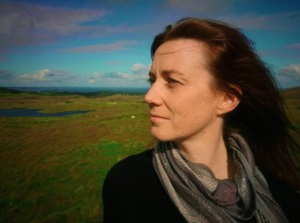
Fiona Kennedy
Fiona Kennedy lives in Connemara, Co. Galway. She has clinical depression and borderline personality disorder.
She writes:
I am so angry right now I am literally shaking. I probably shouldn’t write when I’m this wound-up, but I have to do something because I cannot carry this anger around for the day, not on top of all the other emotion that’s currently going on.
I have been banging my head off a brick wall, metaphorically and at times literally, for months now. The last week has been horrendous. I went to my doctor yesterday because I had to talk to someone and I had literally nowhere else to go. There was nothing he could say, nothing he could do, other than give me space to vent and try and chase the hospital to get a definite answer on dbt for me.
My husband is scared, and worn out. There’s only so many times he’s going to be able to talk me down off a ledge before he cracks too. My parents have been on the receiving end of more than one distress call. My friends don’t believe me when I tell them I’m going home. I have told my psychiatrist I want to be dead. I’ve told my doctor. For fuck sake, I’ve called my husband at work and told him. How is this fair? How have we been left in this situation? I drafted a piece the other day which I had hoped to get published but no one is biting, so here it is. I would be grateful if you could share this as far as you can, because enough is enough.
I do not deserve to be treated like this. My family do not deserve to be treated like this. My friends should not have to pick up the pieces, over and over and over again. I need my life back. But I cannot do it alone. We cannot do it alone. None of you should have to do it alone either.
We are making huge progress as a society when it comes to talking about mental health, huge. Slowly but surely, the stigma that surrounds it is being chipped away.
There are several well-established national campaigns encouraging people to talk, and these are getting a bigger response year on year. It’s fantastic to see. So where’s the caveat? I write from my own experience. I’m not a mental health professional, but I’ve spent years in the public mental healthcare system in Ireland, and that is where the caveat comes in. No more than any other illness, there are varying degrees of severity when it comes to mental illness, and I think that’s where the problems arise.
Yes, it’s ok to ask for help. Seeking support is the first step towards addressing any mental health difficulty. But what about when that help is not forthcoming? What about when a call to a helpline, or a trip to the GP, is not enough? What about when professional support is needed?
The barriers are immense. First, there’s the cost. Let’s suppose I don’t need psychiatric support, but I very much need to speak to a therapist. However, I’m on a low income. Barrier number 1. I need therapy, but unless I can access a low cost service (which may still be too expensive depending on the scale they use) it’s not an option that’s open to me, so I’ve to find a way to manage on my own.
The impact that this can potentially have is far reaching. I may find myself unable to work, further compounding the financial situation and increasing the stress, which in itself has a knock-on effect on whatever the original issue was… you can see how quickly this can spiral out of control.
Let’s take it a step further. I’ve been to my GP, I’ve been fortunate enough to access therapy, but the situation still isn’t improving. I need psychiatric assessment. Barrier number 2. I have two choices – take my chances with the public system, or pay to see someone privately.
Going privately was never an option for me, so I can tell you about the public system. In the first instance, unless there’s an emergency trip to A&E, it will most likely involve a lengthy wait, and once I get in, I will be seen by a consultant.
Thereafter, I will be seen by a member of the team working under said consultant. The lack of continuity that goes hand-in-hand with this approach – new doctors at almost every appointment, trying to explain the same issues over and over again, varying opinions – is heartbreakingly frustrating.
I’m lucky that in recent months I’ve seen my consultant at every appointment for which I’m ridiculously grateful but, prior to this, there were years of rotating doctors asking me to rate my mood over the previous number of months on a scale of 1 to 10.
Given that my mood can shift dramatically a number of times in any single day, that’s a question that’s both impossible to answer and profoundly unhelpful. Again, I must emphasise that I’m writing from my own experience, and I’m at the more severe end of the scale in terms of mental illness. But, I’m far from being the only one.
Barrier number 3. Private therapy isn’t an option. I’ve made it through psychiatric assessment and a very specific form of therapy is recommended. But, there’s a waiting list. A lengthy one, with no guarantee of when a place will be available.
So what do I do in the meantime? I dig in. I hang on. I have no one left to tell that I’m not ok, because I’ve followed every avenue that I can. My bad days are horrendous. My bad days I quite literally fight for my life.
Yet I’m aware that I’m still one of the lucky ones. I have good friends, and a loving, supportive family who do the very best they can for me, but it’s not enough. More than that, it’s not fair to expect that to be enough. I don’t want to detract from the incredible work that is being done to get people talking about mental health. It’s absolutely vital, and I’m confident countless lives will change for the better because of it. It’s ok not to be ok?
Of course! It’s OK to ask for help? Undoubtedly, and it is 110% the right thing to do. It does somewhat work on the assumption that help is both available and accessible though. That’s the caveat right there. From my perspective at least, it’s quite a big one.
Fiona is an Ambassador for See Change, a national movement that tries to improve attitudes towards people with mental health issues.
It’s OK not to be OK? Sure. With a huge caveat (Sunny spells and scattered showers, Fiona Kennedy)
Saturday: Turned Away

Lenny Abrahamson
Lenny Abrahamson, the Academy Award-nominated director of ROOM, will be honored at the Oscar Wilde Awards on 25 February. The US-Ireland Alliance event is held at J.J. Abrams’ Bad Robot production company in Santa Monica.
Also being honored are Irish actress Sarah Greene, Snow Patrol, James Corden and Daisy Ridley, the star of Star Wars: The Force Awakens. Abrams will emcee. Snow Patrol and up-and-coming Irish singer, Roísín O, will perform.
Oscar nominee Lenny Abrahamson to be honored at Oscar Wilde Awards
Thanks Buzz

SPLUTTER!
Rose writes:
Hmm…..I don’t think they’re four of the best animal print cushions at all.

Chapter 2 – You Decide!
Lazlo Panaflex [on behalf of Tralee, Co Kerry-based five-piece acoustic rock outfit Chapter 2] writes:
Above is a video of us performing our new song at Other Voices back in December. Hope you enjoy it! Only problem is, we can’t decide on a name for it. TWO CDs (Yeah, actual physical media!) of our EP go to the person who suggests the best name for it… smile emoticon
Anyone?
Lines MUST close at Midnight.

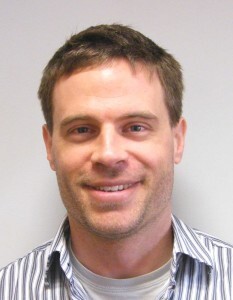
From top: banned substances: Dr Julien Mercille
Updating legislation on illegal drugs could minimise the health risks involved in taking them.
Prohibition makes everything worse.
Dr Julien Mercille writes
Have you heard of the drug 2C1? It’s the drug that killed Alex Ryan this weekend and turned five others into “zombies”, in the never-sensationalist language of the Irish Independent. The drugs were used at a party in Cork.
Also this weekend, we were reminded of the death two years ago of Olivia Beirne, 29-years old, after taking ecstasy. The Independent reported that her father, a retired garda, still believed that his daughter was responsible for taking those dangerous substances, just like all other young and less young who use drugs.
I know something about drugs, not so much out of intensive consumption but more because it’s one of my academic topics (I wrote a book about it).
The first thing you realise when you start reading about the problem of drugs and its solutions is that it’s all very simple.
The overarching point is that the current system of prohibition does not work. (Prohibition is simply when drugs are illegal, and you get arrested for consuming, selling or producing drugs).
What does work is a system that decriminalises or legalises drugs. There are many variations, but simply put, it makes it legal to possess, consume, sell and produce small quantities of drugs.
For example, you could legalise only the possession of up to 1 ounce of weed (marijuana), and allow individuals to grow, say, a maximum of up to six plants at home, in addition to having legal stores where weed can be bought, which would all be tightly regulated.
You can also ban smoking in public spaces, etc. This is what they did recently in Colorado and Washington state in the US. There’s a summary here of the measures by the Drug Policy Alliance, which is an excellent organisation on such matters.
For those who worry that legalisation would lead to a massive growth of drug use, and lots of people being stoned on the job, while driving, or all the time, the experience from places that have liberalised their drug laws (for example, Portugal) show that there may be small increases of consumption of some drugs (e.g., marijuana), but overall it’s absolutely not true that there is a massive rise in consumption. There’s an excellent report on Portugal’s experience here.
Also, big traffickers and producers would still remain illegal, and there wouldn’t be any advertising, and you could only buy drugs in specific stores. So there wouldn’t be packs of weed or heroin on sale on the shelves at Tesco or Spar.
What are the advantages of legalising drugs in such a way? (the following is not specific to Ireland, they’re general conclusions drawn from the experiences of many countries)
1. It saves the State a lot of money because the police don’t have to run around the country arresting students smoking pot or heroin addicts who are homeless and simply have an addiction problem.
2. It generates taxes for the State because drugs is now a legal business, just like tobacco and alcohol. It doesn’t mean we think that drugs are healthy products, it just means that the industry becomes tightly regulated. It thereby generates tax revenues for the exchequer, which can be invested in treatment for addicts.
3. Violent crime decreases. When drugs are illegal, they generate violence. For instance, if two gangs want to divide a neighbourhood to sell drugs and they don’t agree about which street corners belongs to which gang, they’re not going to go see the police or a judge to arbitrate, because they’ll all be thrown in jail! However, if drugs are legal and sold in specific stores, then the problem is solved: the gangs automatically go bankrupt and out of business.4. Quality is much better: under a regulated system, the State can regulate the quality of the drugs, as it does for all foods and alcohol. That gets right to the heart of this weekend’s tragic death. It would not have happened if the stuff had been of good quality.
5. Drug problems become public health issues, not criminal issues. This means that addicts are treated for their addiction instead of getting harassed by the police and arrested. It is proven that treatment of addiction (through clinics, therapy, etc.) is far superior to police operations to reduce drug consumption. In fact, police operation are often useless. You can catch a big trafficker and make it to the front-page of the Indo, but right away another new trafficker will replace the one who’s been arrested.
Finally, none of the above means that drugs are not dangerous. They are dangerous substances, by which I mean that if not used carefully, they can lead to very bad outcomes.
To make them legal simply minimises the risks involved. Prohibition, on the contrary, makes just about everything worse, and that’s why accidents and violence happen.
Julien Mercille is a lecturer at University College Dublin. Follow him on Twitter: @JulienMercille


From top: Independent Alliance members earliert this month including Finian McGrath (second right); William Campbell
Finian McGrath TD, talks to journalist William Campbell of [Irish current affairs podcast] Here’sHow.ie about the Independent Alliance’s 10-point statement of principles.
For example:
William Campbell: “Does the point ;Equal rights, opportunity and access to justice for all regardless of gender, creed or age’ mean that taxpayer-funded schools run by the Catholic Church will no longer be able to discriminate?”
Finian McGrath: “Absolutely, that’s stressed very strongly in principle five, we strongly believe in equal access to education, and that’s something that applies to people that work in the education service”.
Campbell: “And an equal admissions policy for non-Catholic children?”
McGrath: “I’ll have to consult with my colleagues.”
Oh.
Listen here


