Galway’s Christopher Columbus monument in Spanish Arch was recently vandalised (top). Gifted by the Italian city of Genoa, People Before Profit said it ‘glorified slavery and racism’ and have demanded its removal

How to Get Rid of Christopher Columbus

Don’t get photographed presenting your
two thousand names to the Mayor,
looking as if you’re graduating
with a qualification you’ll never use.
Don’t ask the Church of Ireland or National Council
for the Advancement of Concerned People
to intervene.

Do it yourself.
But not explosives, no.
There’s always a mostly innocent
retired car park attendant with a limp
(or some such) passing at the exact moment.
He retired five years ago
but because of the limp
was still on his way home.
And now he’s in small pieces
or, even worse,
one piece;
and you’re the reason
he has that stutter
when the journalist talks to him
on the every o’clock news.

Nothing like a spot of terrorism
gone amiss
to make all that racism, pillage, and slicing
off most of a native’s thigh
just to test your blades
or a child’s hand
because their parents wouldn’t cooperate
with what was
an honest attempt to improve them
seem civilised in comparison.

Arm yourself with
no mere plinkety chisel
but mallet, kango hammer,
a couple of the like-minded,
and high vis jackets marked
‘City Council’ or ‘Irish Water’
and present the slow citizenry
with the fact
of his stone tribute
in the sea

Kevin Higgins

Previously: Glorifying Slavery And Racism

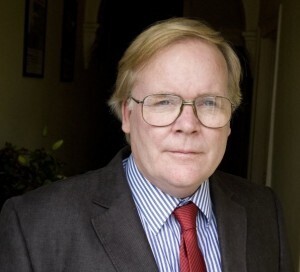
Pic 2: Kevin Higgins

Based on a premise by science fiction author René Barjavel and directed by J.K. Raymond-Millet, this eerily prescient French film from 1947 entitled ‘La télévision, œil de demain’ pretty much nails a vision of smartphones (and the risks of walking and driving while engrossed in them) while describing the evolution of TV into pocket sized devices.

kottke

Earlier

Dublin 9.

Dr Laura Durcan writes:

This is the guy who is  allegedly taking catalytic converters from Beaumont [Hospital]staff car park. I am livid. I never ask for retweets but please retweet this.

Meanwhile…


Catalytic converter?

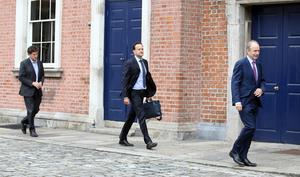
From top:. Leader of the Green Party Eamon Ryan (left)  with Tanaiste, and Minister for Enterprise, Trade and Employment Leo Varadkar (centre) and Taoiseach Micheal Martin leaving the first Cabinet meeting in Dublin Castle yesterday; Michael Taft

‘You follow drugs, you get drug addicts and drug dealers. But you start to follow the money, and you don’t know where the f*** it’s gonna take you.’
– Detective Lester Freamon, The Wire.

The Programme for Government (PfG) has been touted as transformative, progressive, even left-of-centre. A former Minister claimed it was so left-wing that ‘James Connolly and Che Guevera could vote for it’.

But in the fog of spin and a promised plethora of reviews and commissions, it is hard to see the woods for the trees, to assess whether the PfG will usher in ‘transformative’ policies, or just a new vocabulary of rhetoric and aspiration.

So let’s ‘follow the money’.

A strong social state – based on enhanced public services, social security and climate justice with a Just Transition – will cost money. The increased current expenditure (day-to-day spending on public services, social protection, interest and subsidies) will need to be matched by increased revenue in the medium term.

We will need a substantial increase in investment – to get the economy back on track and to deliver the carbon-reduction targets. The lack of detail is understandable given the highly uncertain environment. But let’s see where following the money takes us.

Deficit

The PfG seeks a ‘broadly’ balanced budget. That the deficit will fall in the next couple of years is merely a function of a recovering economy, as revenue rises and unemployment costs fall.

The Irish Fiscal Advisory Council gives a sense of this trajectory on a no-policy-change basis in their recent Fiscal Assessment’s Central Scenario.

The deficit falls dramatically next year and in 2022, before settling down to a slower reduction. However, this scenario was based on pre-pandemic crisis spending projections. These will increase, if only because of elevated unemployment costs.

And introducing a single-tier health service or affordable childcare would require further spending. Therefore, without any revenue measures the deficit will in all likelihood increase.

The PfG gives no time-frame for achieving a balanced budget; however, the Government will make clear its plans within a few months:

‘At Budget 2021 . . . we will set out a medium-term roadmap detailing how Ireland will reduce the deficit and return to a broadly balanced budget.’

So we will have to wait to assess the Government’s intentions. The real issue is whether the achievement of better public services, stronger in-work benefits and social protection, and higher investment can be achievable within this falling deficit. The answer is quite clearly no. It will require fiscal adjustments – notably tax increases.

Investment and Debt

We get only some insight into the Government’s ‘investment’ plans. They have proposed a National Recovery Fund which appears to represent the stimulus part of the PfG for the next two-three years, diminishing as the economy grows (which is to be expected from stimulus expenditure).

However, not all of the Fund’s expenditure will be investment; much of it could be continuing the Temporary Wage Subsidy Scheme and other current spending initiatives.

One concerning aspect of the PfG is its treatment of windfalls to the state:

‘We will use any windfall gains, such as the National Asset Management Agency (NAMA) surplus, the final resolution of the liquidation of the Irish Bank Resolution Corporation (IBRC), or the sale of the state shareholdings in the banks, to reduce our borrowing requirements.’

Why? Does it really make sense to pay down debt (i.e. save) when there is a crisis? One would have thought these windfalls would be ideal resources for the temporary National Recovery Fund. The picture becomes even cloudier given this article from the Irish Independent (thanks to Conor McCabe for pointing this out):

‘Finance Minister Paschal Donohoe said yesterday that spending cash windfalls makes sense when the alternative would be to increase borrowing.’

Absolutely. But where does that leave the PfG commitment above?

Again, we will get a better sense of the Government’s intentions in Budget 2021. But for comparison purposes we should note that in last year’s budget the Government intended to invest €50.5 billion in the five years 2021 to 2025 (or €39.4 billion up to 2024 – I’ve estimated up to 2025 based on trend).

This €50 billion investment envelope was projected at a time when the economy was in danger of over-heating. Given that the economy will have a lot of slack, we should expect the investment envelope to increase; or at the very least, be maintained.

Any new green stimulus investment should be additional (otherwise we’re robbing Investment Peter to pay Investment Paul). We won’t be able to assess this until the Government’s projections in October..

Taxation

There are three distinct taxation categories in the PfG

(a) General Taxation

The PfG states:

‘We will utilise taxation measures, as well as expenditure measures, to close the deficit and fund public services, if required. In doing so, we will focus any tax rises on those taxes that tax behaviours with negative externalities, such as carbon tax, sugar tax, and plastics.’

The focus is on taxing environmentally-damaging activities which, while desirable, is inherently regressive. Without some compensating mechanism, low-income groups will disproportionately carry the burden. There is also reference to increasing taxes on vaping and a review of motor taxes to capture nitrogen oxide and sulphur oxide emissions.

On the other hand, the Government has stated that income tax, USC, property tax (with minor exceptions) and corporation tax will not be touched. Yet, these are progressive taxes.

In addition to freezing progressive taxes there are particular taxes mentioned with a view to cutting them (or increasing the tax break):

* The 3 percent USC surcharge for high-income self-employed

* Increase in the Earned Income Tax Credit (Self-employed)

* A cut in the Capital Gains tax

* Increase in the Home Carer Tax Credit

* Tax changes to facilitate remote working

* Tax changes to facilitate dairy enterprises in a volatile market

* Review the taxation environment for SMEs and entrepreneurs, with a view to introducing improvements

* From 2022 tax credits and tax bands credits to be indexed in line with earnings

This doesn’t mean all these will be implemented. After all, this is a review, examine, consider and assess PfG which in many cases doesn’t give firm commitments. However, the programme indicates intent. The cost of some of these cuts would be significant, even factoring in the pandemic’s impact on fiscal performance:

* Abolishing the USC surcharge would cost €125 million.

* Capital Gains tax is currently set at 33 percent. Each percentage point cut would cost €32 million. Fianna Fail’s manifesto pledge to cut capital gains tax to 25 percent would cost €256 million.

* Indexation of tax credits and allowances of 1 percent (that is, earnings rise by 1 percent) would cost €364 million.

* These are serious tax cuts. The story here is that regressive tax increases could well end up financing tax breaks, some of which would benefit the highest earners.

(b) Carbon Tax

The PfG estimates the revenue over the next decade from increasing the carbon tax (by €7.5 per tonne each year up 2030) to be €9.5 billion. This sounds like a lot money and it is, though it will only amount to approximately 1 percent of total spending during that period.

The PfG will ring-fence carbon tax revenue for three areas: €3 billion for ‘targeted’ social protection measures to prevent fuel poverty; €5 billion for retrofitting; and €1.5 billion to encourage sustainable farming.

The revenue will be spread out over 10 years. But it will take a number of years to accumulate a significant sum in any one year. From my own – admittedly back-of-the-envelope calculation – 45 percent of that €9.5 billion will only be realised between 2028 and 2030 inclusive. So it will take time to accumulate.

(c) Social Insurance

‘Consideration will be given to increasing all classes of PRSI over time to replenish the Social Insurance Fund to help pay for measures and changes to be agreed including, inter alia, to the state pension system, improvements to short-term sick pay benefits, parental leave benefits, pay-related jobseekers benefit and treatment benefits (medical, dental, optical, hearing).’

This is a positive proposal, a potentially decisive step towards a European-style social protection system. Increasing employers’ PRSI opens up the possibility of enhancing in-work benefits such as Illness Benefit, Maternity Benefit and other family supports, and short-term unemployment payments.

However, except for carbon tax, the issues of taxation and social insurance will be kicked into a Commission on Welfare and Taxation. This is not necessarily a bad thing (though we had a tax commission reporting back in 2009). A Commission that looks in detail at all aspects of taxation and social protection could be a useful exercise.

However, there is a caveat:

‘It will review all existing tax measures and expenditures and have regard to the taxation practices in other similar-sized open economies in the OECD. It will have regard to the principles of taxation policy outlined within this document (i.e. PfG).’

If it has regard to similar-sized open economies, then the Commission will be looking at how to substantially increase taxes. However, if it has regard to the principles in the PfG, it will be hamstrung given that the PfG has shut off so many areas for tax increases.

* * * *

Here are some very tentative conclusions:

Continue reading →

Stop packing!

This afternoon.

Via RTÉ

The 27-member bloc is expected to give outline approval to leisure or business travel from tomorrow to 14 countries beyond its borders when they vote on the list, the diplomats said.

The countries are Algeria, Australia, Canada, Georgia, Japan, Montenegro, Morocco, New Zealand, Rwanda, Serbia, South Korea, Thailand, Tunisia and Uruguay, they said.

Russia and Brazil, along with the United States, are among countries that do not make the initial “safe list”.

The vote is aimed at supporting the EU travel industry and tourist destinations, particularly countries in southern Europe hardest hit by the Covid-19 pandemic.

Russia, Brazil and USA.

Not political at all.

US reported not on EU ‘safe’ travel list (RTÉ)

Reuters

From top: Protest outside Leinster House earlier this month calling for the end of Direct Provision; Imran Khurshid

As the new government is formed, we all have an opportunity to set forth; what matters to us, what kind of society we are and above all ask, do we treat others equally.

Ireland has a troubled history with its own identity for generations. There’s no denying that. The cultural divisions from the civil war are only now perhaps being laid to rest with this new government. The national division of families who prefer rugby over GAA (and vice versa) is potentially ending as Fine Gael and Fianna Fáil enter a coalition government.

What was once thought of as unthinkable, has now changed and ‘changed utterly’. Indeed, change has to be accepted before you can change anything else. That’s life and well… politics.

One aspect of Irish life that can and must change, is our immigration policy. It’s wasteful and at times, unjust. I’d like to address a few issues we can and should change in the near future.

Direct Provision

Across Ireland, there are approximately 47 ‘Direct Provision’ (DP) centres to house and feed over 7,000 who seek international protection within Ireland.

Adults and children within them get a state allowance of €38.80 and €29.80, respectively, a week along with medical care. As well as those in ‘DP’ there are over 1,600 in emergency accommodation. It’s expensive.

Hotels, B&Bs are all included in the bill which cost €129.4 million last year. Even then the total costs of providing legal and other state supports must be quite high on top of that.

That said, for those in need and considering the wider problems of affordable accommodation, it does have its advantages as a stop gap for those awaiting their decision. The problem is that applicants are caught within the system for years unable to progress in their lives as a result of this system.

While only recently the Supreme Court did decide that those in direct provision could work after waiting for nine months if they hadn’t received a decision on their asylum application, albeit in a highly restricted manner designed to limit employment opportunities.

One of the positive takeaways from the Covid crisis is that the former government sought recommendations from the former secretary general of the European Commission, Dr. Catherine Day.

She proposed extending the right to work, reducing the application process times, a move to alternative housing and funding models among many other potential changes. Proposals no doubt welcomed by so many caught within the system.

Sadly during the past while, most of the conversation in the media was taken up by a substandard Kerry DP centre becoming a cluster of Covid cases.

Unfortunately, the former Taoiseach, Leo Varadkar merely conceded that there was some substandard accommodation within DP centres during a recent Dáil debate about the matter.

Now, let’s change that conversation.

At the heart of it all, let’s think long term about this. Let’s ask, what do we want as a country? Do we want genuine integration and diversity within Irish society to strength it with a sense of empathy versus sowing the seeds of division and nativism?

Is it fair for the Irish Government to lobby for Irish immigration reform in the USA while millions of other nationals there would become ‘others’ in the political conversation about immigration policy?

If Ireland adopts alternatives to the current system and work proactively at integration efforts from day one, we would reduce the overall cost of the system and create opportunities for applicants to share their skills and expertise within our economy.

While the current accommodation crisis means it would be unfeasible to end DP immediately, there is a lot we could do.

For instance, compulsory language and culture classes within DP centres, the right to work from the date of application, registration with relevant authorities for employment and volunteer opportunities can and, in my opinion, should be done. In many other countries similar programmes take place and it is time we accept that we can learn from such expertise.

Work Permits

As our offices, bars, hotels and restaurants slowly reopen as we enter Phase 3 of our reopening plan, we must consider the wide variety of workers who depend on our work permit system. There are two procedures, the work permit application and the visa application on top of it, if you are so required.

A work permit begins with an application to the Department of Business, Enterprise and Innovation (DBEI) which requires a number of application documents. If they’re successful, they then apply for a work visa if so required by their nationality. A work permit alone may cost an employee a non-refundable €1,000.

Though if a work visa application from the Department of Justice and Equality gets denied: they are caught short. Often in my legal practice, assisting clients in such cases they are repeatedly informed that their employer’s reference letter is not sufficient on the basis of the quality of the paper or that the use of a Hotmail or Yahoo email account for the business are not accepted.

Not all businesses have the capacity or time to set up their own email domain and it is frankly ridiculous to have physical paper quality determine if a willing and capable worker is denied the opportunity to contribute to Ireland’s economy.

If the DBEI accepts employment and supporting documents, why can’t Justice do the same? Are there no interdepartmental guidelines on such matters?

From my experience dealing with a diverse range of clients, I believe there are none. To change it, I suggest that one department carries out the full checks and a subsequent department is not able to object to them.

This would save applicants their fee and the considerable resources used by the state in this convoluted system. Consistency and the rigours of fairness must apply to all applicants under the law.

Naturalisation applications

Naturalisation is the process of becoming an Irish citizen after fulfilling the legal criteria. Recently, there was a change to the system and applicants no longer have to wait years for their decision.

Yet in my experience, while most applicants only need few months to hear the result of their application decision, some wait years. That’s outright unfair and unjust.

Occasionally these delays result in Judicial Review proceedings, which are challenges on the delay or process that the applicant has endured. Court orders to command the Minister of the day to make decisions in these matters, happen. However, like many other aspects of Ireland’s immigration policy in practice, it is extremely costly on everyone.

Applicants have to ‘take it on the chin’ that for years their lives, will be in limbo. This has profound financial, social and mental health impacts on applicants. For most, it means their families remain divided as the onerous financial criteria on applicants stay until they become citizens.

As the world economy adapts to many international changes after the Covid crisis, we should take stock of how we accept others in Irish society with these potential changes.

After all, we are changing our government, so let’s change this too.

Imran Khurshid is a solicitor practicing in the area of immigration law. He contested the local elections for Fianna Fáil in Dublin’s north inner city in 2019.

RollingNews

Behold: the central band of the Milky Way reflected in a lake beneath the dark sky of Southern Australia last month. To wit:

Toward the right were both the Small (SMC) and Large (LMC) Magellanic Clouds, satellite galaxies of our Milky Way. Faint multicolored bands of airglow fanned across the night. Numerous bright stars were visible including Antares, while the bright planet Jupiter appears just above the image center. The featured image is a composite of exposures all taken from the same camera and from the same location within 30 minutes in mid-May from the shore of Lake Bonney Riverland in South Australia. Dead trees that extend from the lake were captured not only in silhouette, but reflection, while lights from the small town of Barmera were visible across the lake. In July, Jupiter and Saturn will rise toward the east just as the Sun sets in the west.

(Image: Will Godward)

apod

Broadsheet.ie
